Low Maintenance Haircuts for Women Over 50
The cut that taught me what low maintenance haircuts for women over 50 actually require was the one I had at month nine of my own transition, when I stopped blow-drying entirely and discovered which parts of the shape had been held up by the brush all along. A genuinely low maintenance cut is one that still looks deliberate at week six after air-drying, with no more than five minutes of daily handling and a trim cadence you can keep without strain. Most cuts sold as easy are only easy on the day they are cut. The difference is structural, and once you know where to look you can ask for it by name.
What Low Maintenance Haircuts Actually Ask of You
Maintenance is really two numbers, and a cut can be low on one while being high on the other. The first is daily time: how many minutes it takes to make the hair look intentional after washing. The second is trim cadence: how many weeks the shape survives before it collapses into something you did not choose. A close crop needs almost nothing in the morning but asks for a trim every 4 to 6 weeks. A blunt bob at the collarbone can go 10 to 12 weeks between trims but wants a few minutes with a dryer if your hair has a kink at the nape.
Three structural decisions set both numbers. The first is where the weight sits, because a shape that carries its weight low lets gravity do the styling. The second is whether the cut follows the direction your hair already grows, particularly at the crown and the nape, where cowlicks decide everything. The third is the perimeter. A clean, solid edge reads as finished even when the interior is untouched, while a heavily texturized edge reads as finished only when it has been styled.
When I sit down for a cut now, the first thing I say is how long I am willing to spend on it on an ordinary Tuesday. That one figure tells a good stylist more than any photograph, because it rules out every shape that depends on a round brush.
How Grey Texture Changes the Arithmetic
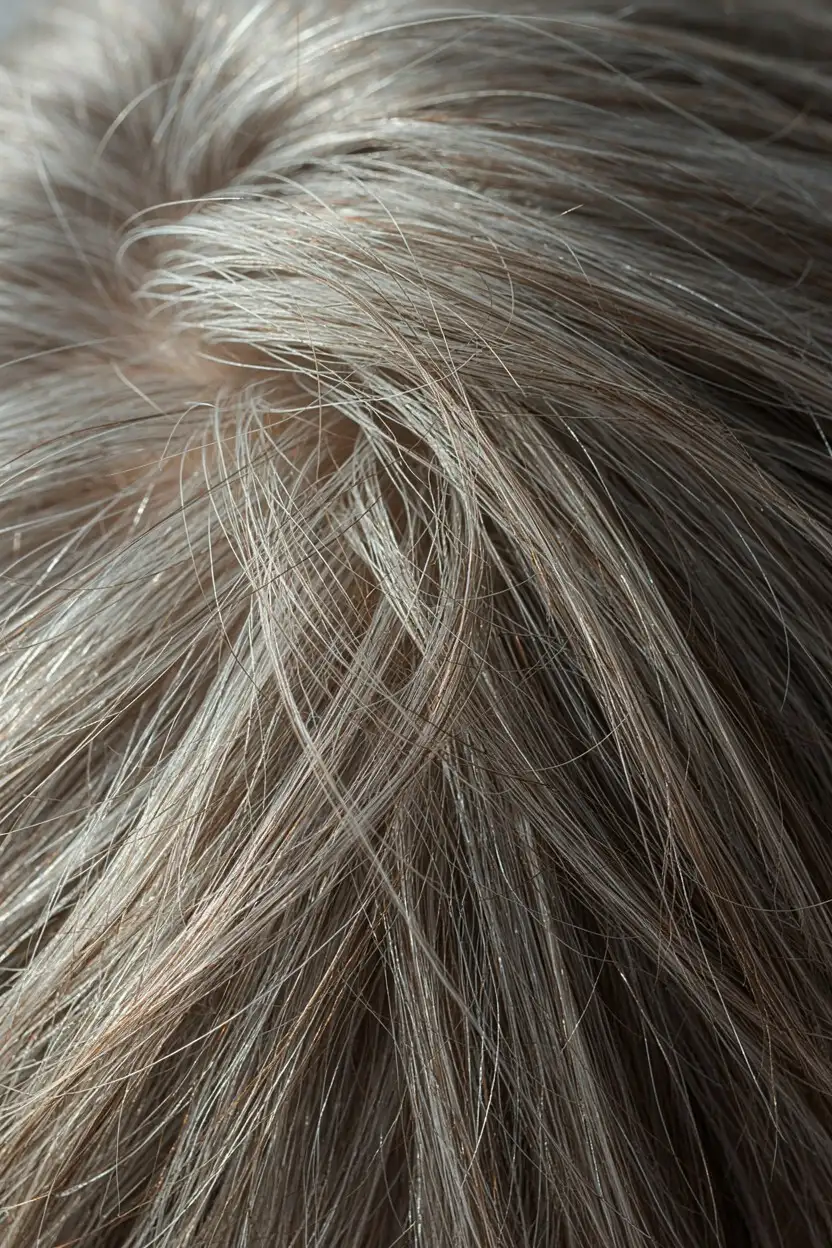
Grey hair is often coarser, wirier and more porous than the pigmented hair it replaces, and that changes which cuts stay easy. The good news is that a coarser strand holds a structured shape on its own, so a crop or a textured short cut tends to need less product on grey hair than it did on the finer hair you had at forty. The less convenient news is that wiry strands spring away from a smooth line, which is why a sleek, one-length cut can look fuzzy by mid-morning unless it is either kept heavier or given a little texture to hide the spring.
Most readers arrive with hair that has been box-dyed or salon-covered for years, and that history matters here too. Lengths that have been colored repeatedly are usually drier and more fragile than the new grey growing in beneath them, so the two halves of your head can behave like two different hair types for 12 to 18 months. A shorter cut shortens that period, which is one honest reason so many women choose a crop during the transition. I kept my own color-damaged ends for about five months longer than I should have, and the cut only became easy once they were gone.
For the full picture of how the transition itself unfolds, the complete guide to going grey sets out the months and the routes. The texture changes that come with it are covered in detail in how grey texture changes your old routine.
Five Low Maintenance Haircuts That Hold Between Trims
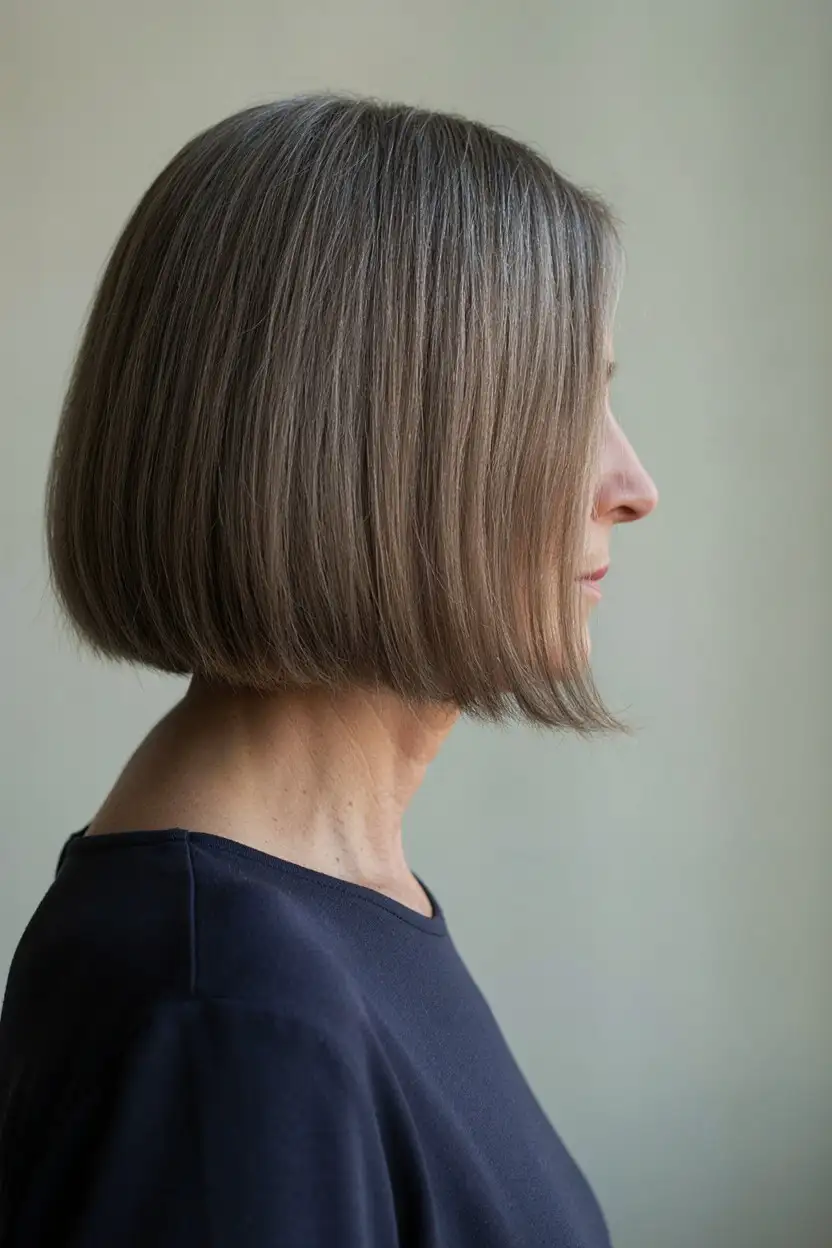
These are the shapes I would point anyone toward first, ranked by how little they ask of you each morning rather than by how long they last. Each one is built around the two numbers above. The table compares them side by side, and the notes underneath explain where each one earns its place.
| Cut | Daily minutes | Trim cadence | Works best on | What it needs from you |
|---|---|---|---|---|
| Textured crop | 1 to 2 | 4 to 6 weeks | Coarse or wiry grey, any density | Regular appointments, a pea of cream |
| Soft rounded short cut | 3 to 5 | 6 to 8 weeks | Fine to medium hair, some wave | Air-drying with the front pushed back |
| Blunt jaw-to-chin bob | 3 to 5 | 8 to 10 weeks | Fine or thinning-looking ends | Patience with a cowlick at the nape |
| Collarbone blunt cut | 5 | 10 to 12 weeks | Medium to thick, straight to wavy | A few minutes with a dryer on wiry days |
| Long layers with weight left in | 5 to 10 | 10 to 14 weeks | Thick or wavy hair past the shoulder | Tying back on bad days without guilt |
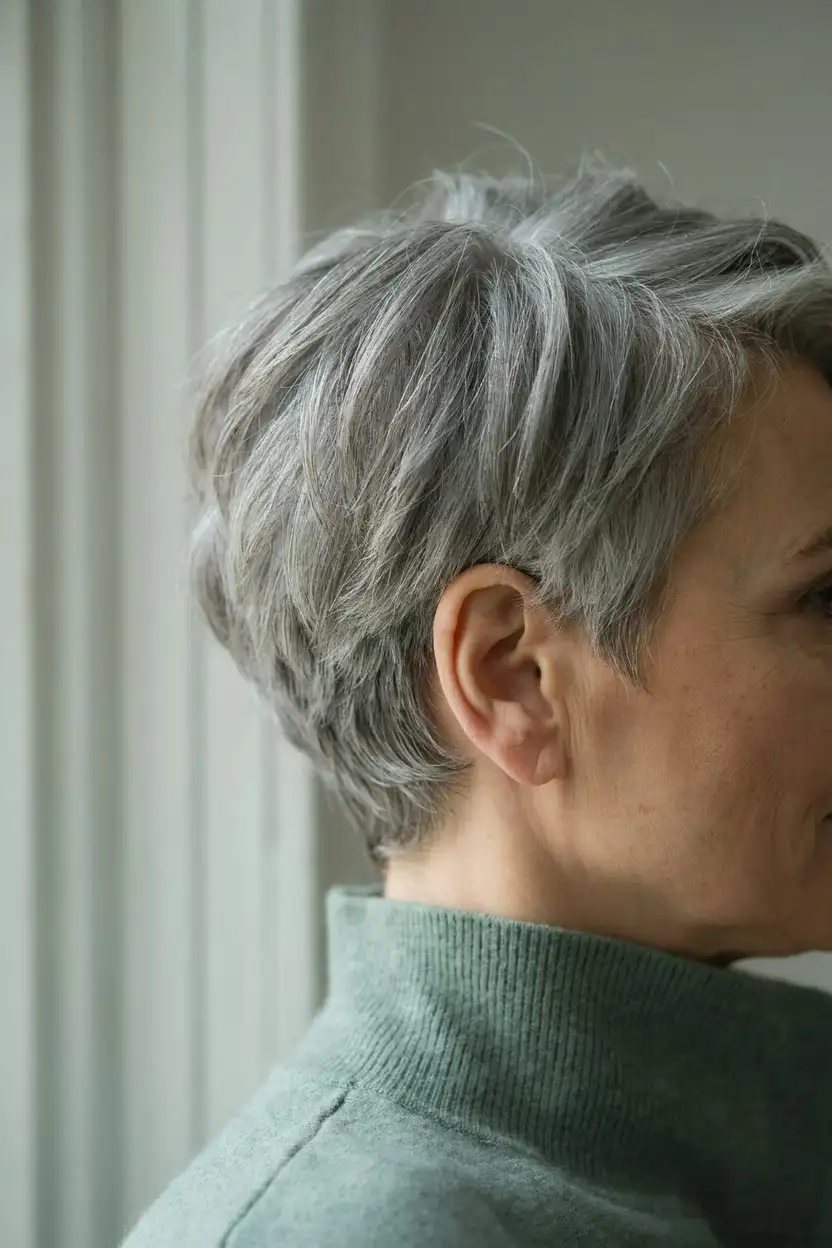
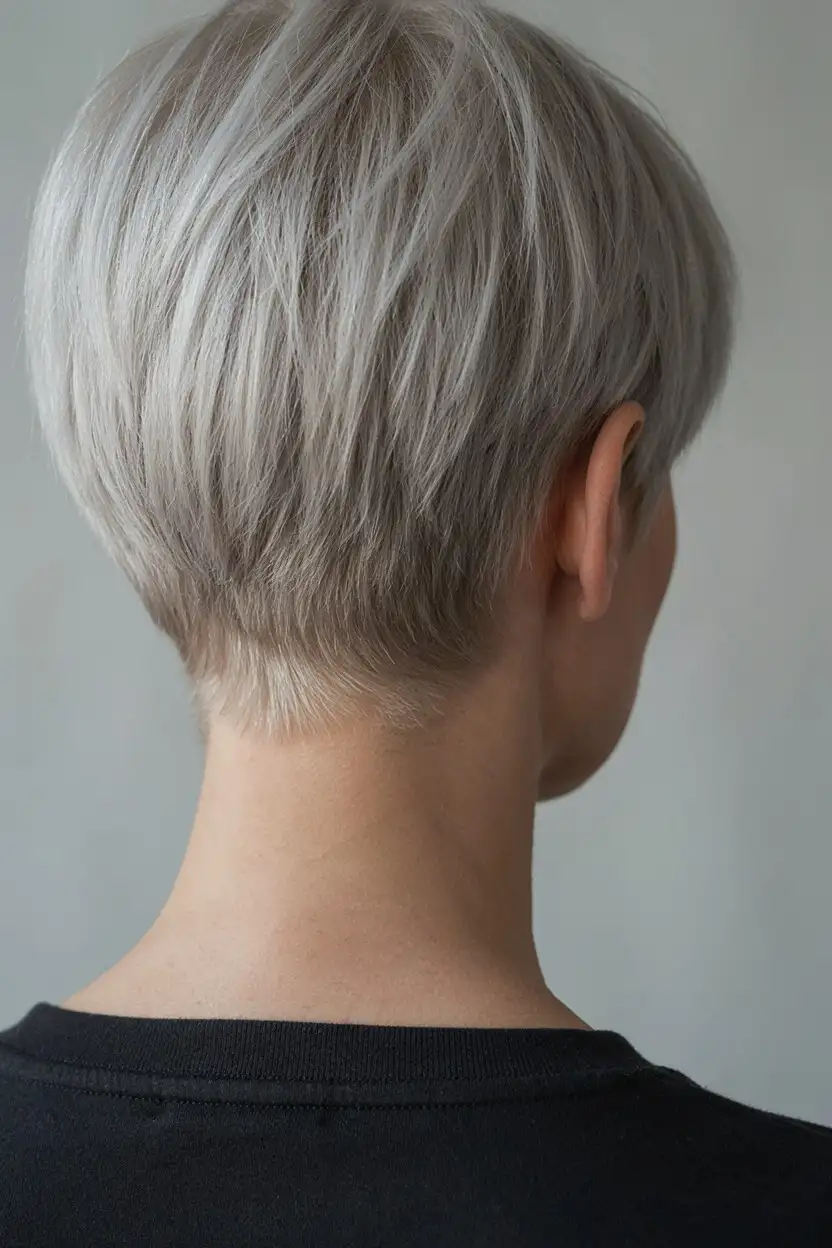
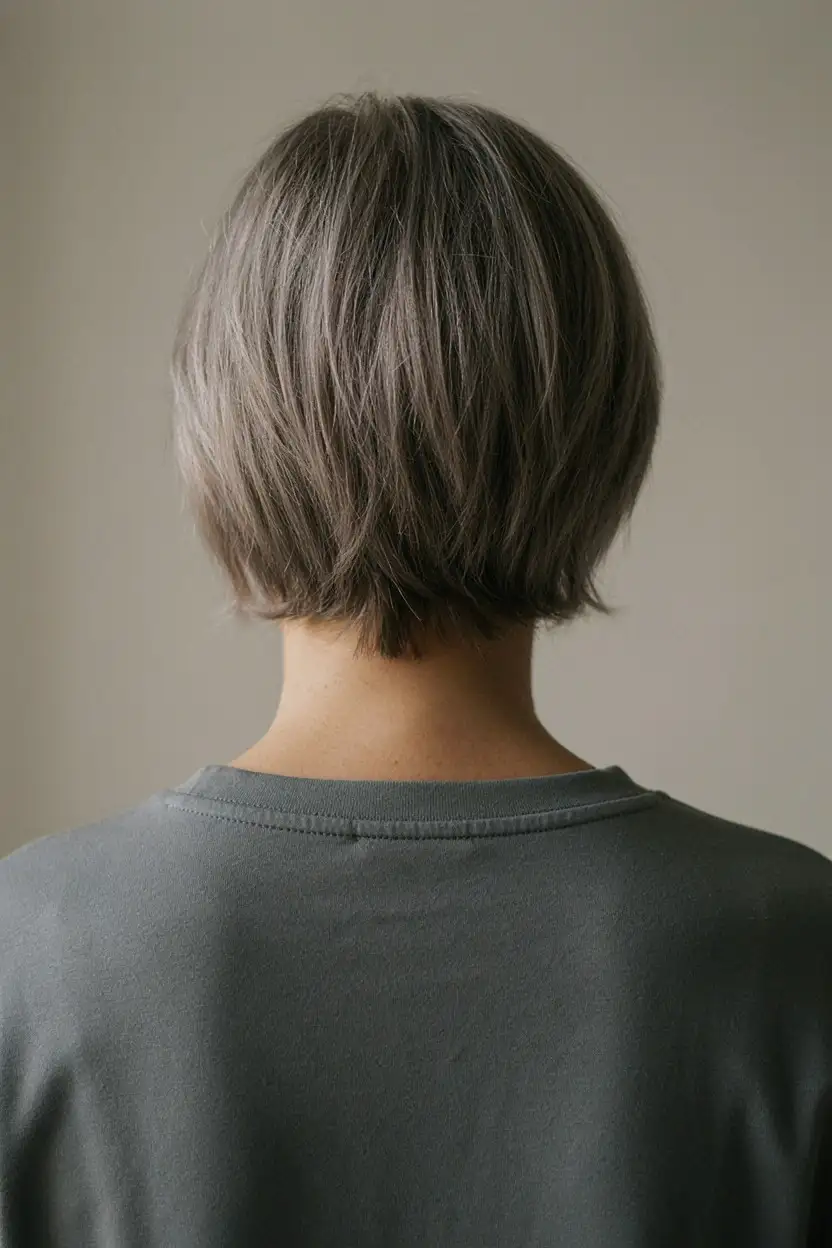
The textured crop is the most forgiving cut in the table on grey hair, because the coarser strands give it body without any product at all. It suits women who like to be out of the house in five minutes and who do not mind booking every 4 to 6 weeks. The soft rounded short cut asks a little more each morning but stays neat for longer, and it is the shape I recommend most often to women whose hair is finer at the crown.
The blunt bob is the low maintenance cut for fine hair, since a single heavy edge makes ends look fuller without styling. The collarbone cut and the long layered cut keep length while still respecting your mornings, provided the layers start low and leave the weight in place. If your ends are fine, the reasoning behind that is set out in why blunt ends often look fuller on fine hair.
A low maintenance haircut is decided by two numbers, minutes in the morning and weeks between trims. Choose those first and the shape follows.
Where Low Maintenance Haircuts Go Wrong
The most common failure is a cut that was chosen for its photograph rather than its week six. Heavily texturized ends, a fringe that needs coaxing into a curve, and crown volume that depends on a round brush all add daily minutes, however short the overall length. A shorter cut is not automatically an easier one. A pixie with lifted crown layers can take longer to style than a collarbone bob.
The second failure is stretching the trim cadence past what the shape can bear. A crop booked every 10 weeks instead of every 6 spends a full month looking unplanned, and that month is when most women decide the cut was a mistake. My firm view is that you should choose the cut whose trim cadence you will actually keep, even if it is not the one you liked best in the photograph, because a cut that is maintained on schedule always looks better than a better cut left too long.
The third failure is product. Grey hair yellows more easily under heavy styling products and dulls under silicone build-up, so a cut that needs three products to behave is not low maintenance on grey hair, whatever it looked like before. A cut that needs one cream, or nothing at all, is the honest target.
Before You Book the Cut

The consultation decides more than the cut itself, because a stylist who knows your mornings can build the shape around them. When I went fully silver, the most useful appointment I had was the one where I said almost nothing about the photograph and a great deal about my routine. Take these points with you, in this order:
- How many minutes you will spend on your hair on an ordinary day, said as a number.
- Whether you own a hairdryer and actually use it, or air-dry every time.
- How often you can realistically book, in weeks, including holidays.
- Where your hair misbehaves first as it grows, usually the nape or the crown.
- How much of your hair is grey now, and whether the lengths are still colored.
- A photograph of the back and side of the cut you like, not only the front.
A good stylist will answer with a shape and a trim interval in the same breath. If the answer is a shape alone, ask what it will look like at week six. For short-cut ideas once you have a direction, the next step is 20 short silver hair ideas, sorted by texture and upkeep, and the wider range is collected in 25 short hairstyles for women over 50.
Frequently Asked Questions
What is the most low maintenance haircut for grey hair?
A textured crop is usually the easiest day to day, because coarse grey strands hold a short structured shape without product or heat. It typically needs 1 to 2 minutes in the morning. The trade-off is the trim cadence, since a crop loses its outline after 4 to 6 weeks and needs regular appointments to stay deliberate. If frequent appointments are the harder part for you, a blunt bob that lasts 8 to 10 weeks is the better choice.
Are short low maintenance haircuts always easier than longer ones?
No, because length and effort are separate measurements. A short cut with lifted crown layers can need a round brush every morning, while a collarbone blunt cut can air-dry into shape in five minutes. What matters is where the weight sits and whether the cut follows your natural growth pattern. Judge any cut by its daily minutes and its trim interval, not by how short it is.
How often should I get my hair trimmed after 50?
That depends on the shape rather than on age. Crops and pixies need trimming every 4 to 6 weeks because a quarter inch changes their outline, bobs every 8 to 10 weeks, and longer cuts every 10 to 14 weeks. Hair grows roughly half an inch a month, so the shorter the cut, the sooner that growth shows. Choosing a cut whose cadence you can keep matters more than the cut itself.
Do low maintenance haircuts work on fine or thinning-looking hair?
They do, and a blunt perimeter is usually the best starting point because one heavy edge makes ends look fuller without styling. Heavy texturizing and lots of layering tend to remove the density you want to keep. If you have noticed a widening part or more shedding than usual over three months or longer, that is a question for a dermatologist rather than a stylist. The cut can be planned once you know what is happening at the scalp.
Should I cut my hair short while I go grey?
A shorter cut shortens the time you spend with colored lengths and new grey growing side by side, since hair grows about half an inch a month. Many women find the transition easier at chin length or shorter for that reason alone. It is not required, and longer hair can be grown out with gradual trims if you prefer. The decision is about how long you are willing to live with two textures, not about what is expected of you.
One Number Before Anything Else
You do not need to choose a cut today. Decide how many minutes you want to give your hair each morning, and take that number to your next appointment before you take a photograph.
Tell me which cut you are weighing in the comments and I will help you think it through. — Nora