Hair Extensions: Which Method Actually Suits Your Hair
Hair extensions get shopped for by length and color almost every time, and weight, wear window, and removal get asked about almost never, which is backward from how it should go. I’ve removed more bad installs than I’ve fitted good ones over eight years of doing this, and the pattern is nearly always the same: someone chose a method based on a photo rather than on what their own scalp could actually carry for eight weeks. This is the real comparison, including the parts the product pages leave out.
I wear my own hair short and unextended, which is a slightly funny thing to admit doing this job, but it’s also exactly why you can trust that nothing here is written to talk you into a specific method. My only stake in this is whether whatever you choose actually survives eight weeks of real life — sleeping on it, washing it, tying it back to cook dinner — not whether you buy the most expensive option on the page.
Hair extensions vary enormously by method in how much they weigh, how long they can safely stay in, and what it takes to remove them, and matching the method to your hair’s actual density and tolerance matters more than matching it to a photo.
The Trade-Off Behind Every Hair Extensions Method
Every method that adds length or volume does it by attaching weight to your existing hair, and every attachment point is a place where tension can build over time. Clip-ins and halos avoid this by being removable daily, so tension never has time to accumulate. Tape, sew-in, and bond methods stay in for weeks at a time, which means comfort and safety depend entirely on how much weight is at each attachment point and where it sits relative to your hairline. Neither approach is better in the abstract — they’re different trade-offs between daily effort and worn-in convenience, and the right one depends on your own tolerance for both.
Comparing Hair Extensions by Method
| Method | Typical weight | Wear window | Removal | Price band |
|---|---|---|---|---|
| Clip-in | 100–180g per set | Daily, removed nightly | Unclips at home, no cost | $60–$250 |
| Halo | 100–150g | Daily, removed nightly | Lifts off at home, no cost | $100–$300 |
| Tape-in | 80–120g per row | 4–8 weeks | Professional, solvent-based | $200–$600 installed |
| Sew-in/weft | 150–250g total | 6–8 weeks | Professional, unpicked | $150–$400 installed |
| Keratin bond | 100–200g total | 3–4 months | Professional, solvent-based | $300–$800 installed |
Notice that price and wear window move together but not always in the direction you’d expect — bonds cost the most and last the longest, but that longer wear window is also the longest single stretch of continuous tension on your hairline of any method here, which is worth weighing against the convenience.
Weight bands in that table are starting points, not fixed numbers — a fine-density head and a thick-density head both wearing “medium” clip-ins are carrying genuinely different proportional loads relative to what their own hair can support. A good fitter adjusts the weight recommendation to your actual density rather than defaulting to a standard set, and it’s worth asking directly what weight they’d recommend for your specific hair before committing to a purchase.
Clip-In and Halo: The Daily-Removable Methods
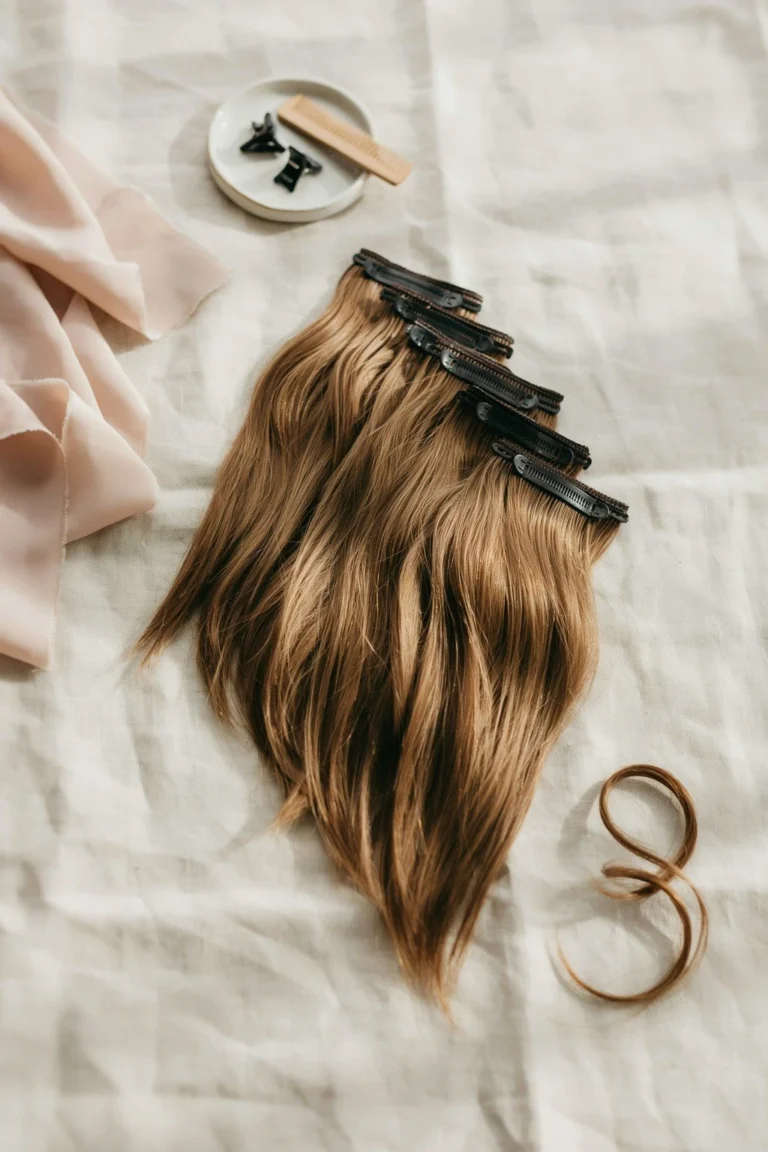
Clip-ins use small pressure clips sewn into a weft, clipped directly into sections of your own hair and removed at the end of the day. A halo uses a single wire under your own top layer instead of multiple clips, which some people find faster to put in and take out. Both are consumer products you can fit and remove yourself, with no adhesive, heat, or professional tool involved. Because they come out nightly, there’s no meaningful ongoing tension risk the way there is with a worn-in method — the trade is daily effort in exchange for zero standing wear time.
Tape-In, Sew-In, and Bond: The Worn-In Methods
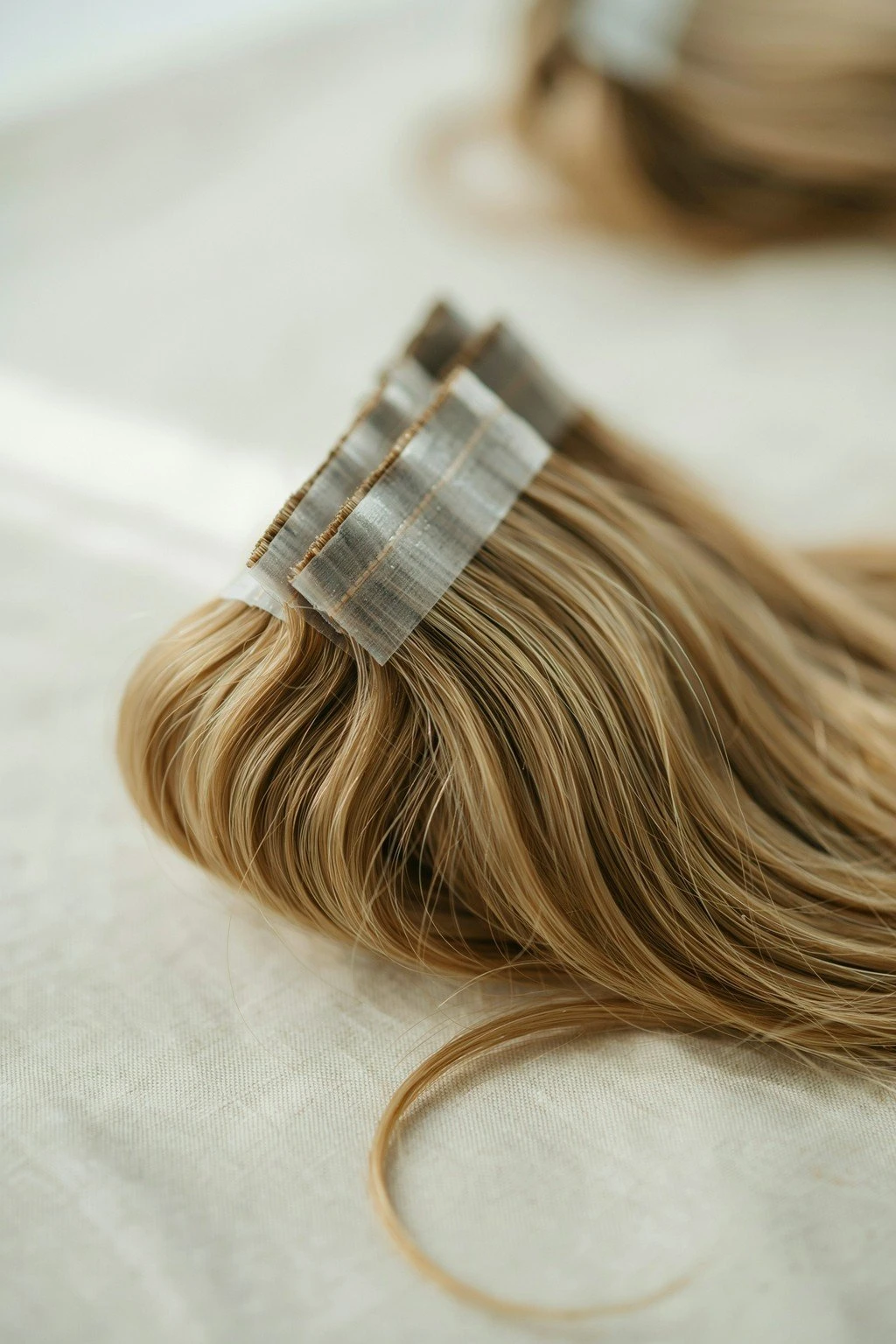
Tape-in extensions use pre-taped wefts sandwiched around thin sections of your own hair, applied and removed by a professional using a specific solvent — this isn’t something to do at home, and any tutorial suggesting otherwise is skipping the part where a wrong removal attempt pulls out your own hair along with the tape. Sew-in extensions involve a fitter braiding a base and sewing wefts onto it; bond extensions fuse individual strands using heated keratin. In all three cases, naming what a fitter does and why is useful information — actually walking you through doing it yourself is not something this category provides, since these methods carry real risk of hair loss at the attachment point when done incorrectly.
Traction alopecia is a real risk with every one of these worn-in methods, and it’s specifically about placement and duration, not the method being inherently unsafe. Any tension-bearing attachment — tape, sew-in, bond, or even a clip-in worn in the exact same spot every single day — can gradually stress the follicle at that specific point if it’s never given a rest. A fitter worth working with will rotate placement between fittings and will tell you plainly if your hairline needs a longer break before the next install, rather than rebooking automatically.
Human Hair vs. Synthetic
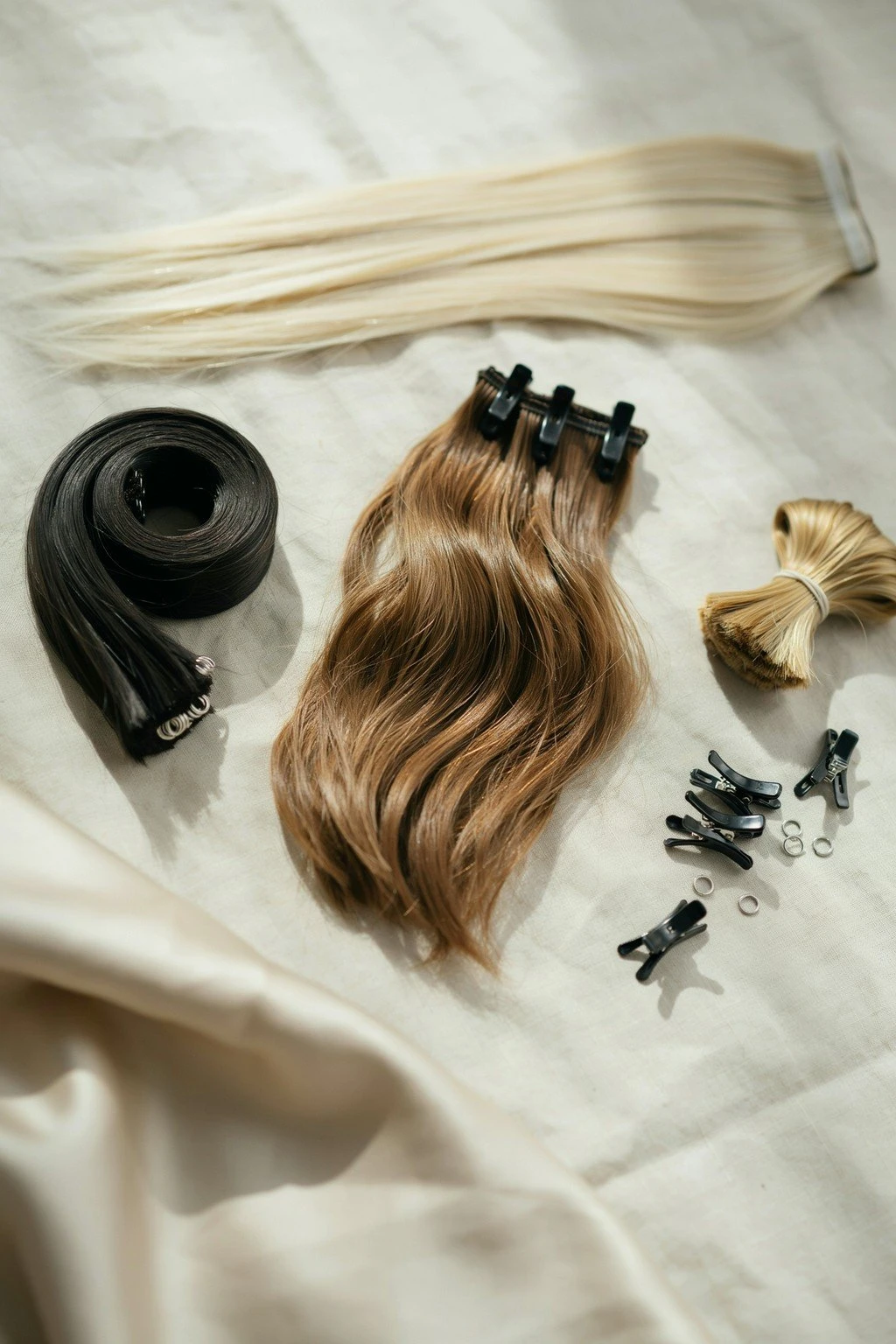
This is a genuine trade-off, not a quality hierarchy. Human hair can be heat-styled, blended more convincingly with your own hair’s movement, and lasts considerably longer with proper care, typically a year or more across multiple installs. Synthetic fiber costs a fraction of the price and holds a pre-set style without any styling effort, but it can’t take heat, doesn’t blend quite as naturally in motion, and needs replacing every few months of regular wear. Neither is the “better” option in every situation — it depends on your budget and how often you’re actually wearing the piece.
Origin matters within human hair too, and it’s worth asking about directly rather than assuming all human hair is interchangeable. Remy hair, where the cuticle is kept aligned in one direction during processing, tangles significantly less than non-Remy hair over repeated wears. Non-Remy hair is cheaper and can still be a reasonable choice for occasional wear, but it typically needs replacing sooner as the mismatched cuticles cause it to mat and dull faster.
The photo shows you the length. It never shows you what eight weeks of actually wearing it looks like, and that’s the part worth asking about before you buy.
The Honest “Don’t”
If your hair is already fine, fragile, or showing signs of breakage near the hairline, a tension-bearing worn-in method is not the right starting point, regardless of how much you want the length. Adding sustained weight to hair that’s already struggling accelerates the exact problem you’re trying to hide. A daily-removable method, or addressing the underlying hair health first, is the more honest answer here, even though it’s the less exciting one to hear. I’d rather tell someone their hair needs a season of recovery first than fit something I know won’t survive its own wear window intact, and any fitter unwilling to say that plainly is one worth being cautious of.
What Happens at Week Eight
This is the part the product pages skip. A tape-in or sew-in reaching the end of its wear window needs a professional removal appointment, not just a longer wait — leaving it in past the recommended window increases tension risk without adding any benefit. Your own hair underneath will have grown out somewhat, which is normal, and a good fitter checks its condition at removal before recommending whether to reinstall immediately or give your scalp a real break first. Budget for this appointment as part of the actual cost of a worn-in method, not as an optional extra.
What your own hair looks like at removal depends heavily on how the install was maintained in between, not just the method itself. Hair that was gently washed, kept moisturized at the attachment points, and never left in past its window generally looks close to how it went in. Hair that was neglected, over-washed with the wrong products, or left in weeks past its recommended date is more likely to show real strain at the root, sometimes with visible thinning at the exact attachment points that takes months to fully recover from.
What to Ask Before You Buy
- What does this weigh, and is that appropriate for my density?
- How is it removed, and does that need a professional?
- What’s the realistic wear window before I need a break or a redo?
- What will my own hair look like underneath when it comes out?
Frequently Asked Questions
What are hair extensions made from?
Either human hair, which can be styled and colored within limits and lasts the longest, or synthetic fiber, which holds a pre-set style without styling but can’t take heat and needs replacing more often. Both are legitimate choices depending on budget and how often you’ll wear the piece.
How much do hair extensions typically cost?
It ranges enormously by method, from around $60 for a basic clip-in set to $800 or more for a full bond installation with professional fitting included. The ongoing cost, including maintenance appointments and eventual replacement, is worth budgeting for alongside the initial price.
Which hair extension method lasts the longest without removal?
Keratin bonds typically last 3 to 4 months before needing removal and reinstallation, the longest single wear window of any method here. That longer window also means the longest continuous tension exposure, which is worth weighing against the convenience.
Can I install tape-in or sew-in extensions myself?
This isn’t something covered here as a how-to, and for good reason — incorrect application or removal of tape, sew-in, or bond methods carries real risk of damaging your own hair at the attachment point. Clip-ins and halos, by contrast, are designed for you to fit and remove yourself.
Will hair extensions damage my natural hair?
Done correctly, with appropriate weight for your density and a fitter who rotates placement and respects wear windows, the risk is low. Damage typically comes from too much weight for the hair’s actual strength, tension left in one spot too long, or skipping recommended breaks between installs.
Before You Book a Fitting
Know your own hair’s density and how much daily effort you actually want to give before you pick a method. That answer matters more than any photo you bring to the appointment.
Tell me your hair type and how much daily upkeep you’re realistically willing to do, and I’ll help you narrow it down. — Della