Gray Hair Texture Changes: When Your Old Routine Stops Working

Gray hair texture changes are not a perception problem. The hair growing out of your scalp now is structurally different from the hair you had ten years ago, and the products and techniques that once worked are failing because the fiber they were designed for no longer exists. I spent the first year of my transition applying the same shampoo, conditioner, and styling routine I had used for a decade, wondering why the result kept getting worse.
Gray hair has a thicker cuticle layer, reduced sebum coating, and a different internal cortex structure than pigmented hair. These three changes make it coarser, drier, and more resistant to styling. The routine adjustment is not complicated, but it must start from the structural reality rather than from the routine you remember.
What Changes Inside the Hair Shaft
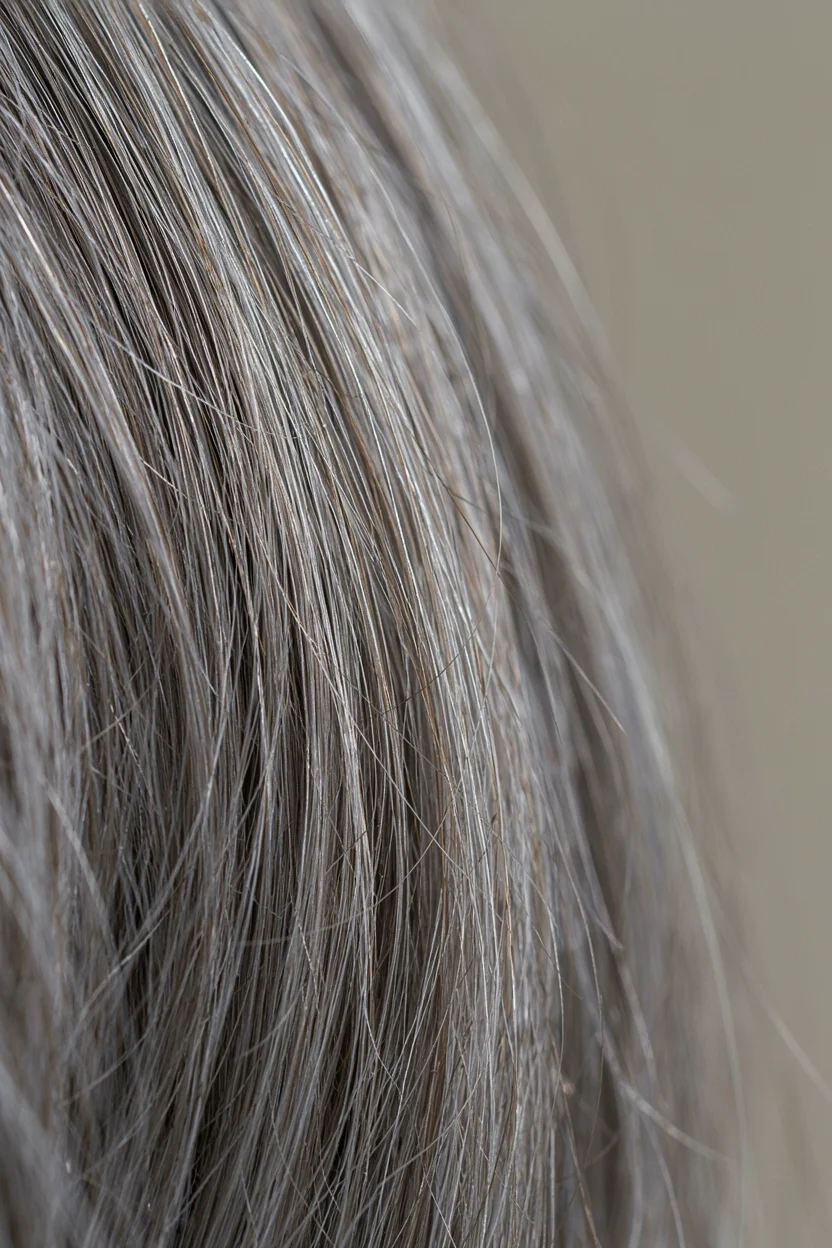
The hair shaft is composed of three layers: the medulla at the center, the cortex that provides color and strength, and the cuticle that forms the outer protective layer. When melanin production stops and the hair grows in gray, the cortex loses the pigment granules that once filled it. Those granules occupied physical space within the fiber, and their absence changes the internal density and the way the hair bends and reflects light.
The cuticle on gray hair is typically thicker and more tightly packed than on pigmented hair. This makes the fiber more resistant to moisture penetration, which means conditioning products take longer to absorb and styling products sit on the surface rather than being drawn into the shaft. The thicker cuticle also makes gray hair feel coarser to the touch, even when the individual strand diameter is actually finer than it was before.
The combination of a changed cortex and a thicker cuticle produces a fiber that is simultaneously more wiry and more fragile. It resists bending, which makes it difficult to style, but it breaks more easily under tension because the internal structure lacks the reinforcement that pigment granules once provided. This contradiction is the reason gray hair often feels coarse but breaks readily.
The Sebum Shift
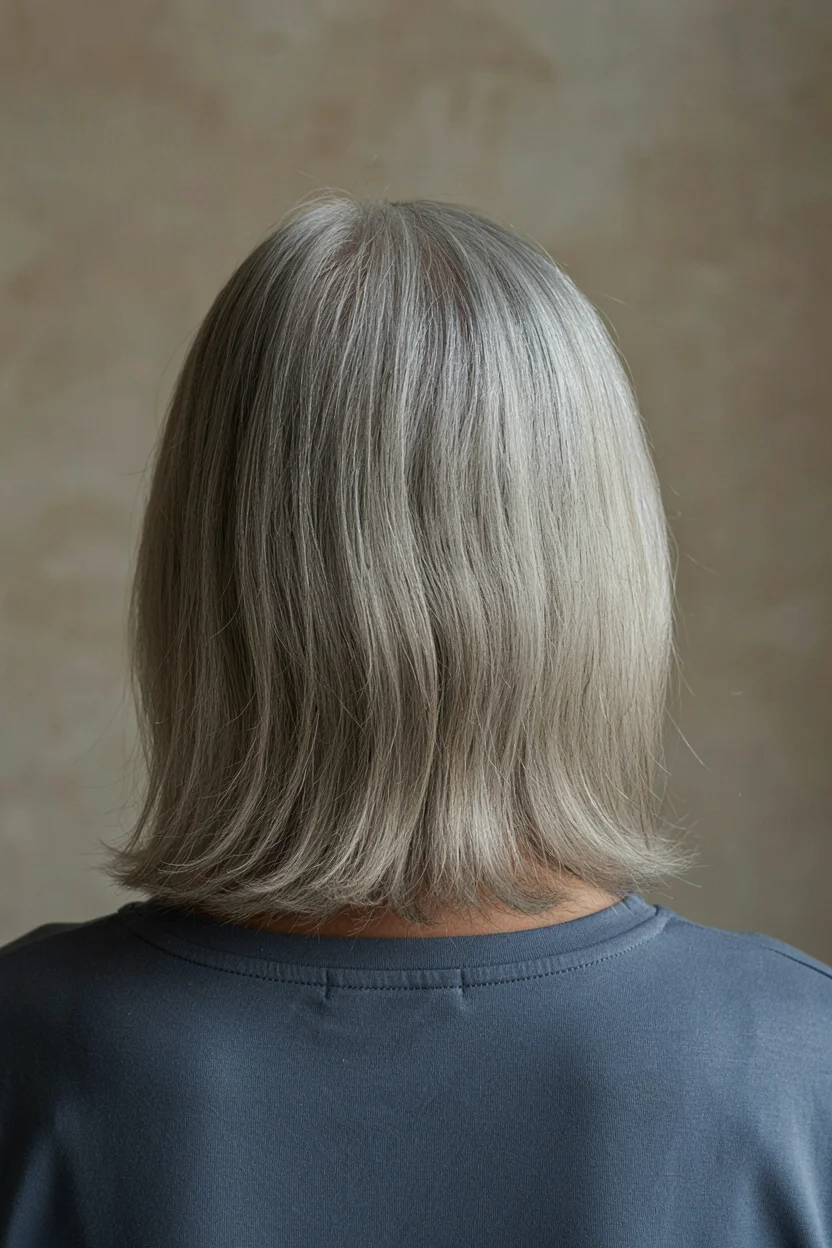
Sebum production declines with age, and the effect on gray hair is more pronounced than on pigmented hair. Sebum coats each hair strand with a thin layer of lipid that provides natural conditioning, slight water resistance, and the soft sheen associated with healthy hair. When sebum production drops, the hair loses that coating and becomes drier, more porous, and more prone to frizz.
On pigmented hair, reduced sebum is often masked by the melanin and the smoother cuticle that comes with younger hair. On gray hair, the reduced sebum combines with the thicker cuticle to produce a fiber that is both dry on the surface and resistant to absorbing moisture from products. The result is hair that feels rough and looks dull despite conditioning efforts.
| Hair characteristic | Pigmented hair (before) | Gray hair (after) | What changes in your routine |
|---|---|---|---|
| Cuticle thickness | Moderate, allows product absorption | Thicker, resists product absorption | Longer conditioning times, warmth during deep conditioning |
| Sebum coating | Present, provides natural conditioning | Reduced, hair is drier | Leave-in conditioner or light oil on ends daily |
| Cortex density | Pigment granules fill internal space | Pigment absent, internal structure less dense | Gentler handling, less tension during styling |
| Moisture retention | Moderate to good | Poor, moisture escapes quickly | Humectant-based products in humid climates, sealing products in dry climates |
| Elasticity | Good, hair stretches and returns | Reduced, hair snaps under less tension | Wider-tooth combs, less brushing when dry |
I noticed the sebum shift most at the ends of my hair. The first six inches from the scalp retained some natural oil, but the ends were persistently dry regardless of how much conditioner I applied. The fix was not more conditioner in the shower. It was a small amount of lightweight oil applied to the last three inches every morning, which replaced what the scalp was no longer supplying.
Why Your Old Shampoo Stops Working

The shampoo that suited pigmented hair is often too stripping for gray hair. Sulfate-based shampoos remove oil and debris effectively when sebum production is adequate. On gray hair with reduced sebum and a thicker cuticle, sulfate shampoos strip the small amount of natural oil that remains, leaving the hair drier and more prone to tangling.
The shift to a sulfate-free or low-sulfate shampoo is one of the first and most impactful changes for gray hair. These formulas clean without stripping the lipid layer entirely. The transition can take two to four weeks, because the scalp adjusts its sebum production in response to gentler cleansing. During that adjustment period, the hair may feel heavier than expected. This is temporary.
Washing frequency also changes. Gray hair benefits from less frequent washing, typically two to three times a week rather than daily. Extending the interval between washes allows the limited sebum to distribute along the hair shaft and provide conditioning that no product replicates exactly.
Conditioning for a Thicker Cuticle
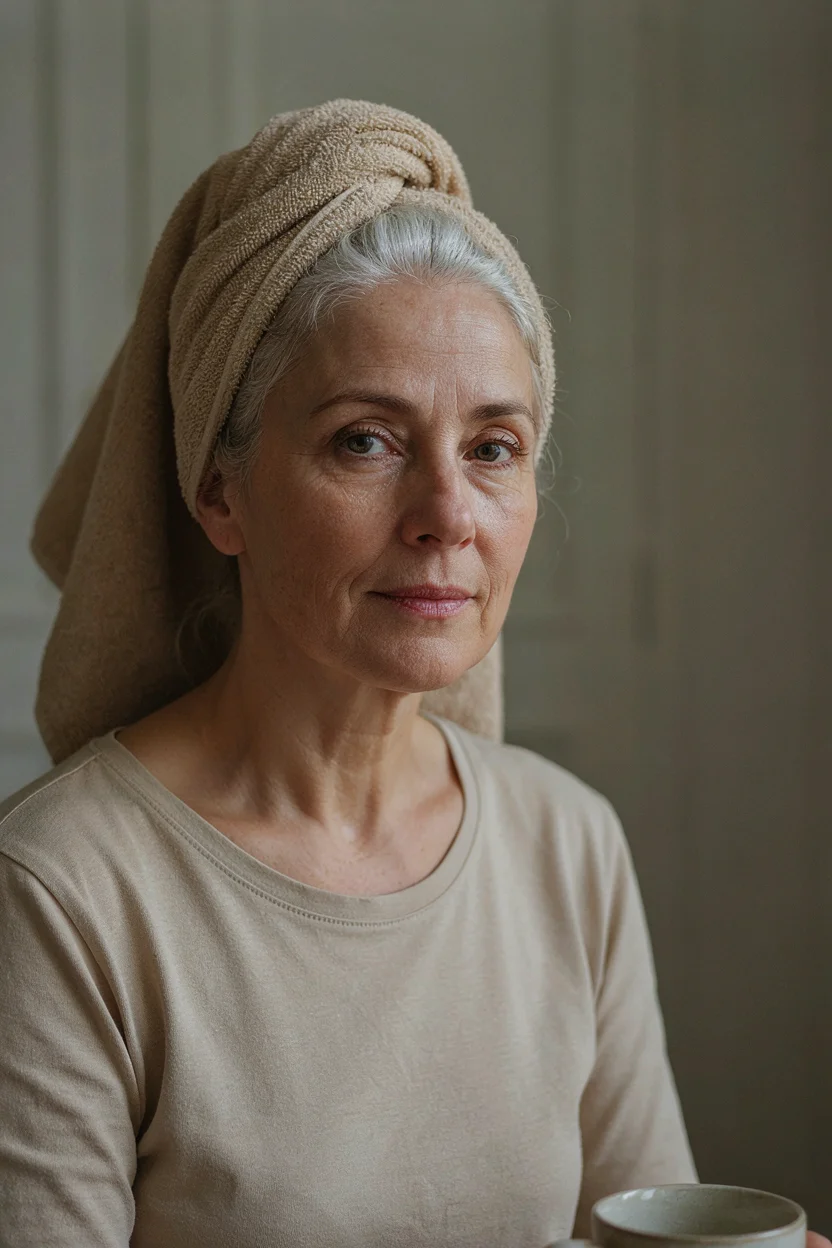
Gray hair needs more conditioning time, not necessarily more product. The thicker cuticle means that conditioner applied for sixty seconds in the shower does not have time to penetrate the outer layer and reach the cortex where moisture is needed. Extending the conditioning time to three to five minutes, or applying conditioner and then stepping away from the shower for the rest of your routine before rinsing, allows the product to work through the cuticle.
Deep conditioning once a week addresses the moisture deficit that daily conditioner cannot fully resolve. A deep conditioning treatment applied to damp hair, left for fifteen to twenty minutes, and rinsed with cool water provides the kind of sustained moisture that gray hair absorbs slowly. Warmth during the treatment, either from a warm towel wrapped around the head or from applying the treatment before a shower and letting the steam work, improves penetration through the thicker cuticle.
One caution with deep conditioning: protein-heavy treatments can make gray hair feel stiffer rather than softer. Gray hair often needs moisture more than it needs protein, because the internal structure has changed but is not necessarily protein-deficient. A moisture-focused deep conditioner used weekly, with a protein treatment no more than once a month, is the balance that worked for my hair and that most gray-hair specialists recommend.
Styling Adjustments for Coarser, More Fragile Hair
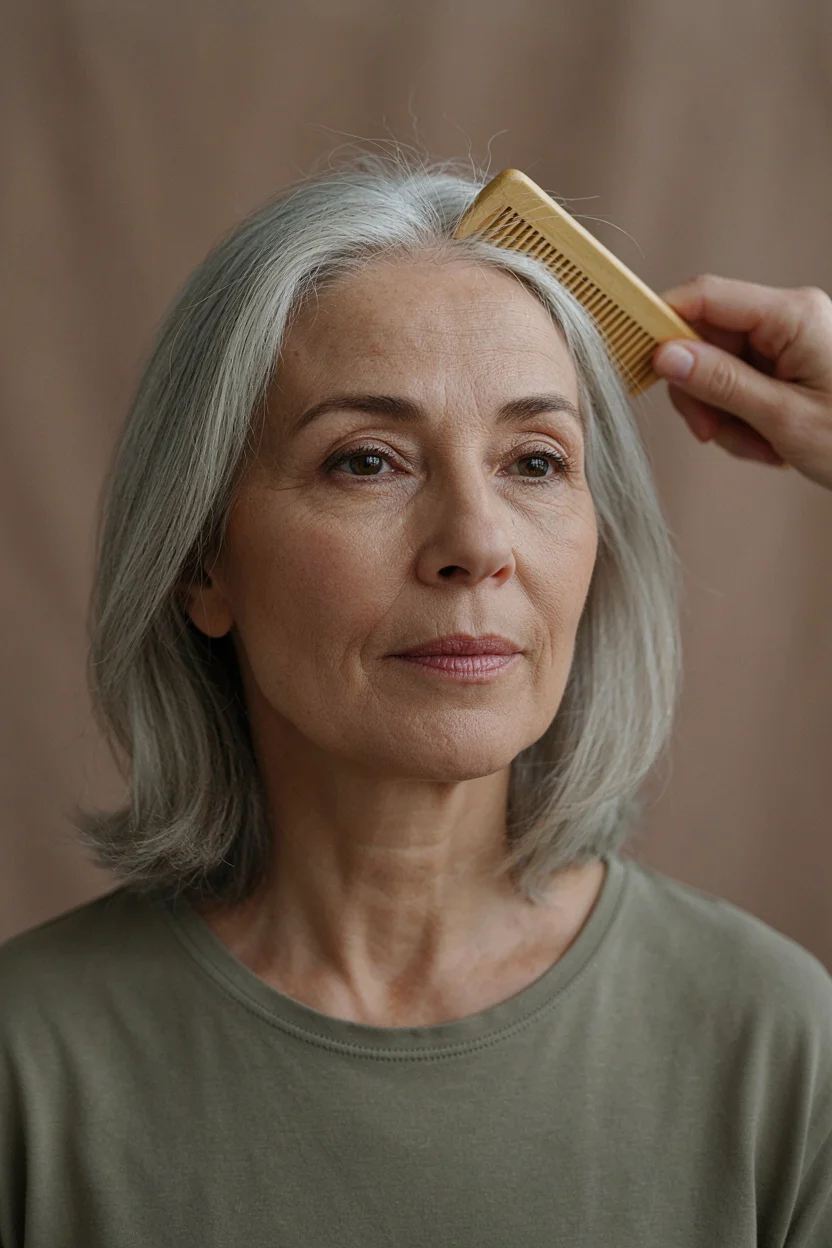
The styling tools and techniques that worked on pigmented hair often damage gray hair because the fiber cannot tolerate the same level of heat and tension. The reduced elasticity means that pulling the hair taut with a round brush or flat iron creates breakage at the point of greatest tension, typically at the mid-length where the hair is thinnest.
| Styling practice | Pigmented hair tolerance | Gray hair adjustment | Why |
|---|---|---|---|
| Flat iron temperature | 350 to 400 degrees | 280 to 320 degrees | Thicker cuticle conducts heat differently; lower temperature achieves similar result |
| Round brush tension | Moderate to firm pulling | Light tension, wider barrel | Reduced elasticity means firm tension causes mid-length breakage |
| Blow-dry distance | Close to the hair, high heat | Six inches away, medium heat | Drier fiber scorches more easily under concentrated heat |
| Brushing when dry | Standard brushing is fine | Wide-tooth comb, start at ends | Dry gray hair tangles more and snaps under brush tension |
| Heat protectant | Optional for occasional styling | Required for every heat application | Less moisture in the fiber means less buffer against heat damage |
I lowered my flat iron temperature by roughly sixty degrees when my hair went fully silver, and the result was a smoother finish with less breakage at the ends. The lower temperature took slightly longer to achieve the same straightening effect, but the difference was a matter of an extra minute or two, and the hair held the style longer because the cuticle was not being overheated and rebounding.
The old routine was calibrated for a fiber that no longer exists. The adjustment is not a concession. It is a correction.
Signs Your Routine Needs Adjusting

The shift in gray hair texture is gradual enough that you may not notice it day to day. The signs accumulate over weeks and months, and by the time they are obvious, the hair has been receiving the wrong treatment for some time.
- Hair feels rougher or more wiry than it did six months ago, despite using the same products.
- Breakage at the mid-length or ends has increased, particularly when brushing or styling.
- The ends remain dry within hours of conditioning, suggesting the sebum deficit is not being addressed.
- Tangling has increased to the point where brushing causes visible hair loss from snapping rather than shedding.
- The hair holds a style for a shorter time than before, suggesting the cuticle is not retaining the shape set during styling.
- Frizz has increased in humid conditions or brittleness has increased in dry conditions, or both, suggesting the moisture regulation the cuticle once handled is now unmanaged.
Seasonal Texture Shifts

Gray hair responds more dramatically to seasonal humidity changes than pigmented hair does. In humid conditions, the more porous gray fiber absorbs moisture from the air and expands, creating frizz. In dry conditions, the same porous fiber loses moisture to the environment and becomes brittle, increasing breakage.
The seasonal adjustment is straightforward. In humid months, an anti-humectant product creates a barrier that slows moisture absorption. In dry months, a sealing product applied after conditioning traps moisture inside the fiber. The products are different, but the principle is the same: manage the moisture exchange that the changed cuticle can no longer regulate on its own.
Climate matters more for gray hair than it did for pigmented hair. A routine that works in March may fail in July, not because the hair has changed but because the environment has.
When Texture Changes Signal Something Beyond Gray

Not every texture change is caused by the loss of melanin. Thyroid function, medication changes, nutritional deficiencies, and scalp conditions can all alter hair texture independently of the graying process. If your hair texture has changed suddenly rather than gradually over months, or if the change is accompanied by increased shedding, scalp irritation, or hair loss in patches, the appropriate next step is a conversation with a dermatologist or trichologist rather than a product adjustment.
Gradual texture change over the course of a gray transition is normal. Sudden change is worth investigating. The distinction matters, because treating a structural hair change with products when the cause is medical delays a diagnosis that may be straightforward to address.
Building a Routine That Matches Your Current Hair
The most common mistake I see in my own past routine is the attempt to make the new hair behave like the old hair. The products, tools, and techniques were calibrated for a fiber that no longer exists. The adjustment does not require a complete overhaul. It requires acknowledging the three structural changes, a thicker cuticle, reduced sebum, and a changed cortex, and selecting products that work with those changes rather than against them.
A sulfate-free shampoo, extended conditioning time, weekly deep conditioning, lower heat settings, and seasonal product adjustments address the structural reality of gray hair. The routine takes roughly the same amount of time as the old one. The products cost about the same. The result is hair managed according to what it is now, not what it used to be.
Frequently Asked Questions
Will my gray hair always feel this coarse?
Gray hair texture stabilizes once the entire length reflects the new structure. For most women, the first year of full gray growth feels the most different, because the contrast with previously pigmented hair still on the head is pronounced. Once the full head of gray hair has been growing for twelve to eighteen months, the texture becomes familiar and the routine adjusts to match it.
Can I use the same conditioner I used before going gray?
You can, but it may not perform the same way. The thicker cuticle requires longer conditioning times for the product to penetrate. If your current conditioner works when left on for three to five minutes, there is no reason to change it. If it sits on the surface and the hair still feels dry after rinsing, a formula designed for coarser hair will likely produce a better result.
Why does my gray hair tangle more than it used to?
The thicker cuticle creates more friction between adjacent strands, which leads to tangling. The reduced sebum coating also means the strands do not slide past each other as easily. A leave-in conditioner applied to damp hair before combing reduces friction and prevents the breakage that occurs when tangles are forced apart.
Is it true that gray hair is more porous?
Gray hair is often more porous at the ends and less porous near the root. The thicker cuticle near the scalp resists moisture absorption, while the older ends have accumulated damage that increases porosity. This is why the ends of gray hair feel drier than the roots, and why conditioning products benefit from being applied from the mid-length to the ends.
Should I change my hairbrush when my hair goes gray?
A wider-tooth comb or a brush with flexible, widely spaced bristles works better on gray hair than a dense paddle brush. The reduced elasticity means that dense brushing creates tension points where the hair snaps. A wide-tooth comb used from the ends upward detangles with less breakage.
The Hair You Have Now
Gray hair texture changes are real, they are structural, and they are permanent for as long as the hair grows without pigment. The adjustment is not large. It is a series of small shifts in products, timing, and technique that align your routine with the fiber growing from your scalp. The old routine served the old hair. The new one serves the new hair just as faithfully.
— Nora