Gray Roots and Dark Dye: The First Colorist Conversation
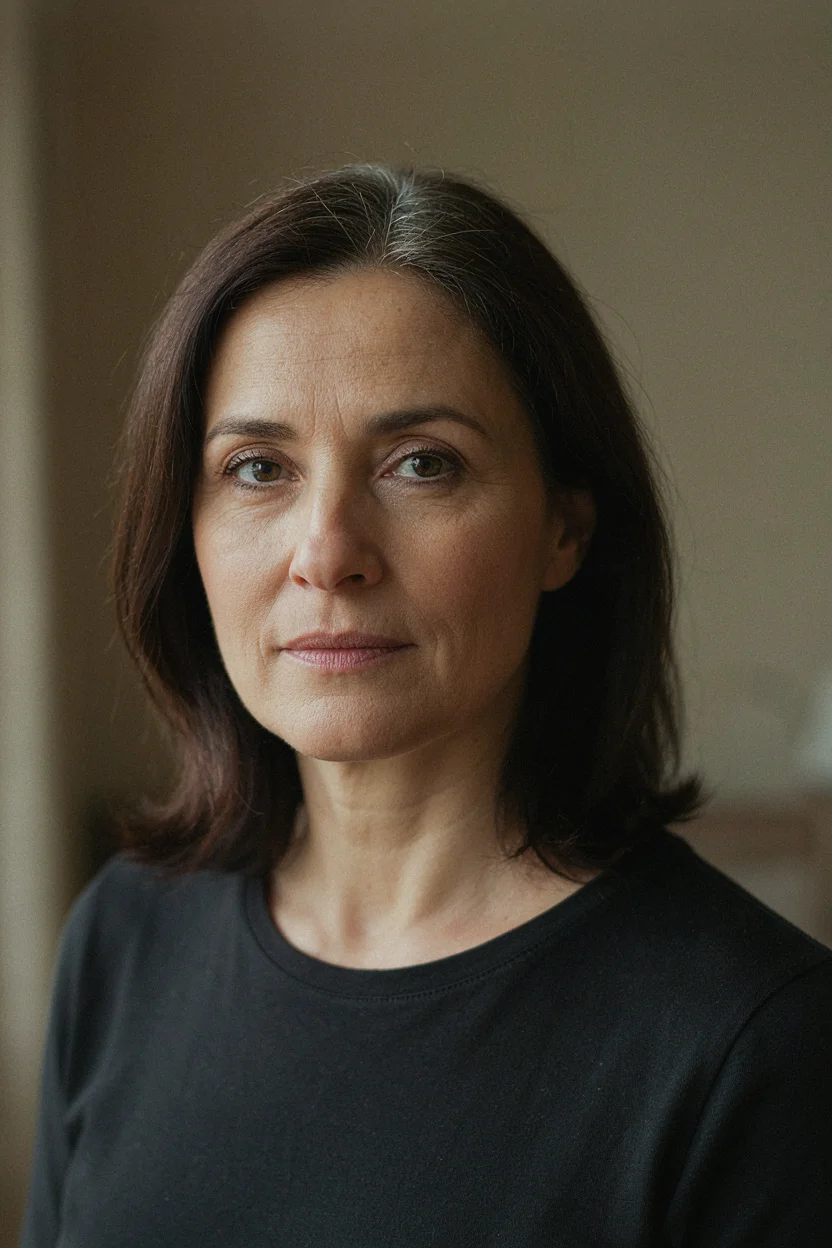
Gray roots against dark dye create a contrast that becomes harder to ignore with each passing week. I reached that point on a Tuesday morning in front of a bathroom mirror, roughly two months before I told anyone I had stopped covering. The line at my part was almost an inch wide, and I knew the four-week appointment I had kept for eleven years was not going to solve what was actually happening.
The first colorist conversation about gray roots and dark dye is the appointment where you shift from maintenance to a plan. That conversation determines whether you continue covering, begin blending, or start the process of growing out to silver. The outcome depends less on what the colorist can do and more on what you tell them about your hair history and what you are willing to spend in time and money.
Why Dark Dye Makes Gray Roots More Visible
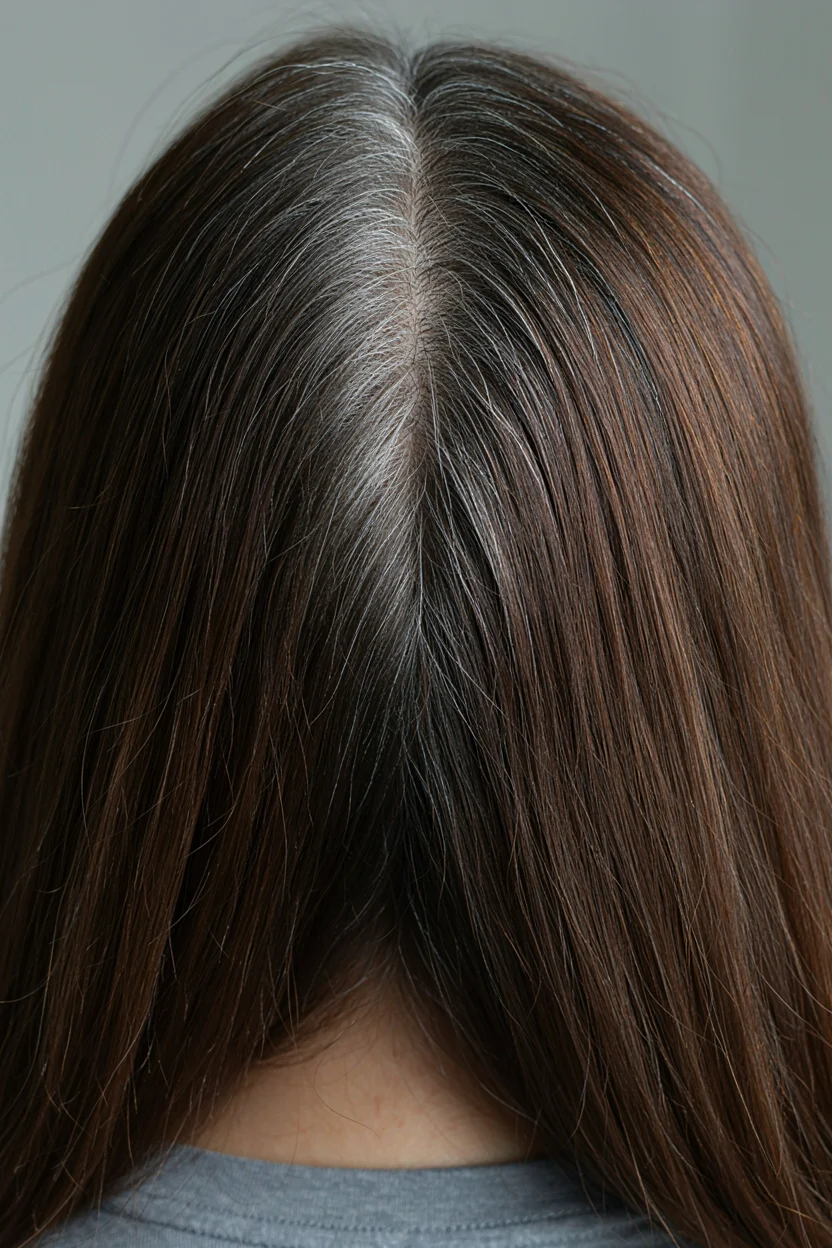
The mathematics of contrast are straightforward. Dark dye absorbs light. Gray hair reflects it. When the two sit next to each other at the root, the eye registers the boundary immediately. The darker the target color, the sharper that boundary appears. A woman coloring her hair dark brown or black will see a visible regrowth line at two to three weeks, while a woman coloring her hair a lighter shade may not notice until week four or five.
Gray hair also has a different texture than pigmented hair. The cuticle layer is often thicker and more tightly packed, which means the fiber resists color penetration differently. On previously dark-dyed hair, the new gray root emerges with a wiry, sometimes coarser texture that catches light at a different angle than the dyed length beside it. The combination of color contrast and texture difference is what makes the regrowth line so difficult to disguise with styling alone.
I had been coloring my hair a medium-to-dark brown for over a decade. When my gray started coming in at the temples and part line, the contrast was immediate. By week three, the root band was the first thing I noticed in photographs, and by week four I was scheduling my next appointment out of habit rather than preference.
What to Tell Your Colorist at the First Visit

The first conversation should cover your hair history in detail, because that history determines what the colorist can and cannot do in a single session. Hair that has been colored with box dye for years behaves differently under lightener than hair that has only received salon color. The colorist needs to know the full timeline.
- How long you have been coloring your hair, and whether it was salon-applied or box dye.
- The approximate shade you have been using, and whether it has changed over the years.
- Any previous color corrections, bleaching, or chemical straightening treatments.
- How much gray you estimate is present, even a rough percentage at the part line and temples.
- What your goal is: continued coverage, a transition to blending, or a path toward growing out to your natural silver.
- Your budget per visit and how often you are willing to return for maintenance.
The more specific you can be, the more accurate the colorist’s plan will be. A woman who says “I have been using the same box dye for eight years and I want to stop” gives the colorist different information than a woman who says “I have had salon color for six years and I want to keep covering but stretch the visits.”
The Assessment the Colorist Will Perform
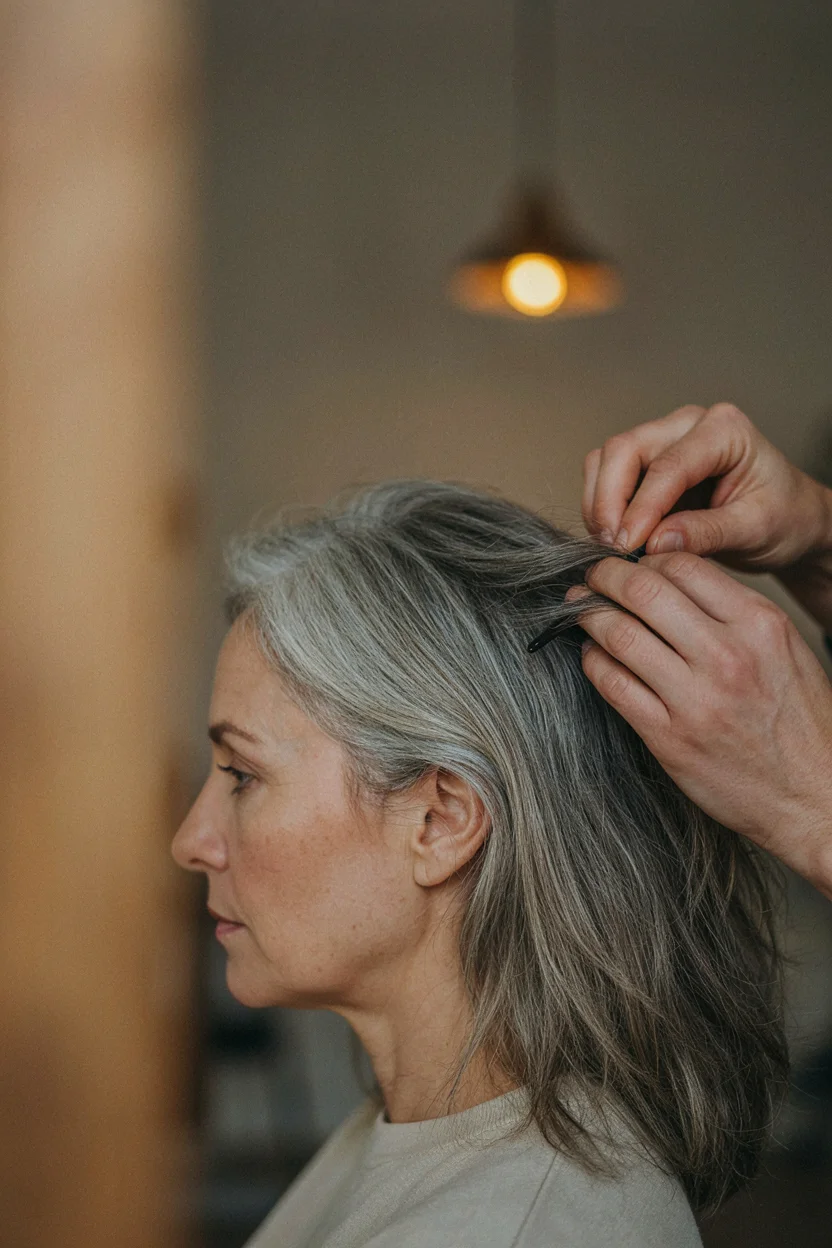
A thorough colorist will examine your hair before discussing options. The assessment typically covers three areas: the condition of the hair shaft, the amount and pattern of gray, and the depth of artificial pigment that must be managed.
| Assessment area | What the colorist checks | Why it matters |
|---|---|---|
| Hair shaft integrity | Elasticity, porosity, and breakage along the length | Determines whether the hair can withstand lightener or needs conditioning before any chemical service |
| Gray percentage and pattern | How much gray is present at the root, temples, and crown, and whether it is scattered or concentrated | Determines whether blending, full coverage, or a gradual transition is the most practical option |
| Artificial pigment depth | How many layers of dye are present and how deeply they have penetrated | Determines whether color removal is needed before blending and how many sessions a correction will take |
| Scalp condition | Dryness, sensitivity, and any signs of irritation from previous chemical services | Determines which products are safe to apply and whether the scalp needs treatment before color work begins |
This assessment takes ten to fifteen minutes and should happen before any color is mixed. If a colorist begins applying product without examining the hair first, that is worth noting.
The Three Paths the Colorist Will Present
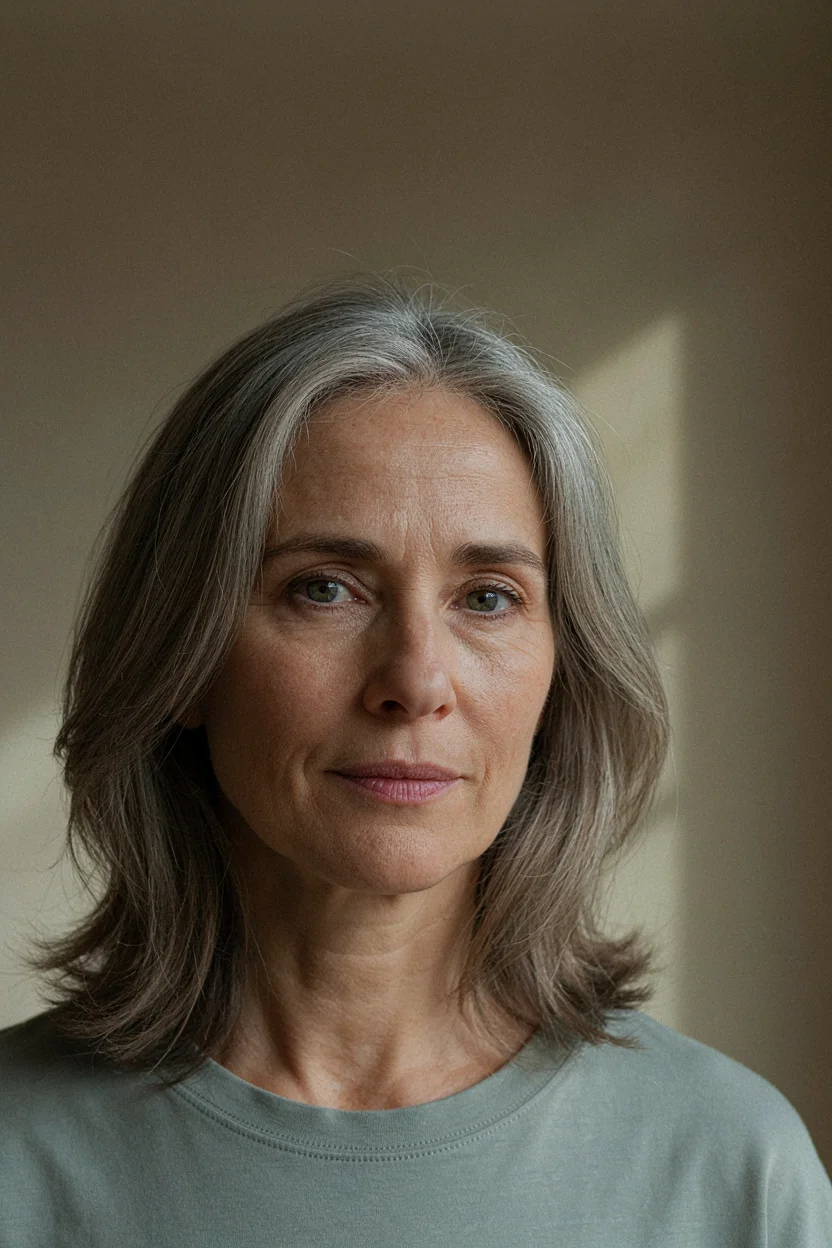
After the assessment, the conversation typically narrows to three options. Each one carries a different timeline, a different cost structure, and a different visual result during the transition.
| Option | Timeline | Visits required | Cost range | What you see during transition |
|---|---|---|---|---|
| Continue full coverage | Ongoing, every 3 to 5 weeks | 10 to 14 per year | $90 to $180 per visit | Solid color, sharp regrowth line at week 3 or 4 |
| Begin blending | 4 to 6 months to establish, then every 8 to 12 weeks | 2 to 3 initial sessions, then 4 to 6 per year | $150 to $300 per visit | Dimensional color with soft regrowth, three-zone phase mid-transition |
| Grow out to silver | 12 to 18 months depending on hair length | 1 to 2 corrective sessions, then routine trims | $200 to $500 for corrective work, then $0 for color | Visible demarcation line for 6 to 12 months, then natural silver |
None of these options is wrong. The colorist should present all three without steering you toward one based on their preference. The decision belongs to you, and the arithmetic around visit frequency and cost is the most reliable guide.
What to Ask Before You Agree to Anything

The first appointment is where the plan is set, and asking the right questions before any product is applied prevents misunderstandings that are expensive to correct later.
Ask how many sessions the colorist estimates for the plan they are recommending. A single-session promise on hair that has been dark-dyed for years is a warning sign, because color correction on layered artificial pigment typically requires two or three visits to complete safely. Ask what the hair will look like between sessions, because the transition phase has a visual reality that matters if you work in a setting where appearance is part of your professional presentation.
Ask about the integrity cost. Every chemical service affects the hair shaft, and a responsible colorist will name that cost directly. If the plan involves lightener, ask what the colorist will do to protect the hair during and after the service. If the plan involves continued permanent color, ask whether the formula will change as more gray grows in, because gray hair absorbs color differently and may require adjustments over time.
A good colorist tells you what your hair can survive. A great one tells you what it will look like three months from now if you follow the plan.
Ask about patch testing. Any new product, particularly toners and glosses used in blending, should be patch-tested on a small section of skin 48 hours before the full application. This is standard practice and should not require prompting, but if the colorist does not mention it, you should.
Managing the Grow-Out Phase on Dark-Dyed Hair
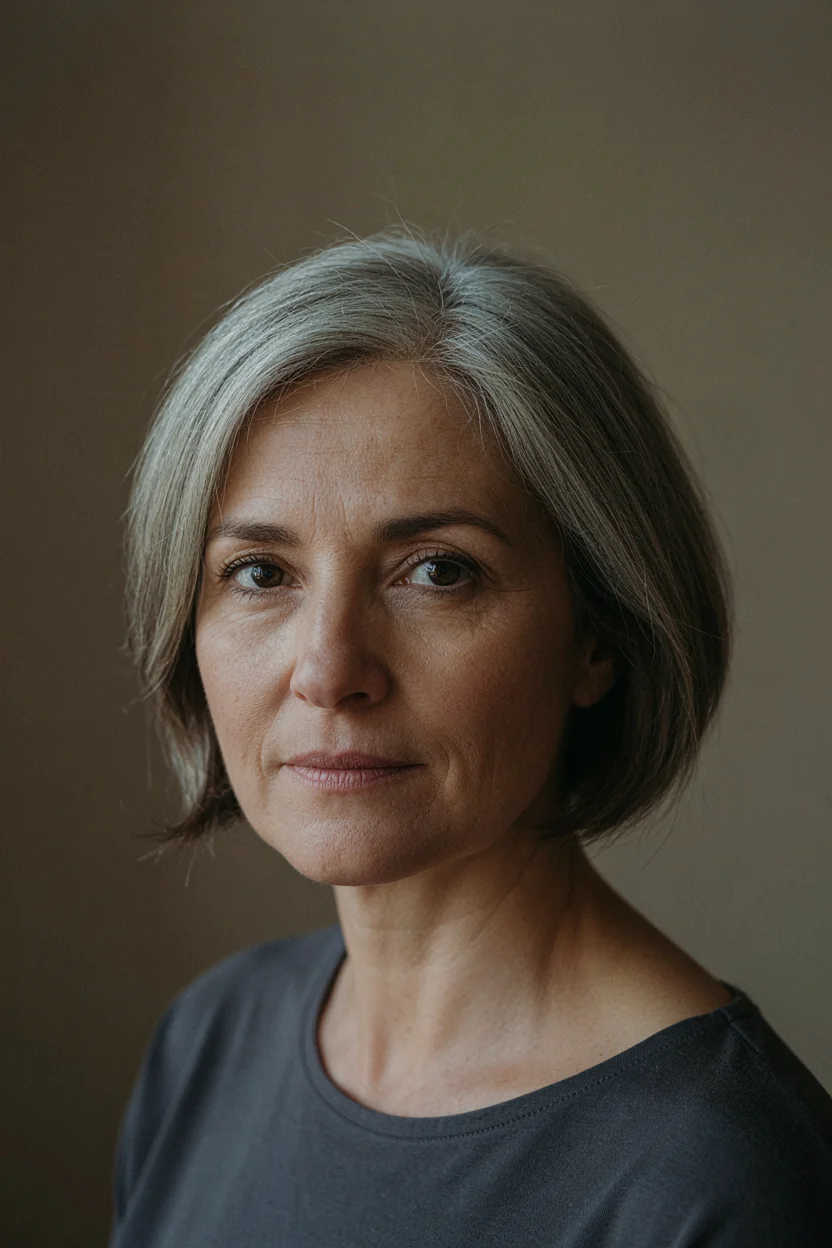
If you decide to stop covering and grow out your natural gray, the transition on dark-dyed hair is longer and more visually demanding than on hair that was colored a lighter shade. The dark artificial pigment at the mid-length and ends will remain visible for the entire grow-out period, and the contrast with the incoming silver at the root will be pronounced.
At half an inch of growth per month, a woman with hair at her shoulders needs roughly 14 to 18 months for the dark dye to grow out completely. Most women do not wait that long. The typical approach is to have the colorist remove some of the dark pigment during one or two corrective sessions, which lightens the ends and reduces the contrast with the growing root. This service is sometimes called a color correction or a color removal, and it typically costs $200 to $500 depending on the amount of artificial pigment present.
I cut my hair short twice during my grow-out. Once because the shorter length removed the most heavily dyed ends and made the transition less obvious. Once because I panicked at month six, when the demarcation line was wide enough to see but not long enough to look intentional. The second cut was not a good decision, but it was a human one, and the hair grew back.
What the First Visit Actually Costs

The first colorist conversation about gray roots and dark dye is sometimes a consultation-only appointment with no color applied. Some salons charge $50 to $75 for this consultation, which is applied toward the first color service if you book. Other salons include the consultation at the beginning of the first appointment at no additional charge. Ask when you schedule whether the first visit is consultation-only or includes a service.
If the first visit does include a service, expect it to be the most expensive appointment in the plan. Color correction, assessment, and the first round of blending or coverage adjustment can take two to three hours. The cost for that first visit typically ranges from $175 to $350, depending on the salon and the complexity of the correction. Subsequent visits in the plan are shorter and less expensive.
Frequently Asked Questions
Should I stop coloring my hair cold turkey or transition gradually?
The answer depends on your tolerance for a visible grow-out line and your willingness to invest in corrective sessions. A gradual transition through blending softens the grow-out over four to six months and avoids a dramatic demarcation phase. Stopping cold turkey is less expensive but requires twelve to eighteen months of visible regrowth before the result looks intentional. Most women find the gradual path more comfortable, particularly if they work in environments where a sharp grow-out line draws comment.
Can my colorist remove dark box dye in one session?
Dark box dye that has been applied repeatedly over several years typically requires two or three sessions to remove safely. Each session lifts some of the artificial pigment without compromising the hair shaft. A colorist who promises complete removal in one session on heavily box-dyed hair is taking a risk with your hair’s integrity that may result in breakage.
Will my natural gray match what I expected?
Natural gray varies across the head. The hair at the temples may be white while the hair at the crown is steel gray or silver. The colorist can help blend these variations during the transition, but the final result depends on the gray pattern you were born with. Most women find that the variation in their natural gray creates a more interesting result than the single color they were applying.
How do I find a colorist who specializes in gray transitions?
Search for colorists who show before-and-after photographs of gray transitions in their portfolio. A colorist who specializes in this work will have multiple examples showing the grow-out phases, not just the final result. Ask during the consultation how many gray transitions they have performed and what their typical plan looks like for hair with your history.
Is it possible to keep some dark color while letting the gray grow?
Yes. This is essentially what gray blending accomplishes. The colorist maintains some of the darker tones as lowlights while allowing the natural gray to grow and integrating it with highlights. The result is a dimensional color that includes both the gray and some of the previous depth, without the sharp regrowth line that full coverage produces.
The Conversation Before the Color
The first colorist conversation about gray roots and dark dye is not about what shade to apply next. It is about what you want the next twelve months to look like. Bring your hair history, bring your budget, and bring the patience to hear a plan that takes more than one visit to reach its result. The color is the easy part. The decision is the part that matters.
— Nora