Does Gray Hair Age You? Five of Us Sat Down to Disagree

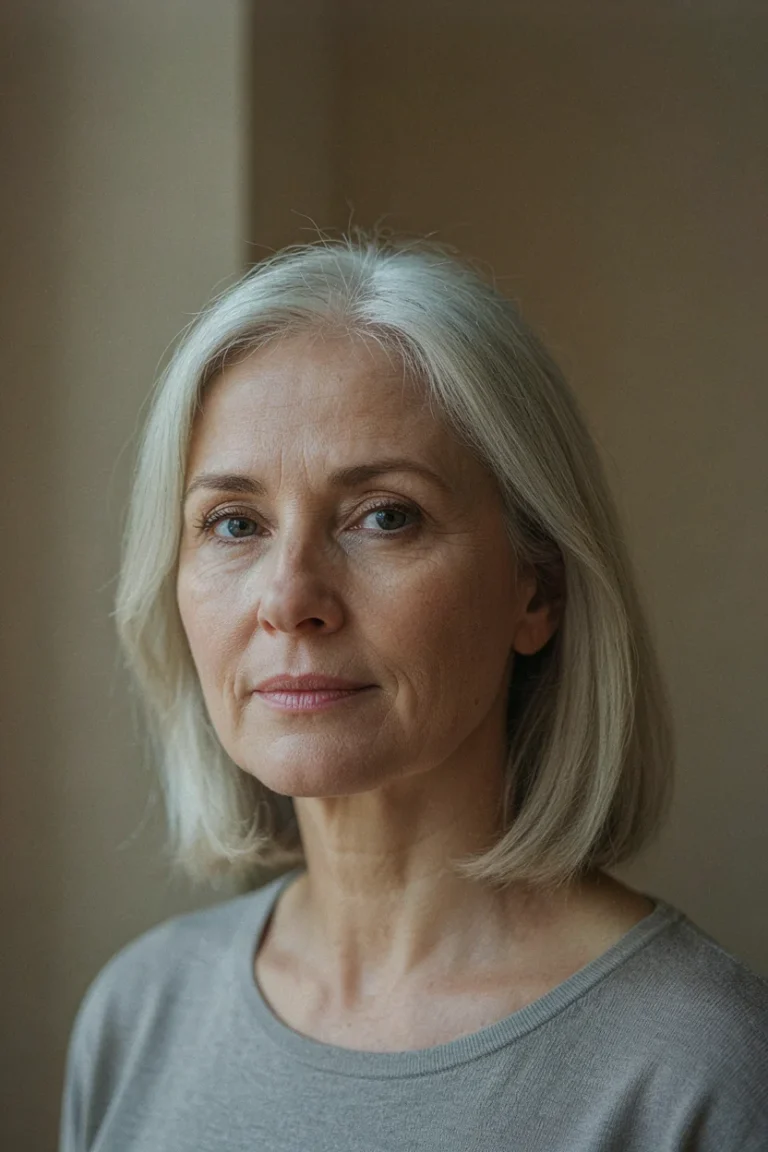
Does gray hair age you is the question I get asked more than any other, and it is the one I am least willing to answer on my own. The short version the five of us converged on is this: gray hair by itself does not age a face, but three things that usually arrive alongside it do, and every one of them is fixable without touching the color. Those three are a shape that has not changed in a decade, flat uniform dye that stops half an inch from the scalp, and dry, dull texture. We disagreed about which of the three matters most, and we disagreed fairly sharply about whether the question deserves an answer at all. I have left the disagreements in.
In the room: Viv, who cuts. Margot, who colors. Tess, who teaches styling. Iris, who translates the science. And me.
Does Gray Hair Age You? The Short Version
Viv: No. Your cut does. I have watched this happen from behind the chair for 14 years and it is not close.
Margot: Also no, and I will go further than Viv. The coverage is doing more damage to how you read than the gray ever would.
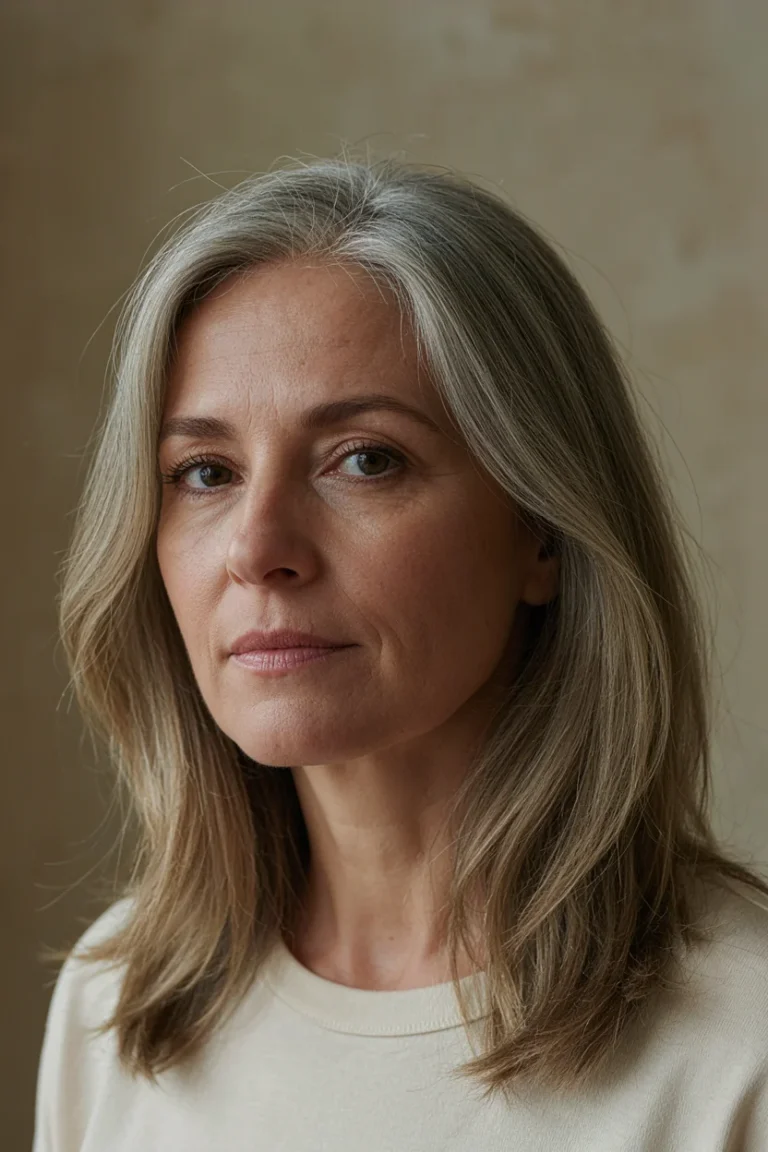
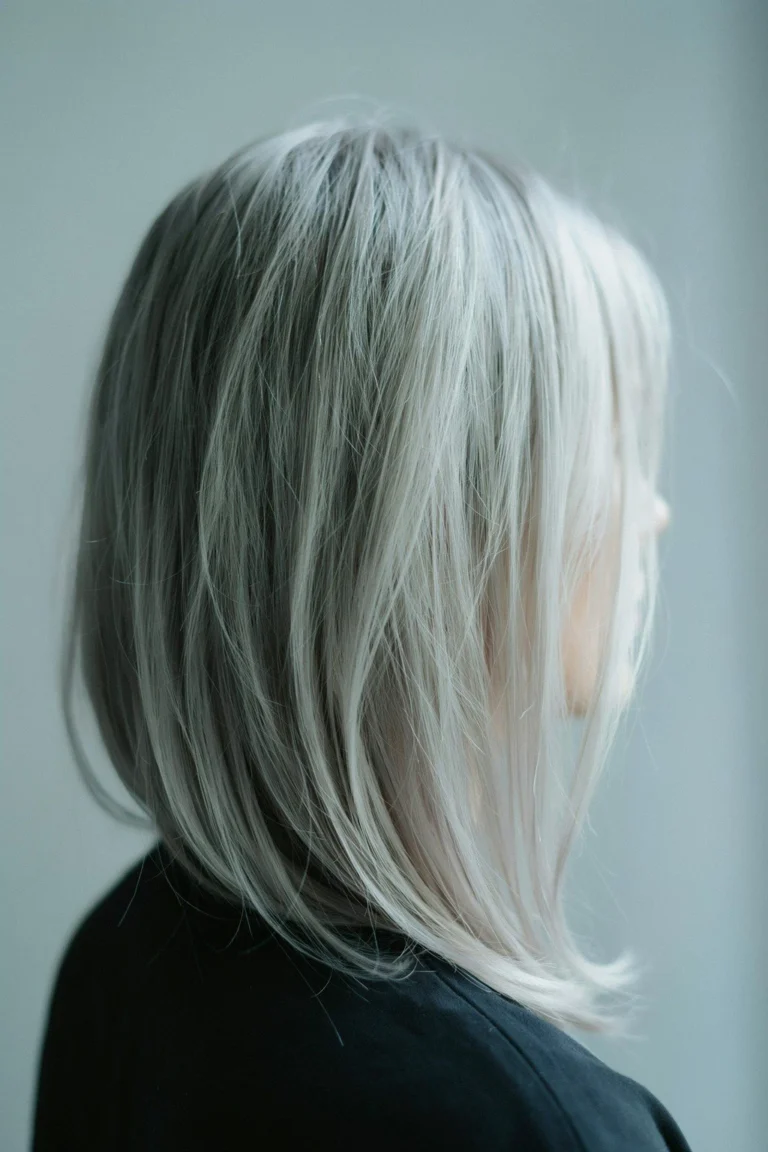
Tess: Mine is a texture answer. Silver that is dry and frizzy reads tired. Silver that has moisture and some shine does not. Same color, completely different impression, and the difference is about 10 minutes of routine.
Iris: I want to complicate it slightly. In a meaningful number of cases the thing a woman has noticed is not the pigment at all. Hair diameter and density both change over the same decades that pigment does, and density is what actually alters how a head of hair sits and catches light. People attribute to color a change that belongs to structure.
Nora: I think the question itself is built wrong. It asks what your hair subtracts from you. I have not found a version of that question worth answering honestly, and I will come back to why.
The Shape Argument
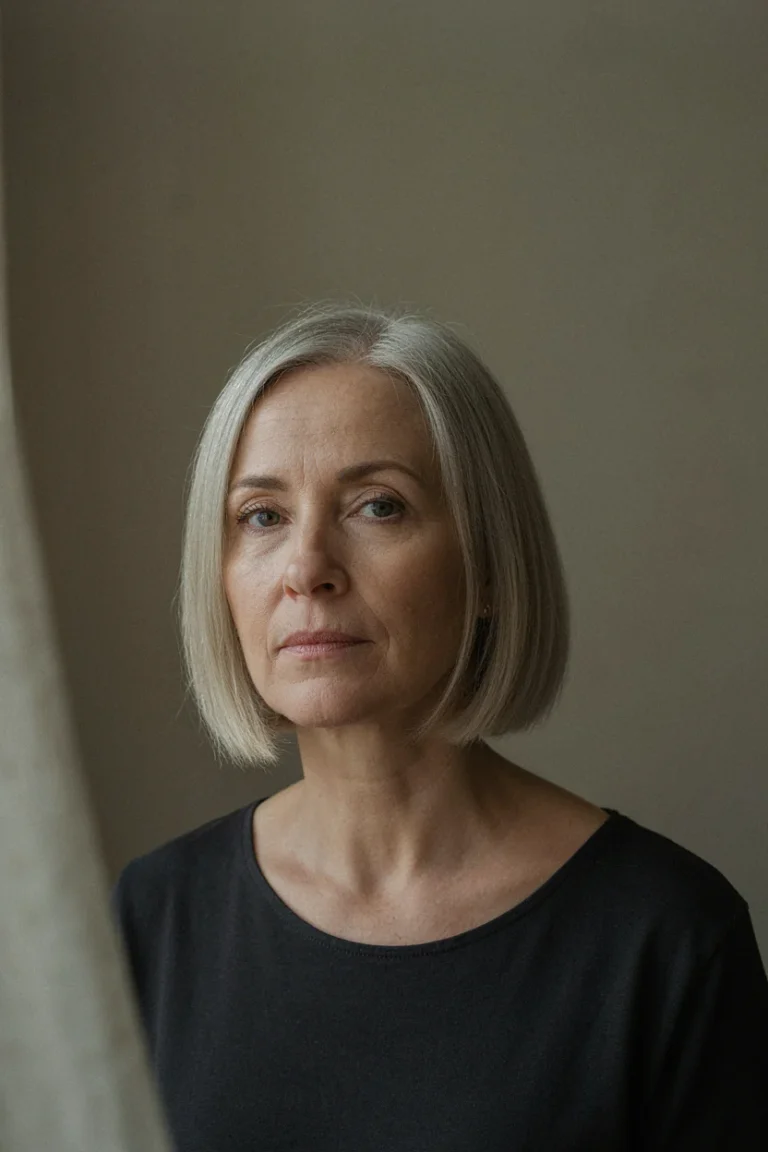
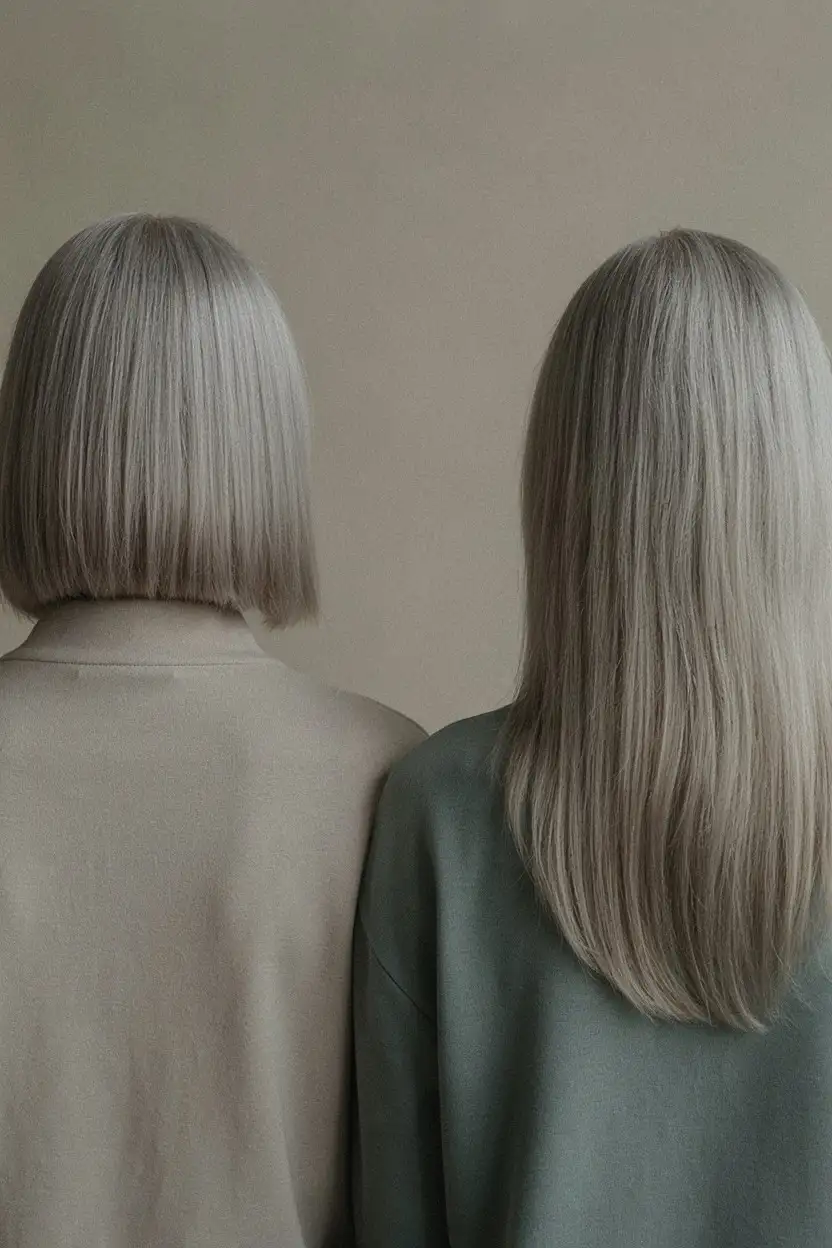
Viv: Here is what I mean. Two women, same age, same face. One has a long layered cut she has had since roughly 2014, parted in the middle, blow-dried smooth. The other has a jaw-length bob with a strong perimeter. Put gray hair on both. The bob does not read as older. The 2014 cut does, and it would read as older in brown too.
Margot: Say the actual mechanism.
Viv: Weight and where it sits. A cut that carries all its weight at the bottom pulls the whole silhouette down. Length past the collarbone with no internal shape does that, and it does it more on silver because silver is usually coarser and holds a heavier line. Move the weight up — a bob at the jaw, or long layers that actually start at the cheekbone — and the silhouette lifts. That is the entire trick and it costs $70 to $130 depending on where you live.
Tess: Can I add the cheap version. Even without a cut, changing where you part it does some of this. Deep side part, roots lift, done.
Viv: It does about a fifth of it. Take the cut.
Iris: There is a structural reason Viv’s point holds particularly well on gray hair. Unpigmented hair frequently grows with a larger diameter and a rougher cuticle, which means it resists falling into a soft shape and holds whatever line it is cut into more stubbornly. A cut that was forgiving on fine pigmented hair can become unforgiving on the same head 10 years later, and the woman experiences that as her hair having gone wrong rather than as a cut that no longer suits the material.
What Ten Years of Coverage Actually Costs
Margot: This is the part I get in trouble for. I sell this service. I am telling you it is often the thing making you look older.
Nora: Say why.
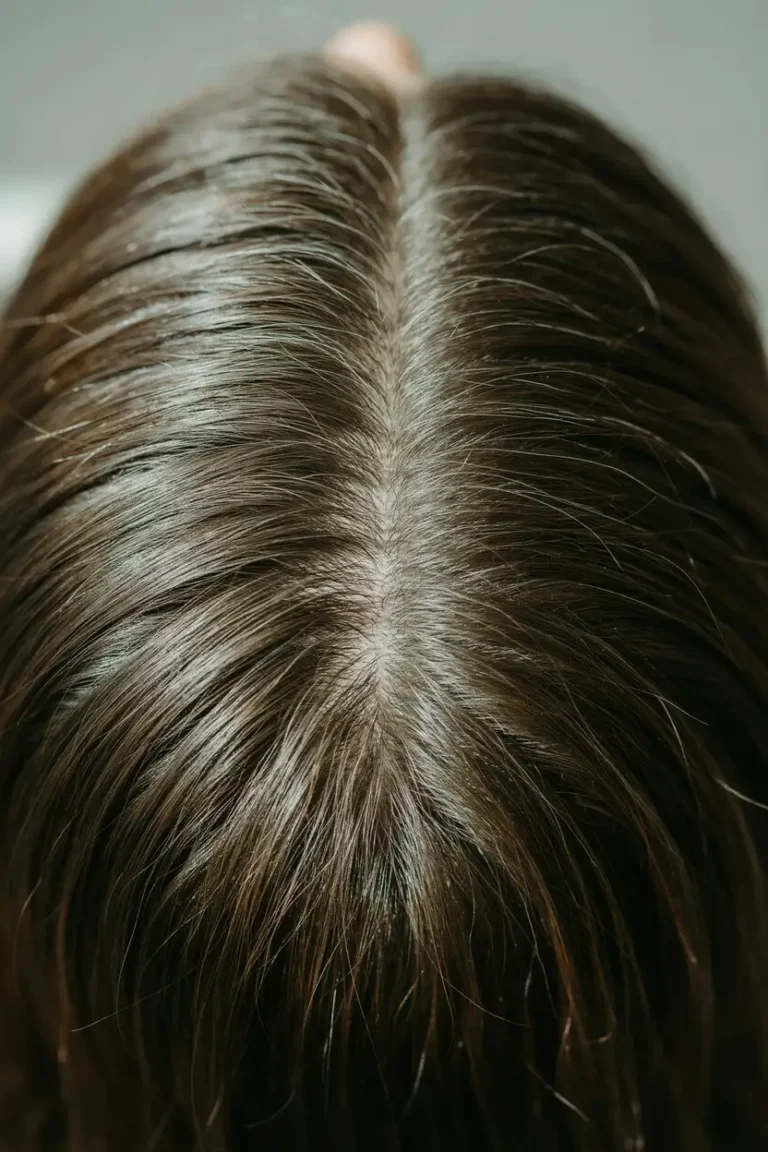
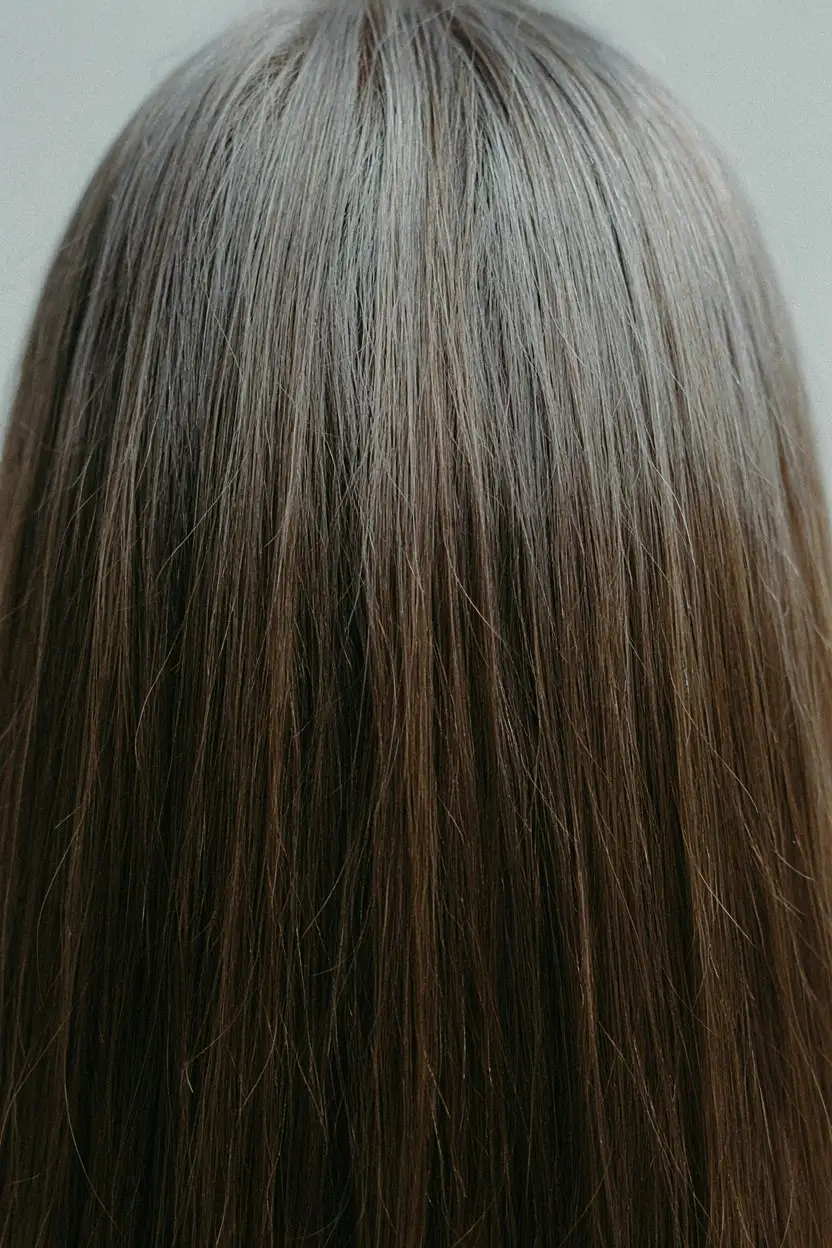
Margot: Because permanent single-process color is flat. It has to be. It deposits one tone edge to edge, and real hair has never been one tone in the history of hair. Nobody has uniform color. You have variation at the temples, variation where the sun hits, variation from the ends being older than the roots. Single-process erases all of it. Then it grows out, and now you have a hard line half an inch from your scalp, and you are living with that line for 4 to 6 weeks out of every 6.
Tess: The line is the bit nobody prepares you for.
Margot: And it gets worse over years, not better, because you keep going darker to keep up with what is coming in. I have watched women arrive at a level 3 who started at a natural level 6. Nobody decided that. It happened 2 shades at a time.
Nothing ages a head of hair like a flat, uniform brown that stops half an inch from the scalp.
Iris: There is an evidence point worth adding, carefully. Repeated permanent coloring does measurably affect the cuticle over time, and a compromised cuticle scatters light rather than reflecting it, which is perceived as dullness. That is a real mechanism rather than a marketing claim. What I would not say is that any of this is dangerous, because that is where this conversation usually goes wrong.
Margot: If you want to keep covering, keep covering. Do it in a way that leaves variation. Gloss and lowlights instead of one flat tone, at $50 to $90 every 6 to 8 weeks, and the line never gets hard because there is nothing solid for it to be a line against.
Why Gray Hair Reads Dull, and What Fixes It
Tess: Right, my turn. Nearly every photo of gray hair that looks tired is a moisture problem wearing a color costume.
Nora: Explain the mechanism rather than the impression.
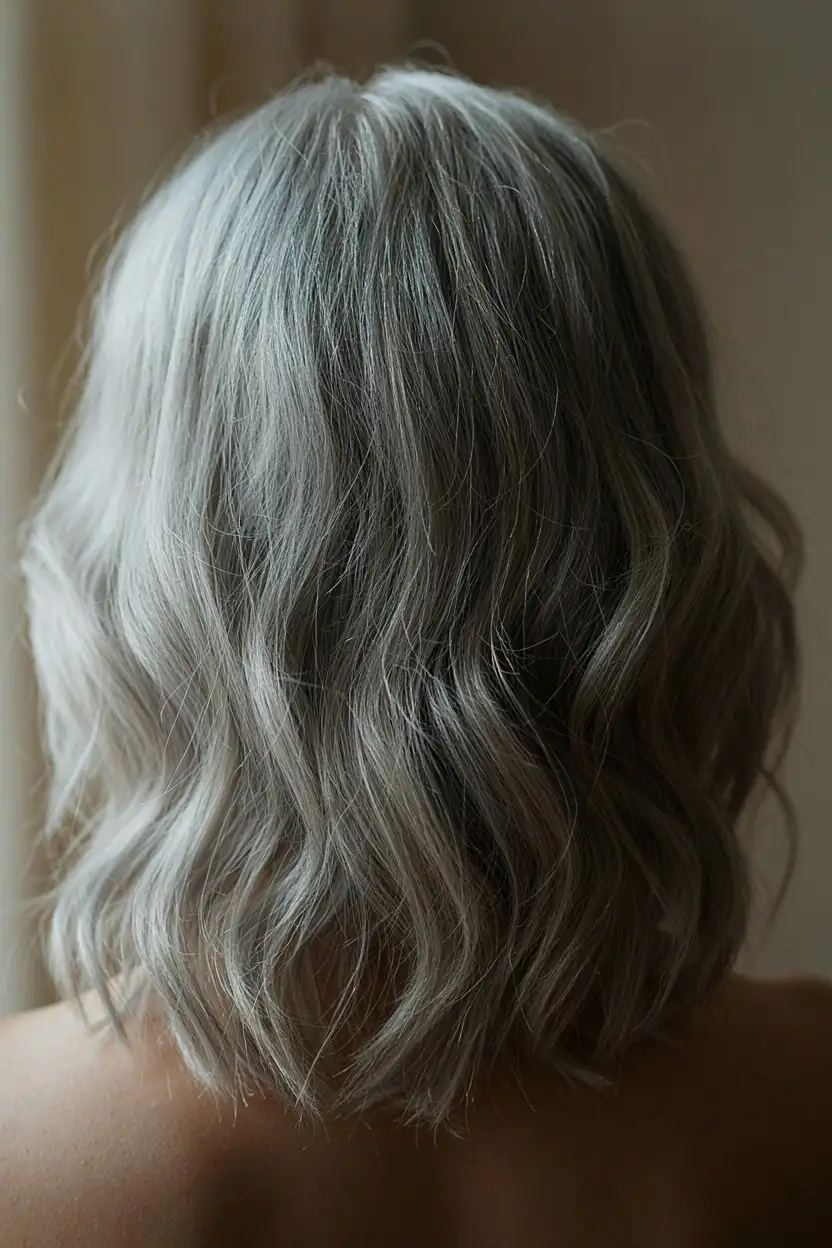
Tess: Silver is more porous. Water goes in fast and leaves fast. So it dries out between washes in a way it never used to, and dry hair scatters light instead of bouncing it back. That is what people are actually seeing when they say silver looks dead. Not the color. The surface.
Tess: The fix is boring and it works. Conditioner through the mid-lengths every wash, a deeper treatment once a week for 15 minutes, and stop blow-drying it smooth. Coarse silver blown flat looks like a wig. Air-dried with some texture left in, it looks like hair.
Iris: I would add one correction to how this usually gets discussed. Purple and silver toning shampoos are frequently offered as the answer to dullness, and they are not. They address unwanted warmth, which is a different problem. Used against dullness they build up, and the accumulated pigment reads as a flat violet cast that people then mistake for damage. Two or three washes a week is a ceiling, not a target.
Tess: Guilty. I over-toned for about six months once and could not work out why it kept looking worse.
When Gray Hair Isn’t the Thing That Changed
Iris: This is the point I most want a reader to take away. Pigment loss and density loss happen over overlapping decades, and only one of them is cosmetic. A woman notices that her hair looks different, sees gray in the mirror, and concludes the gray is the change. Frequently the change is that her part has widened, or that her ponytail has less circumference than it had, and the color is simply the most visible thing in the frame.
Viv: I see this from the other side. Someone books a cut to fix something a cut cannot fix.
Iris: Which is why the distinction is practical rather than academic. If your part has visibly widened over about 6 months, or you are consistently losing more than roughly 100 hairs a day for more than 8 weeks, that belongs with a dermatologist and not with a colorist or a stylist. I am a translator of the literature and not a clinician, and the honest version of my job is knowing exactly where it stops.
Margot: And nothing on my menu fixes density. I can make hair look thicker at the ends. That is a shape trick and it is Viv’s, not mine.
The Part of the Question Nobody Wants to Answer
Nora: So here is my objection, and it is not a soft one. Every version of this question asks what your hair takes away from you. It assumes there is a number you are supposed to look, and that your hair’s job is to keep you under it.
Margot: Readers still ask it.
Nora: They do, and I do not think answering it as asked serves them. I spent 11 years covering mine and 14 months growing it out, and in month seven I was not asking whether I looked older. I was asking whether the line across my head was going to be there forever. That is a real question with a real answer, and it is 7 months of cutting or 14 of growing.
Tess: That is a much better question.
Nora: It is the same woman asking. She has just been handed the wrong words for it. Gray is a color with technical requirements, in the way that copper is a color with technical requirements. Copper fades and needs a gloss every 6 weeks. Silver is porous and needs moisture and restraint with toner. Neither of those facts is about anyone’s age.
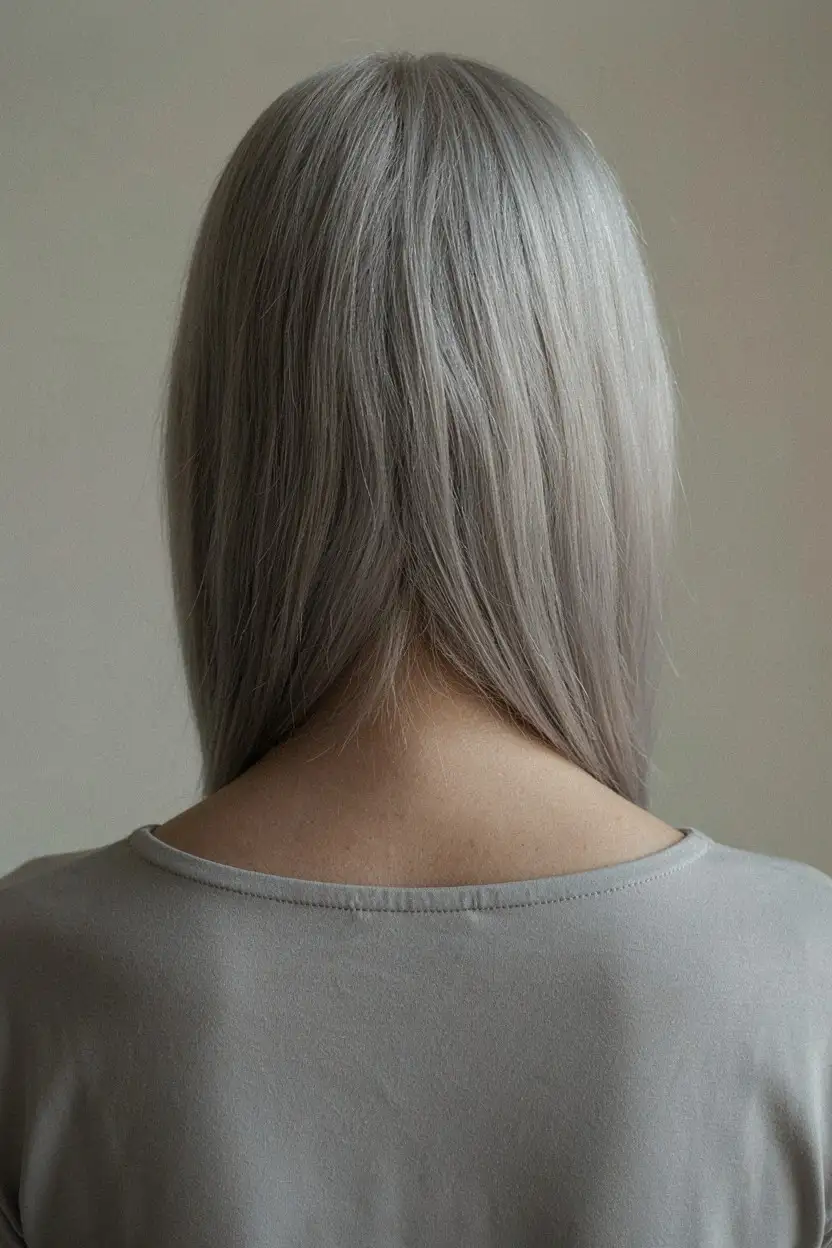
Viv: I half agree. I think the question is fine and the answer is just boring. It is the cut.
Nora: Then we have found the disagreement.
Where They Disagree
Set side by side, the five positions do not reconcile, and it is worth seeing which one you actually believe before booking anything.
| Voice | What she says reads as older | What she would do first | Cost |
|---|---|---|---|
| Viv | A shape that has not changed in a decade | Move the weight up — bob at the jaw, or layers from the cheekbone | $70 to $130 |
| Margot | Flat single-process dye and its regrowth line | Swap coverage for gloss and lowlights that leave variation | $50 to $90 every 6 to 8 weeks |
| Tess | Dryness and lack of shine, not color | Weekly deep conditioning, stop blow-drying it smooth | $0 to $25 |
| Iris | Often density, misattributed to pigment | Establish whether the change is structural before treating it cosmetically | A dermatology visit if thresholds are met |
| Nora | The framing of the question | Replace it with what the transition costs in months and money | Nothing |
Costs vary with region, salon tier, and length. Four things they did all agree on, without much discussion:
- Gray hair is structurally different — coarser, more porous, and it needs different handling rather than better discipline
- Nothing worth doing here starts with a color decision
- Toning products are for warmth, never for dullness, and they accumulate
- A change in density is a medical question, not a styling one
Frequently Asked Questions
Does gray hair age you more than dyed hair does?
Four of the five of us think the opposite is closer to true, and the colorist among us was the most emphatic about it. Permanent single-process color deposits one flat tone across hair that has never naturally been one tone, then leaves a hard regrowth line for 4 to 6 weeks out of every 6. Well-kept silver has natural variation through it that no single-process formula reproduces. The exception is dye applied with variation left in, such as gloss and lowlights, which does not have the flatness problem in the first place.
What is the fastest way to look less tired with gray hair?
Address moisture before anything else, because it costs nothing and shows within a week. Silver is more porous than the hair it replaced, so it loses water faster between washes, and dry hair scatters light rather than reflecting it, which is what reads as dull. Conditioner through the mid-lengths at every wash and one deeper treatment of about 15 minutes weekly is the whole intervention. Stopping the habit of blow-drying coarse silver perfectly smooth does most of the rest.
Should I cut it shorter when I stop coloring?
Shorter is faster rather than better. Hair grows roughly half an inch a month, so shoulder-length hair carrying 7 inches of dyed length clears in about 14 months on growth alone, while taking 2 to 3 inches at each of three trims brings that closer to 7 months. Long silver holds up perfectly well if the perimeter is kept blunt and trimmed every 10 to 12 weeks. The decision is about how long you want to live with a demarcation line, not about what length is permitted to you.
Is purple shampoo the fix for dullness?
No, and this is the most common mix-up in the category. Toning products correct unwanted warmth, which is a yellow or brassy cast, and that is a different problem from a surface that is not reflecting light. Used against dullness they deposit pigment that accumulates across washes and eventually reads as a flat violet tone people mistake for damage. Two or three washes a week is a ceiling; a clear gloss every 6 to 8 weeks does the shine job instead.
How do I tell whether it is the color or the density that changed?
Compare the width of your part and the circumference of your ponytail against a photograph from a few years ago, because both are measurable and memory is not. If the part has visibly widened over about 6 months, or shedding has been consistently above roughly 100 hairs a day for more than 8 weeks, that is a question for a dermatologist rather than a salon. Cosmetic work will not change the answer and may delay getting one. If neither is true, what changed is almost certainly color, texture, or the cut.
Take the Argument With You
Five people who work on hair for a living could not agree on this, which should tell you something about how confidently it usually gets answered elsewhere. Pick whichever of the five positions describes what you actually see in the mirror, and start there rather than with the color.
If you want to tell me which of them you think is right, or that all five of us are wrong, the comments are open.
— Nora