Gray Blending vs. Full Coverage: Which Extends Salon Visits?
Gray blending and full coverage produce different results on different schedules, and the choice between them is mostly a question of how often you want to sit in a salon chair. I spent eleven years on a four-week full-coverage cycle before I started blending, and the arithmetic was what finally shifted me: twelve visits a year versus five or six, each one lasting two hours instead of three.
Gray blending extends the interval between salon visits to 8 to 12 weeks, compared to 3 to 5 weeks with full coverage, because blending works with the incoming gray rather than hiding it. The regrowth line is softer, the transition is gradual, and the grow-out period is part of the design rather than a problem to correct.
What Full Coverage Actually Involves
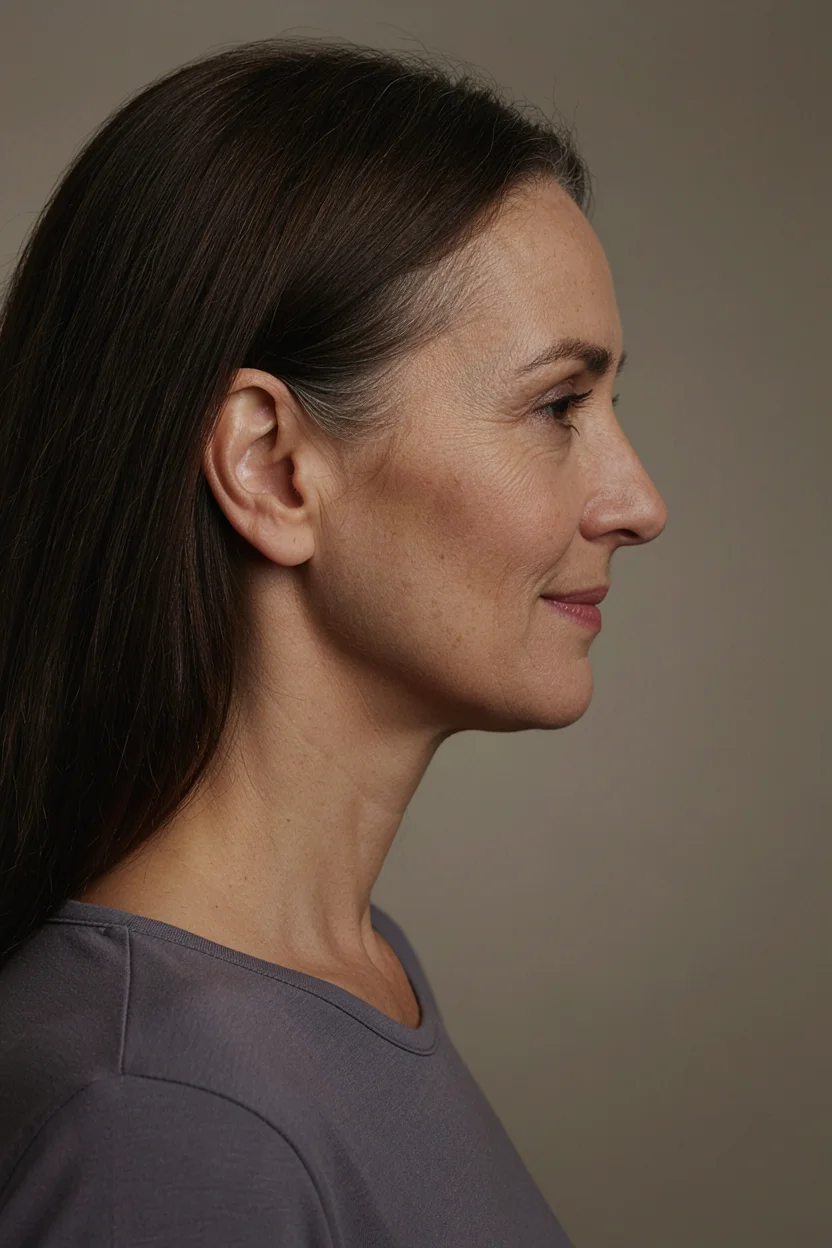
Full coverage means applying permanent color to the entire head, from root to end, with the goal of eliminating every visible gray strand. The color penetrates the cuticle and deposits pigment throughout the cortex. The result is uniform: one color, no variation, no gray showing through. It is effective at what it does, and for many years I considered it the only option.
The problem is the regrowth timeline. Hair grows approximately half an inch per month. Within three to four weeks, a visible band of gray or white appears at the root. On darker target colors, that band reads as a sharp line of demarcation. The contrast between the dyed length and the natural root is what drives the four-week appointment cycle, and it is the reason full coverage demands the most maintenance of any gray-management approach.
A full-coverage appointment typically takes 90 minutes to two hours, depending on hair length and the amount of gray being covered. The color processes for 30 to 45 minutes, and then the stylist rinses, tones if necessary, and styles. The cost ranges from roughly $90 to $180 per visit, depending on the salon and the length of the hair. Over twelve visits a year, that adds to between $1,080 and $2,160.
What Gray Blending Actually Involves
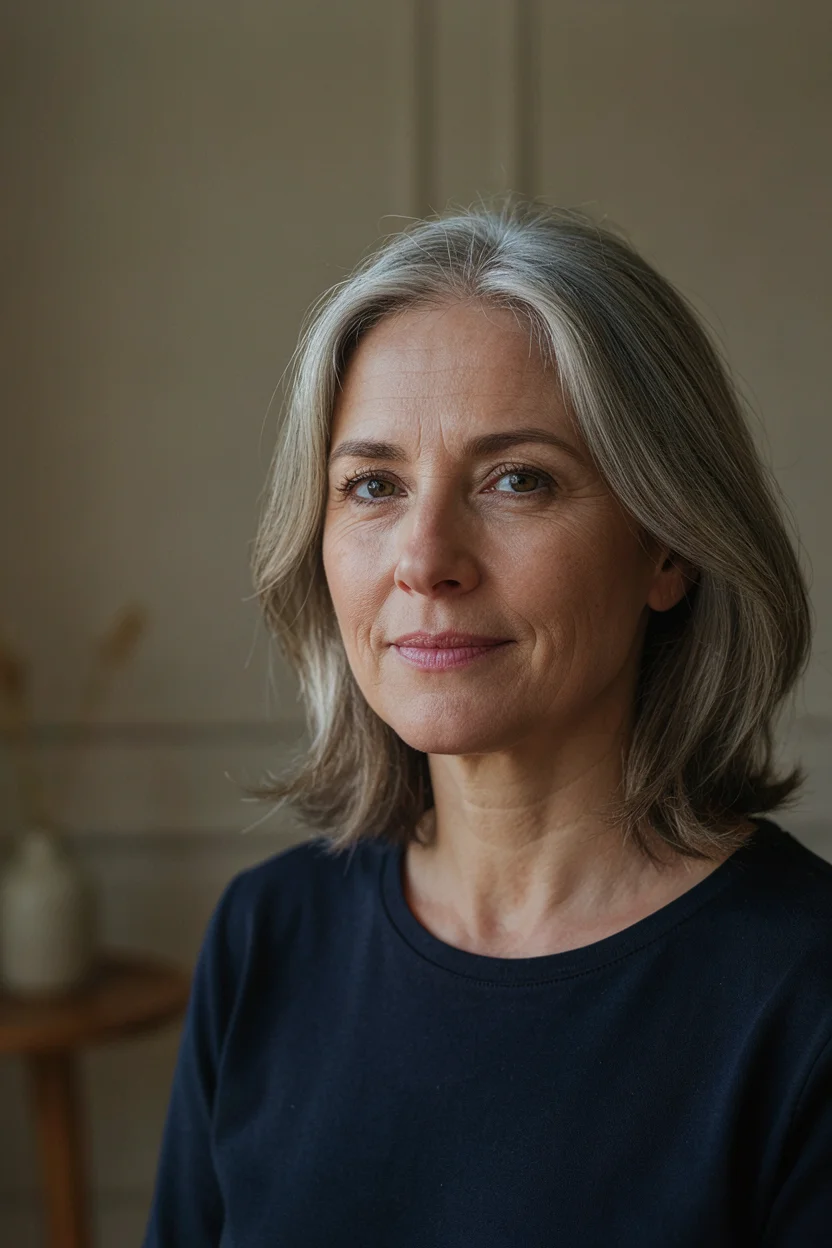
Gray blending is a collection of techniques that soften the line between natural gray and colored hair rather than erasing it entirely. The most common approaches are highlights, lowlights, or a combination of both, placed strategically around the face and part line where regrowth is most visible. The goal is to create a multi-tonal effect where the incoming gray reads as one of several colors rather than as a regrowth problem.
Blending does not eliminate gray. It integrates it. A well-blended head of hair might be forty percent gray, with the remaining sixty percent in tones that complement the silver rather than fight it. The result is a dimensional, natural-looking color that does not produce a sharp regrowth line.
A blending appointment takes longer than a single-process full coverage, typically two to three hours, because the stylist is placing foils or using a balayage technique to create the multi-tonal effect. The cost per visit is higher, often $150 to $300 depending on the complexity. However, the interval between visits stretches to 8 to 12 weeks, which means four to six appointments per year instead of twelve. The annual cost for blending, at $200 per visit and five visits a year, lands around $1,000. Full coverage at $140 per visit and twelve visits a year lands at $1,680. The blending path is less expensive annually despite the higher per-visit price.
The Trade-Off Table
| Factor | Full coverage | Gray blending | Full grow-out to silver |
|---|---|---|---|
| Salon interval | 3 to 5 weeks | 8 to 12 weeks | One cut at end, then routine trims |
| Visits per year | 10 to 14 | 4 to 6 | 0 to 2 for color, plus trims |
| Cost per visit | $90 to $180 | $150 to $300 | $0 for color |
| Annual cost estimate | $1,080 to $2,160 | $750 to $1,500 | $0 to $200 for corrective work |
| Regrowth visibility | Sharp line at 3 to 4 weeks | Soft transition, no harsh line | None once fully silver |
| Color uniformity | Single solid tone | Multi-tonal, dimensional | Natural silver, may vary |
| Hair integrity cost | Moderate, repeated root chemical exposure | Moderate to high, depending on lightener use | Low once chemical services stop |
| Transition difficulty if you change your mind | Color must grow out or be corrected | Easier to shift toward full silver over time | Not applicable |
The table tells the story. Full coverage wins on uniformity and simplicity. Blending wins on visit frequency and annual cost. Full grow-out wins on maintenance freedom but requires a transition period that neither of the other two options demands.
Blending on Previously Box-Dyed Hair
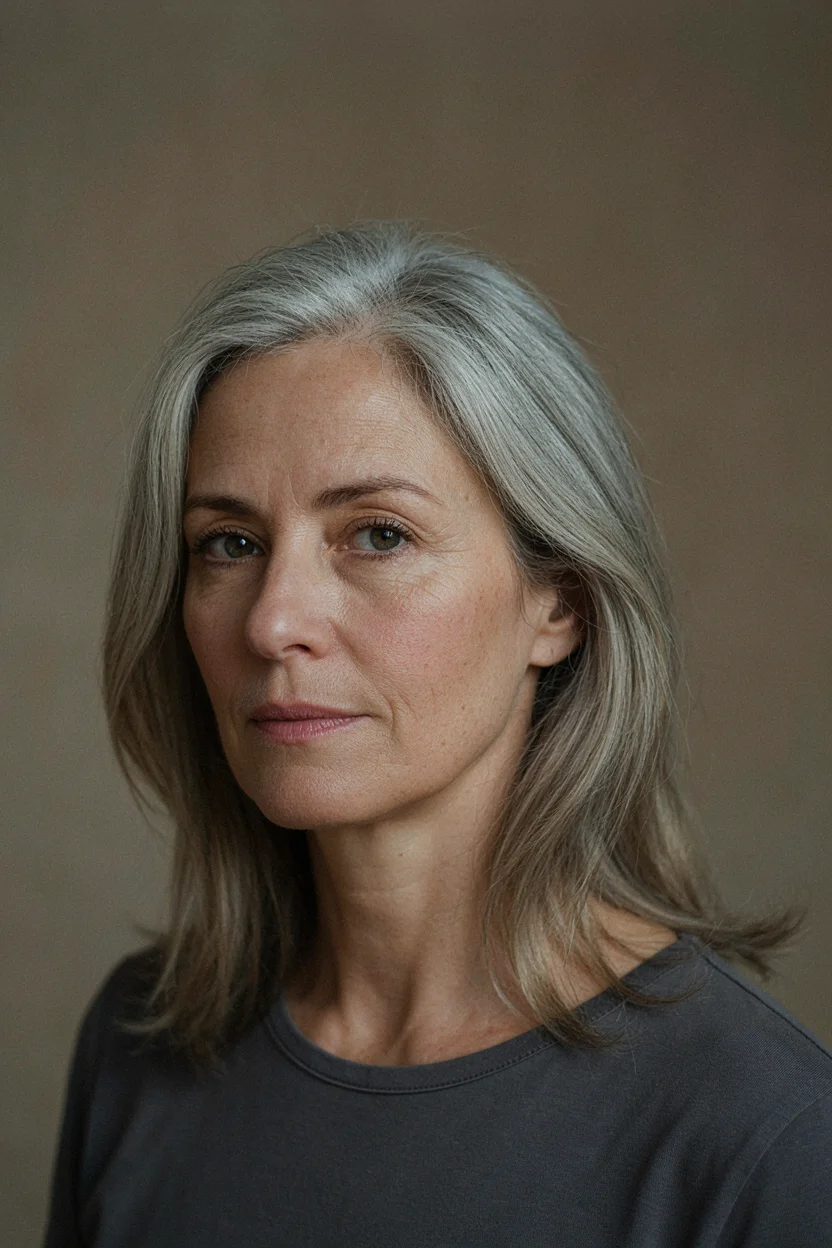
Blending works differently on hair that has been colored with box dye for years. Box dye deposits pigment in a way that is difficult to lift evenly, and the transition from box-dyed length to newly blended highlights can produce a band of warmth that the stylist must correct. I had roughly eight years of box dye in my hair before switching to salon color, and the first blending appointment required a color-removal step that added about an hour and $40 to the visit.
If your hair is currently box-dyed, tell the colorist before the appointment begins. They will need to assess how much artificial pigment is present and whether the first blending session should include a gentle color removal or whether they should blend around the existing color and address it across two or three visits. The latter approach is slower but preserves hair integrity, which matters more than speed when the hair is already carrying years of chemical history.
Blending is not a single appointment. It is a plan that unfolds over two or three visits, and the first visit is almost always an assessment as much as a color service.
For women with salon-applied permanent color rather than box dye, the transition to blending is generally faster. The stylist can place highlights and lowlights directly into the existing color, and the artificial pigment lifts more predictably than box dye does.
The First Blending Appointment
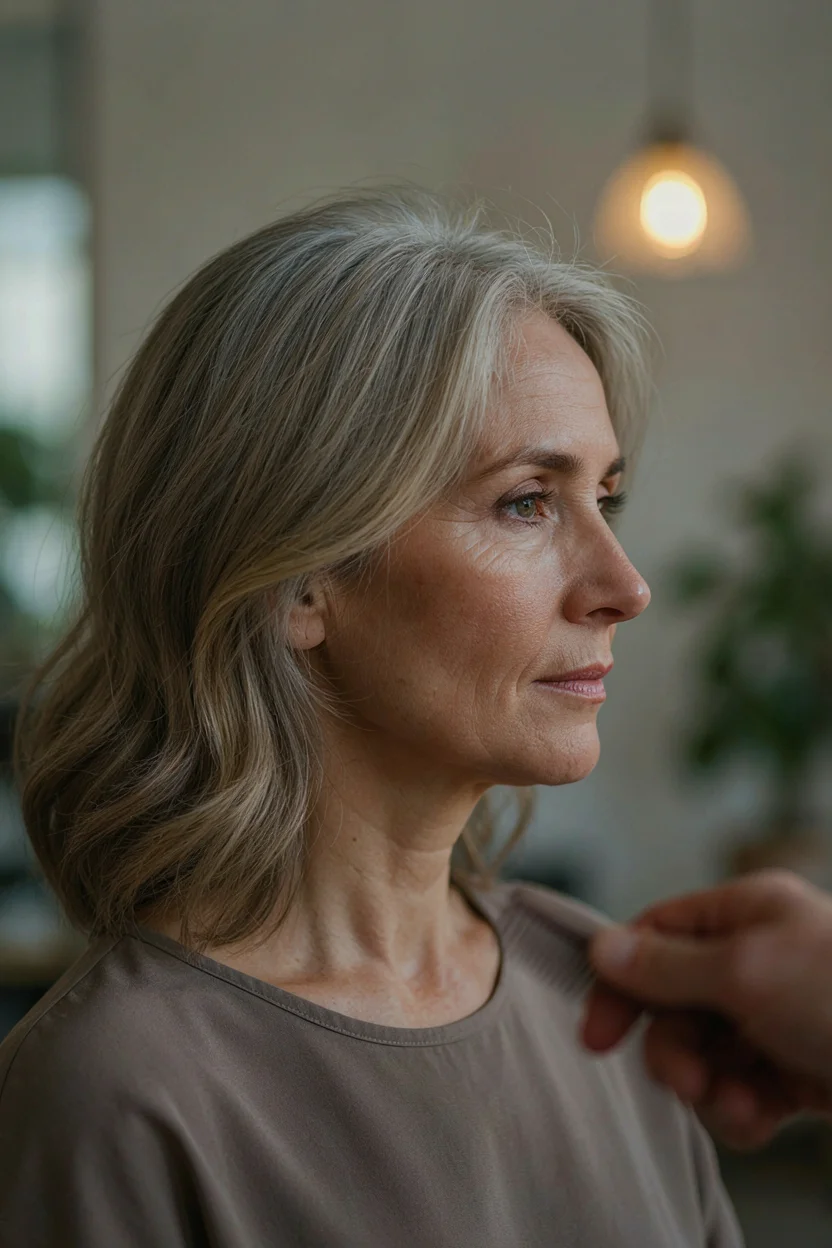
The first blending visit is where the colorist builds the foundation. Highlights are placed around the face, along the part, and at the crown to break up the solid base color and create space for the incoming gray to land without looking like regrowth. Lowlights may be added to keep the overall color from going too light or too ashy.
After the first appointment, the hair will look dimensional but may not yet read as intentionally gray. The full blending effect develops over two or three visits as more of the natural silver grows in and the stylist adjusts the highlight and lowlight placement to match. The second visit, typically 8 to 10 weeks after the first, is where the colorist sees how the gray has grown and adjusts the pattern accordingly.
I found that my second blending appointment was where the result started to look right. The first visit felt like something was happening to my hair. The second visit felt like the colorist was working with my hair rather than against it. By the third visit, roughly six months in, the blend had settled into something I stopped thinking about between appointments.
When Full Coverage Still Makes Sense
Blending is not the correct choice for everyone. There are situations where full coverage remains the better option, and recognizing those situations is as important as knowing when to blend.
- You want a single, uniform color with no variation. Blending produces a multi-tonal result by design, and if you prefer solid color, blending will frustrate you.
- Your gray is less than 20 percent and you are not interested in seeing any of it. Blending integrates gray rather than hiding it, and at low percentages the integrated look may not match your preference.
- You are preparing for a specific event and need a predictable result within one appointment. Blending takes two or three visits to settle into its final form.
- Your hair has significant damage from previous chemical services, and the stylist recommends avoiding further lightening until the hair recovers. Highlights and balayage involve lightener, which adds chemical stress.
- You have been coloring your hair dark for decades and the idea of seeing any gray, even integrated gray, does not feel right to you yet. That is a valid position, and full coverage serves it well.
The decision is not about which method is superior in the abstract. It is about which method matches what you want to see when you look in the mirror and how often you want to pay to maintain it.
Maintenance Between Appointments

Both approaches require some at-home care, though the nature of that care differs.
| Maintenance task | Full coverage | Gray blending |
|---|---|---|
| Root touch-up products | Often needed at week 3 to extend the interval | Rarely needed, the blend softens regrowth |
| Toning shampoo | Used to prevent brassiness in the colored length | Used once a week to keep silver highlights bright |
| Deep conditioning | Weekly, to offset repeated chemical processing at the root | Bi-weekly, focused on highlighted sections |
| Heat styling adjustment | Minimal change needed | Lower heat settings recommended to protect highlighted strands |
| Color-safe shampoo | Required to extend color longevity | Required, sulfate-free formulas preserve both natural and colored tones |
Between-appointment care for blending is generally lighter than for full coverage, because there is no regrowth line to manage. The toning shampoo does double duty, keeping the silver highlights from yellowing and maintaining the overall dimensional effect. A purple shampoo used once a week is typically sufficient. Daily use risks over-depositing pigment, which can give silver hair a purple cast that takes several washes to remove.
Moving From Full Coverage to Blending
The transition from full coverage to blending is not instantaneous. The solid color must grow out enough for the colorist to place highlights and lowlights into natural hair, which typically means waiting 6 to 8 weeks after your last full-coverage appointment. During that waiting period, the regrowth line will be visible.
Once the blending begins, expect two to three visits over four to six months before the result looks finished. The colorist is building the blend while the old color grows out, and there is a period of roughly eight weeks where the hair has three zones: the new gray root, the blended mid-length, and the old solid color at the ends. A good cut helps that phase look intentional.
The Visit Count, Reduced to Arithmetic
Gray blending extends salon visits from a 3-to-5-week cycle to an 8-to-12-week cycle. That difference translates to roughly seven fewer visits per year, which is seven fewer two-hour blocks of time and seven fewer payments. The per-visit cost of blending is higher, but the annual total is lower. For women whose primary goal is fewer appointments while keeping some color, blending offers the middle path between full coverage and full silver.
The arithmetic does not lie. Twelve visits a year at $140 each is $1,680 and roughly 24 hours in the chair. Five visits a year at $200 each is $1,000 and roughly 12 hours in the chair. The hours matter as much as the dollars, particularly if sitting in a salon has never been your favorite way to spend a morning.
Frequently Asked Questions
Can I blend gray hair at home?
Gray blending involves precise placement of highlights and lowlights that integrate with your natural gray pattern. This placement requires a colorist who can see how your gray grows and adjust accordingly. At-home blending with box highlight kits tends to produce unpredictable results, particularly on previously colored hair.
Will blending damage my hair more than full coverage?
Blending involves lightener for highlights, which affects hair integrity. However, the lightener is applied to selected sections rather than the entire head, and the intervals between visits are longer, giving the hair more recovery time. Full coverage applies color to the entire head every three to five weeks. Both methods carry integrity costs, but they distribute those costs differently.
How do I know if my colorist is experienced with gray blending?
Ask to see photographs of blending work they have done on clients with a similar starting point to yours. A colorist experienced in blending will discuss the plan across multiple visits, not just the first appointment. They will also ask about your hair history, including box dye and previous color services, and explain how that history affects the blending timeline.
Can I go from blending to fully silver later?
Yes. Blending is one of the most practical stepping stones toward full silver. As the gray grows in, the colorist gradually reduces the colored sections and adjusts the highlights to match the incoming silver. After four to six months of shifting the blend toward more gray and less color, many women find that the transition to fully silver has already happened without a single dramatic grow-out phase.
Does blending work on all hair colors?
Blending works on most hair colors, but the effect varies. On lighter base colors, such as blonde or light brown, the gray integrates more seamlessly because the contrast between natural and silver is smaller. On darker base colors, the blending requires more highlights to break up the contrast, and the result tends toward a salt-and-pepper effect rather than a soft silver. Both results can look well, but the darker the starting color, the more visits the blend typically requires.
The Schedule You Can Keep
The right method is the one that fits your calendar and your budget without requiring you to rearrange your life around it. Blending stretches the interval between visits and reduces the annual cost. Full coverage offers uniformity and predictability. Neither choice is wrong. The arithmetic simply favors the one that asks less of your time.
— Nora