Hair Transplant for Women: Why the Donor-Area Math Is Different
Hair transplant for women gets marketed with photos and case studies built almost entirely around male-pattern baldness, which follows a predictable pattern with a reliably stable donor area. Female pattern hair loss usually doesn’t work that way, and the mismatch between the marketing and the actual biology is where a lot of women end up disappointed by a consultation that assumed their case would look like the photos. I’m not a surgeon and I don’t evaluate candidacy — what I can do is explain honestly why this evaluation often looks different for women before you sit down for one.
I hear from readers who’ve had a frustrating first consultation more often for this topic than almost any other in this category, usually because the surgeon’s default assumptions were built around a pattern that didn’t match their own. That’s not necessarily a sign of a bad surgeon; it’s a sign that the marketing and the typical case volume in this field still skew heavily toward male-pattern presentations. Knowing that going in changes how you advocate for yourself in the room.
Hair transplant candidacy for women often comes down to whether there’s a genuinely stable, dense donor area to draw from, since female pattern hair loss frequently thins diffusely across the whole scalp rather than in the sharply defined pattern that makes male-pattern candidacy more straightforward to evaluate.
Why the Pattern Matters More Than the Diagnosis
Male pattern baldness typically follows a recognizable, progressive pattern — a receding hairline, thinning crown — that leaves the sides and back of the scalp reliably unaffected and genetically resistant to the same process, which is exactly what makes those areas useful donor sites. Female pattern hair loss more often presents as diffuse thinning spread across the whole scalp, including areas that would otherwise serve as donor sites in a male-pattern case. This isn’t universally true for every woman evaluating a transplant, but it’s common enough that it’s the first thing a thorough evaluation needs to establish, rather than assuming the same donor-area math that applies to most male cases.
There are exceptions worth naming, since “diffuse” isn’t universal to every woman’s case. Some women do experience a more localized pattern of thinning, closer to what’s typically seen in male pattern baldness, and in those cases the donor-area evaluation and overall candidacy conversation looks more similar to a typical male-pattern consultation. The point isn’t that women can never be straightforward candidates — it’s that the pattern itself, not gender as a category, is what actually determines candidacy, and that pattern needs individual assessment rather than a default assumption in either direction.
Localized vs. Diffuse Patterns
| Pattern type | Typical donor area | Candidacy outlook |
|---|---|---|
| Localized (common in male-pattern cases) | Sides and back usually stable | Often straightforward to evaluate |
| Diffuse (common in many female-pattern cases) | May affect potential donor zones too | Needs careful, individual density evaluation |
| Mixed or unclear | Varies by individual | Worth a dermatologist’s input before a surgical consult |
What a Donor-Area Evaluation Actually Involves
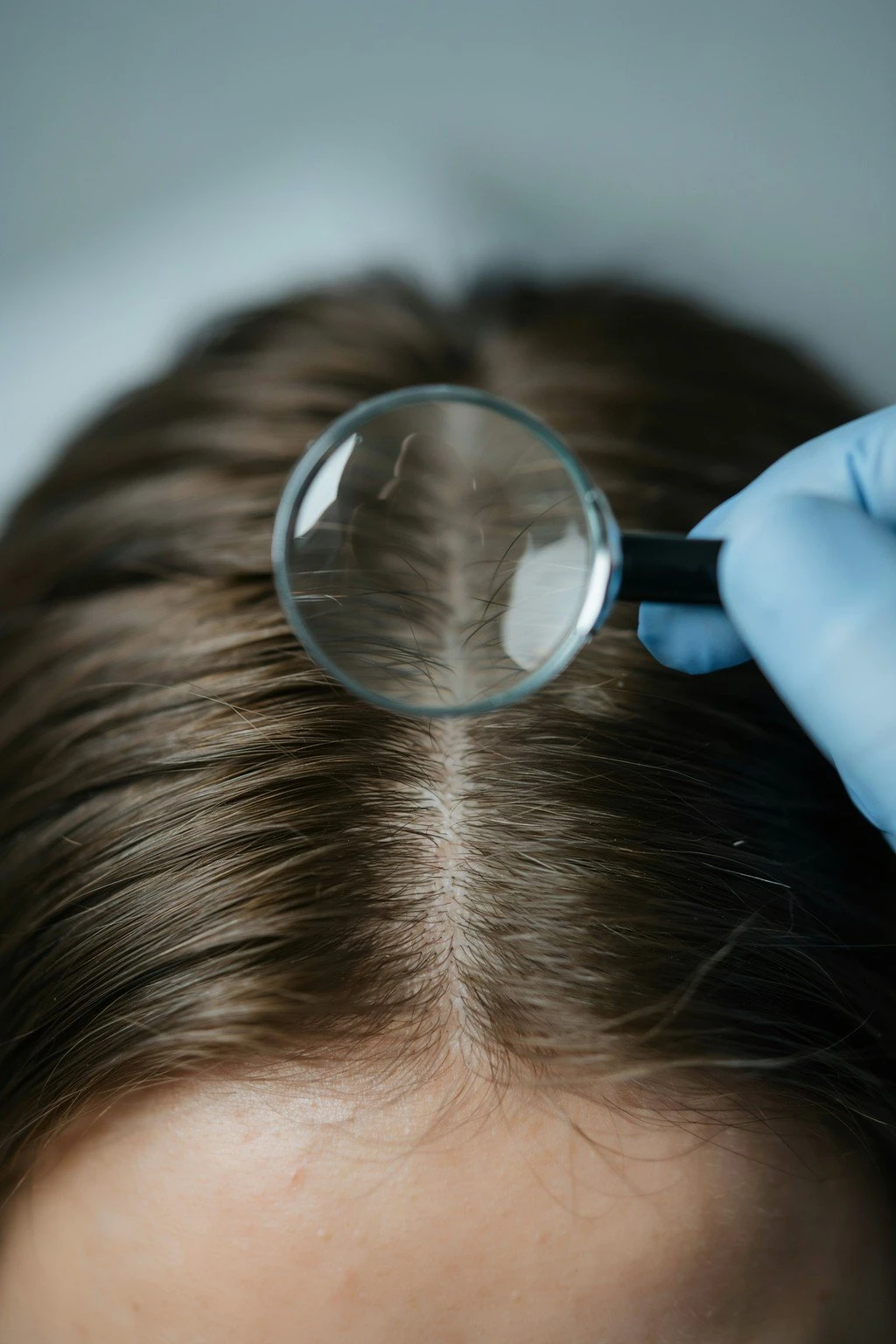
A surgeon assessing candidacy examines density across the whole scalp, not just the area of visible thinning, specifically looking for a zone that’s both dense enough and stable enough to draw follicles from without leaving that area visibly thinner afterward. This often involves close examination under magnification, sometimes with photographs taken over time to establish whether an area has genuinely remained stable rather than just appearing so at a single visit. This evaluation takes real time and expertise, and a consultation that skips this step and moves straight to discussing style and coverage is skipping the part that actually determines whether the procedure makes sense at all.
Some clinics use tools like a densitometer, a small handheld device that magnifies a section of scalp enough to count follicular units per square centimeter directly, giving a more precise density measurement than visual assessment alone. This kind of measured, specific evaluation is worth asking about directly — a consultation that offers only a general visual impression of your donor area is giving you less information than one willing to measure it properly.
The photo shows the after. It never shows whether the donor area survived intact, and for a lot of women’s cases, that’s the actual question worth asking first.
When a Hair Transplant Genuinely Isn’t the Right Fit
If donor density is insufficient or the thinning pattern is genuinely diffuse rather than localized, a reputable surgeon should say so directly rather than proceeding with a procedure unlikely to deliver a meaningful, lasting result. This is the honest answer some women don’t want to hear after researching and planning for a procedure, but a surgeon willing to say “this isn’t likely to work well for your specific pattern” is doing you a real service compared to one who proceeds anyway. In diffuse-pattern cases, non-surgical options — addressing an underlying cause if one exists, or a topper or volumizing styling approach — are often the more honest recommendation.
It’s worth saying plainly that hearing this can be genuinely disappointing after building up hope around a specific procedure, and that disappointment is a real, valid reaction rather than something to push past quickly. A surgeon delivering this news well will explain specifically why, in terms of your own donor density and pattern, rather than a vague dismissal, and will usually have thoughts on what alternatives are actually worth exploring rather than simply ending the conversation there.
What Else Differs From Typical Male-Pattern Cases
Hairline design decisions differ meaningfully by the goals most women bring to a consultation, often prioritizing density and natural movement through the mid-scalp over the specific hairline reconstruction that’s central to many male-pattern cases. Hormonal factors are also frequently part of the picture for women, since female pattern hair loss can be connected to hormonal shifts, thyroid function, or other causes a dermatologist should evaluate before or alongside any surgical consultation — a transplant addresses the visible symptom, not an underlying hormonal cause if one is present.
Post-procedure expectations can also differ by pattern type. Someone with a genuinely localized, stable pattern generally follows a timeline similar to the general transplant timeline — a shedding phase, then gradual growth over several months. Someone whose case involved a more marginal donor area, addressed carefully by a thorough surgeon, may see a more modest overall density improvement, since there was simply less donor material available to work with from the start. Neither outcome reflects a failed procedure; they reflect the actual biological starting point each case began with.
Getting an Honest Evaluation
- Ask specifically whether your thinning pattern is localized or diffuse, and how that affects candidacy.
- Ask what your donor area’s actual density is, in specific terms, not a general reassurance.
- Ask whether a dermatologist should evaluate you first to rule out or address an underlying cause.
- Get a second opinion if a surgeon seems eager to proceed without a thorough donor-area evaluation.
- Ask how many cases similar to your specific pattern the surgeon has actually handled.
Bring documentation of your hair loss history to the consultation if you have it — photos over time, any bloodwork or dermatologist findings, and a rough timeline of when thinning started and how it’s progressed. A surgeon working from that history, rather than a single snapshot at the consultation, can give a far more accurate assessment than one working from a single day’s impression.
Frequently Asked Questions
Why do women get told they’re not good transplant candidates more often than men?
It’s not that women are inherently less suitable — it’s that female pattern hair loss more often presents as diffuse thinning without a clearly stable, dense donor area, which is the actual limiting factor regardless of gender. A man with the same diffuse pattern would face the same candidacy challenge.
Should I see a dermatologist before a hair transplant consultation?
Yes, especially for women, since female pattern hair loss is more often connected to an underlying hormonal or medical cause worth identifying first. A dermatologist can also help clarify whether your thinning pattern is progressing, which affects whether a transplant is a reasonable option right now.
What questions should I ask a surgeon about donor area density specifically?
Ask for a specific, direct assessment of your donor area’s density and stability, not a general estimate, and ask how many grafts that density realistically supports for your goals. A surgeon unwilling to give specifics is worth a second opinion.
Are there alternatives if I’m not a good transplant candidate?
Depending on the cause, options range from addressing an underlying medical or hormonal factor with a dermatologist to non-surgical styling options like a topper or volumizing approach. None of these are lesser choices — they’re simply better matched to a diffuse thinning pattern than a procedure built around a stable donor area.
How is female pattern hair loss different from male pattern baldness?
Female pattern hair loss typically presents as diffuse thinning across the scalp rather than the more localized, progressive pattern common in male pattern baldness. This difference is exactly why donor-area evaluation and overall candidacy assessment often look different between the two.
What should I do if I’ve already had one disappointing consultation?
Seek a second opinion from a surgeon with specific experience evaluating female pattern hair loss, rather than assuming the first consultation’s conclusion is the final word. Bring any documentation from that first visit, including specific density figures if they were provided, so the second surgeon has a fuller picture to work from.
Before You Book a Consultation
See a dermatologist first if you haven’t already, and bring that evaluation to any surgical consultation. A clear picture of your pattern and its cause makes the surgical conversation far more useful than starting there cold.
Tell me what you’ve been told about your pattern and where you are in the process, and I’ll help you understand what questions to ask next. — Iris