Hair Growth Supplements: When Biotin Evidence Falls Short

Eight years ago I bought my first bottle of biotin because the label promised 5,000 micrograms per capsule and the internet told me more was better for hair growth supplements. The truth, which took me considerably longer to find, is that most hair growth supplements lack evidence strong enough to justify their claims. Biotin deficiency is genuinely rare in developed countries, and for people with normal biotin levels, extra biotin passes through the body without measurable change to hair growth, density, or shedding rate.
Hair growth supplements can help when a specific nutritional deficiency exists, and that condition is narrower than most supplement marketing implies. Biotin is the only ingredient with settled evidence, and only for the small population with confirmed deficiency. For everyone else, the capsule you swallow this morning will not alter how your hair behaves by next month. The supplement shelf is largely an expensive bet on a problem you probably do not have.
What Your Hair Actually Needs to Grow
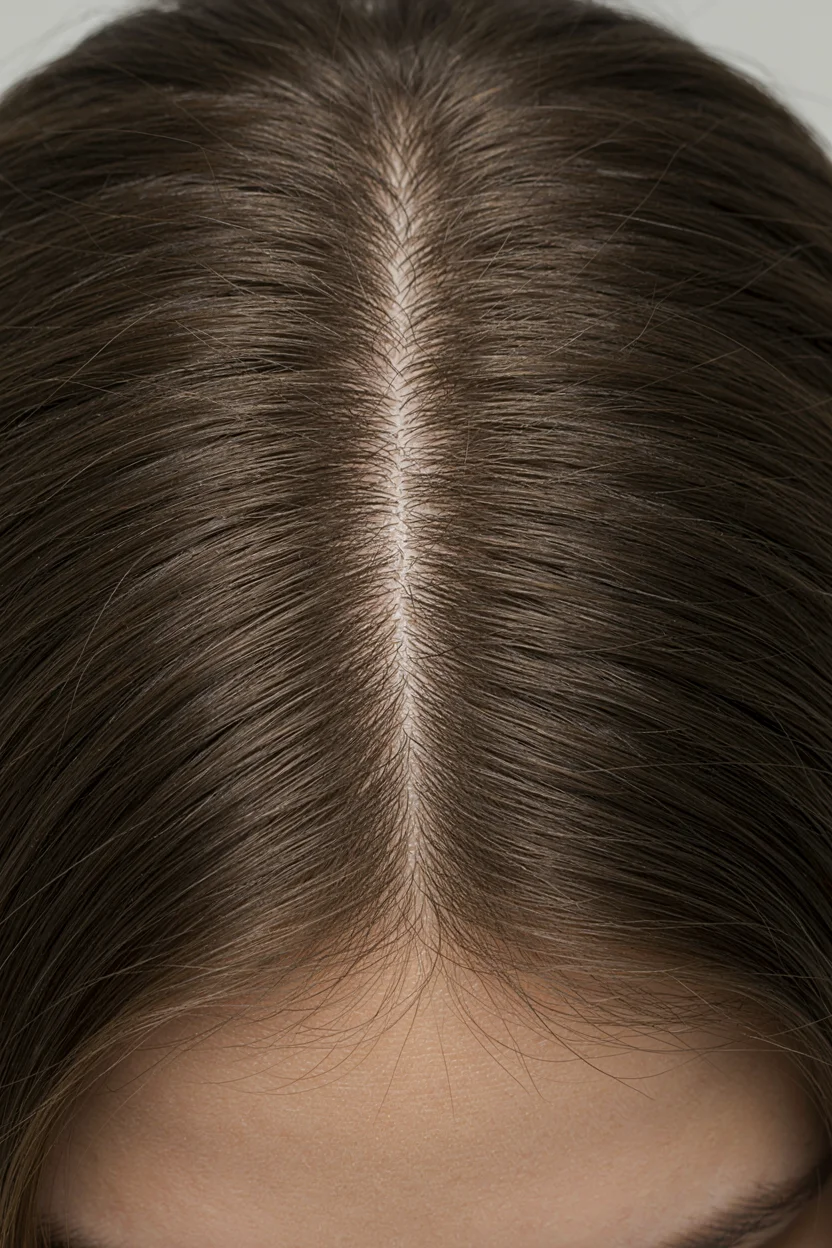
Hair above the scalp is dead tissue composed primarily of keratin protein, which makes up roughly 80 percent of the hair shaft by weight. Everything that determines your hair’s strength, diameter, and texture was decided below the scalp surface while the hair was still forming inside the follicle. Once it emerges, no pill or serum can alter its internal structure. Products can coat the shaft, fill gaps in a damaged cuticle, or reduce friction between strands, but they cannot rebuild what is already keratinized and gone.
The hair growth cycle has three phases, and understanding them reframes what a supplement could realistically accomplish. The anagen phase lasts two to seven years and produces roughly one centimeter of growth per month. The telogen resting phase lasts about three months before the hair sheds, and at any given time approximately 85 to 90 percent of your scalp follicles are in active growth while the remainder rest. Shedding up to 100 hairs per day falls within the normal range, because those are simply the follicles that completed their cycle and released their hair.
A supplement could theoretically help if it corrects a nutritional gap that is slowing the follicle’s activity during anagen. It cannot accelerate the growth rate your genetics have set, and it cannot extend the anagen duration beyond its programmed window. I used to stand in the supplement aisle and grab the first bottle with biotin on the front, never pausing to ask whether my body actually needed it.
The Supplement Shelf: What the Evidence Actually Shows

I find it useful to sort supplement claims into three tiers: settled biology that we can state as fact, plausible mechanisms with thin evidence that deserve honest hedging, and marketing claims that sound scientific until you examine the foundation. Here is how the major hair growth supplement ingredients land across those tiers.
| Ingredient | Proposed Mechanism | Evidence Strength | Tier |
|---|---|---|---|
| Biotin (Vitamin B7) | Cofactor in keratin synthesis | Settled for deficiency only | 1 (conditional) |
| Collagen peptides | Amino acid supply for keratin | Small trials, mixed results | 2 |
| Iron (when ferritin low) | Oxygen transport to follicle | Settled for deficiency | 1 (conditional) |
| Vitamin D | Follicle cycling regulation | Association established, supplementation evidence thin | 1 to 2 |
| Saw palmetto | Weak 5-alpha-reductase inhibition | Small studies, short duration | 2 |
| Biotin for non-deficient hair | Extra keratin support | No evidence above placebo | 3 |
| “Hair, skin, and nails” blends | Multi-nutrient synergy | Manufacturer-run, no independent replication | 3 |
Biotin is a B vitamin that serves as a cofactor for enzymes involved in fatty acid synthesis and amino acid metabolism. The biological connection to hair is real: true biotin deficiency causes hair thinning, brittle nails, and a scaly rash around the eyes and mouth. However, biotin deficiency is uncommon in developed countries, because foods like eggs, nuts, sweet potatoes, and whole grains supply adequate amounts for most people. The evidence that matters here is conditional. If you are biotin deficient, supplementing helps. If your biotin levels are normal, taking more does not produce additional hair benefit. Your kidneys excrete the excess, and you have paid for expensive urine. One practical concern worth knowing: high-dose biotin supplements can interfere with common laboratory tests, including thyroid panels and cardiac troponin assays, sometimes producing dangerously misleading results.
Where Can You Research Biotin and Lab Test Interference?
| Source | What It Says |
|---|---|
| U.S. FDA safety communication (via Healio) | The FDA warned in 2017, and again in 2019, that biotin in supplements can cause incorrect lab results. Its main concern is falsely low troponin results, which can lead to a missed heart attack diagnosis. |
| ADLM (formerly AACC) guidance on biotin interference | Laboratory medicine guidance listing the tests most affected by high biotin intake, including thyroid hormone tests (TSH, T3, T4) and troponin. Results can be falsely high or low depending on how the test is designed. |
| Testing.com: FDA warns biotin may affect lab results | A patient-facing summary of the FDA warning. It advises telling your doctor about any biotin, including in multivitamins and hair, skin and nail supplements, before blood work. |
Collagen peptides are broken-down proteins derived from bovine, porcine, or marine sources. The mechanism is plausible: collagen contains amino acids like proline and glycine that the hair follicle could use for keratin production. The evidence is thin, consisting mostly of small trials, some funded by supplement manufacturers, with mixed outcomes and no standardized dosing protocol. Your body does not route collagen amino acids preferentially to your hair. It distributes them wherever protein is needed, and whether extra amino acids from a collagen supplement make a measurable difference to hair growth is a question the existing evidence does not settle. I initially dismissed collagen supplements entirely, then read the mechanism more carefully and found it more plausible than I expected, even though the evidence remains thin.
Iron and vitamin D occupy an interesting middle ground. Iron deficiency, particularly low ferritin, is associated with increased hair shedding and is a recognized factor in telogen effluvium. Vitamin D receptors are present in hair follicles, and low vitamin D is associated with conditions including alopecia areata. The crucial qualifier in both cases is that supplementation helps only when blood work confirms a deficiency. Taking iron when your ferritin is already normal causes side effects like nausea and constipation without helping your hair. Blood work must come before the supplement, not after.
Saw palmetto is marketed as a natural DHT blocker, and the mechanism has some basis. It may weakly inhibit 5-alpha-reductase, the enzyme that converts testosterone to dihydrotestosterone, which is involved in androgenetic hair thinning. The evidence is thin: small studies, typically lasting around 24 weeks, with inconsistent results and no large-scale independent replication. The enzyme inhibition is plausible but weak compared to prescription options like finasteride, which themselves require careful medical supervision. Between weak enzyme inhibition and visible hair improvement, the evidence trail gets very short indeed.
The supplement industry thrives on combining plausible ingredients with generous marketing. A typical hair growth supplement layers multiple vitamins, minerals, and botanical extracts into a single capsule and charges a premium for the convenience. More ingredients in one capsule does not mean better results. The question that matters is whether the formula addresses an actual gap in your body, not how many compounds fit on the label.
If your blood work is normal, every hair growth supplement on the shelf is solving a problem you do not have.
When a Supplement Might Genuinely Help

The narrow circumstance where hair growth supplements earn their place is when blood work reveals a specific deficiency that is affecting your hair. This applies to a real but limited segment of people with hair concerns.
Iron deficiency is the most common nutritional contributor to increased hair shedding, particularly among women who menstruate. When ferritin, the stored form of iron, drops below a level your body considers adequate for non-essential functions, it diverts resources away from hair growth. Some trichologists reference a ferritin level below 30 nanograms per milliliter as potentially associated with increased shedding, though this threshold is not universally agreed upon and your clinician may use a different marker. Correcting the deficiency through dietary change or targeted supplementation can bring shedding back toward the normal range of up to 100 hairs per day within three to six months.
Zinc deficiency is less common but documented as a contributor to diffuse hair thinning. Vitamin D insufficiency, typically a blood level between 20 and 30 nanograms per milliliter, follows a similar pattern: associated with hair shedding in some contexts, correctable when confirmed by lab work, and irrelevant to hair growth when your levels are already sufficient.
The uncomfortable truth is that if your blood work comes back normal, no amount of biotin, collagen, or saw palmetto is likely to change your hair’s behavior. At that point, the investigation needs to shift to other possible causes that a dermatologist is far better equipped to address than any supplement aisle:
- Hormonal factors, including thyroid dysfunction and androgen-related thinning patterns that require specific testing beyond a standard blood panel.
- Scalp conditions such as seborrhoeic dermatitis or psoriasis, which can create an inflammatory environment that disrupts the hair growth cycle at the follicle level.
- Genetic thinning patterns, particularly female pattern hair loss, which follows a progressive miniaturization process that no nutritional supplement can reverse.
- Medication side effects, where a drug you are already taking may be contributing to shedding in ways your prescribing doctor can evaluate.
Frequently Asked Questions

Do hair growth supplements actually work for thinning hair?
Hair growth supplements work when thinning is caused by a specific nutritional deficiency that blood work has confirmed. In that narrow circumstance, correcting the deficiency can reduce excess shedding within three to six months. If your thinning is driven by genetics, hormonal shifts, or a scalp condition, no over-the-counter supplement will alter the trajectory, and a dermatologist visit is a more productive use of your time and money.
Should I take biotin for my hair even if I eat a balanced diet?
If you eat a varied diet that includes eggs, nuts, and whole grains, your biotin intake is likely already adequate. Taking supplemental biotin when your levels are normal does not produce additional hair benefit, because the body excretes what it does not use. The only way to know whether you need biotin is through blood work ordered by your doctor, and true biotin deficiency is rare enough that most clinicians do not test for it routinely unless symptoms point in that direction.
How long before I see results from a hair growth supplement?
If a confirmed deficiency is the cause of your shedding, correction typically takes three to six months before visible improvement appears. Hair follicles need time to re-enter the anagen growth phase and produce enough length for the change to be noticeable above the scalp. If six months pass with consistent supplementation and no measurable change, the deficiency was probably not the cause, and further investigation with a dermatologist is warranted.
Are hair gummies better than regular hair growth supplements?
Hair gummies contain the same categories of vitamins and minerals as capsule-form hair growth supplements, delivered in a chewable format with added sugar and flavoring. The evidence supporting their hair growth claims rests on the same conditional logic: supplementation helps only when a deficiency exists. Gummies often contain lower doses of key nutrients than standard capsules, which makes them neither superior nor inferior, simply a different delivery format with a different marketing angle.
Is there a natural alternative to hair growth supplements?
The most effective alternative to a supplement is not a different supplement but a blood panel that identifies whether a real deficiency exists. A diet providing adequate protein, iron, and micronutrients supports hair growth more reliably than any single isolated compound. For specific concerns like iron-related shedding, your doctor may recommend dietary adjustments or medical treatment that addresses the underlying cause more directly than an over-the-counter blend.
When should I see a dermatologist instead of trying hair growth supplements?
If you are shedding more than 100 hairs per day for longer than six weeks, noticing a widening part line, or seeing scalp through the crown, a dermatologist visit is the appropriate next step. These patterns can indicate hormonal, autoimmune, or scalp-related causes that no supplement will address. A dermatologist can examine your scalp directly, order relevant blood work, and determine whether treatment beyond nutrition is needed.
The Smaller Next Step
The most practical move is the one that costs the least guesswork: ask your doctor for a basic blood panel at your next appointment, including ferritin and vitamin D. If a deficiency shows up, you now have a targeted, evidence-based path forward. If your labs come back normal, you have eliminated one category and can direct your attention to the causes that actually apply to your hair.
— Iris