Fine Hair Volume: Root Lift Without a Stiff Finish

Fine hair volume is one of those things that people talk about like it’s a product problem, when it’s really a technique problem. I spent years buying volumising sprays and mousses and wondering why my hair still went flat by midday, and it took a long time before I realised the issue wasn’t what I was putting on my hair. It was how I was applying it, when I was applying it, and what I was doing in the five minutes after I stepped out of the shower. The method I use now takes about eight minutes on damp hair and produces lift that lasts through the afternoon without any crunch or stiffness.
Root lift on fine hair comes down to three things: getting the product to the right place, lifting the root while it dries, and not collapsing that lift with heavy products on top. If any one of those three is off, the result is flat. And the frustrating thing is that most of the advice out there focuses on product recommendations when the real difference is in the sequence and the timing.
Why Fine Hair Falls Flat in the First Place
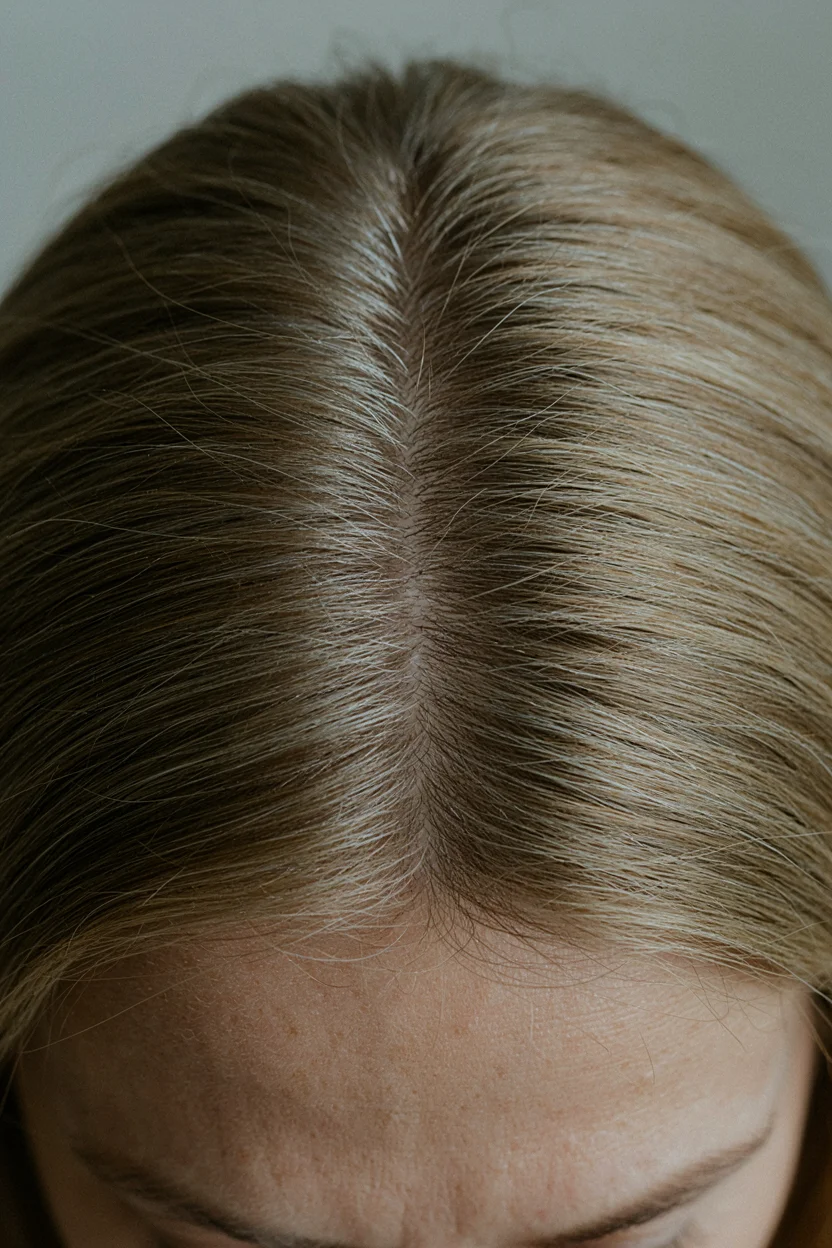
Fine hair has a smaller diameter per strand than medium or coarse hair. That means each individual strand is lighter and more flexible, which sounds like it should make it easier to lift. But it actually makes it harder, because fine strands don’t have the structural rigidity to hold themselves away from the scalp. They bend, they lean, and they settle back down as soon as whatever was holding them up is removed.
The other factor is oil. Fine hair shows oil faster because there’s less surface area for the sebum to spread across. The scalp produces the same amount of oil regardless of hair thickness, but on fine hair that oil coats the strands more completely and weighs them down sooner. This is why fine hair often looks its best right after washing and starts to fall within a few hours, even when no product is involved at all.
I learned this the hard way. I used to pile on dry shampoo in the morning and wonder why my hair felt heavy and stiff but still looked flat. The dry shampoo was absorbing oil, sure, but it was also adding weight to strands that didn’t have the structure to carry it. The lift I wanted was at the root, and I was putting the product everywhere.
The Method: Root Lift in Eight Minutes

This is the routine I actually do on wash days, not the fourteen-step version I used to attempt and then abandon by week two. It works on straight hair through wavy hair, roughly 1a to 2c on the curl spectrum. If your hair is curlier than that, root lift is usually less of a concern because the curl pattern provides its own volume at the root.
Start with clean, towel-blotted hair. Not dripping wet, not almost dry. You want enough moisture that the hair is pliable but not so much that water is running down your neck. A light volumising mousse, the kind that says lightweight on the label, goes directly at the roots. I flip my head upside down, lift sections with my fingers, and apply a small amount right at the base. The amount is roughly the size of a walnut for the whole head, and most of it should end up at the roots, not the mid-lengths.
Then flip your head back up and start drying. A blow dryer with a concentrator nozzle on medium heat, around 150 to 170 degrees Celsius, works well here. The technique is to lift each section at the root with your fingers or a vented brush while directing the airflow at the base, not along the length. You’re drying the root in a lifted position so it sets that way. Each section takes about 30 to 45 seconds of focused air, and you work from the nape up to the crown and then the sides.
| Step | Time | Hold Duration | Best For |
|---|---|---|---|
| Upside-down mousse application | 1 minute | Until next wash | 1a to 2c hair types |
| Root-focused blow-dry with finger lift | 5 to 6 minutes | 6 to 8 hours | All fine hair regardless of wave pattern |
| Cool-shot set at roots | 1 to 2 minutes | Extends hold by 2 to 3 hours | Fine hair that falls within 3 hours of styling |
| Root powder on dry roots | 30 seconds | 3 to 4 hours before reapplication | Midday refresh when lift starts to drop |
The cool shot at the end is the part most people skip, and it’s the part that makes the lift last. Switch the dryer to cool air and go back over each lifted section for about 15 to 20 seconds. The heat moulds the hair into the lifted position, and the cool air sets it there. Without the cool set, the hair cools gradually and settles back toward the scalp before the shape has time to lock in.
Products and Tools: What Actually Helps
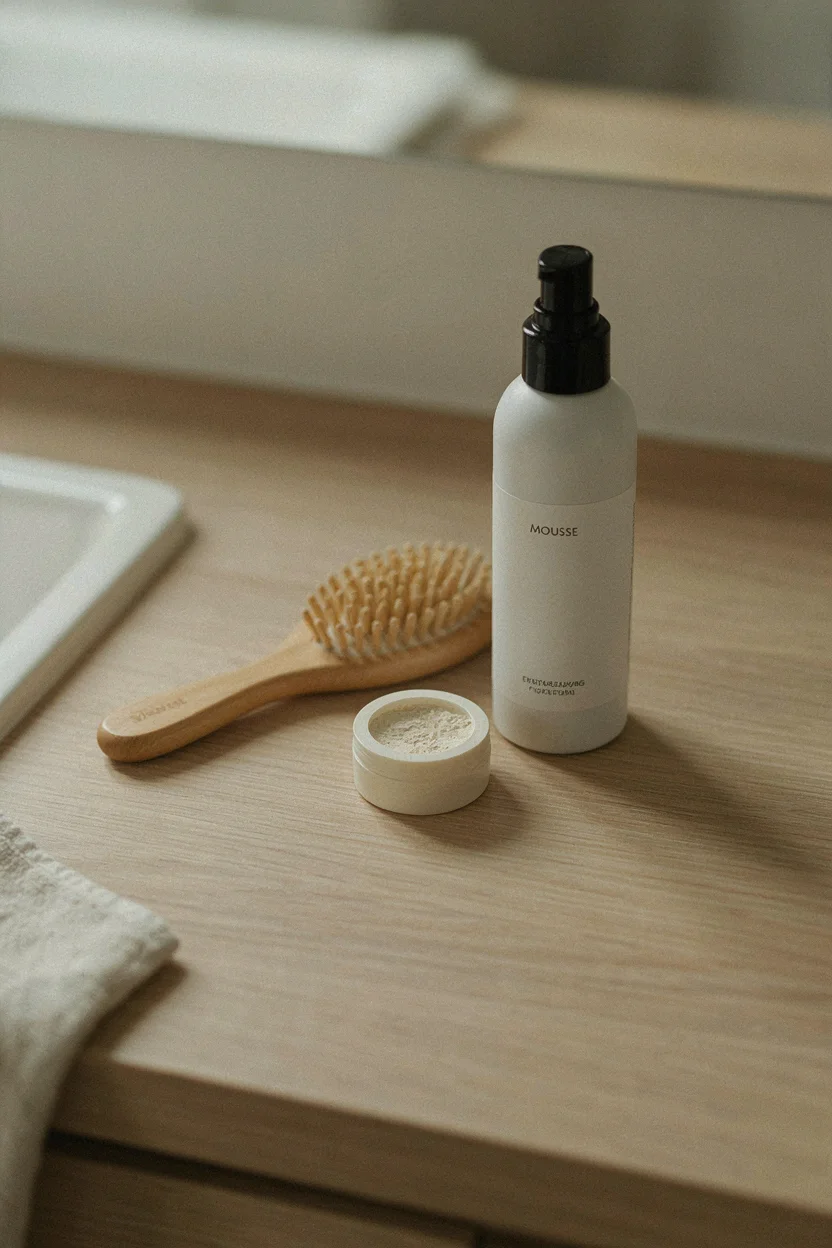
The number of products you need for this method is small, and I want to be clear about why each one is here rather than just listing things.
- A lightweight mousse with flexible hold polymers. The reason: it gives the roots something to grip onto while they dry without adding the weight that creams or heavy gels put on fine strands.
- A vented or paddle brush with widely spaced bristles. The reason: it lifts the root while allowing air to flow through, which speeds up drying and prevents you from pressing the hair flat against the scalp.
- A root-lifting powder or texturising powder for midday touch-ups. The reason: it absorbs a small amount of oil at the base and adds friction between strands, which helps them stay separated and lifted for a few more hours.
- A blow dryer with at least two heat settings and a cool-shot button. The reason: you need medium heat for shaping and cool air for setting, and a single-heat dryer can’t do both.
One thing I stopped using entirely is heavy serums on the roots. A lightweight silicone serum on the mid-lengths and ends is fine for reducing friction during styling and adding some slip. But applying it anywhere near the root adds weight that fine hair can’t carry, and it negates all the lifting you just did. I keep the serum below the ears and nowhere higher.
Common Mistakes That Kill the Lift

Overloading product is the most common one. I’ve done it myself more times than I can count. You see a flat crown and reach for more mousse, more spray, more powder, and each layer adds weight. On fine hair, a small amount placed precisely at the root does more than a large amount distributed everywhere. If the lift isn’t there, the issue is usually placement or technique, not quantity.
Drying the hair in the wrong direction is another one. If you dry fine hair while it hangs straight down, it dries in that position and stays there. The root needs to be lifted away from the scalp while the heat is applied, either by flipping the head upside down, lifting sections with fingers or a brush, or both. The direction you dry in is the direction the hair sets.
And here’s a mistake I made for years before I figured it out: touching the hair too much after styling. Running your fingers through freshly lifted roots breaks the set you just created. The cool shot locks the shape, and then the best thing you can do is leave it alone for the first hour or two. After that, the set is stable enough to handle light touching, but the first hour is when the shape is most vulnerable to being pressed back down.
Fine hair doesn’t need more product to stay lifted. It needs the right product in the right place, applied at the right time, and then left alone.
Frequently Asked Questions
How long does root lift last on fine hair?
With the method above, I typically get six to eight hours of visible lift before the roots start to settle. The cool-shot set is what extends it past the three or four hour mark that most people experience. A quick refresh with root powder at midday can add another three to four hours, but it won’t match the original lift exactly. On wash days where I skip the cool shot, the lift drops noticeably within three hours.
Does this work on fine wavy hair?
Yes, and it works particularly well on hair in the 2a to 2c range because the wave pattern adds some natural body that straight fine hair doesn’t have. The root lift technique gives the waves a place to start, and the result tends to look more natural than on very straight hair because the wave breaks up the line between root and length. For hair curlier than 2c, I’d adjust the approach because the curl pattern has its own volume dynamics.
Can I use dry shampoo instead of root powder?
You can, and a lot of people do. Dry shampoo absorbs more oil than root powder and adds more volume, but it also adds more weight and can leave a visible residue on darker hair. Root powder is lighter and more targeted for lift specifically. If your main concern is oil absorption, dry shampoo is the better tool. If your main concern is root lift, the powder gives you a lighter touch with a similar effect.
Should I wash my hair more often to keep the volume?
I wash mine every other day with this routine, and that’s the longest interval I’ve found where the root lift still works well. By day three, there’s enough oil at the scalp to weigh fine hair down regardless of technique. Some people with fine hair do well with daily washing, and some can stretch to three days. It depends on how quickly your scalp produces oil and how much your hair can carry before it shows. Our guide to understanding shedding versus breakage has more on how washing frequency affects the hair shaft.
Will heat damage my fine hair with this method?
The temperatures in this routine stay between 150 and 170 degrees Celsius, which is below the threshold where significant structural damage to the hair shaft begins, approximately 180 degrees for dry hair. Fine hair is more susceptible to heat damage than coarse hair because there’s less cortex to absorb the heat before it affects the entire strand, so staying below that threshold matters more here. Using the medium setting and keeping the dryer moving rather than holding it on one section reduces the cumulative exposure. For more on what heat does to the hair shaft, see our scalp care guide which covers how washing and styling interact.
The Eight-Minute Version Is the One I Keep
I’ve tried the elaborate routines and the ten-product wash days, and the eight-minute version is the one that actually shows up in my life consistently. Root lift on fine hair is a timing and placement problem, and once you get those two right, the rest is just not adding more than you need.
— Tess