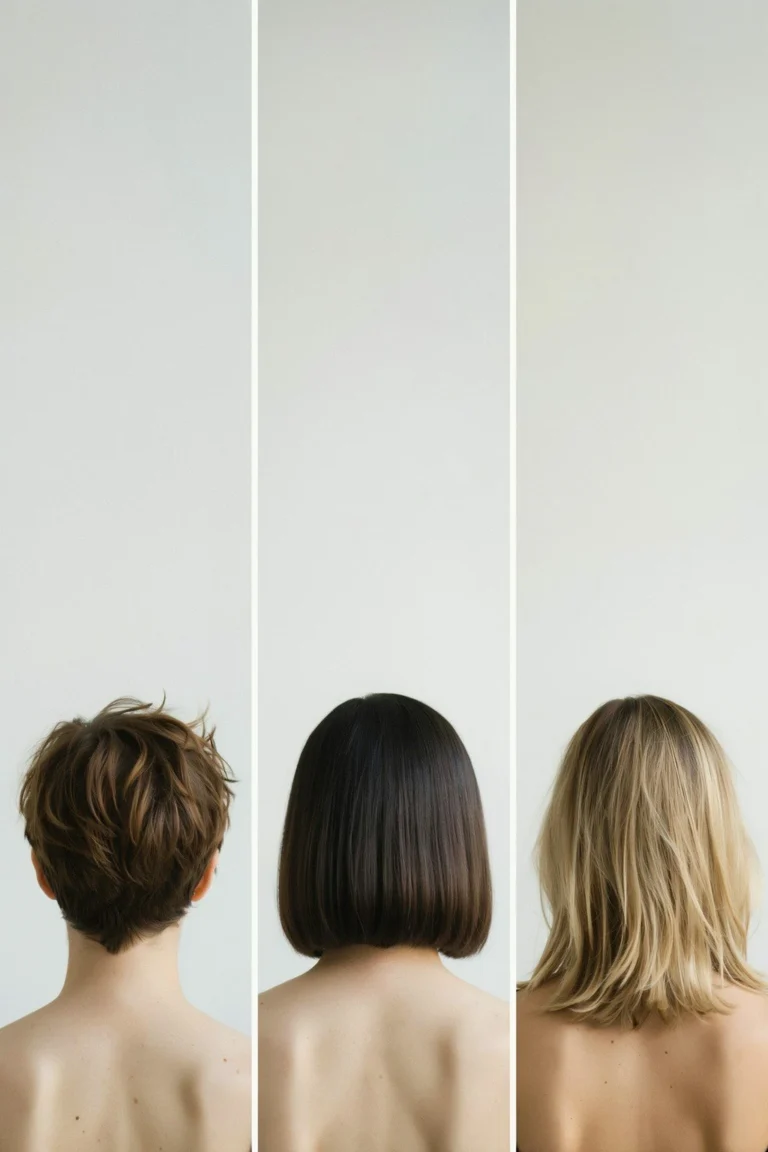
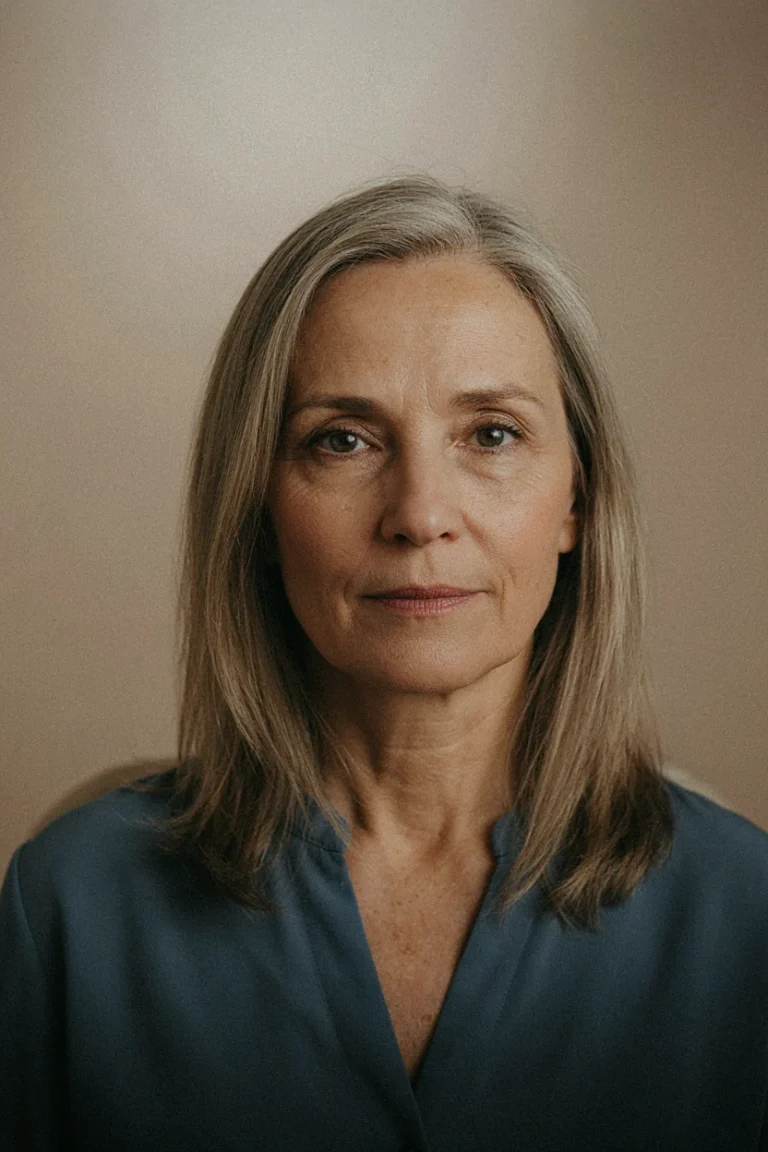
Thinning Haircuts: What a Blunt Perimeter Can—and Cannot—Do

Thinning haircuts work best when the perimeter is left alone. A blunt, unbroken line at the bottom edge of the cut creates the appearance of more hair. Every layer you remove from that line reduces density at the very place you need it most. If your hair is thinning, the cut that helps is the one that keeps weight where it is.
A new client sat in my chair last fall. She was 58. Her hair had been getting thinner for about three years. Her previous stylist had given her short layers to add volume. The layers removed weight from the bottom. The result was a triangle shape: wide at the crown, narrow at the nape. She said it looked thinner than before. She was not wrong. The layers took density from the perimeter, and thinning hair cannot afford to lose perimeter weight.
I cut a blunt line at her jaw. No layers on the perimeter. Six weeks later she came back and said it looked fuller than it had in years. The cut had not added hair. It had kept the hair she had in one solid line.
What a Blunt Perimeter Actually Does
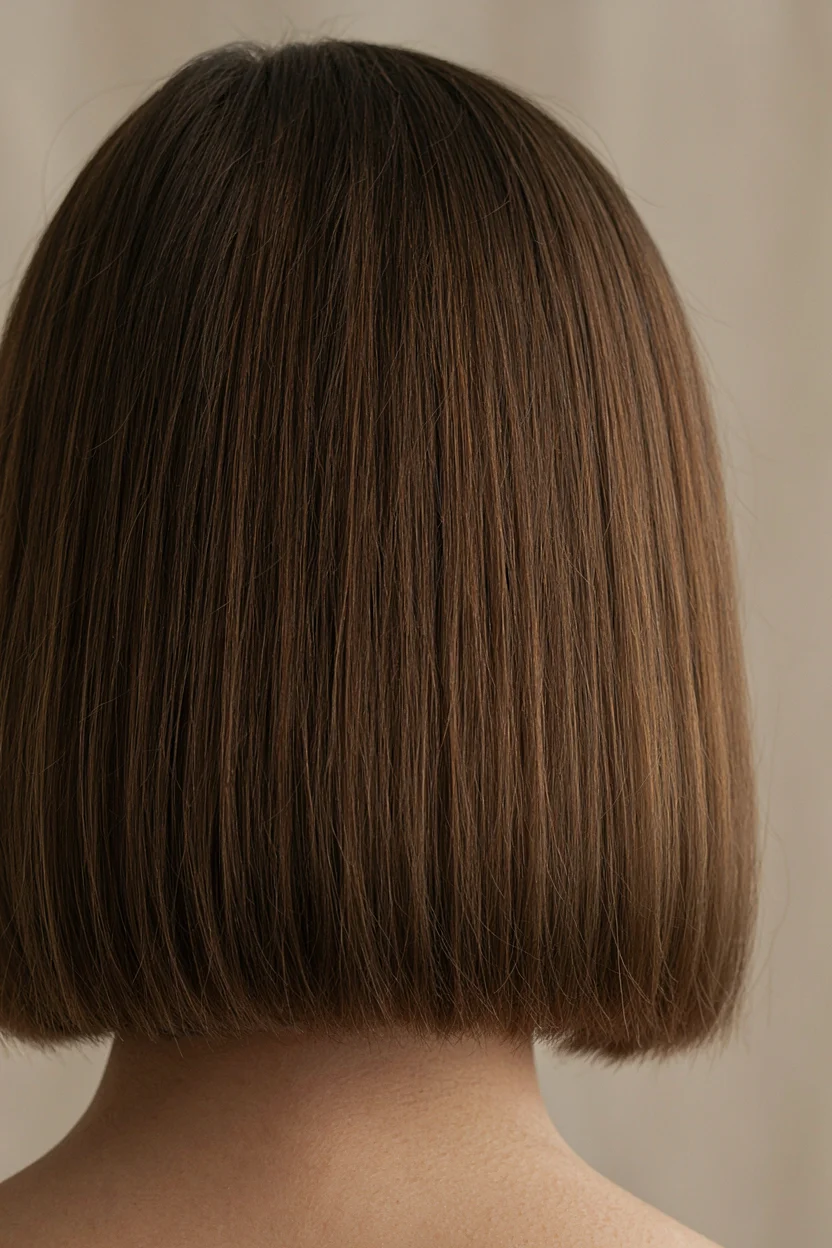
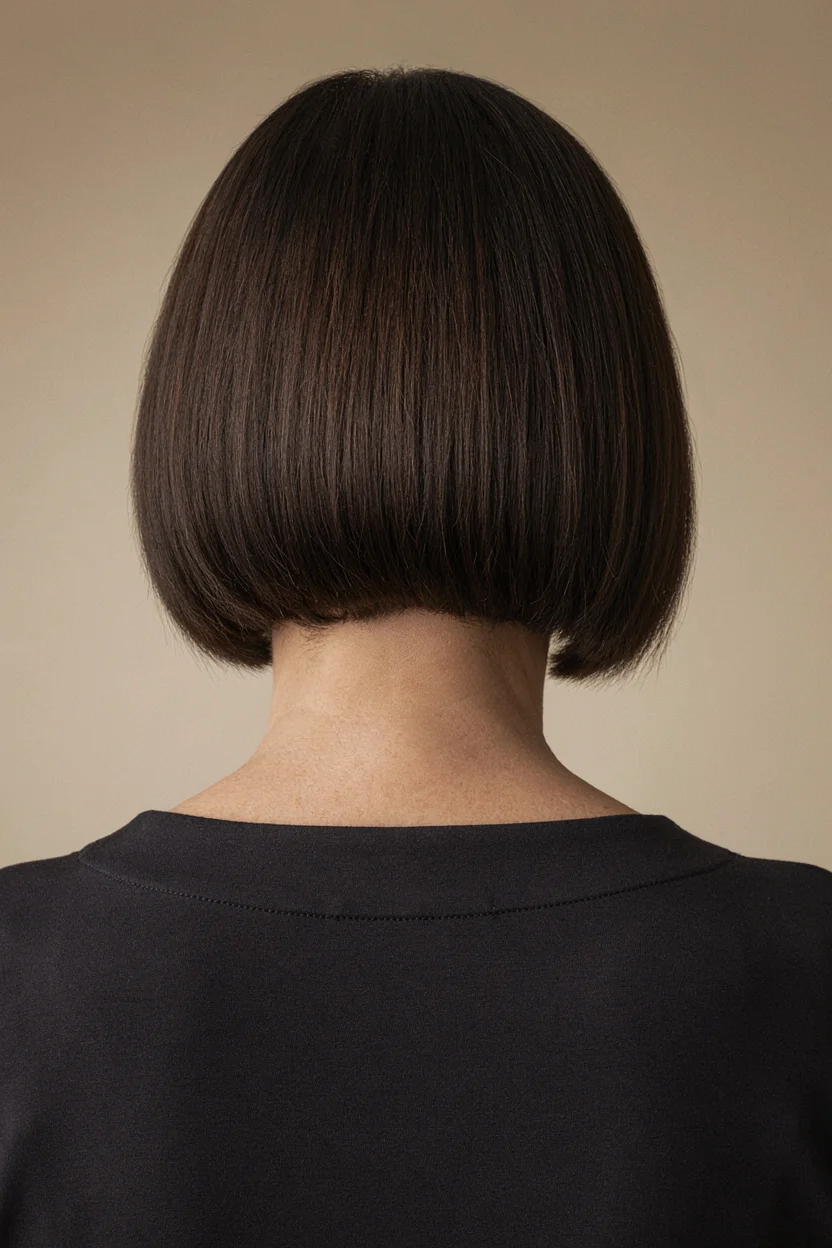
A blunt perimeter means every strand at the bottom edge of the cut falls to the same point. There are no layers tapering into the ends. No texturizing at the line. No graduation. The result is a clean, solid edge that makes the hair look denser than it is.
Thinning hair shows its weakness at the ends. When the perimeter is layered or texturized, the ends spread apart and the scalp becomes visible through them. A blunt line keeps those ends stacked together. The visual effect is thicker, even though the actual strand count has not changed.
The weight line also matters. A blunt cut holds its shape because the weight sits at the bottom. Layers redistribute that weight higher on the head. For thinning hair, weight at the bottom is an asset. Weight at the top creates volume but sacrifices the density line that makes the hair look full.
Face shape is a guideline, not a rule. A blunt perimeter works on most face shapes because the line itself is horizontal and neutral. The length of that line, chin, jaw, shoulder, is where face shape comes into play.
The Blunt Bob at Chin Length
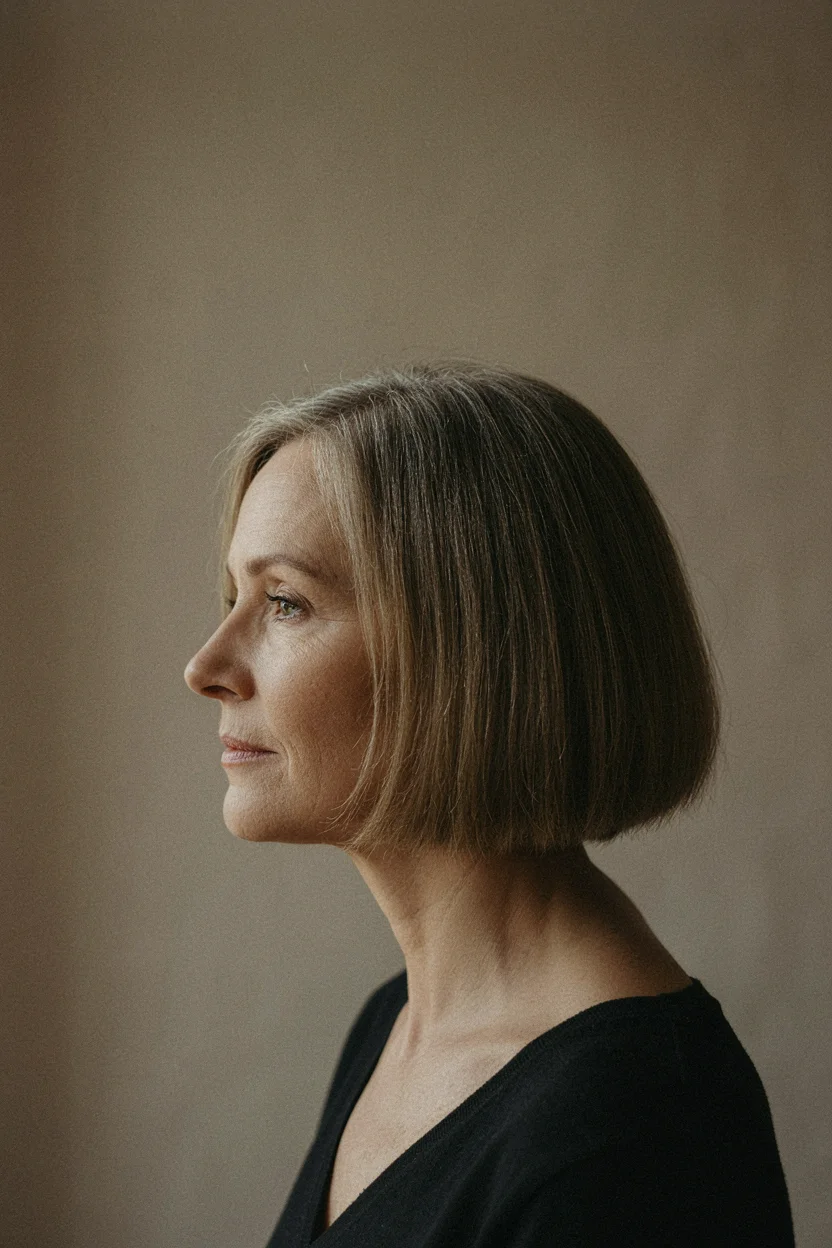
A chin-length blunt bob lands right at the jawbone. The line follows the natural curve of the jaw. Every strand falls to the same point. This cut works on straight to wavy hair, fine to medium texture.
Styling takes five minutes. Blow-dry with a round brush to turn the ends under slightly. That creates a clean, inward curve that reinforces the density line. Air-drying works if your hair dries straight naturally. Add a light hold product at the ends to keep the line defined.
Trim cadence is six weeks. Chin-length cuts grow out fast because the length change is visible against a fixed landmark, the jaw. At half an inch per month, the cut is half an inch past the chin by week six. That is when the line starts to lose its shape. A six-week trim keeps it sharp.
At week six, the bob sits below the jaw. The ends begin to separate slightly. The density line softens. If you stretch to eight weeks, the cut reads as a different shape entirely. Six weeks is the interval. Not seven. Not whenever you remember.
The Shoulder-Length Blunt Cut
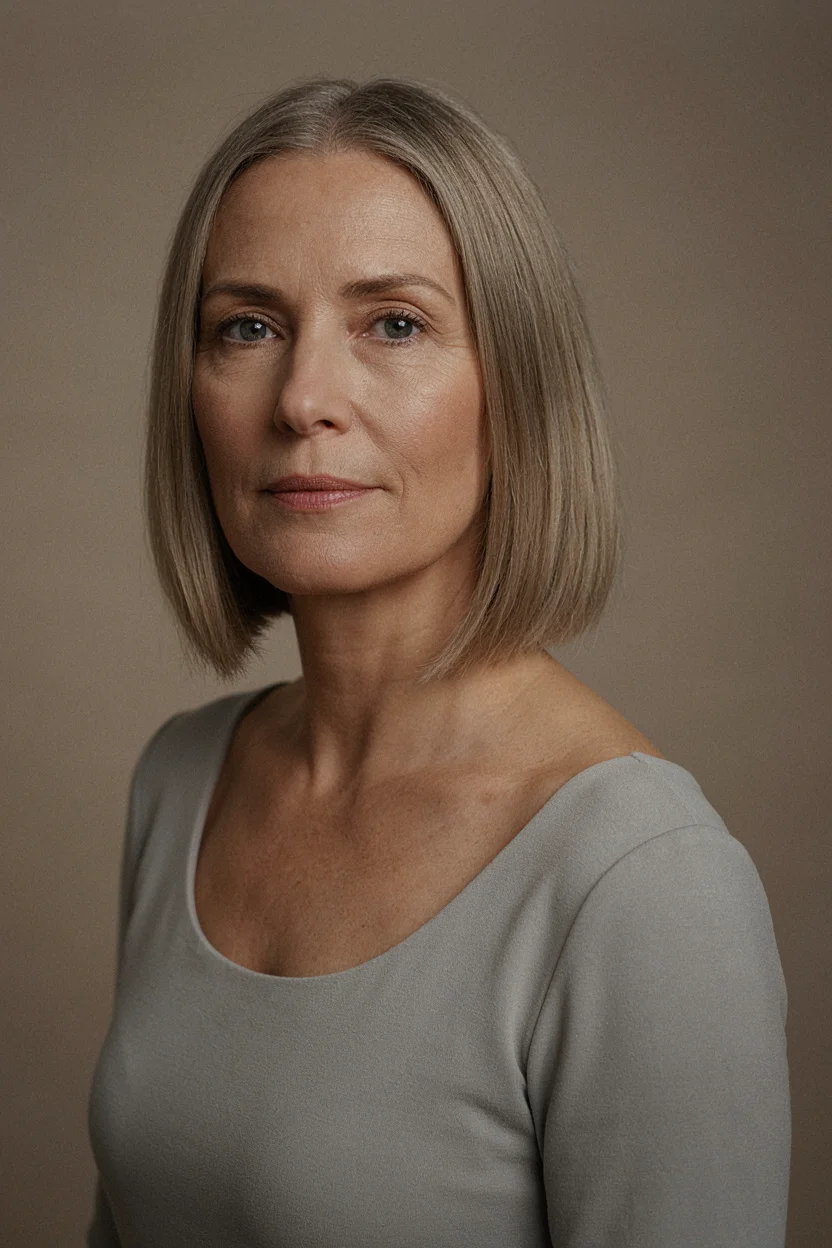
A shoulder-length blunt cut gives you more length while keeping the density line intact. The weight sits at the collarbone. This cut suits straight hair, fine to medium texture. Wavy hair works if you are willing to blow-dry for a smooth finish.
Styling takes eight to ten minutes. Blow-dry with a paddle brush for a smooth, straight result. The longer length means more surface area to cover. If you air-dry, the ends may flip at the shoulder. That flip breaks the density line and makes the hair look thinner at the bottom.
Trim cadence is eight weeks. Shoulder-length is more forgiving than chin-length because the growth is less visible against a broader landmark. At eight weeks, the cut has grown one inch. The line still reads as shoulder-length. At ten weeks, it starts to look mid-length and the shape loses definition.
One limitation: shoulder-length blunt cuts add weight at the bottom, which can pull fine hair flat against the scalp. If your hair is very fine and you want some lift at the crown, ask for interior layering only. Interior layers remove weight from the inside of the cut without touching the perimeter line. The density line stays intact. The crown gets a small amount of lift.
The Jaw-Length Cut with Interior Layers

This cut keeps the perimeter blunt at the jaw but removes weight from the interior. The layers are cut inside the shape, not at the edge. The result is a solid density line with slightly more movement through the body of the hair.
This works on wavy to curly hair. Curly hair at a blunt jaw length tends to stack and look heavy. Interior layers remove enough bulk to let the curl pattern move without sacrificing the bottom line. On straight hair, interior layers are unnecessary and you are better off with a clean blunt jaw.
Styling takes five to seven minutes. Diffuse or air-dry to let the wave or curl pattern form naturally. A light curl cream at the midshaft keeps the texture defined. Avoid brushing once the hair is dry. That separates the curl and breaks up the density line.
Trim cadence is five to six weeks. Curly hair shows growth faster because the curl pattern changes as the hair gets longer. The weight of new growth stretches the curl slightly, and the shape shifts. Five weeks keeps the cut consistent. Six weeks is the maximum before the shape changes noticeably.
- Blunt chin bob: 6-week trim, 5 minutes daily styling, straight to wavy fine-to-medium hair
- Shoulder-length blunt: 8-week trim, 8 to 10 minutes daily styling, straight fine-to-medium hair
- Jaw-length with interior layers: 5 to 6-week trim, 5 to 7 minutes daily styling, wavy to curly hair
- Interior-only layers: add lift at the crown without touching the perimeter line
A blunt perimeter does not add hair. It keeps the hair you have in one solid line, and that line is what reads as density.
What a Blunt Perimeter Cannot Do

A blunt cut cannot create volume at the crown. If your hair lies flat against the scalp and you want lift, the perimeter is not the place to get it. Volume at the root comes from styling technique and product, not from the cut line. A blunt perimeter gives density at the ends. Root volume is a separate conversation.
A blunt cut cannot address thinning at the part line. If your part is visibly wider than it used to be, that is a density issue at the scalp, not a cut issue. A haircut can redistribute weight and change the silhouette. It cannot fill in a widening part. If your part has widened noticeably over six months or you are seeing new patches of scalp, see a dermatologist. That is a medical conversation, not a styling one.
A blunt cut cannot add movement on its own. Blunt lines are structured and geometric. If you want softness and motion, that comes from face-framing pieces or interior work, not from the perimeter. A completely blunt cut with no face framing can look heavy and severe on some people. A soft face-framing piece starting at the cheekbone adds softness without removing perimeter weight.
Decision Table: Which Blunt Cut Works for Thinning Hair
| Cut | Week-Six Behavior | Trim Cadence | Daily Styling | Best Suited For |
|---|---|---|---|---|
| Chin-length blunt bob | Line drops below jaw, ends begin to separate | Every 6 weeks | 5 minutes, round brush blow-dry | Straight to wavy, fine to medium texture |
| Shoulder-length blunt | Grows one inch past collarbone, line still holds | Every 8 weeks | 8 to 10 minutes, paddle brush blow-dry | Straight, fine to medium texture |
| Jaw-length with interior layers | Curl pattern stretches, shape shifts | Every 5 to 6 weeks | 5 to 7 minutes, diffuse or air-dry | Wavy to curly, medium texture |
| Shoulder-length blunt with interior layers | Line softens slightly, crown lift holds | Every 8 weeks | 8 to 10 minutes, paddle brush blow-dry | Straight to wavy, very fine texture needing crown lift |
| Chin-length blunt with face framing | Line drops below jaw, framing pieces grow past cheekbone | Every 6 weeks | 5 to 7 minutes, round brush blow-dry | Straight to wavy, anyone wanting softness without losing perimeter weight |
When to Add Face Framing Without Losing Density

Face framing on a blunt cut means cutting two pieces, one on each side, that start shorter than the perimeter. The shortest point lands at the cheekbone or chin. The rest of the cut stays blunt. The framing pieces add softness near the face without removing weight from the back perimeter.
This is worth doing if a completely blunt line feels too severe. The framing pieces break up the hardness of the line around the face. The density at the back stays the same. You get the softness without the cost.
Trim cadence for the framing pieces is the same as the rest of the cut. They grow at the same rate. At six weeks, the shortest point of the framing has dropped half an inch below the cheekbone. If you started at the cheekbone, it is now at the jaw. That is fine. It still frames. If you want it back at the cheekbone, the six-week trim addresses it.
Styling adds about two minutes to the routine. The framing pieces need a slight bend from a round brush to curve them away from the face. The rest of the cut is styled as usual. Total daily styling time with framing: seven minutes on a chin-length cut, ten to twelve minutes on a shoulder-length cut.
Frequently Asked Questions
Will a blunt cut make my thinning hair look thicker?
It will look denser, which is not the same as thicker. A blunt perimeter keeps every strand at the same length, which creates a solid line at the ends. That line reads as fullness. The actual strand count does not change. But the visual effect is noticeable, especially compared to a layered cut where the ends spread apart and show scalp.
Should I avoid layers entirely if my hair is thinning?
Avoid layers at the perimeter. Layers at the edge remove weight from the density line, which is the last thing thinning hair needs. Interior layers, cut inside the shape without touching the bottom edge, are a different tool. They remove bulk from the inside and can add lift at the crown without sacrificing the perimeter. The distinction matters. Perimeter layers hurt density. Interior layers manage bulk.
How short should I go if my hair is thinning?
The shortest I recommend for most thinning hair is chin length. Shorter than the chin, and the hair may not have enough length to create a visible density line. Above the chin, the cut reads as a crop, and crops expose the nape and scalp in ways that can make thinning more visible, not less. Chin to shoulder is the range where a blunt perimeter delivers the most benefit.
Can I keep my hair long if it is thinning?
You can, but understand the trade-off. Long hair is heavier. The weight pulls it flat against the scalp, which reduces the appearance of volume at the crown. Long thinning hair also tends to separate at the ends, which makes the thinning more visible. If you want length, shoulder-length is the practical maximum for thinning hair. Beyond the shoulder, the density line weakens and the hair looks stringy at the ends.
How do I know if my thinning needs a dermatologist instead of a haircut?
If your part has widened noticeably over six months, if you see round patches of bare scalp, or if you are losing hair in clumps rather than the normal daily shed, see a dermatologist. Those are signs of a scalp or hormonal issue that a haircut cannot address. A stylist can improve the appearance of thinning hair with the right cut. A dermatologist can investigate the cause.
The Line Is the Cut
A blunt perimeter is the most reliable tool for thinning hair. It does not add volume at the root. It does not fix a widening part. It creates one thing: a solid, unbroken line at the ends that reads as density. Every layer you take out of that line costs you the exact benefit you came in for. Keep the line. Trim it on schedule. The fullness you see is the hair you already had, held together instead of cut apart.
— Viv