Hair Straightener: How to Use One by Hair Type, Without the Damage
A hair straightener gets used the same way on almost everyone’s hair regardless of texture, and that one-size-fits-all approach is a big part of why so many people end up with damage that doesn’t fully grow back looking the same. I’ve fried more of my own hair with a flat iron set too hot than I want to admit before I actually looked into what temperature my texture needed instead of just cranking it to the highest setting out of impatience. This walks through what the tool is actually doing, the temperature that suits your hair type, and the honest trade you’re making every time you use it.
I used to test the heat on my hand before ever checking a temperature dial, which tells you nothing useful about what a specific setting is doing to hair specifically. Skin and hair respond to heat completely differently, and a temperature that feels totally fine on the back of your hand can still be well above what your particular hair type can handle repeatedly without real cumulative damage.
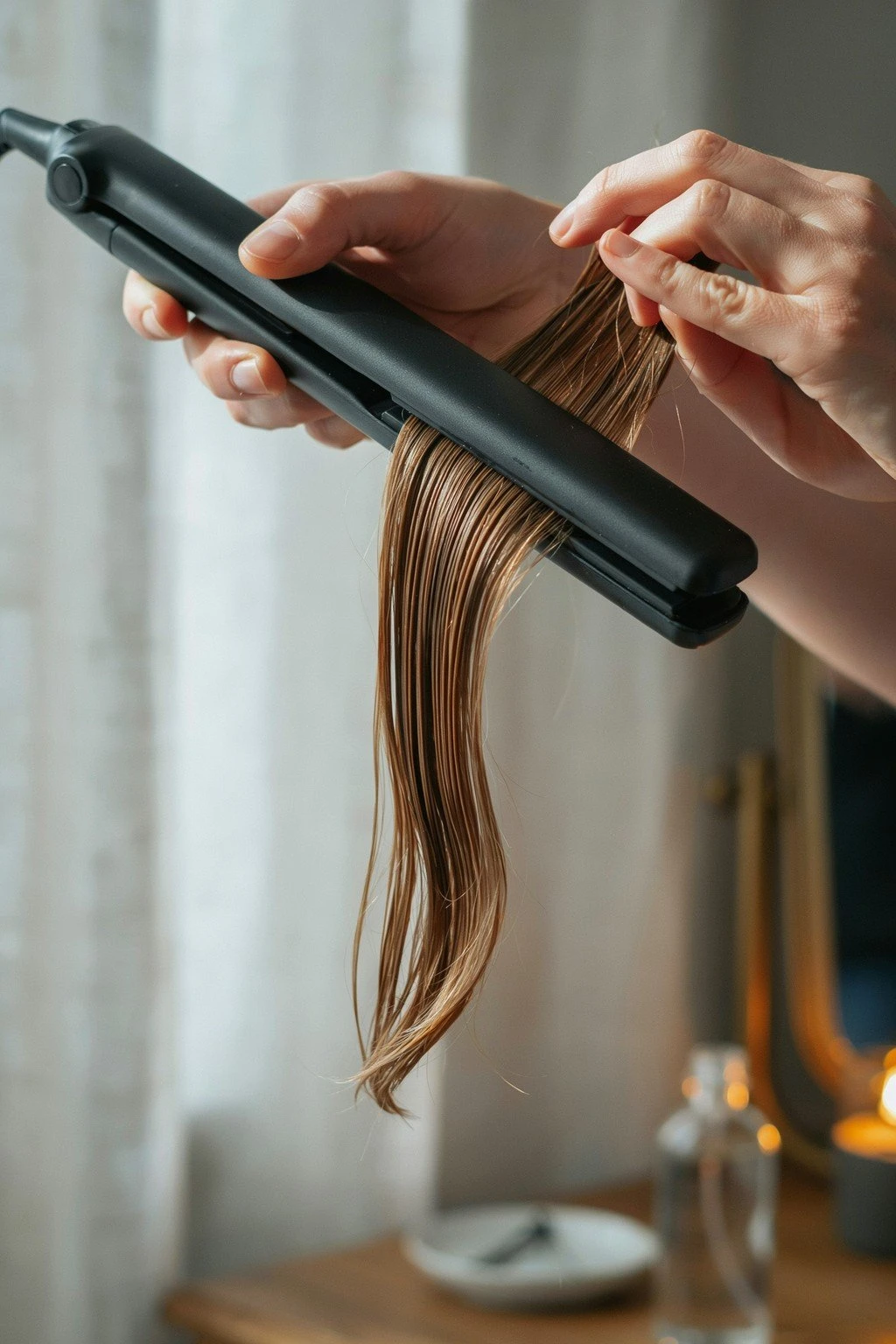
A hair straightener works by using heat to temporarily break and reform hydrogen bonds in the hair shaft, and matching the temperature to your specific hair type, rather than defaulting to the highest setting, is what actually determines how much damage you’re risking.
What a Hair Straightener Actually Does
Heat temporarily breaks hydrogen bonds inside each strand, and as the hair cools back down, those bonds reform in the smooth, straight shape the plates pressed it into. This is different from a chemical relaxer, which permanently breaks stronger disulfide bonds and doesn’t reverse. Heat styling is temporary instead, reverting with the next wash or with humidity. That’s genuinely good news in one sense, since nothing about a flat iron alone permanently changes your hair’s structure the way a chemical service does. The honest trade is that repeated heat exposure, especially above the temperature your specific hair can tolerate, weakens the hair shaft over time in a way that does become harder to reverse.
Choosing the Right Temperature
| Hair type | Recommended range | Typical passes needed |
|---|---|---|
| Fine or color-treated | 250°F–300°F | 1 pass |
| Medium texture | 300°F–350°F | 1–2 passes |
| Thick or coarse | 350°F–400°F | 2 passes |
| Very coarse or resistant | Up to 410°F | 2–3 passes |
Fine or chemically color-treated hair is the most vulnerable to heat damage and needs the lowest temperatures on this list. Going hotter doesn’t straighten it any better, it just adds risk without adding benefit. Thicker, coarser, or more heat-resistant textures genuinely need more heat to actually achieve a smooth result, and using too low a temperature on this hair type just means more passes over the same section, which itself adds up to more cumulative heat exposure than one pass at the right temperature would.
If you’re not sure which category your hair falls into, start at the lower end of the range that seems closest and test on a small, hidden section first. It’s easier to raise the temperature ten degrees at a time than to undo the result of guessing too high on your first pass through the whole head.
The Technique, Step by Step
- Start with completely dry hair. Straightening damp or wet hair causes the water inside the strand to boil rapidly under heat, which is one of the most damaging things you can do to hair with a flat iron.
- Apply a heat protectant to clean, dry hair, focused evenly through the mid-lengths and ends. This takes under 1 minute and is not optional at any temperature.
- Section hair into four to six parts, working in smaller subsections within each as you go, roughly an inch wide.
- Clamp each subsection near the root and glide the iron down in one smooth, continuous motion, aiming for a single pass at your hair type’s recommended temperature.
- Let hair cool fully before touching, brushing, or tying it back — this is the step most people skip, and it’s when the bonds are actually resetting into the new shape.
The temperature that works isn’t the highest one your iron goes to. It’s the lowest one that actually gets the result in a single pass.
What a Hair Straightener Doesn’t Fix
A flat iron smooths the shape of hair that’s already there. It doesn’t repair split ends, reverse existing heat or chemical damage, or make hair that’s breaking stop breaking — if anything, using more heat on already-damaged hair usually makes those specific problems worse rather than better. It also doesn’t permanently change your texture; every wash, humid day, or workout brings your natural pattern back unless you’re using it purely as a temporary style. If you’re reaching for a straightener specifically because your natural texture is hard to work with day to day, that’s worth addressing through routine and product changes, which is a different conversation than technique.
Protecting Your Hair From Real Heat Exposure
Limiting straightening to two to three times a week at most gives hair real recovery time between heat exposures, and going longer between sessions matters more than almost any product you could add to a heat-heavy routine. A heat protectant genuinely reduces damage, but it doesn’t make any temperature safe to use indefinitely — it raises the threshold, it doesn’t remove it. Watch for a texture change that doesn’t bounce back after a few heat-free days, since that’s a sign of real cumulative damage rather than something a lower temperature next time will undo on its own.
A heat-training claim is worth being skeptical of. Some styling advice suggests that repeated straightening gradually “trains” hair to stay straighter with less heat over time, but that’s not something the hair itself is doing. What’s actually happening in cases where this seems true is usually cumulative damage reducing the hair’s natural elasticity and spring, which lets it hold a straighter shape more easily for the wrong reason entirely.
Who This Isn’t For Right Now
If your hair is already showing significant breakage, dryness, or damage from previous heat or chemical services, adding more heat on top of that isn’t the move, regardless of temperature or technique. Give hair a real break and focus on moisture and gentle handling first. A dermatologist or stylist can help you tell the difference between hair that needs a break and hair that’s dealing with something else entirely, like a scalp or growth-cycle issue, which is outside what a styling change can address.
What You’ll Need
- A flat iron with an adjustable temperature dial, not a single fixed setting.
- A heat protectant spray or cream, used every single time.
- Sectioning clips for working in small, even subsections.
- A wide-tooth comb, for detangling before you start.
Frequently Asked Questions
What temperature should I use on a hair straightener for fine hair?
Somewhere between 250°F and 300°F is generally enough for fine hair to straighten in a single pass. Going hotter than that adds risk without adding any real benefit, since fine hair typically responds to heat faster than thicker textures do.
How often can I use a hair straightener without damaging my hair?
Two to three times a week is a reasonable upper limit for most hair types, always with a heat protectant and at the lowest temperature that gets the job done in one pass. More frequent use, especially at higher temperatures, increases cumulative damage risk regardless of how careful the technique is.
Does a hair straightener work on curly or coily hair?
Yes, though coarser or coilier textures often need a slightly higher temperature and sometimes an extra pass to achieve the same smoothness that finer hair reaches in one. Detangling thoroughly before you start matters more on textured hair, since any remaining tangles will resist the iron and require repeated passes over the same section.
Why does my hair frizz up right after I straighten it?
This usually means either the hair wasn’t completely dry before you started, or you’re in humid conditions that are re-swelling the cuticle you just smoothed. A lightweight anti-humidity product applied after straightening, and completely dry hair before you begin, both help extend how long the smooth result actually holds.
Is a ceramic or titanium plate straightener better for my hair?
Ceramic plates heat more evenly and are generally gentler for most hair types, particularly finer or more heat-sensitive hair. Titanium plates heat faster and hotter, which some people with very coarse or resistant textures prefer, but that same intensity makes titanium a riskier choice for hair that’s already fine or compromised. If you’re unsure which you have, ceramic is the safer default to start with regardless of texture.
Before You Plug It In Tonight
Check what temperature you’ve actually been using against the chart above, not what you assumed was right. Most people are running hotter than their hair type actually needs, and dialing it back is usually the single biggest change you can make without giving up straightening altogether.
Tell me your hair type and what temperature you’ve been using, plus how many passes it usually takes, and I’ll tell you honestly if it’s too hot. — Tess