Short Haircuts for Round Faces: 20 Ideas That Add Vertical Line

Short haircuts for round faces work through one consistent mechanism across every length: adding a vertical line where a round face has the least of one naturally, usually by ending below the cheekbone rather than at it. I’ve cut plenty of round-faced clients who’d been told for years that short hair “wouldn’t work” for them, and the actual issue was almost always where the previous cut ended, not the length itself. Face shape is a guideline here, not a rule — density, texture, and how you actually want to style each morning matter just as much as bone structure. These twenty span pixies through lobs, grouped by cut family, so you can find the mechanism that suits your hair type first.
What I ask every client to bring, before we even talk about a specific style, is a sense of how they actually part their hair on a normal day and how many minutes they realistically spend on it each morning. Those two answers change which of the options below is actually livable, far more than the shape of their face does. A cut that adds the right vertical line but takes twenty minutes to style every day isn’t a win if you don’t have twenty minutes most mornings.
Short haircuts add a vertical line to a round face by ending below the cheekbone rather than at its widest point, which is the mechanism behind every version on this list.
Short Haircuts for a Round Face: Pixie Options
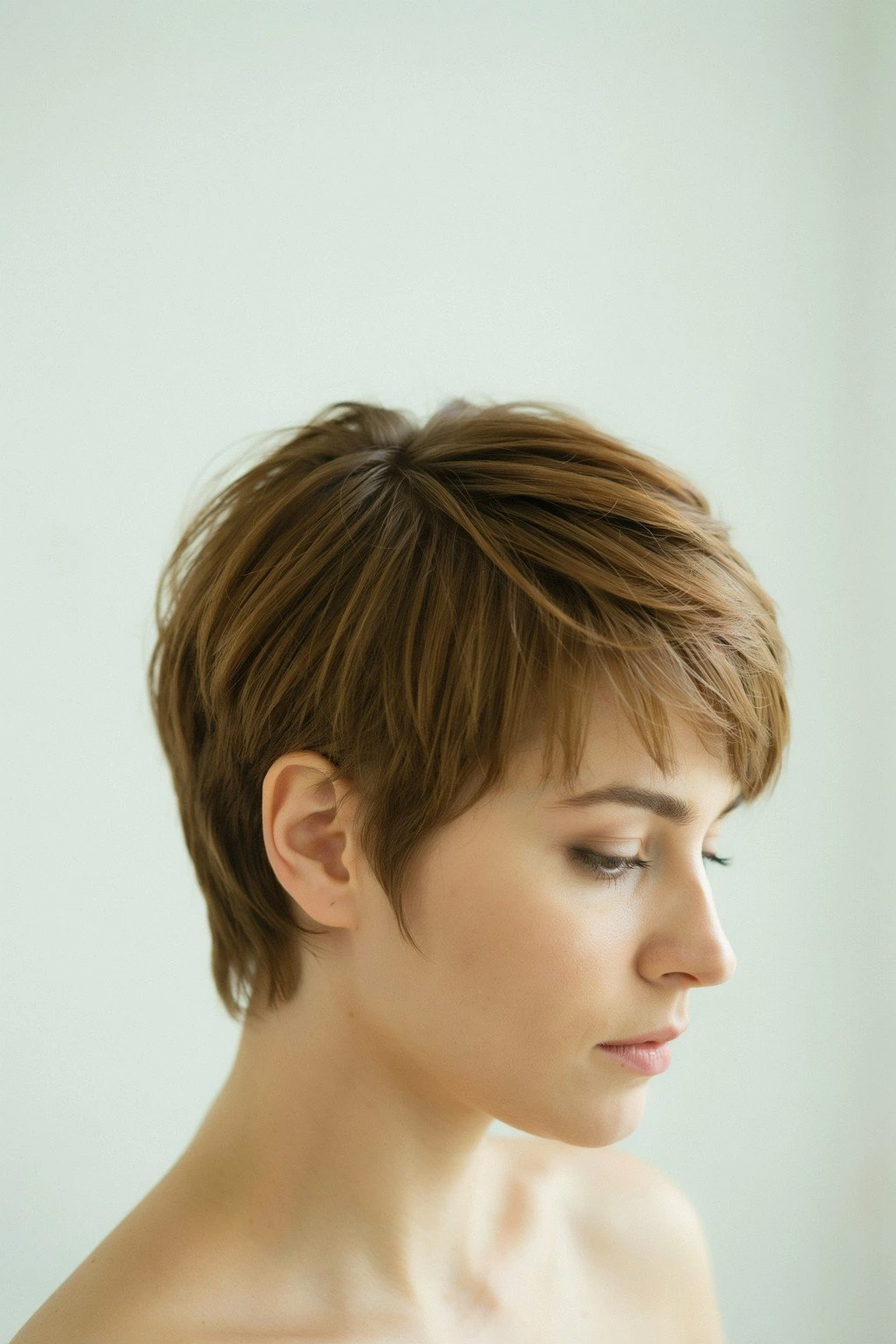
Height at the crown does the work here, drawing the eye upward rather than letting volume sit at the sides where the face is already widest.
The Pixie With Crown Height
Shorter at the sides, textured and lifted at the crown. Say, “keep the sides close and build height on top,” to get this specific balance. Expect a trim every 4 to 5 weeks to hold the lift.
The Side-Swept Pixie
A longer front section swept to one side rather than a symmetrical fringe, breaking up the roundness at the front. At week six, the front piece has grown enough to sweep even more dramatically, extending the style before its next trim.
The Textured Crop
Choppy, piece-y texture throughout rather than a smooth cap shape, which adds visual break-up along the sides. This needs a trim every 4 weeks to stay textured rather than growing into a rounder, softer stage.
The Long Pixie With Face-Framing Pieces
A longer pixie variant with pieces left at cheekbone length to frame the front. Low-maintenance relative to the shorter options here, a trim every 6 to 8 weeks holds it.
Bobs for a Round Face

A bob’s exact length relative to the jaw decides almost everything about whether it adds a vertical line or emphasizes width instead.
The Below-Jaw Bob
Ends an inch or so below the jaw rather than exactly at it. At week six, this drops to a flattering collarbone-adjacent length rather than losing its shape entirely.
The Angled Bob
Longer in the front, shorter in the back, drawing the eye down along the jawline rather than across the widest part of the cheek.
The Side-Part Bob
A deep side part breaks the symmetry that can emphasize width, shifting hair to one side to create a line the eye follows down instead of across.
The Textured Bob
Choppy ends add visual break-up along the jawline rather than one solid line. A trim every 6 to 8 weeks keeps the texture from softening into a rounder shape. At week six, the texture has softened somewhat but still reads as intentional rather than needing an immediate refresh.
Short Haircuts for a Round Face: Lob Options

A lob gives the most length, and the most vertical line, of anything in this shorter cut family, while layers add movement without adding width.
The Classic Lob
Blunt at collarbone length, the longest option on this list. Low-maintenance for this group, a trim every 10 weeks holds it.
Face-Framing Layers on a Lob
Layers start below the cheekbone, around jaw level, adding vertical movement rather than width at the face’s widest point. At week six, these framing pieces have grown to jaw length, still working as intended.
The Deep-Side-Part Lob
A deep part shifts weight to one side, creating an off-center line that draws the eye down rather than across. This suits medium to thick density best, since there’s enough hair to fill the heavier side.
The Curly Lob
Cut dry to work with natural curl pattern, ending below the cheekbone once the curl springs back. Say, “please cut this dry so you can see where it actually falls,” to avoid a length that shrinks shorter than planned.
Short Haircuts for a Round Face: Shag Options

A shag’s irregular, choppy layering breaks up the outline more than a smooth, single-length cut, which suits a round face well when the layers start at or above the cheekbone.
The Short Shag
Heavy, choppy layering throughout, starting near the ear. At week six, the shortest pieces have grown enough to blend, softening the choppiness into something more wearable day to day.
The Curtain-Bang Shag
Bangs blended into shaggy layers, both starting around the cheekbone. Bangs need a trim every 4 to 5 weeks to hold their length and swing.
The Wolf Cut
A more dramatic, high-contrast version of the shag, with significant volume at the crown and heavy layering below it. Ask specifically for “lift at the crown, not just length taken off the bottom” to get this effect rather than a standard shag.
The Low-Maintenance Textured Crop
Softer, less dramatic texture than a full shag, with minimal styling required. A trim every 8 weeks holds this, and it’s the lowest daily-effort option in this group.
Asymmetrical and Side-Part Cuts for a Round Face

Deliberate asymmetry breaks the horizontal symmetry that can emphasize width, replacing it with a diagonal line the eye follows instead.
The Asymmetrical Bob
One side cut noticeably longer than the other, usually a one- to two-inch difference. This needs a trim every 6 to 8 weeks to keep the asymmetry deliberate rather than growing lopsided.
The Asymmetrical Pixie
A longer, sweeping front section on one side paired with a shorter back and opposite side. At week six, the long side has grown enough to sweep even further, which some people prefer to the original length.
The One-Length Side Part With Heavy Fringe
A single-length cut styled with a deep side part and a heavier fringe on the shorter side. Low-maintenance relative to the shorter asymmetrical options, a trim every 8 to 10 weeks holds it.
The Undercut Asymmetrical Crop
One side shaved or closely cropped, the other left long enough to sweep across. This is the boldest option in this group and needs the sides refreshed every 3 to 4 weeks to hold the contrast.
Choosing Your Cut
| Cut family | Where it adds vertical line | Trim cadence | Who it suits |
|---|---|---|---|
| Pixie | Height at the crown | 4–5 weeks | Anyone wanting the most dramatic change |
| Bob | Length below the jaw | 6–8 weeks | Anyone wanting shape with less daily styling |
| Lob | Length below the cheekbone | 10 weeks | Anyone prioritizing length retention |
| Shag | Irregular layering at the sides | 4–8 weeks | Anyone wanting texture over a smooth line |
If you’re deciding between a bob and a lob, I’d lean toward whichever length you can commit to trimming on schedule. A bob that’s grown out past its intended line stops doing the work it was cut to do, while a lob has more room to stretch between appointments.
The mechanism is length below the cheekbone, not a specific cut name. Once you understand that, the whole list stops looking like twenty separate decisions.
What to Say Before You Sit Down
- “I want this to end below my cheekbone, not at it.”
- “Can you build height at the crown rather than volume at the sides?”
- “How will this look at week six, and how often do I need to come back?”
- “Can you show me the back before I leave?”
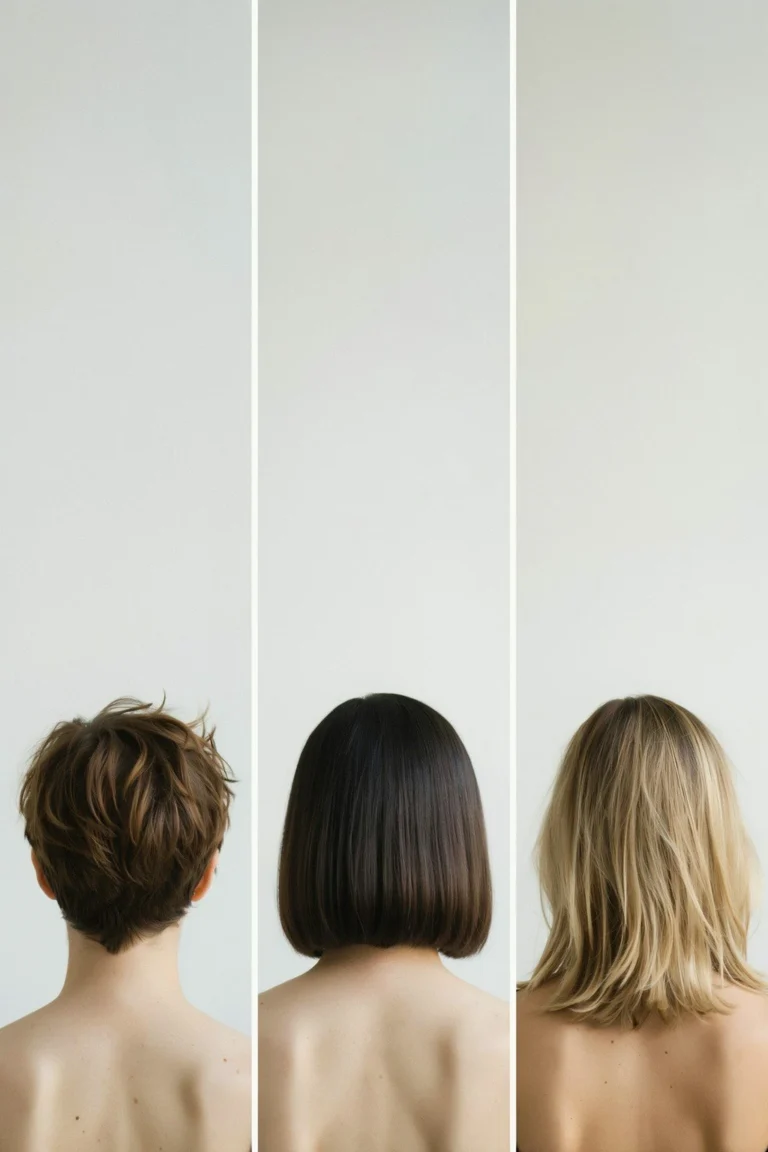
Bring a photo of the back of any cut you’re considering, along with a front photo. Vertical line is built through where the cut ends relative to your jaw and cheekbone, and that’s easiest to judge from a side or back angle, not the front-facing photos most people bring in.
Bring a photo of your hair on an ordinary day too, not just freshly styled. A cut that only reads right the moment you leave the chair isn’t a realistic plan, and a stylist who sees how your hair actually falls day to day can place the vertical line to hold up without daily effort, rather than only on the day it’s cut.
Frequently Asked Questions
What haircuts work best for a round face?
Cuts ending below the cheekbone rather than at it, with added height at the crown for shorter lengths. The specific cut name matters less than where the perimeter falls relative to your jaw and cheekbone.
Should I avoid bangs with a round face?
No — side-swept or curtain bangs that leave some length at the sides work well, since they add asymmetry rather than a solid horizontal line. A blunt, full fringe cut straight across is the version worth approaching more carefully, since it can emphasize width at the forehead.
Do short haircuts make a round face look shorter?
The right length adds a vertical line that changes where the eye travels, but no cut changes bone structure. What changes is emphasis, not the shape of your face underneath the hair.
How short can I go with a round face?
As short as you want — a pixie works well with the right crown height, and there’s no length that’s off the table based on face shape alone. Density, texture, and your daily styling routine matter more than face shape in deciding how short to go. If you’re nervous about going short for the first time, a long pixie or a bob gives you most of the vertical-line effect with an easier path back to longer hair if you change your mind.
What’s the biggest mistake people make cutting short hair for a round face?
Cutting a bob or lob exactly at the jaw or cheekbone rather than an inch or so below it. That single difference in length placement is responsible for more disappointment in this category than any other factor, including the actual cut style chosen.
Can I still get bangs with a round face?
Yes, and side-swept or curtain versions tend to work better than a heavy, blunt fringe cut straight across. The asymmetry breaks up a solid horizontal line at the forehead, which is the same vertical-line principle behind every cut on this list.
Finding Your Starting Point
Match your preferred cut family to a group above, then confirm the exact length with your stylist relative to your own jaw and cheekbone, not a general rule. That conversation matters more than the photo you bring.
Tell me your current length and how many minutes you have most mornings, and I’ll help you figure out where to start. — Viv