Scalp Massager for Hair Growth: What It Actually Does
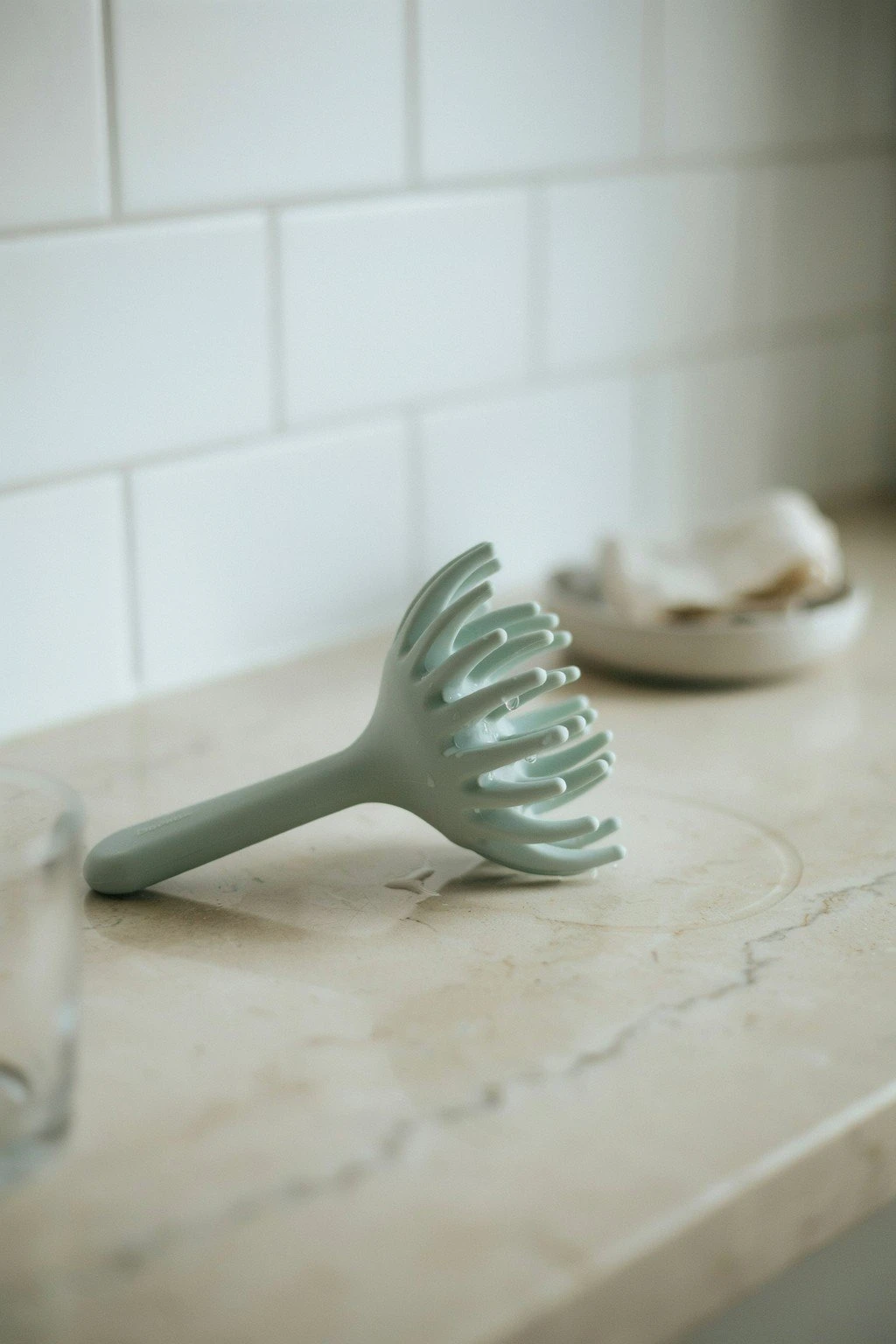
A scalp massager for hair growth gets sold with implications that stretch well past what a few minutes of massage can actually do, and I want to walk through the honest mechanism before you spend money on one. Massage does something real to the scalp, mild and temporary circulation changes mostly, but it doesn’t touch the biology that actually sets your hair’s growth rate. Here’s what the tool can plausibly add and what it can’t.
I use one myself most evenings, mostly because it’s become the few minutes of my routine that actually feels like a break rather than another step. I’d be lying if I said I could point to visibly faster growth from it, and I’d also be lying if I said that mattered to me as much as the five minutes of genuinely relaxing my scalp does at the end of a long day.
A scalp massager for hair growth works by mildly and temporarily increasing local circulation, a real mechanism with modest, thin evidence behind it for growth specifically, though it reliably reduces tension and can improve how product distributes through the scalp.
What Scalp Massage Actually Does
Massage increases local blood flow to the area being worked, a settled, easily observed effect — this is why a massaged scalp often looks slightly flushed and feels warmer immediately afterward. The plausible link to hair growth is that increased circulation could deliver more oxygen and nutrients to a follicle in its active growth phase, and a small number of studies have measured a modest effect on hair thickness with consistent scalp massage over several months. This sits at the plausible-but-thin evidence tier: the mechanism is real and the studies exist, but they’re small, and the effect size measured is modest rather than dramatic. It is not the same as the settled, well-established effect massage has on relieving tension and improving relaxation, which needs no such caveat.
It’s worth being specific about what those small studies actually measured, since “improved hair thickness” gets repeated a lot without context. The studies that exist generally measured shaft diameter under magnification after several months of consistent daily massage, comparing a massage group against a group that didn’t massage. The measured difference was real but modest, not the kind of change that would be obvious to the eye without careful measurement, and the studies were small enough that they’d benefit from being replicated at a larger scale before anyone treats the finding as settled.
Manual Massage vs. a Massager Tool
| Method | Mechanism | Time per session | Evidence tier |
|---|---|---|---|
| Fingertip massage | Manual pressure and circulation | 5–10 minutes | Plausible but thin (growth); settled (relaxation) |
| Handheld silicone massager | Same mechanism, more consistent pressure | 3–5 minutes | Same as above |
| Vibrating/electric massager | Adds mild vibration to the same mechanism | 2–5 minutes | Same as above, vibration itself not separately studied for growth |
None of these tools work through a fundamentally different mechanism than your own fingertips do — a massager mostly makes consistent pressure easier to maintain and less tiring on your hands over a longer session. A vibrating attachment adds a sensation some people find more relaxing, but there’s no separate evidence that vibration itself does anything additional for growth beyond the circulation effect massage already provides.
Material and design differences among massager tools mostly affect comfort rather than the underlying mechanism. Soft silicone bristles distribute pressure more gently across a wider area, which some people find more comfortable for a longer session, while firmer plastic tips concentrate pressure into a smaller point, which others prefer for targeting specific areas like the crown. Neither material changes what the massage is actually doing physiologically — the choice comes down to what you’ll actually want to use consistently, since a tool sitting unused in a drawer provides no benefit at all regardless of its design.
Price varies enormously in this category, from a few dollars for a basic silicone piece to considerably more for an electric, vibrating version with multiple speed settings. Given that the underlying mechanism is identical across all of them, I’d steer someone toward the cheapest option that feels comfortable in hand rather than assuming a more expensive tool does more. The evidence doesn’t support a meaningful difference in outcome between a basic and a premium version.
A scalp massager doesn’t do anything your own hands can’t do. What it adds is consistency and comfort, not a different or stronger mechanism.
What a Scalp Massager Does Not Do
This is worth stating plainly, since it’s where the marketing tends to overreach:
- It doesn’t change how long your genetically set anagen, or growing, phase lasts.
- It doesn’t reverse pattern hair loss caused by follicle miniaturization — that needs a dermatologist’s evaluation, not a massage tool.
- It doesn’t work faster with more pressure or more frequent use; there’s no evidence that doubling the time or intensity doubles any benefit.
- It doesn’t substitute for addressing an actual cause of hair loss, if one is present, medical or otherwise.
How to Use One
Work in small circular motions across the scalp, covering the crown, sides, and back, for about 5 minutes total. Firm, comfortable pressure is enough — pressing hard enough to cause pain or discomfort isn’t more effective and risks irritating the scalp rather than helping it. Most of the research behind the modest effect measured used sessions of a similar length, done most days of the week over several months, so consistency matters more than any single session’s intensity.
Timing within your routine is worth a mention too, mostly for practical reasons rather than a mechanistic one. Massaging before bed doubles as a wind-down ritual for some people, which supports the settled relaxation benefit alongside whatever modest growth effect might be happening. Massaging in the shower, with or without a product already on the scalp, is a reasonable alternative if evening routines don’t fit your schedule — the mechanism doesn’t care which time of day you do it, only that you do it consistently.
Realistic Expectations
If you’re doing this hoping for a noticeably faster growth rate, the honest expectation is a modest effect at best, measured over months rather than weeks, and it’s more likely to show up as slightly improved thickness than as hair that’s visibly longer sooner. Where a scalp massager reliably delivers is relaxation and stress relief, which is a real and worthwhile benefit on its own, even setting aside any growth-related hope. Pairing it with a scalp oil or serum you’re already using can also help that product distribute more evenly, though the massage itself isn’t adding a separate growth mechanism on top of whatever the product does.
Give a fair trial of this a genuine three to four months before deciding whether it’s worth keeping, matching the timeline the actual research used. Judging it after a week or two, which is when most people give up on a new habit, isn’t giving the underlying mechanism, modest as it is, a real chance to show anything at all. If you’re tracking results, a monthly photo in consistent lighting is more reliable than trying to remember how your hair looked a month ago.
Frequently Asked Questions
How often should I use a scalp massager for hair growth?
Most days of the week, for about 5 minutes per session, matches the frequency used in the small studies showing a modest effect. More frequent or more intense use hasn’t been shown to add additional benefit.
Can scalp massage regrow hair that’s already thinning?
No — massage doesn’t reverse follicle miniaturization or address the underlying cause of pattern hair loss. If thinning is an active concern, a dermatologist visit is the more useful next step than relying on massage alone. A concrete threshold worth using: if you’re shedding noticeably more than your normal for several weeks, or seeing thinning concentrated at the part or hairline, that’s the point to see a professional rather than waiting to see if a massage routine changes anything.
Is a vibrating scalp massager more effective than a manual one?
There’s no separate evidence that vibration adds a growth benefit beyond what the circulation mechanism from massage itself provides. Choose based on comfort and consistency — whichever one you’ll actually use regularly matters more than the specific mechanism.
Can I use this tool with oils or other products?
Yes, and it can help distribute a product more evenly through the scalp, though the massage and the product are doing two separate things rather than combining into a stronger single effect. Apply the product first, then massage it in gently.
Is it possible to overdo this?
Excessive pressure or overly vigorous massage can irritate the scalp or, in rare cases, contribute to mechanical stress on hair that’s already fragile. Gentle, consistent pressure over a modest daily session is the more evidence-backed approach than pressing harder or longer.
Should I massage a scalp that’s itchy, flaky, or irritated?
Hold off until the underlying cause is addressed, since massage on already-irritated skin can worsen discomfort rather than help. Dandruff, dry scalp, and other conditions have their own specific routines worth trying first, and a massager fits back into the routine comfortably once the scalp has settled.
Where to Start
Try five minutes a day for a month before deciding whether it’s worth keeping in your routine. Even if the growth effect turns out modest for you, the relaxation alone is often reason enough to keep it.
Tell me if you’ve noticed a difference, how long you’ve been at it, and whether the relaxation alone has been worth it — I’m curious what people are actually experiencing. — Iris