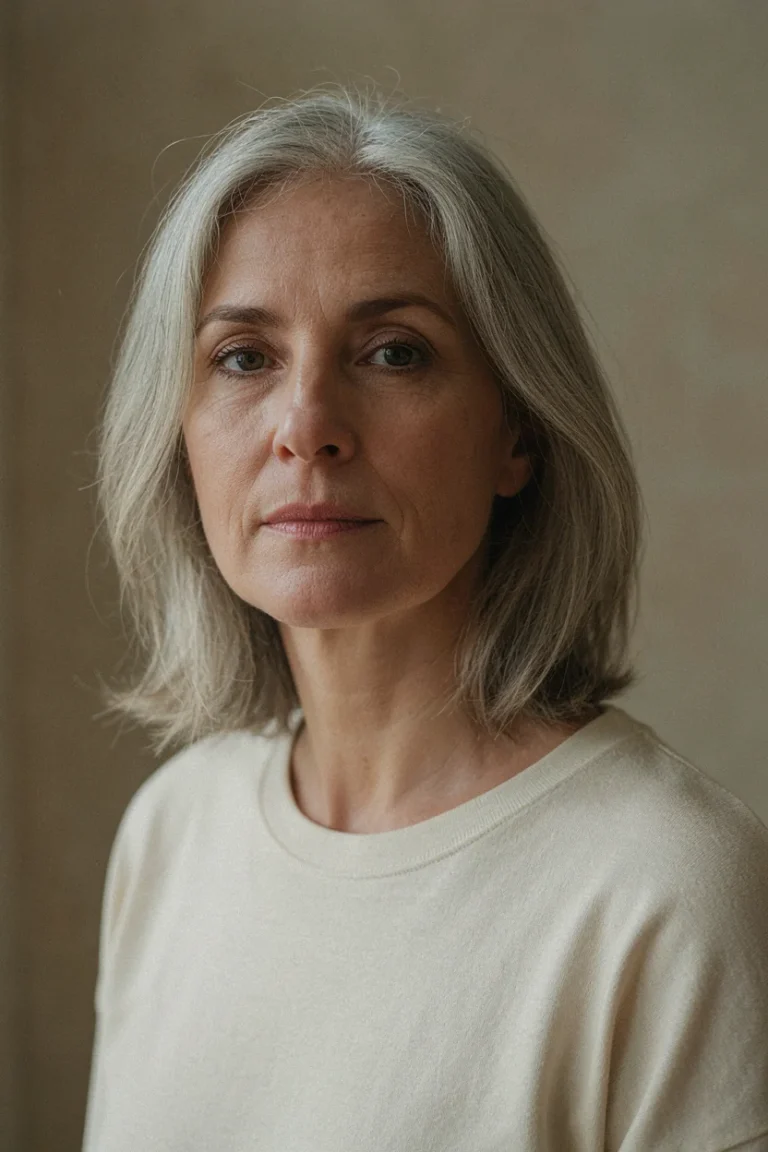
Fine Hair Over 50: Why Blunt Ends Often Look Fuller
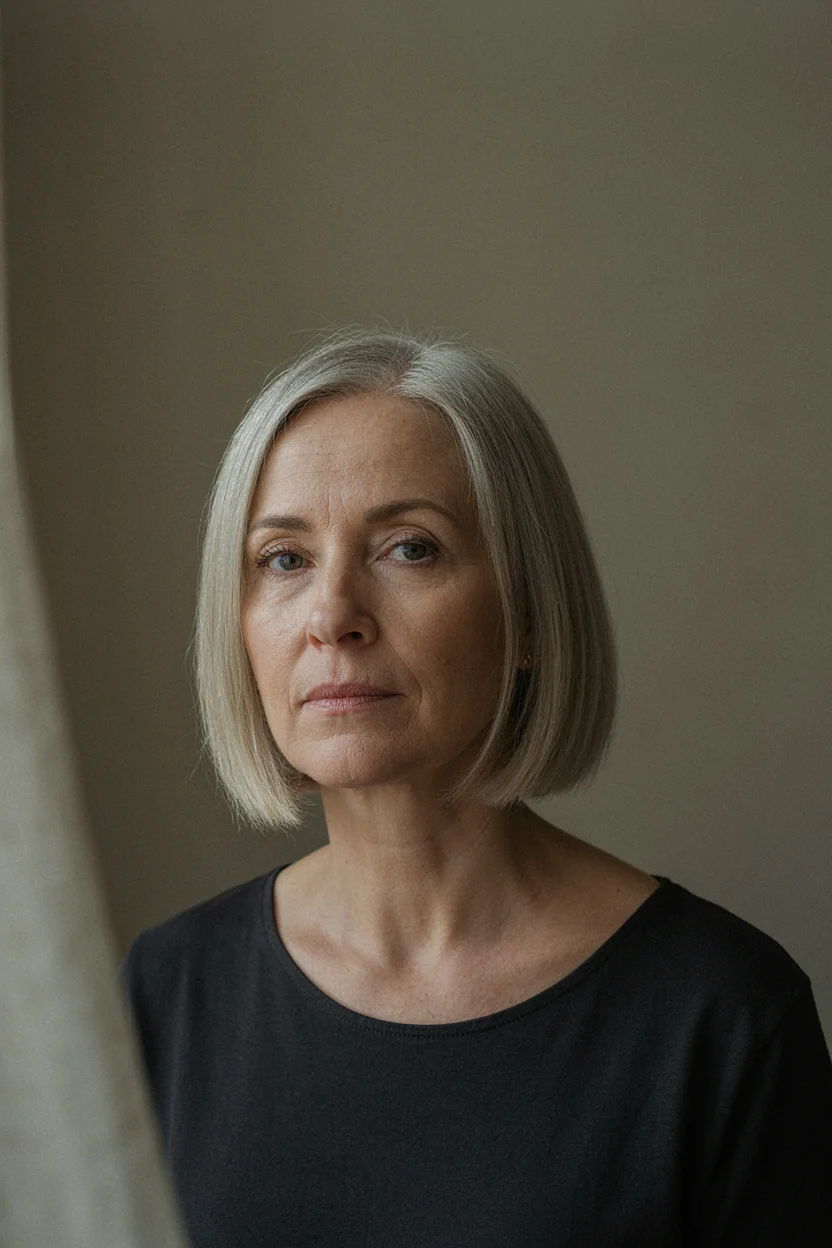
Fine hair over 50 behaves differently than it did at thirty, and the cut that once gave you volume may now be working against you. I spent roughly eleven years sitting in a salon chair every four weeks, watching my hair thin at the crown while my stylist kept adding layers to compensate. The fuller result did not arrive until I stopped layering and asked for a single-length line instead.
A blunt cut makes fine hair look thicker because every strand terminates at the same point, concentrating density at the perimeter rather than dispersing it across staggered lengths. For women noticing less volume after menopause, that single geometric change often matters more than any product.
Why Fine Hair Thins With Age
Hair diameter decreases with age for reasons rooted in the follicle. Each strand grows from a follicle that gradually miniaturizes over decades, producing a finer fiber with each cycle. Estrogen decline after menopause accelerates this process, because estrogen supports the anagen phase where hair grows at roughly half an inch per month. When that phase shortens, the hair that emerges is both thinner in diameter and shorter in maximum length.
Sebum production also drops with age. The scalp produces less natural oil, which means fine hair loses the slight coating that once made each strand appear plumper. The combined effect is a head of hair where individual strands are narrower, lighter, and less coated than they were twenty years earlier. The result at the ends is particularly visible: wispy, see-through tips that make the overall shape look sparse.
Gray hair compounds the picture. The absence of melanin changes the internal structure of the cortex, and gray fibers tend to be coarser in texture yet finer in actual diameter. So the hair that is growing out may feel wiry while measuring thinner under magnification. This is why women often report that their hair feels different and looks thinner at the same time.
The Geometry of a Blunt Cut
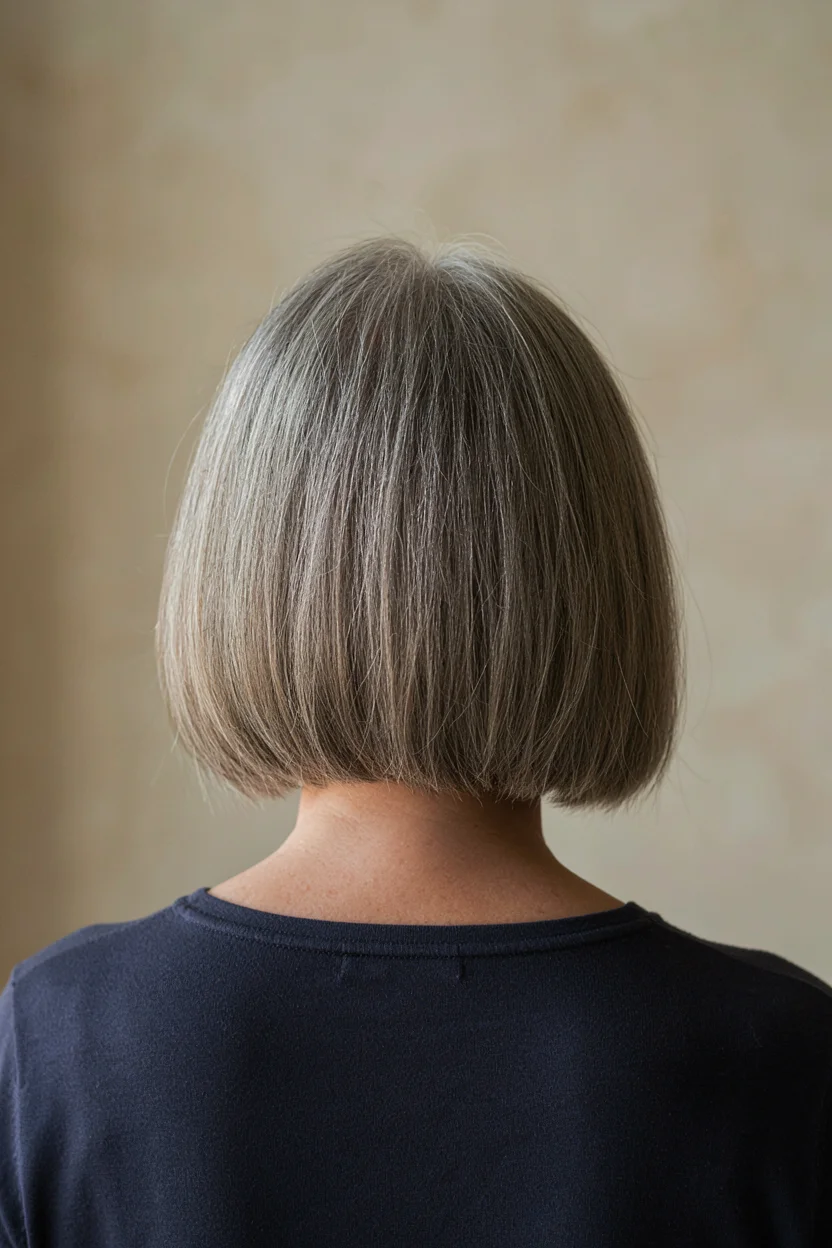
A blunt cut places every strand at the same terminal point. When hair falls to a single line, the combined cross-section of all those ends creates a visible edge that reads as density. Think of it like the difference between a brush with bristles cut to one length and one with bristles staggered at random. The even brush has a solid face. The staggered one has gaps.
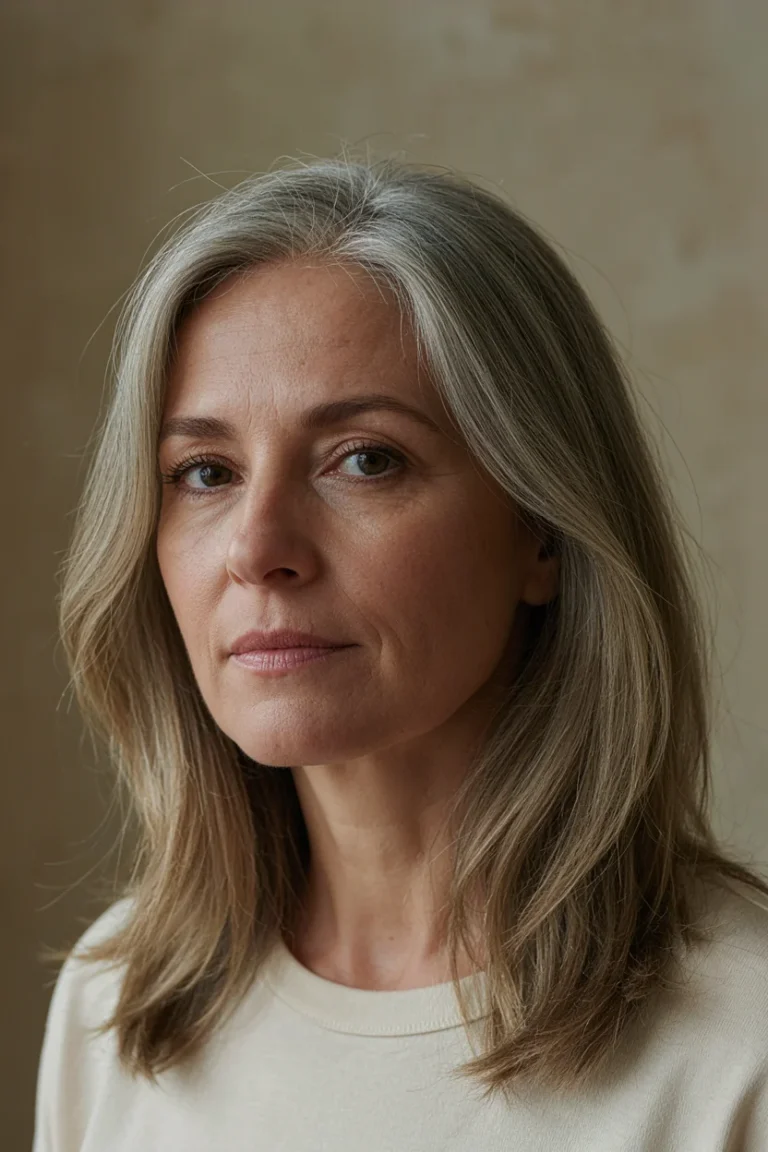
Layers remove weight, which is useful for thick hair that needs shaping. For fine hair, layers remove density from the perimeter and redistribute it at varying heights. On fine hair over 50, the result is often a silhouette that looks wispy at the ends and hollow through the mid-lengths. The top may have slight lift near the root, but the overall impression is less hair, not more.
A blunt line does not add hair. It concentrates what you already have at one visible edge, and that concentration is what reads as fullness.
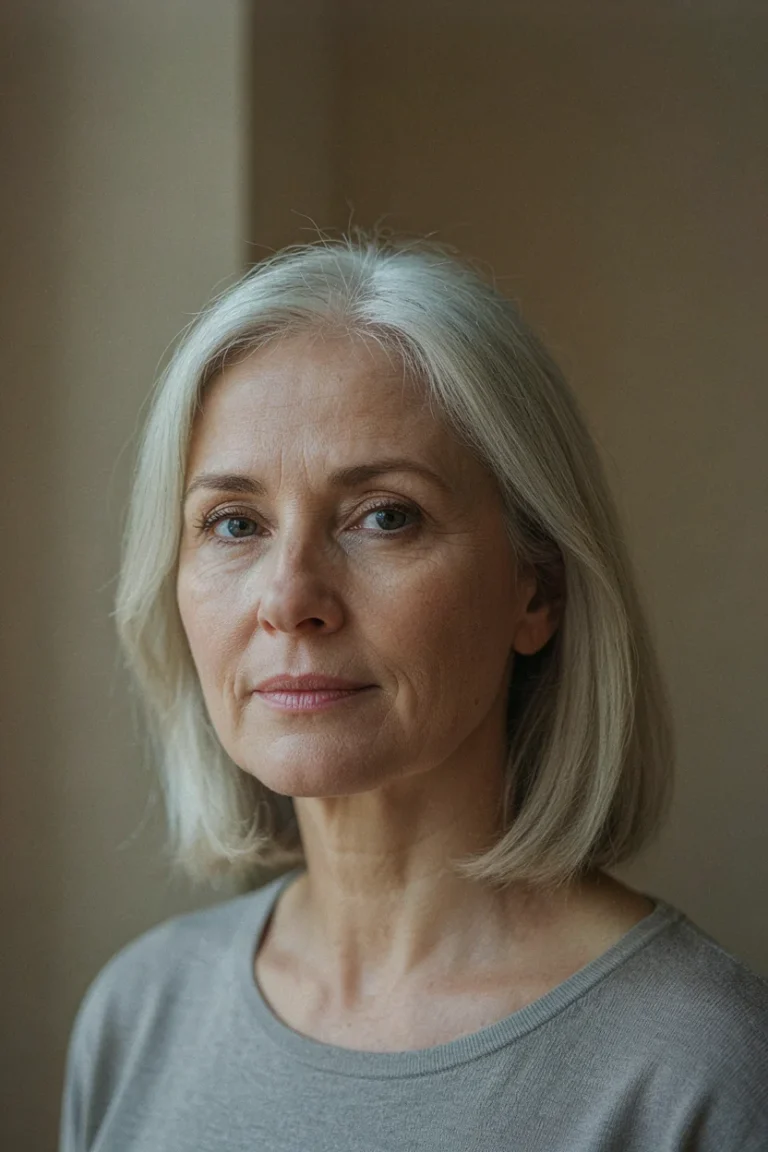
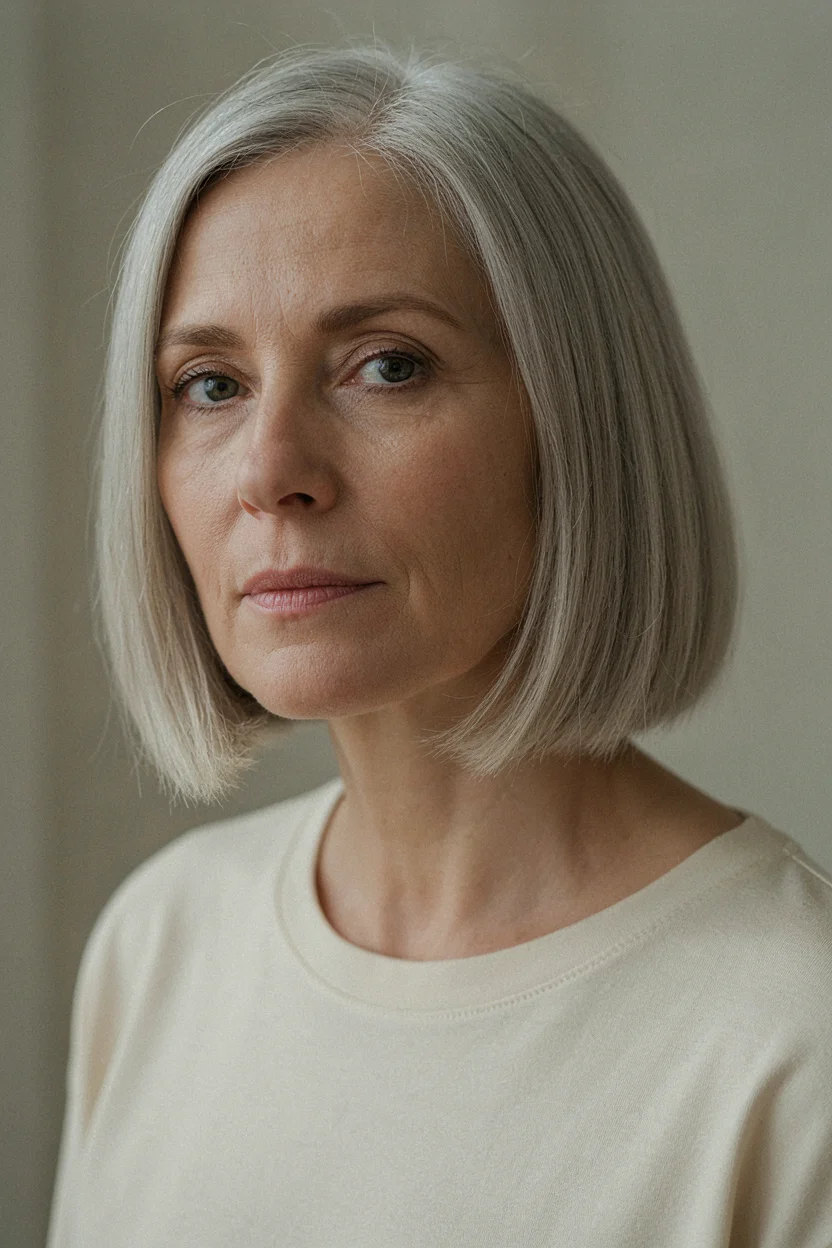
The effect holds across lengths. A blunt bob ending at the jaw puts all the density right where the face narrows, which creates the impression of a thicker hemline. A blunt cut at the collarbone works the same way, just lower. Even a blunt shoulder-length shape gives fine hair a solid perimeter that layers would fragment.
When Layers Still Make Sense
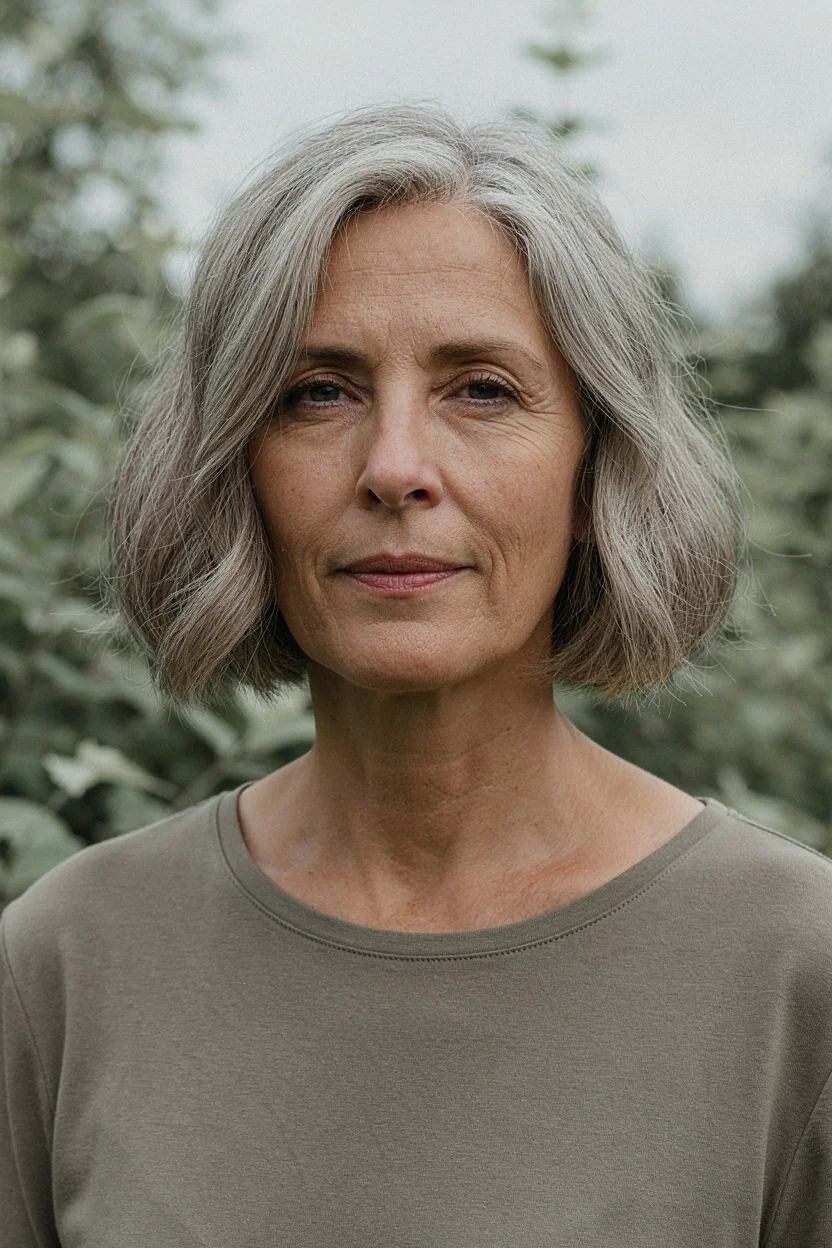
Blunt is not universally correct. There are situations where some layering improves the result, and a good colorist or stylist will tell you which camp you fall into.
| Hair situation | Cut approach | Why | Maintenance interval |
|---|---|---|---|
| Fine, straight, below-shoulder | Single-length blunt | Maximum perimeter density, no weight to sacrifice | 6 to 8 weeks |
| Fine with wave or curl | Blunt base with light interior layering | Wave pattern needs some weight removal to avoid a triangular shape | 8 to 10 weeks |
| Fine at crown, thicker at nape | Blunt perimeter with crown texturizing only | Lift at the root without thinning the hemline | 6 to 8 weeks |
| Very fine, above-shoulder | Blunt bob, zero layers | Short length already provides root lift; layers only remove density | 4 to 6 weeks |
| Fine but dense (many strands, thin each) | Blunt with soft beveling at ends | Softens the edge without removing meaningful weight | 8 to 10 weeks |
The key distinction is between interior texture and perimeter removal. Interior texturizing, done sparingly with a razor or point-cutting, can help fine hair move without sacrificing the blunt edge that creates fullness. Perimeter layers, which shorten strands at the outside of the shape, are the ones that make fine hair look thinner.
What to Ask Your Stylist

The conversation at the consultation determines the result more than anything that happens in the chair. I learned to bring a photograph of the perimeter I wanted, not the overall style, because the hemline was where my fine hair either worked or failed.
- Ask for a single-length baseline and explain that you want the perimeter to stay solid.
- If you want movement, ask for interior texturizing only, and specify that the outermost layer should not be touched.
- Request that the stylist check the density at your crown before deciding on any layering in that area.
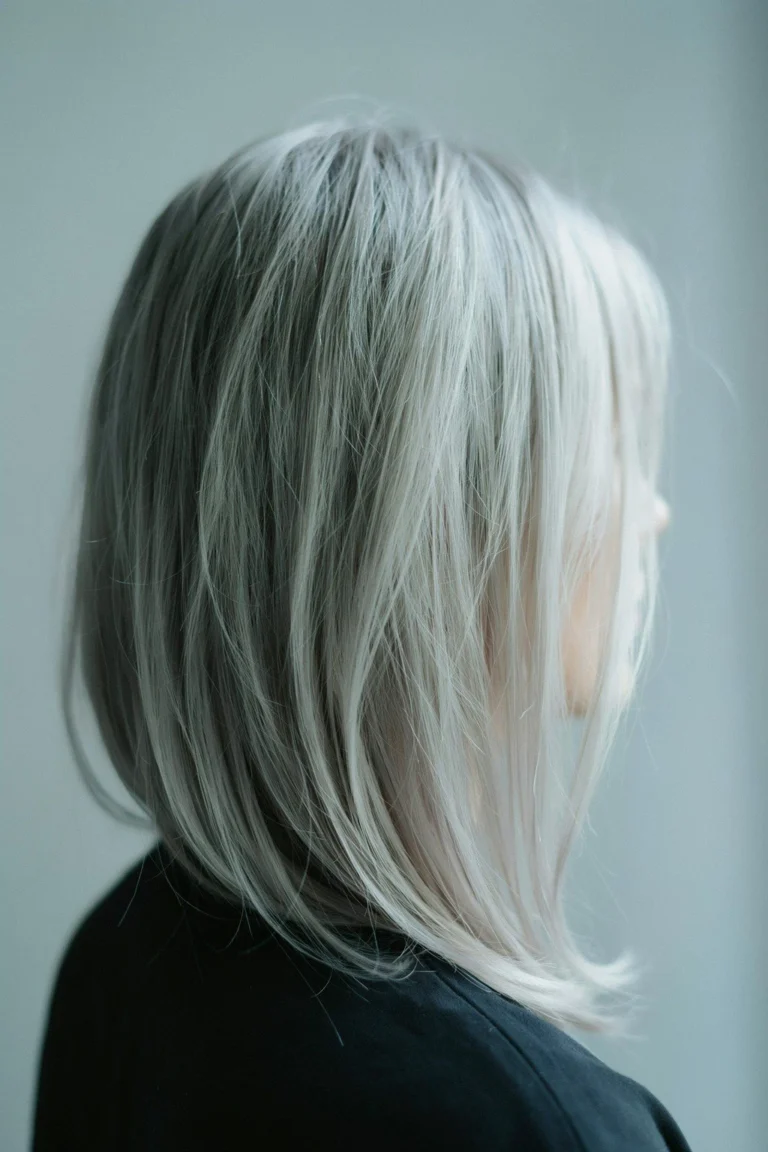
- Bring a photo that shows the blunt edge you want, taken from the back or side, not just the front.
- Ask how often you need to return to maintain the line. A blunt cut typically needs trimming every 6 to 8 weeks to keep the edge clean.
- If you are growing out layers, ask whether a single blunt cut is possible now or whether you need two or three visits to get there without losing too much length at once.
A stylist who works with fine hair regularly will understand these requests immediately. One who pushes back hard, insisting that layers are the only way to add volume, may be applying a principle that suits thick hair to a client who needs the opposite.
Blunt Cuts and Gray Hair
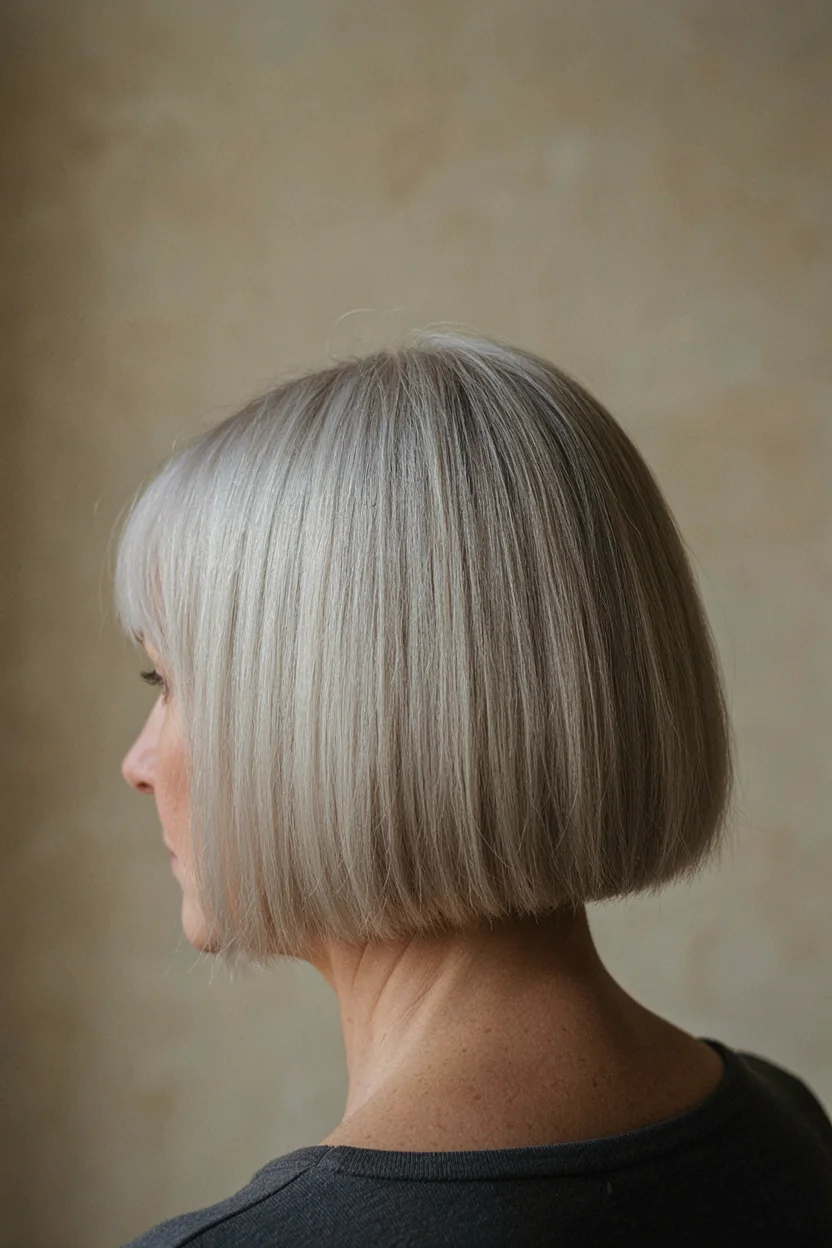
Gray hair and blunt cuts share a natural partnership. Because gray fibers are coarser in texture, they hold a straight line well. The wiry quality that makes gray hair difficult to curl or smooth becomes an advantage when the goal is a clean perimeter that does not collapse.
I noticed this during my own transition. My silver hair, which resisted every styling product I tried, fell into a blunt bob with almost no effort. The weight of the uncut strands kept the shape in place, and the coarser texture meant the edge looked defined rather than limp. After fourteen months of growing out my color, the cut was the one thing that required less maintenance, not more.
For women who are fully silver or in the growing-out phase, a blunt cut also helps the demarcation line between colored and natural hair look intentional rather than grown-out. A clean edge reads as a choice. Wispy, layered ends on two-tone hair read as neglect.
Products That Support a Blunt Silhouette
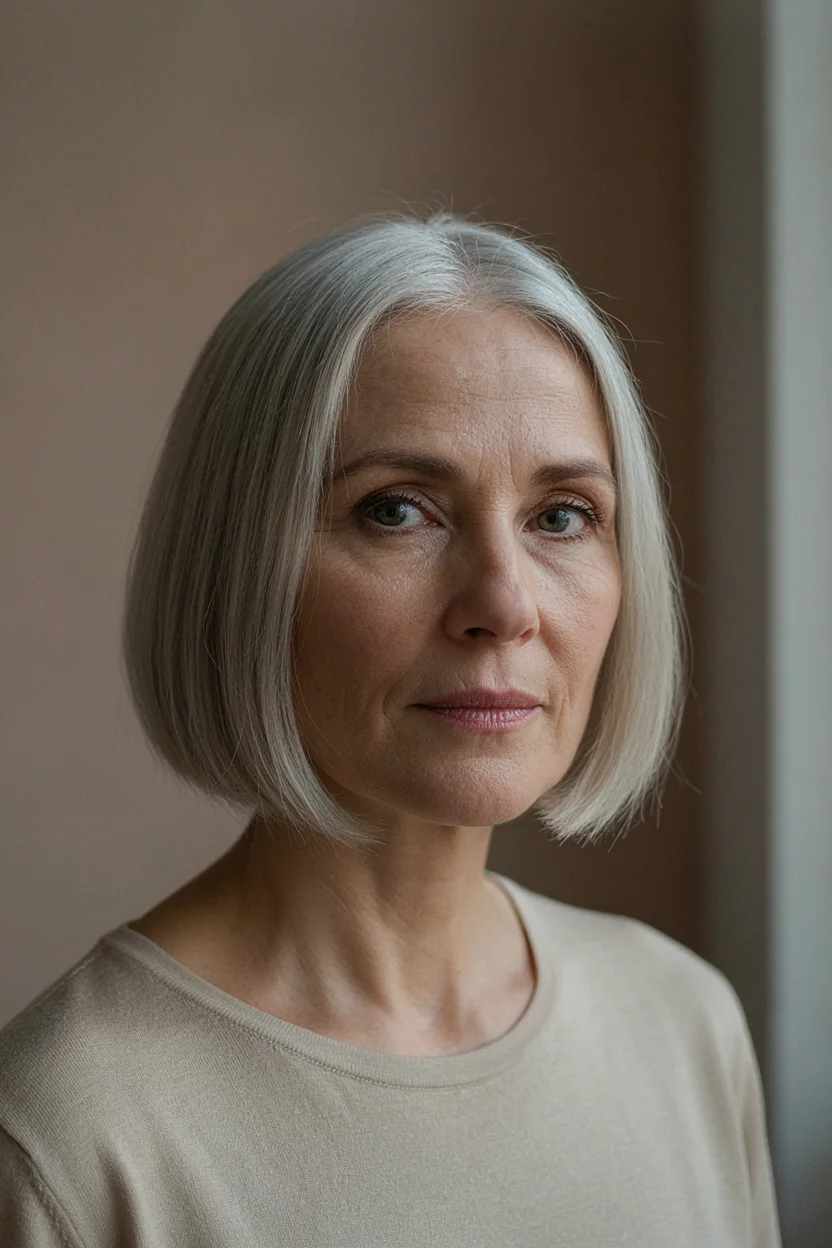
The right products keep a blunt cut looking its best without adding weight that flattens the root. For fine hair over 50, the goal is light hold and some grip at the root, not heavy smoothing that compresses the strand.
| Product type | What it does | Application | What to avoid |
|---|---|---|---|
| Lightweight root-lift spray | Adds grip at the scalp so the blunt line sits away from the head | Apply to damp roots before blow-drying | Heavy volumizing mousses that leave residue |
| Dry texture spray | Creates separation between strands so the perimeter reads as thicker | Mist on dry hair from mid-length to ends | Wax-based sprays that clump fine strands together |
| Smoothing serum (sparingly) | Tames the coarser texture of gray ends without softening the line | One drop, emulsified, applied only to the last two inches | Applying serum at the root, which kills lift |
| Heat protectant | Prevents the fine strands from scorching during blow-dry or flat-iron | Apply before any heat styling | Oil-based protectants that weigh fine hair down |
Less product is generally more for fine hair. I use roughly half the amount I used at forty, applied to a smaller area. The blunt cut does most of the visual work, and the product simply keeps it from collapsing by the end of the day.
Frequency and Maintenance
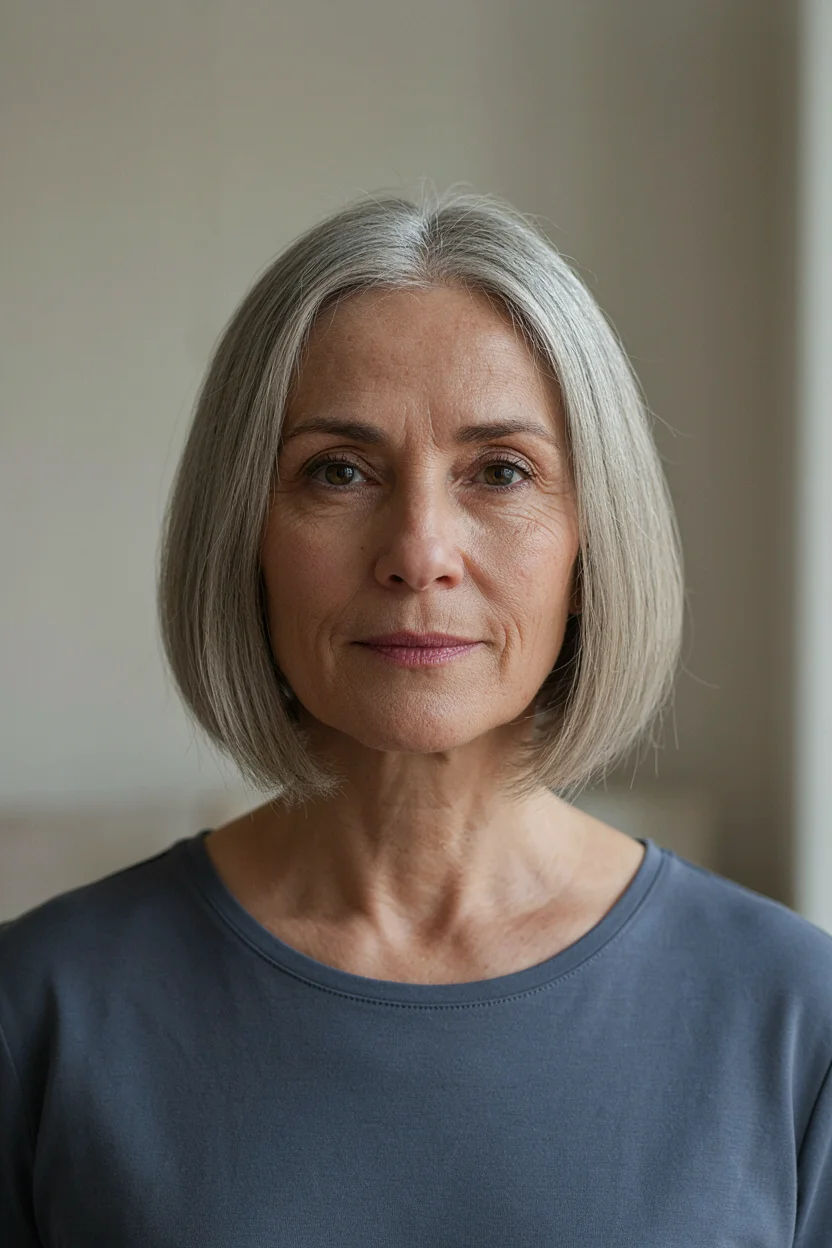
A blunt cut requires regular trims to maintain its effect. The entire visual argument rests on a clean, even line, and that line degrades as the hair grows. At half an inch per month, a blunt cut that starts sharp will look noticeably softer after eight weeks and lose its geometric advantage after twelve.
Budget for a trim every 6 to 8 weeks. The appointment is shorter than a full cut, because only the perimeter needs attention. In my experience, a blunt-line trim took about twenty minutes in the chair, compared to forty-five for a layered reshape. That difference matters if you are managing salon visits on a fixed schedule.
If you are growing out a layered cut toward a blunt one, expect two or three visits over four to six months. Each visit removes some of the shorter layers while preserving as much length as possible. The transition is not instant, but the result, once you arrive, is a cut that takes less daily effort than the layered one it replaced.
The Bottom Line on Blunt Ends for Fine Hair
Fine hair over 50 does not need more layers. It needs the density that layers remove, placed where the eye can see it. A blunt cut concentrates every strand at one visible edge, and that concentration is what reads as fullness from across the room. The maintenance is straightforward: a trim every 6 to 8 weeks, lighter products, and a stylist who understands that removing weight from fine hair is removing the very thing it needs.
If your hair has been thinning and your response has been to add more layers, try the opposite. Ask for the line to stay solid. See what six weeks of concentrated perimeter does for the way your hair looks and the way you feel about it.
Frequently Asked Questions
Will a blunt cut make my thin hair look even flatter on top?
A blunt cut concentrates weight at the perimeter, which can reduce root lift if the hair is very long and very fine. Keeping the length above the shoulders typically avoids this problem, because shorter lengths are lighter at the root. A lightweight root-lift spray applied before blow-drying addresses any remaining flatness without compromising the blunt edge.
Can I have a blunt cut if my hair is wavy or slightly curly?
Yes, though the approach adjusts slightly. A blunt baseline with minimal interior texturizing allows wave patterns to form without creating a triangular silhouette. The perimeter stays solid, which preserves the fullness effect, while the interior layers prevent the hair from flaring outward at the ends.
How long does it take to grow out layers into a blunt cut?
The shortest layers in a heavily layered cut may be four to six inches above the perimeter. At half an inch per month, those layers need eight to twelve months to reach the baseline. Most stylists can blend the transition across two or three visits over four to six months, removing some shorter lengths each time while preserving overall length.
Is a blunt bob better than a blunt long cut for fine hair over 50?
Shorter blunt cuts generally create a stronger impression of fullness because the hair is lighter and sits away from the scalp more readily. A bob ending between the jaw and the collarbone is the most common recommendation for fine hair. Longer blunt cuts still work but may need root-lift products to prevent the weight from pulling the hair flat at the crown.
Does a blunt cut work for gray hair that is coarser in texture?
Gray hair holds a blunt line particularly well. The coarser texture that makes gray hair resistant to curling also keeps the perimeter defined throughout the day. Many women find that a blunt cut on gray hair requires less daily styling than the same cut on their previously colored hair.
Your Hair, One Clean Line
The best haircut for fine hair over 50 is the one that keeps every strand working toward the same edge. Blunt ends are not a trend. They are a structural choice that respects what fine hair actually is and stops asking it to perform in ways it cannot.
— Nora