Hair Breakage: Why It Looks Like Your Hair Stopped Growing
Hair breakage gets confused with slow growth constantly, and I understand why: both leave you with hair that seems stuck at the same length no matter how long you wait. The mechanisms are completely different, though, and figuring out which one you’re actually dealing with changes everything about what helps. Breakage happens partway up the strand. Slowed growth happens at the root. Here’s how to tell them apart and what the evidence actually supports for each.
I spent a frustrating stretch of my own hair journey convinced my hair had simply stopped growing, when what was actually happening was breakage quietly undoing months of growth before I ever noticed the length. Once I learned to look for the actual signs of breakage rather than just measuring length against a mental benchmark, the picture made a lot more sense, and so did what to do about it.
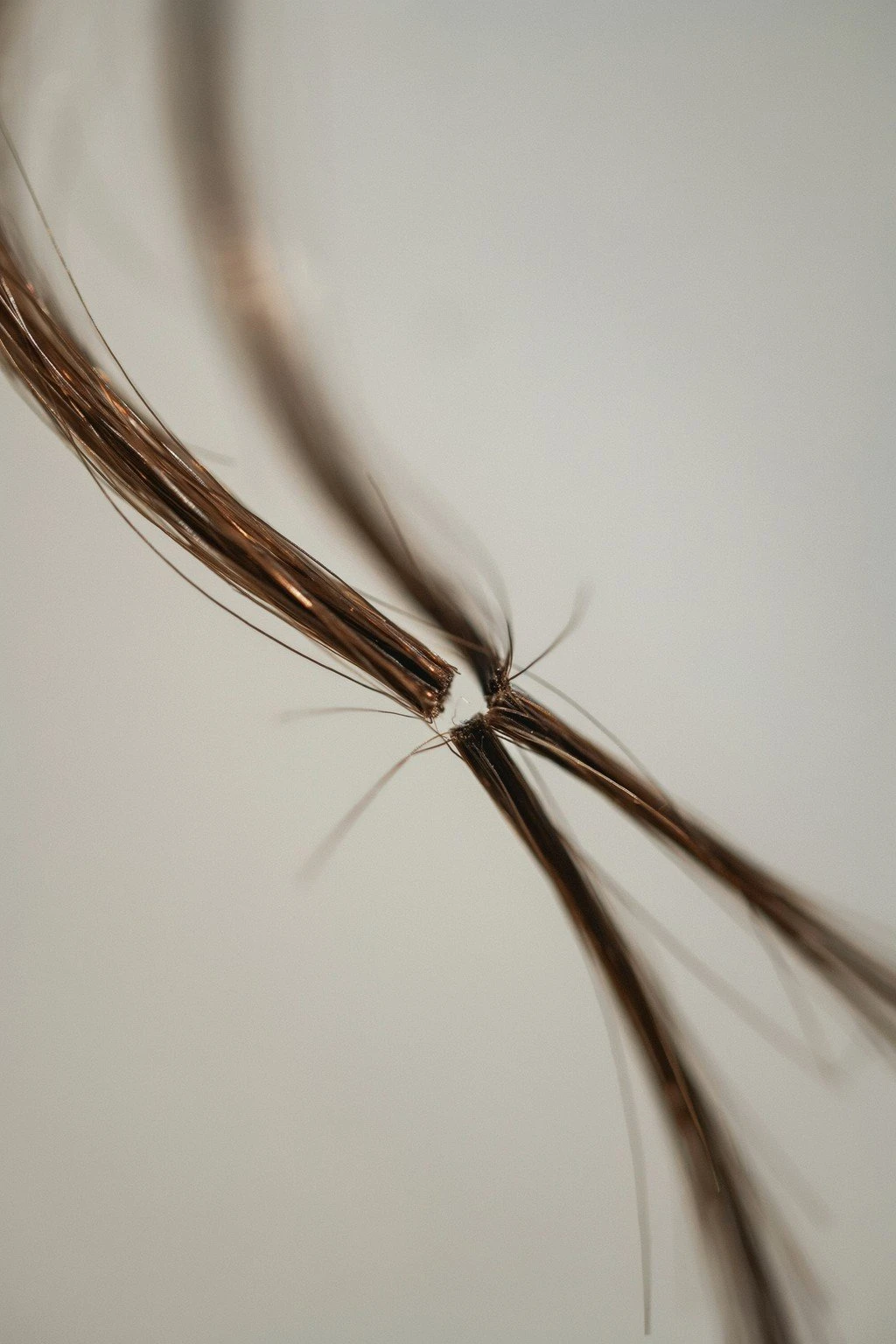
Hair breakage happens when a strand snaps somewhere along its shaft rather than shedding naturally from the root, and it’s the single most common reason hair appears not to be growing even though the follicle underneath is working fine.
How Hair Breakage Differs From Shedding and Slowed Growth
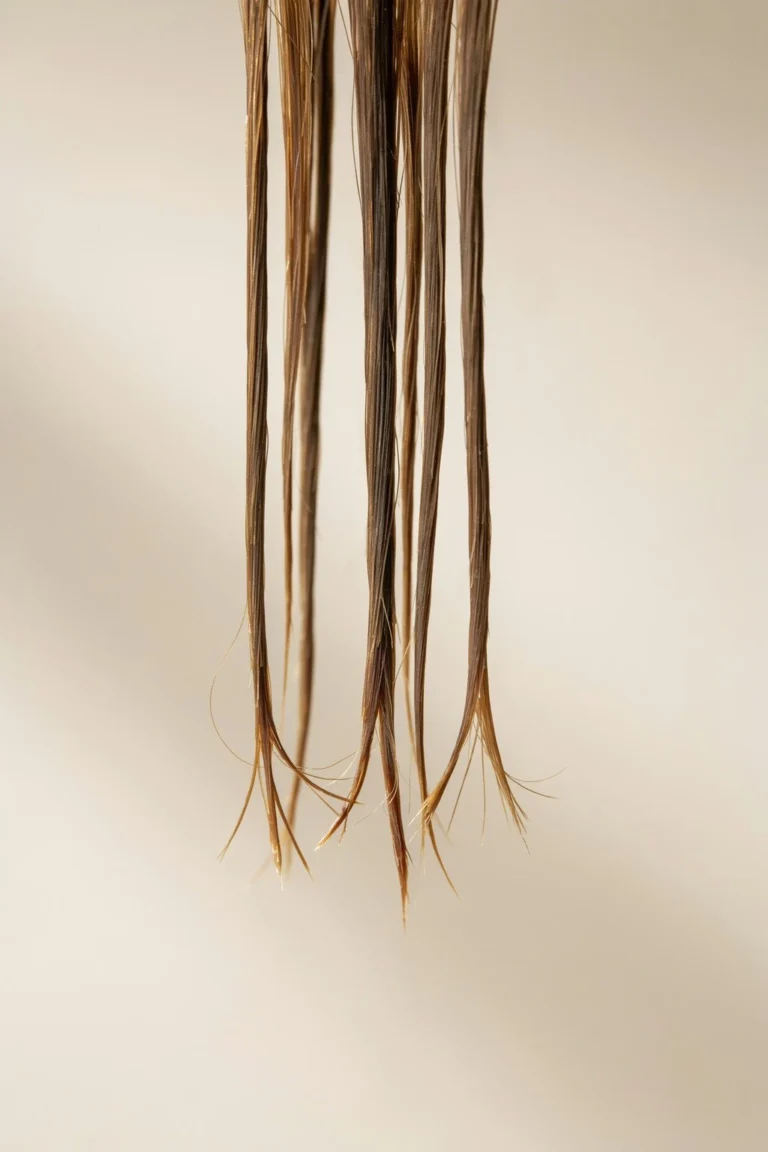
Shedding is a hair falling out from the root, bulb intact, as part of the hair’s normal growth cycle: a settled, expected process that happens to every hair eventually. Breakage is a hair snapping somewhere along its length, leaving a jagged or split end where the strand simply gave out under stress rather than completing its natural cycle. You can usually tell them apart by looking at the end: a shed hair has a small bulb at one end, while a broken hair has a rough, uneven break with no bulb at all.
Slowed growth is a different question entirely, tied to the rate at which the follicle produces new hair, and it’s much less common as an explanation for stalled-looking length than breakage is. Most of the time when someone tells me their hair “stopped growing,” what’s actually happening is that hair is growing at a completely normal rate at the root while breaking off at roughly the same rate somewhere along the shaft, netting out to no visible length change at all. Distinguishing between the two matters because the fixes are almost entirely different, and treating a breakage problem like a growth problem, or the reverse, wastes real time.
What Actually Causes It
Mechanical stress is one of the biggest contributors: tight hairstyles, aggressive brushing especially when hair is wet and most vulnerable to stretching, and friction from rough fabrics or tools all put strain on the hair shaft that it isn’t built to withstand indefinitely. Chemical processing, coloring, relaxing, or any service that alters the hair’s internal structure, weakens the shaft’s ability to resist that mechanical stress afterward, which is why breakage often shows up in the weeks following a chemical service rather than during it.
A protein-moisture imbalance is another well-established factor, though it’s more nuanced than a lot of marketing suggests. Hair needs both structural protein and moisture to stay flexible enough to resist snapping, and leaning too far in either direction, over-moisturized and limp, or over-proteined and stiff, can leave the shaft more brittle than a balanced strand would be. This is a real, evidence-backed mechanism, though the specific balance that works varies enough by individual hair type and history that no universal ratio applies to everyone equally.
Heat, Styling Tools, and Breakage
Heat styling above a certain temperature threshold denatures the proteins that give hair its structural strength, and repeated exposure without adequate protection compounds that damage over time, making the shaft measurably more prone to snapping. This is one of the more settled parts of the evidence around breakage: the mechanism is well understood and the effect is consistently observed, unlike some of the thinner claims made about specific styling products.
I used to run a flat iron over my hair daily without thinking twice about it, and looking back, the breakage I was chalking up to “just how my hair is” tracked almost exactly with how often I was reaching for heat that week. Heat protection helps mitigate the damage, but it doesn’t eliminate it entirely, so the honest framing is reducing frequency and temperature where you can, not assuming a protectant makes heat styling risk-free. Air-drying or lower-heat styling methods on the days you can spare the time make a real, cumulative difference over months, even if no single session feels consequential on its own.
Breakage doesn’t happen all at once. It’s usually the accumulated result of small stresses that each did a little damage, none of them dramatic enough on their own to notice.
Common Causes at a Glance
| Cause | Mechanism | Evidence tier |
|---|---|---|
| Tight hairstyles and friction | Repeated mechanical stress weakens the shaft | Settled |
| Heat styling without protection | Protein denaturation from heat exposure | Settled |
| Chemical processing | Alters internal shaft structure | Settled |
| Protein-moisture imbalance | Reduced flexibility in either direction | Plausible, individual-dependent |
Can Broken Hair Be Repaired?
I want to be direct about this because it’s where a lot of products overpromise: once hair has broken or the shaft is structurally damaged, that damage is not reversible. Hair is not living tissue capable of healing itself the way skin is, so a product claiming to “repair” broken hair is describing a temporary, cosmetic smoothing effect at best, not an actual structural fix. What genuinely helps is preventing further breakage and giving healthy new growth time to replace what’s been lost, which is a matter of months rather than a quick fix.
That’s not a discouraging thing to hear once you sit with it, in my experience. It reframes the goal from “fix this broken hair” to “stop the breakage and let healthy growth take over,” which is a completely achievable goal even though it takes patience. The strand that’s already broken isn’t coming back to full strength, but the hair growing in behind it doesn’t have to break the same way.
What Helps Reduce Hair Breakage
- Detangle gently, starting from the ends and working up, and only when hair has some slip from a conditioner or detangling product.
- Use a wide-tooth comb or your fingers on wet hair rather than a brush, since wet hair stretches and breaks more easily.
- Add heat protection before any hot tool, and keep tools at the lowest effective temperature for your styling goal.
- Give tight protective styles a rest period between installs, and loosen any style that causes tension or discomfort at the edges.
- Trim split or damaged ends regularly, since a split end left alone tends to travel further up the shaft over time.
None of these fixes work overnight, and that’s worth setting an honest expectation around. Reducing new breakage stops the problem from getting worse immediately, but seeing the visible effect in your overall length takes as long as it takes healthy hair to grow in and become the dominant portion of your ends, generally several months of consistent care.
Fabric and sleep habits are worth a specific mention since they’re easy to overlook. Cotton pillowcases create more friction against hair overnight than smoother fabrics like satin or silk, and that friction adds up across months of sleep the same way any repeated mechanical stress does. Loosely tying hair up or switching to a smoother pillowcase are small changes, and neither one is going to single-handedly solve a breakage problem on its own, but they remove one more source of friction from a routine that’s otherwise doing everything right.
When Hair Breakage Might Signal Something Else
Occasional breakage from styling and manipulation is normal and expected. What’s worth a dermatologist visit is breakage that’s severe, sudden, or paired with other signs like visible thinning at the scalp, unusual scalp symptoms, or hair that snaps with barely any handling at all — those combinations can point to something beyond ordinary mechanical wear, including certain scalp conditions or nutritional factors that are worth ruling out with a professional rather than guessing at from a search.
Frequently Asked Questions
How can I tell if my hair is breaking or shedding?
Look at the end of the hair you’ve found: a shed hair has a small bulb at one end from the root, while broken hair has a rough or jagged end with no bulb. Finding a lot of short, broken-looking pieces around your part or hairline is also a common sign of breakage specifically.
Can protein treatments fix hair breakage?
Protein treatments can temporarily strengthen and smooth the hair shaft, but they don’t repair already-broken hair or reverse existing damage. They’re most useful as part of a broader routine that also addresses the mechanical causes of breakage, not as a standalone fix.
How long does it take to see improvement after addressing hair breakage?
Because addressing breakage means preventing new breakage rather than repairing what’s already broken, visible improvement in overall length and fullness generally takes several months as healthier growth becomes the majority of your ends. There’s no shortcut that compresses this timeline meaningfully.
Is hair breakage a sign of a health problem?
Occasional breakage from styling and handling is normal, but breakage that’s sudden, severe, or paired with scalp changes is worth a dermatologist visit to rule out an underlying cause. Most breakage, though, traces back to mechanical or chemical stress rather than a health issue.
Where to Start
Start by figuring out which one you’re actually dealing with — breakage or slowed growth — since the fix depends entirely on getting that right. If you’re not sure after checking your strand ends, that uncertainty itself is a reasonable thing to bring to a stylist or dermatologist.
Tell me what you’re noticing, and whether it’s showing up as short broken pieces or more like hair that just isn’t shedding or growing the way it used to, and I’ll help you figure out which direction to focus on. — Iris