Anti-Dandruff Shampoo: What Actually Works

Standing in the shampoo aisle comparing four different anti-dandruff formulas, all promising more or less the same thing in different colored bottles, is where I finally sat down and actually compared what each one’s active ingredient was doing rather than trusting the front label. Anti-dandruff shampoo works by delivering a specific active ingredient — usually an anti-fungal, sometimes a mechanical exfoliant — into contact with the scalp long enough to reduce the yeast overgrowth or clear the buildup driving visible flaking, and the differences between formulas come down almost entirely to which active they use and how much of it. Once you know what to actually look for on the ingredient list, choosing between bottles stops being a guessing game.
Anti-dandruff shampoo works through a specific active ingredient — most reliably zinc pyrithione or ketoconazole — that needs several minutes of scalp contact time to meaningfully reduce the yeast overgrowth behind flaking.
How Anti-Dandruff Shampoo Actually Works
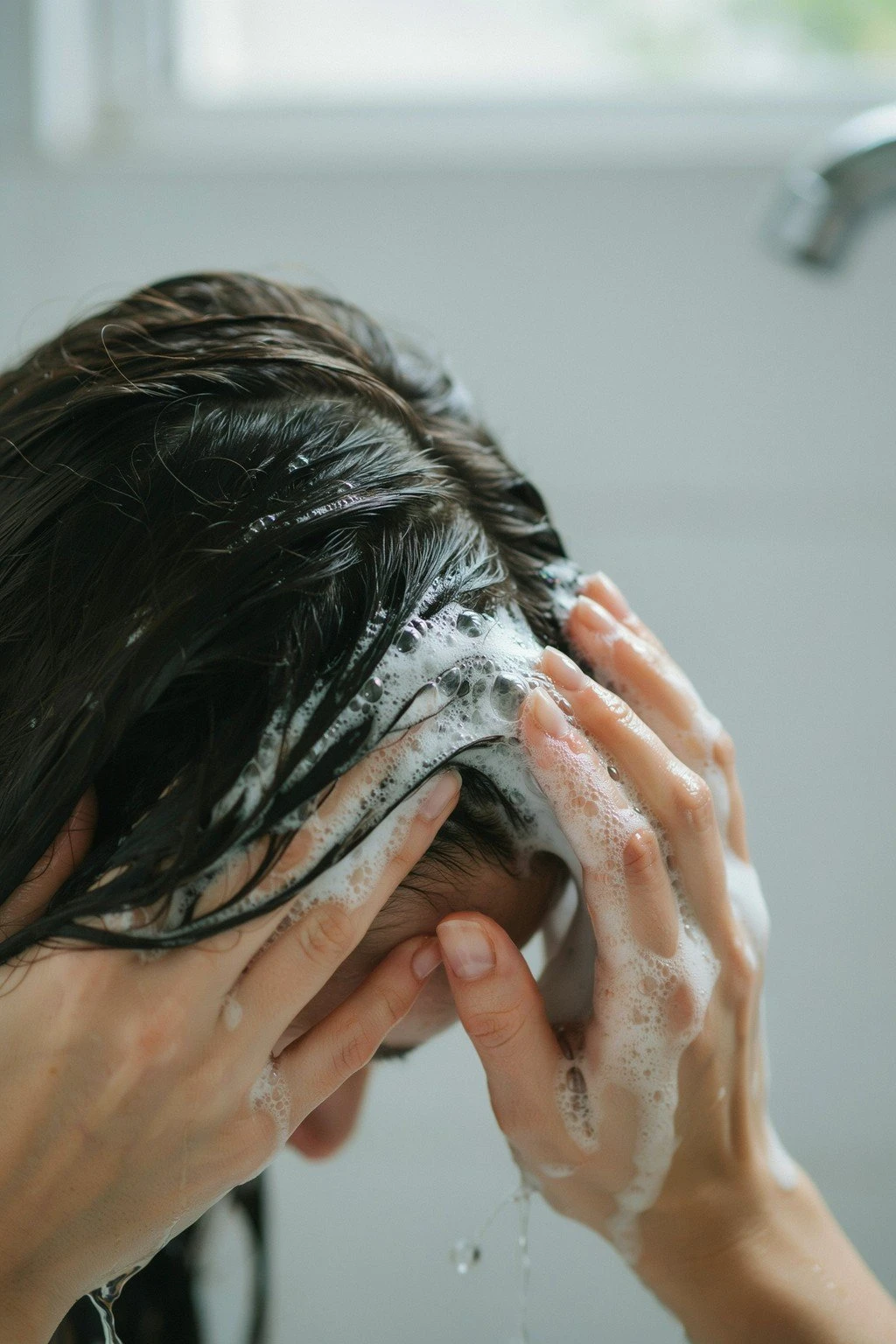
Most dandruff is driven by an overgrowth of Malassezia, a yeast that lives on every scalp normally and reacts with sebum in a way that speeds up skin cell turnover, producing visible flakes. An effective anti-dandruff shampoo delivers an ingredient that either reduces that yeast population directly or slows the resulting skin cell turnover, and unlike a standard shampoo, it needs meaningful contact time on the scalp rather than a quick lather-and-rinse to actually do that work. This is the single most common reason a “good” anti-dandruff shampoo gets blamed for not working: it was rinsed off in under a minute, which is nowhere near enough contact time for the active ingredient to meaningfully affect the yeast living at the scalp surface.
Formulation base plays a smaller supporting role too, worth understanding even though it’s not the main event. A thicker, more emollient base can help offset the drying effect some anti-fungal actives have with regular use, which is why plenty of anti-dandruff formulas pair their active ingredient with conditioning agents rather than a stripped-down cleansing base alone. That combination isn’t marketing filler — a scalp that’s flaking and also dry from an aggressive formula tends to look and feel worse overall, even if the yeast overgrowth itself is technically improving underneath.
Comparing the Main Active Ingredients
| Active ingredient | Relative strength | Best suited for | Worth knowing |
|---|---|---|---|
| Zinc pyrithione | Moderate, well-tolerated | Everyday maintenance use | Gentlest of the anti-fungal actives for regular rotation |
| Ketoconazole | Strong | More persistent or moderate cases | Often the most effective OTC anti-fungal available |
| Selenium sulfide | Strong | Persistent flaking | Can discolor lightened or gray hair with regular use |
| Salicylic acid | Mild, mechanical only | Mild flaking, often combined with an anti-fungal | Exfoliates flakes but doesn’t reduce yeast on its own |
| Coal tar | Strong | Thicker, more persistent flaking | Can darken very light or gray hair over time |
Ketoconazole and zinc pyrithione are generally the best starting points for most people, since both have strong evidence behind them and a good tolerability profile for regular use. Selenium sulfide and coal tar tend to be reserved for more persistent cases specifically because of their staining potential — worth knowing before reaching for either if your hair is gray, silver, or noticeably lightened, since both carry a real risk of leaving a dulling or yellowing cast with regular use that isn’t as much of a concern with the other actives.
I reached for a coal tar formula once during a particularly stubborn flare without checking the fine print first, and noticed within a couple of washes that the lighter, sun-kissed pieces in my hair had taken on a faint brassy tint that took a clarifying wash and a bit of patience to fully correct. It wasn’t dramatic, and it wasn’t permanent, but it was a completely avoidable surprise if I’d read the label with my actual hair color in mind before grabbing whatever bottle promised the strongest result.
What Anti-Dandruff Shampoo Does Not Do
This is worth stating clearly before you build an entire routine around one bottle:
- It does not permanently eliminate the yeast responsible for dandruff — Malassezia lives on the scalp continuously, and the shampoo manages the overgrowth rather than removing the organism for good.
- It does not treat seborrheic dermatitis or scalp psoriasis as effectively as a prescription formulation, even though both can look similar to ordinary dandruff at a glance.
- It does not work well without adequate contact time — a rinse-and-go use defeats most of what the active ingredient is capable of doing.
- It does not fix dryness that isn’t actually related to yeast overgrowth, which is a separate, sometimes coexisting scalp issue.
The bottle matters less than the minutes it sits on your scalp before you rinse it out.
Anti-Dandruff Shampoo and Color-Treated Hair

A genuinely useful thing to check before buying, specifically for color-treated or gray hair, is whether the active ingredient has any documented interaction with hair color. Selenium sulfide and coal tar both carry real staining risk on lighter or silver-toned hair with repeated use, sometimes leaving a yellow or muddy cast that a purple or silver-toning shampoo then has to work to correct. Zinc pyrithione and ketoconazole don’t carry the same staining reputation and are generally the safer starting point if you’re managing both dandruff and a color or gray-blending routine at the same time. It’s also worth spacing an anti-dandruff wash a day or two apart from a toning shampoo where possible, since layering two active formulas back to back in the same routine can sometimes over-process hair that’s already had a chemical service.
Over-the-Counter vs. Prescription Strength
Over-the-counter formulas cap the concentration of actives like ketoconazole at a level generally considered safe for unsupervised, regular use, which is effective for most ordinary dandruff but sometimes insufficient for a more stubborn case or for seborrheic dermatitis specifically. Prescription-strength shampoos and topical solutions carry a higher concentration of the same or a related active and are formulated for cases that haven’t responded adequately to consistent over-the-counter use. Moving to a prescription option isn’t a sign the over-the-counter route failed you personally — it’s simply a stronger tool for a case that needs it, and a dermatologist is the right person to make that call after seeing how your scalp has actually responded.
It’s worth keeping a rough log of what you’ve actually tried before that appointment, since “I’ve used a few different dandruff shampoos” is far less useful to a dermatologist than “I used ketoconazole two to three times a week for six weeks with mild improvement, then switched to selenium sulfide with no further change.” Specific actives, frequencies, and timeframes let a dermatologist see exactly where the over-the-counter route stopped working, rather than starting the whole process of elimination over from scratch.
How to Actually Use It for Best Results
Apply directly to the scalp rather than just letting shampoo run through as you rinse the lengths, since the scalp is where the active ingredient needs to make contact, not the hair shaft. Leave it on for the full time stated on the label — typically three to five minutes — before rinsing, and resist the urge to treat that as optional on a rushed shower day, since under-timing the contact window is the single most common reason people report a “strong” active not working for them. Alternate with a gentler, non-medicated shampoo on days you don’t need the active formula, since continuous daily use of some actives can be more drying than necessary once flaking is under control.
Water temperature and how you dry your scalp afterward both matter more than most people expect. Very hot water can aggravate an already-reactive scalp during an active flare, so lukewarm water is generally better tolerated without reducing how well the active ingredient works. Towel-drying with a gentle patting motion rather than vigorous rubbing avoids adding mechanical irritation on top of a scalp that’s already dealing with an inflammatory process — a small habit, but one that measurably shortens how long a flare takes to settle for some people.
Where you apply the shampoo first matters too, and it’s a habit worth building deliberately rather than assuming it happens automatically. Sectioning your hair and applying the shampoo directly to the scalp in a few passes, rather than pouring it once at the crown and hoping it spreads evenly as you lather, gives the active ingredient a much more even shot at reaching the areas that actually need it — including the back of the scalp and the hairline, both places people commonly under-treat simply because they’re harder to see in a mirror.
Frequently Asked Questions
How often should I use anti-dandruff shampoo?
Two to three times a week is a reasonable starting frequency for most active ingredients, alternating with a gentler shampoo on other wash days. Daily use of a strong active like ketoconazole or selenium sulfide isn’t usually necessary and can leave the scalp more dry than the flaking itself did.
Can this kind of shampoo make flaking worse at first?
A brief adjustment period with some dryness or mild irritation is common in the first week or two as the scalp adjusts, but flaking itself shouldn’t meaningfully worsen. If irritation is significant or lasts longer than two weeks, that’s worth switching actives or checking in with a dermatologist rather than pushing through it.
Is a sulfate-free anti-dandruff shampoo less effective?
The active ingredient, not the surfactant base, is what’s doing the anti-fungal work, so a sulfate-free formula with an effective active like zinc pyrithione or ketoconazole works just as well as a sulfate-based one. Sulfate-free bases can be gentler on color-treated hair overall, which is worth considering if that’s a separate concern for you.
Why does an active ingredient stop working after a while?
Some people’s Malassezia populations seem to respond less over time to a single active used continuously, so switching to a different active ingredient periodically often restores effectiveness. This is a common enough pattern that rotating between two actives every few weeks is a reasonable default habit rather than a sign of a bigger problem.
Should I see a dermatologist before trying anti-dandruff shampoo?
Not necessarily for ordinary flaking — an over-the-counter option with zinc pyrithione or ketoconazole is a reasonable first step on your own. If flaking comes with redness, thick scaling, or scalp discomfort, or doesn’t improve after six to eight consistent weeks, that’s the point to bring in a dermatologist.
What to Actually Buy This Week
Check the active ingredient before the front-of-bottle claim, pick zinc pyrithione or ketoconazole if you’re starting fresh, and commit to the full contact time on the label rather than a quick rinse. That single habit change does more than switching brands ever will.
Let me know which active you’ve had the best luck with in the comments — I keep track of what readers report. — Iris