Split Ends: Why They Happen and What Actually Fixes Them
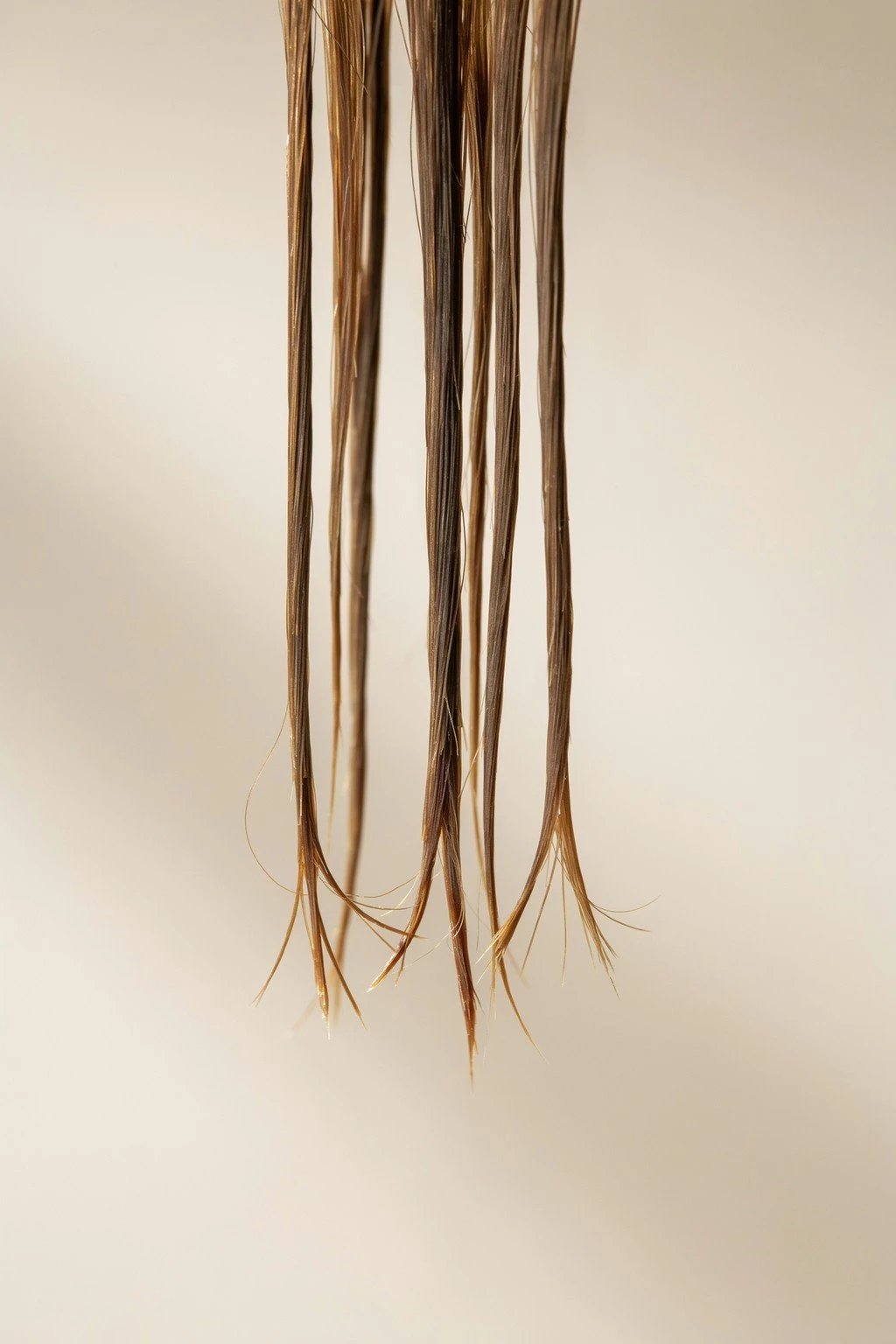
I spent a long time in my twenties buying every split-end serum on the shelf before I understood what I was actually looking at under a bathroom mirror light: strands where the cuticle had unraveled at the very tip and pulled apart into two or three separate threads, none of which were ever going back together. Split ends happen when the protective cuticle layer at the end of a hair strand wears away completely, leaving the cortex underneath exposed and unsupported, and once that structure separates, no product reattaches it — the fiber is mechanically split apart, not merely damaged in a way that can close back up on its own. Understanding that distinction changes what’s actually worth spending money on and what’s just a temporary illusion sold in a bottle.
A split end is a permanent separation at the hair’s tip that no product can rejoin — a trim is the only thing that actually removes it.
What a Split End Actually Is
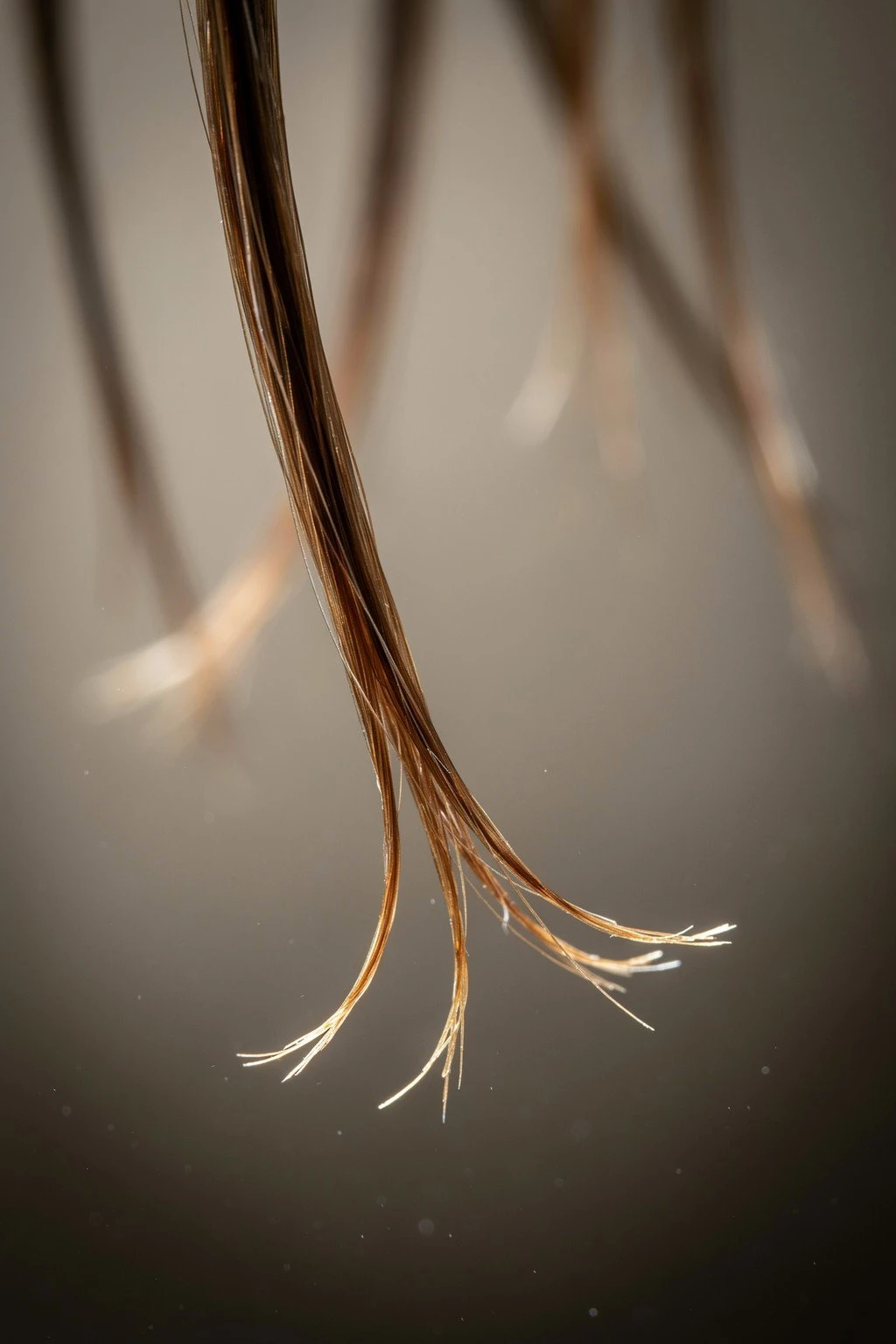
Hair above the scalp is not living tissue, which matters here specifically: there’s no cellular repair process available to a strand once it’s left the follicle, only whatever the cuticle’s remaining structure can mechanically hold together. At the very tip of a strand, where the cuticle is thinnest and has taken the most cumulative wear over the hair’s lifetime, it eventually wears through completely, and the cortex underneath — unprotected and under tension every time the hair is brushed, tied back, or caught on fabric — separates along its length into two or, on longer-neglected ends, three or more distinct strands. This is a mechanical failure, comparable to a rope fraying at a worn spot, and like a frayed rope, no amount of product application restores the original single, intact fiber.
The most common form is a simple two-way split, where the cortex separates into two roughly even threads at the tip. Left untreated, that same fraying point continues to unravel with ordinary handling, and it isn’t unusual to see three or even four thin threads branching from what was originally a single split, especially on the longest, oldest sections of a strand that hasn’t been trimmed in a while. Each additional thread represents more exposed cortex with nothing protecting it, which is part of why a neglected split tends to make hair feel and look rougher out of proportion to how small the original damage was.
Why Hair Splits in the First Place
Heat styling above roughly 365°F is one of the most common contributors, since repeated thermal stress dries and weakens the cuticle from the outside in, and the ends — having been through more heat-styling sessions over their lifetime than hair closer to the root — bear the brunt of it. Chemical processing works on a similar timeline: color, lightening, and any service involving broken disulfide bonds leaves the cuticle thinner and more porous than it started, and porous, thin cuticle at the tip fails faster under ordinary mechanical stress. Simple friction plays a bigger role than most people expect — rough toweling, sleeping on cotton pillowcases, brushing dry hair aggressively, and tight ties or clips that create a consistent stress point all wear the cuticle down gradually, without any single dramatic event to blame. Dryness compounds every one of these causes, since a cuticle that’s already lost moisture is more brittle and less able to absorb mechanical stress before it fails.
Hard water plays a quieter role than most of these causes but a real one — mineral deposits from hard water can coat the hair shaft and make it feel rougher and drier over time, which compounds the mechanical wear from brushing and heat rather than causing splitting directly on its own. Sun exposure works on a similar slow timeline to heat styling, breaking down the proteins that hold cuticle scales in place through cumulative UV exposure over a season rather than any single afternoon outside. None of these causes act in isolation for most people — a typical set of split ends usually reflects some combination of heat, chemical history, dryness, and simple mechanical wear rather than one single culprit, which is why fixing only one variable at a time often produces a smaller improvement than expected.
Telling Split Ends From Other Breakage
A genuine split end is specific and visible once you know what to look for: hold a section of ends up to good light and look for individual strands that visibly fork or fray at the very tip, rather than snapping somewhere in the middle of the strand’s length. Breakage that happens mid-shaft rather than at the tip is a different problem — usually a sign of weakened structure from over-processing or protein-moisture imbalance along the whole strand, not specifically an end issue — and it responds to a different set of fixes than trimming alone provides. Running your fingers gently down a section of dry hair and feeling for small, rough knots or bumps rather than a smooth glide is a second, tactile way to find splits that aren’t always obvious to the eye, especially on finer hair where the visual fraying can be subtle.
- What to look for visually: strands that fork or fray specifically at the very tip.
- What to look for by feel: small rough catches or bumps when running fingers down dry hair.
- What it’s not: breakage occurring mid-strand, which points to a different, whole-fiber problem rather than an end-specific one.
Can You Repair a Split End?
No, not in the sense of restoring the original single strand — this is worth being direct about, since it’s the exact claim most split-end products lean on. What a split-end serum or sealer actually does is coat the split with a silicone or polymer film that temporarily glues the fraying pieces together, smoothing the surface enough that it looks and feels intact until the next wash strips the coating away, at which point the split is exactly where it was before. That’s a real, if temporary, cosmetic effect, and there’s nothing wrong with using one before a special occasion or between regular trims — the problem is only when it’s marketed as a fix rather than a short-term disguise. A bond-building or protein treatment can sometimes strengthen the strand just above an existing split enough to slow further fraying up that strand, but it does not reverse the split that’s already there.
It’s worth reading a serum’s own ingredient list with this in mind. Most rely on dimethicone or a similar silicone to create the smoothing film, sometimes alongside a small amount of hydrolyzed protein that can genuinely fill microscopic gaps in the surrounding cuticle even where it hasn’t fully split yet. That protein component is doing real, if modest, work; the silicone film is doing the cosmetic work of making a visible split look temporarily smooth. Knowing which ingredient is responsible for which effect makes it easier to judge a product honestly rather than by how good the “before and after” photo on the label looks.
A split-end serum isn’t fixing anything. It’s gluing the damage shut until the next wash strips it back off.
Preventing Further Splitting
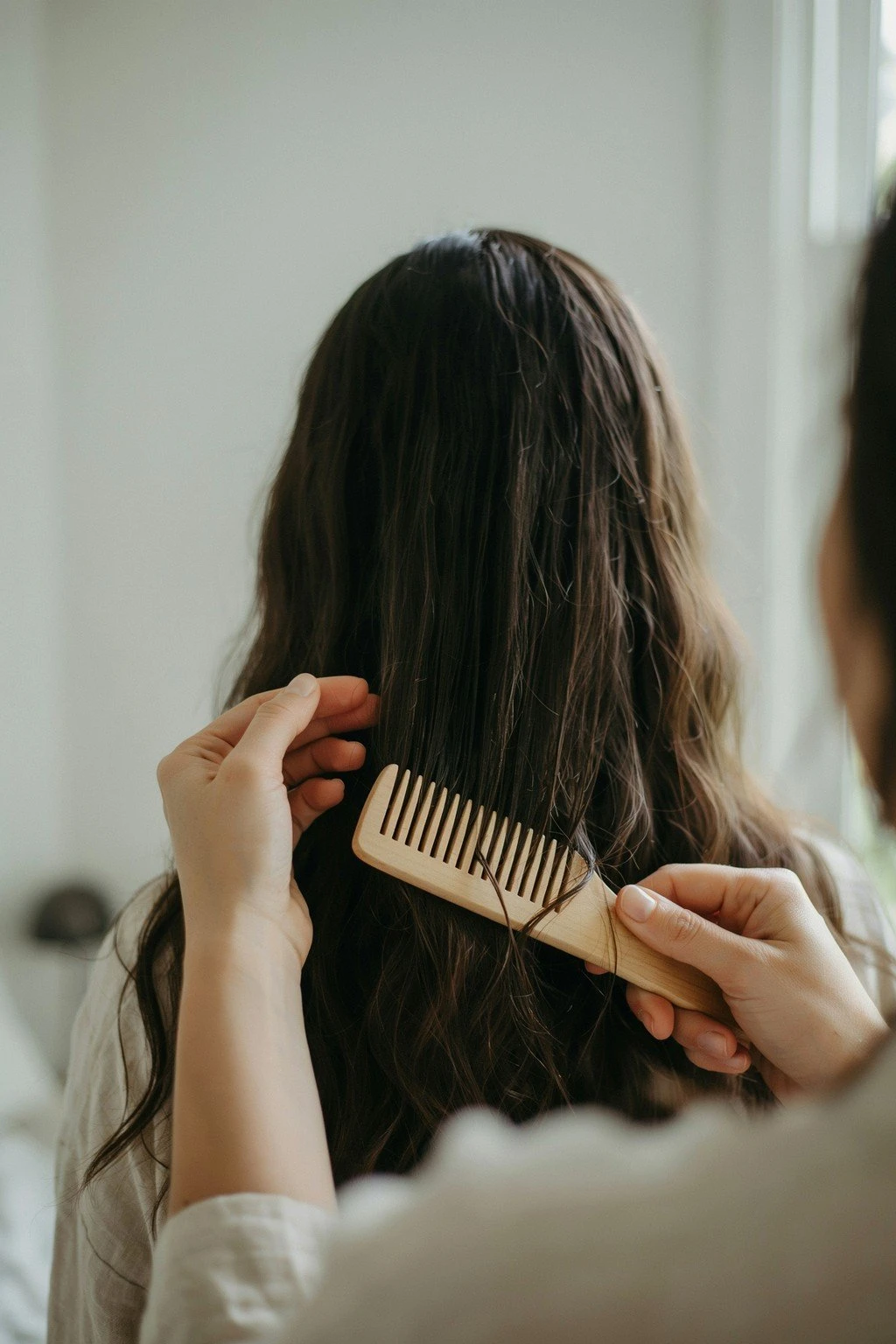
Keeping styling tools under roughly 365°F and using a heat protectant every time reduces how quickly new splits form, since it’s cumulative thermal stress at the tips doing most of the damage over time rather than any single styling session. Detangling from the ends upward with a wide-tooth comb, rather than dragging a brush from root to tip through knots, keeps mechanical stress concentrated where hair is strongest instead of forcing already-weak ends through repeated snags. Switching from a cotton pillowcase to silk or satin reduces the overnight friction that quietly wears down ends over months without a single obvious cause. None of this repairs existing splits, but it meaningfully slows how fast new ones appear, which is the more realistic goal for anyone who isn’t ready to cut off length.
I switched from a cotton pillowcase to silk about two years ago mostly for the way it felt, not expecting it to change anything about my ends, and it was the wide-tooth comb change — detangling from the bottom up rather than the top down — that actually made a visible difference to how often I was finding new splits at my regular trims. Neither change costs much or takes extra time once it’s a habit, which is part of why they’re worth starting before anything more involved.
Trim Frequency and What Actually Removes a Split
| Approach | What it does | How often |
|---|---|---|
| Dusting (trimming ¼ inch or less) | Removes visible splits with minimal length loss | Every 8–10 weeks |
| Full trim (½ inch or more) | Removes splits plus a margin of weakened cuticle above them | Every 3–4 months |
| Split-end serum | Temporarily seals the split cosmetically | As needed, between trims |
| Bond-building treatment | Strengthens the strand above an existing split | Every 2–4 weeks |
Dusting on a shorter cycle works well for anyone trying to hold onto length while still keeping ends from fraying further, since it targets just the visibly split portion rather than a fixed amount of hair regardless of how much is actually damaged. A trim is the only entry in that table that actually removes a split rather than managing it, which is worth remembering the next time a product promises otherwise on the bottle.
Frequently Asked Questions
Can split ends be repaired without cutting them off?
No — the strand has mechanically separated, and no product reverses that, though a serum or bond treatment can disguise or slow it temporarily. A trim is the only way to actually remove hair that’s already split rather than manage how it looks in between.
How often should I trim to prevent split ends?
Dusting the very ends every eight to ten weeks catches most splits before they travel further up the strand, while a fuller trim every three to four months works for hair that isn’t especially prone to fraying. Finer hair and heavily processed hair generally need the shorter end of that range.
Do split ends travel up the hair shaft over time?
Yes, and this is the main reason to trim before splits become severe — a split left untreated can continue unraveling further up the strand with ordinary washing and styling, turning a small end split into a longer, more visible problem months later. Catching it early with a light dusting keeps the damage contained to the very tip.
Does trimming hair make it grow faster?
No — hair grows from the follicle at the scalp, and nothing happening at the ends affects that rate. Trimming does mean the hair you’re growing arrives at healthier ends rather than fraying and thinning out as it grows, which is a real benefit, just not one about growth speed.
Can oils or masks prevent fraying at the ends?
They can reduce dryness and friction, which are two real contributors to splitting, so a consistent moisture routine plausibly slows how often new splits form. Oils and masks don’t address heat or mechanical stress directly, though, so they work best paired with lower heat settings and gentler handling rather than as a stand-alone prevention plan.
The One Habit Worth Starting Today
Book a dusting appointment if it’s been longer than three months since your last one, and in the meantime, swap your cotton pillowcase for silk or satin — it’s the single lowest-effort change on this list. Neither undoes existing splits, but together they’re the most reliable way to slow how fast the next round forms, and that’s a more realistic win than chasing a serum that promises to reverse damage no product actually can.
Tell me in the comments how long it’s been since your last trim — I promise not to judge. — Iris