Curly Hair in Humidity: What Frizz Says About Your Routine

Curly hair in humidity is one of those situations where the frizz you see is not actually telling you that your hair is doing something wrong. It’s telling you something about your routine, and the distinction matters because the fix is different depending on what it’s saying. I spent a long time treating humidity frizz like it was a hair problem, trying product after product to seal it down, when the real issue was a mismatch between what I was putting on my hair and what the air was doing to it. Once I learned to read the type of frizz, the routine adjustments became a lot simpler.
Frizz on curly hair in humid conditions is almost always one of two things: either the hair is absorbing moisture from the air because it wasn’t sealed effectively during styling, or the products on the hair are attracting moisture because they contain humectants that pull water from the environment. Those are different problems with different fixes, and the type of frizz you’re seeing usually tells you which one you’re dealing with.
What Frizz Actually Is
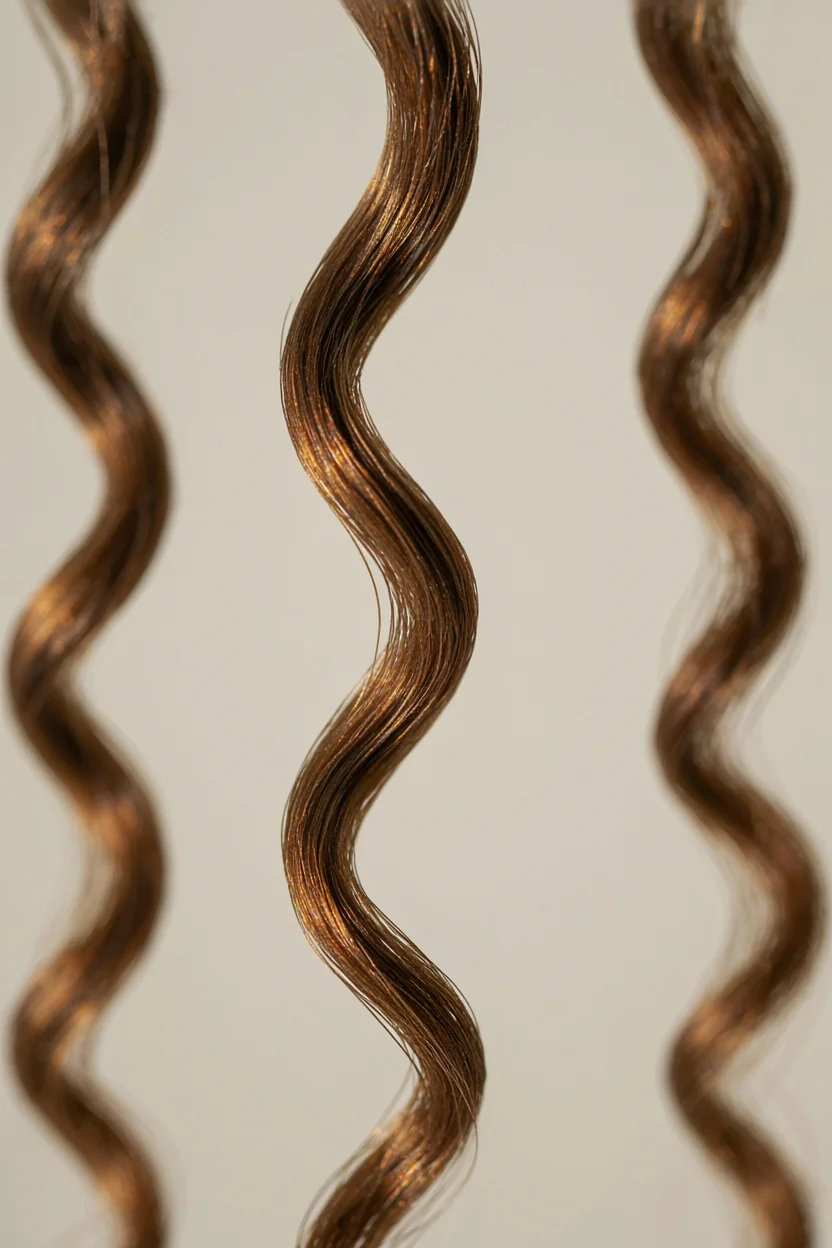
Frizz is raised cuticle. The outermost layer of each hair strand is made up of overlapping scales, like shingles on a roof, and when those scales lie flat, the hair looks smooth and reflects light evenly. When they lift, the surface becomes rough, light scatters, and you see what we call frizz. On straight hair, cuticle lifting usually comes from damage. On curly hair, the cuticle lifts more easily because the curl pattern creates natural points where the scales don’t overlap as neatly, particularly at the bends in the curl.
This isn’t a flaw. It’s a structural feature of curly hair. The tighter the curl pattern, the more points where the cuticle doesn’t lie perfectly flat, which is one reason that hair from 3a through 4c on the curl spectrum tends to show more surface frizz than looser wave patterns. And hair type is a shorthand, not a diagnosis, but it’s useful for knowing roughly where on the spectrum you fall.
I think this needs to be said plainly: frizz is not a sign that your hair is unhealthy or that you’re doing something wrong. It’s a sign that the cuticle is raised, and the cuticle raises in response to specific conditions. The job is to understand which conditions are raising yours and adjust accordingly. Not to wage war on the frizz itself.
How Humidity Changes What Happens to the Cuticle

When the air around your hair has more moisture than the hair itself, water vapour moves from the air into the hair shaft. The cortex absorbs that moisture and swells slightly, which pushes the cuticle scales outward. On straight hair, this swelling is minimal and the cuticle mostly stays put. On curly hair, where the cuticle is already more exposed at the bends, the swelling lifts the scales further, and the result is visible frizz at the surface.
The reverse also matters. When the air is drier than the hair, moisture moves out of the hair and into the air, which can make the hair feel rough and brittle. But that’s a different conversation. In humidity, the issue is moisture moving in, and the question is how much of it your hair is absorbing and whether your styling routine has accounted for that.
I noticed this pattern on my own hair before I understood the mechanism. On days with high humidity, the frizz would appear within an hour of going outside, and it always started at the crown and the outermost layer. That’s the hair most exposed to the air, and it’s the first to absorb ambient moisture. The hair underneath, closer to the scalp and shielded by the outer layers, usually stayed more defined. That told me the problem was at the surface, not throughout.
Reading the Frizz: What Each Type Tells You
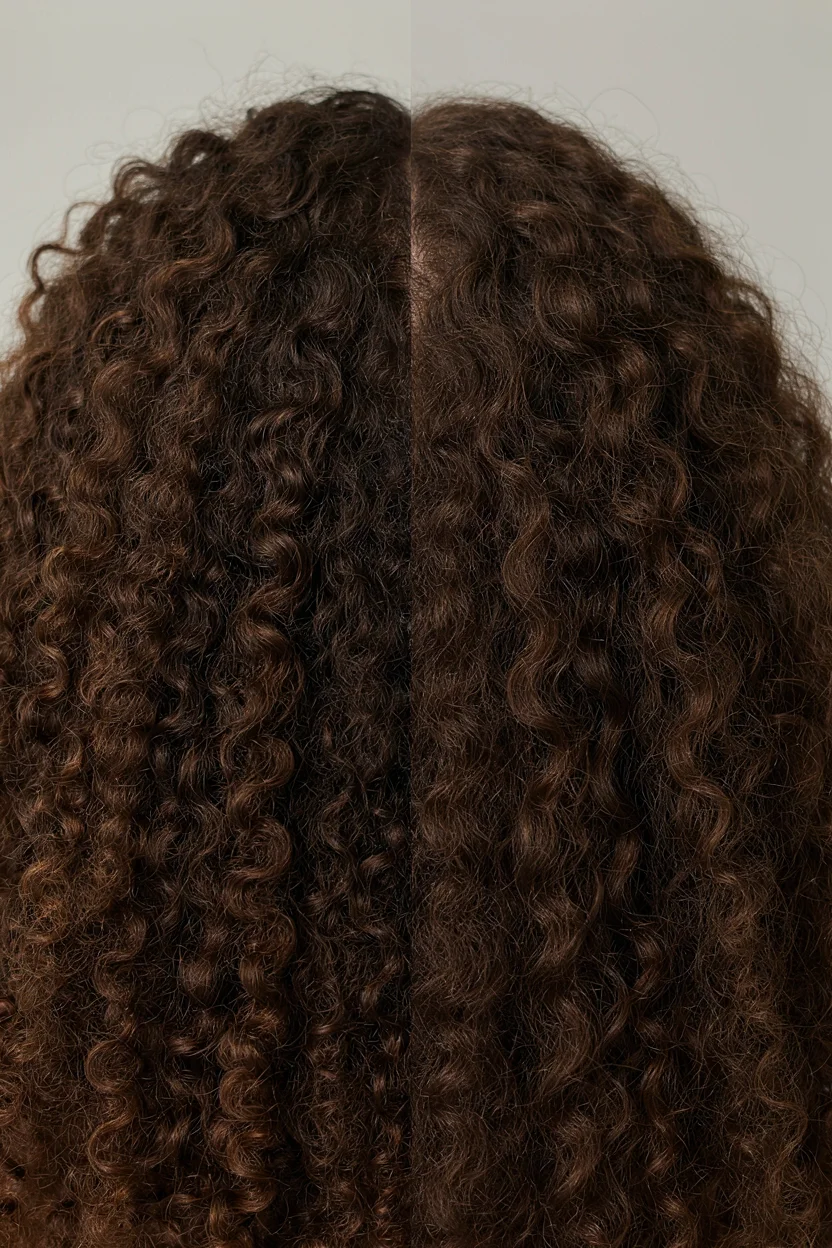
Not all frizz looks the same, and the way yours shows up in humidity tells you something specific about your routine. Here’s what I look for.
- A soft halo of frizz at the surface, with the curl pattern underneath still intact, means the cuticle is responding to humidity but the styling products are holding the curl shape below. This is normal and the fix is usually a light sealant on the surface.
- Frizz that breaks apart the curl clumps and makes individual strands separate from each other means the styling products didn’t create a strong enough film to hold the clumps together in humid air. The fix is a stronger-hold gel or a layering technique.
- Frizz that appears sticky or heavy, with the hair looking both puffy and weighed down at the same time, often means a humectant-rich product is pulling moisture from the air into the hair faster than the styling product can manage. The fix is reducing humectants in the routine on humid days.
- Frizz concentrated at the ends with the roots looking fine usually means the ends are more porous from age, chemical processing, or heat exposure, and they’re absorbing moisture faster than the newer hair near the scalp. The fix is targeted sealing on the ends before going out in humidity.
The frizz isn’t random. It’s concentrated where the cuticle is most exposed, and it shows up fastest where your routine has the thinnest seal.
Adjusting the Routine for Humid Conditions
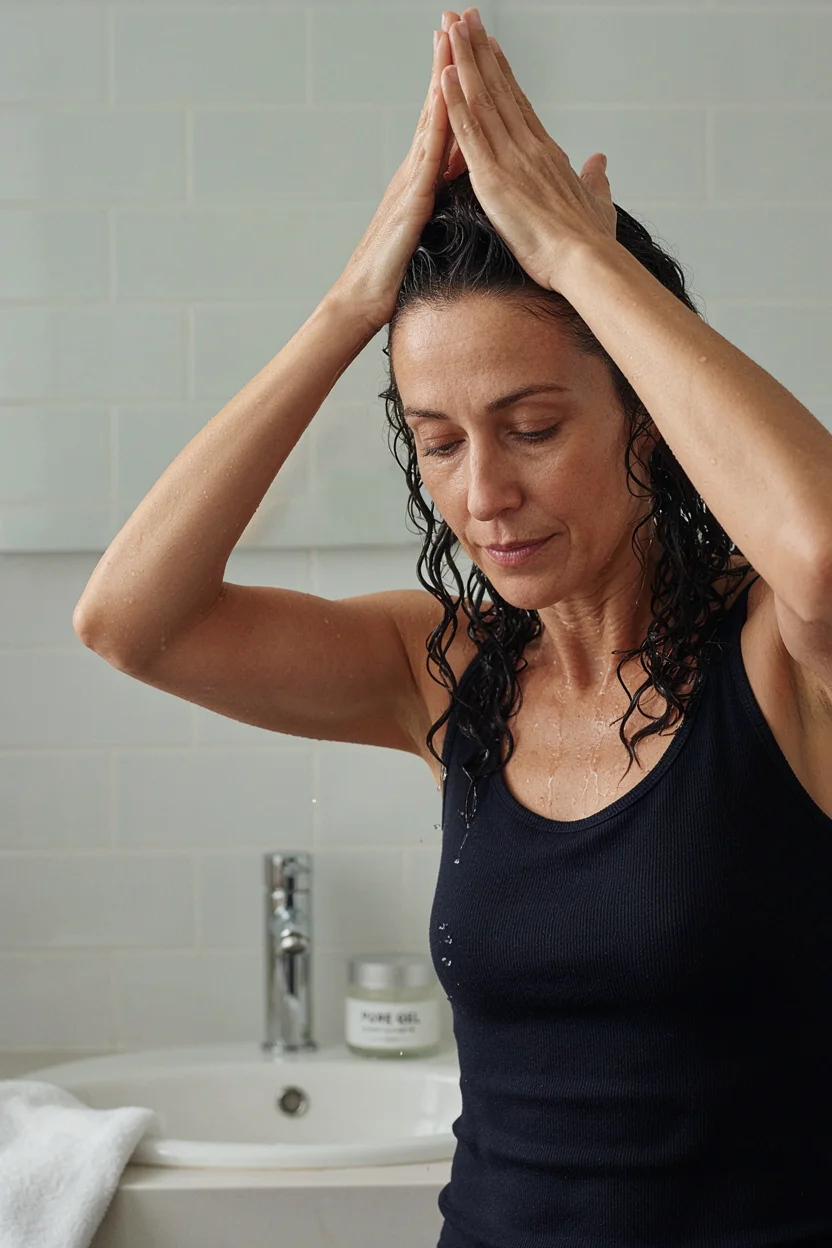
The adjustments that work for me on humid days are small and they don’t require a different set of products. They’re mostly about when and how I apply what I already have.
| Adjustment | Extra Time | How Long It Lasts | Best For |
|---|---|---|---|
| Apply gel to soaking wet hair instead of damp hair | 2 minutes | 6 to 8 hours in high humidity | 3a to 4c curl patterns |
| Scrunch out the crunch after gel cast dries fully | 3 minutes | Removes the cast without disturbing the seal | All curl patterns using gel-based routines |
| Replace humectant leave-in with a sealing cream on humid days | 1 minute swap | Reduces moisture absorption for 4 to 6 hours | 2c to 4c patterns in humidity above 70 percent |
| Refresh with a water-and-gel mix instead of plain water | 2 minutes | Extends the set by 3 to 4 hours | All curl patterns when the morning set starts to drop |
The biggest single change I made was applying gel to soaking wet hair instead of towel-dried hair. When the hair is fully saturated, the gel distributes more evenly and forms a more continuous film around each curl clump as the hair dries. On damp hair, the gel tends to sit in patches, and those patches leave gaps where humidity can reach the cuticle directly. The difference in frizz on a humid day is visible within the first hour.
The second change was being deliberate about humectants. Glycerin and honey draw moisture toward themselves. On a dry day, they pull moisture from deeper in the hair toward the surface, keeping it soft. On a humid day, they pull moisture from the air into the hair, adding more water than the styling product can manage. I don’t avoid humectants entirely. I just swap to a sealing product when the humidity is above about 70 percent.
Product Considerations Without the Hype
I want to be clear about what I’m recommending and why, because product advice for curly hair tends to get loud fast. Here’s the practical list.
- A gel with flexible hold, not maximum hold. The reason: a hard-hold gel creates a strong cast that locks the curl, but on fine or medium-textured curly hair, the weight of the cast pulls the curl open over time. A flexible-hold gel gives you a seal that moves with the hair instead of against it.
- A lightweight sealing cream or oil for the surface after scrunching out the gel cast. The reason: once the cast is broken, the surface of the hair is exposed again, and a thin layer of sealant on the outside of the curl clumps closes the gap where humidity would reach the cuticle.
- A spray bottle with water and a small amount of gel mixed in for midday refresh. The reason: plain water on dry curly hair raises the cuticle and increases frizz. Adding a small amount of gel to the water means you’re resealing as you rewet, which gives the curl something to reform around.
I stopped buying products marketed specifically as anti-frizz or humidity-blocking, because most of them rely on heavy silicones or waxes that build up on curly hair and require stronger cleansers to remove. The buildup then creates its own problems, including dullness and reduced curl definition. A lightweight gel and a thin sealant accomplish the same thing without the accumulation. For more on how product buildup interacts with scalp health, see our scalp care and washing guide.
Frequently Asked Questions
Does high humidity always cause frizz on curly hair?
Not always. If your routine includes a gel or styling product that forms a continuous film around the curl clump, the film acts as a barrier between the humid air and the cuticle. Hair that’s well-sealed can handle moderate humidity, roughly 50 to 70 percent, without significant frizz. Above 70 percent, most routines need some adjustment, but the adjustment is usually small. A swap from a humectant leave-in to a sealing cream is often enough.
Should I avoid glycerin in all my products if I live somewhere humid?
You don’t need to avoid it entirely. If your leave-in conditioner has glycerin as one of the first three ingredients and you’re in high humidity, that product is probably pulling more moisture into your hair than your gel can seal. Swapping the leave-in for a glycerin-free option on humid days is usually sufficient. The gel itself can contain glycerin without causing problems because the film it forms manages moisture differently.
Why does my hair look defined indoors and then frizz as soon as I go outside?
This is usually the humidity gap. Indoors, the air is drier, especially with air conditioning, and your styling products manage the moisture level fine. Outdoors, the sudden increase in ambient moisture overwhelms the seal, and the cuticle lifts at the most exposed points. The crown and outermost layer frizz first because they’re the most exposed. A thin sealant applied to those areas before going out reduces the gap. Our guide to heatless curls on fine hair covers a related concept with curl sets.
Is it better to air-dry or diffuse curly hair in humid weather?
Diffusing tends to give better results because the controlled heat dries the gel cast faster, creating a more continuous seal before ambient humidity affects the cuticle. Air-drying takes longer, and during that time the hair absorbs moisture from the air while the product is still trying to set. If you prefer air-drying, applying the gel to very wet hair helps. For more on managing heat on curly hair, see our root lift technique guide.
Can I refresh my curls midday without making the frizz worse?
Yes, but the method matters. Spraying plain water on dry curly hair in humidity usually increases frizz because the water raises the cuticle without sealing it back down. Mixing a small amount of gel into the water gives you a refresh that rewets the curl and reseals it at the same time. I spray lightly, scrunch from the ends upward, and let it air-dry. The refresh adds about three to four hours of definition.
Reading the Weather Instead of Fighting It
The biggest shift for me was stopping the habit of treating humidity like an enemy and starting to treat it like information. The frizz tells you where your seal is thin, which products are working against the conditions, and what small adjustment would close the gap. Once you know how to read it, the routine gets simpler, not more complicated.
— Tess