Heatless Curls on Fine Hair: Why the Set Falls by Lunch

Heatless curls on fine hair are one of those things that look perfect in the morning and then quietly disappear by the time you’ve finished your second cup of coffee. I’ve been doing some version of heatless curling for years, and the first few hundred times, I could not figure out why my curls would set beautifully overnight and then relax back to straight within three hours. The method was right. The products were fine. What I was missing was how fine hair interacts with a set differently from medium or coarse hair, and once I understood that, everything changed.
The short version is this: fine hair has less internal structure to hold a curl shape, so the set needs more time to form, less weight from products during the wrapping process, and a cool-down period that most tutorials skip. Get those three things right and the curls last. Get any one of them wrong and you’ll be looking at straight hair by noon.
Why Fine Hair Doesn’t Hold a Set the Way Thicker Hair Does
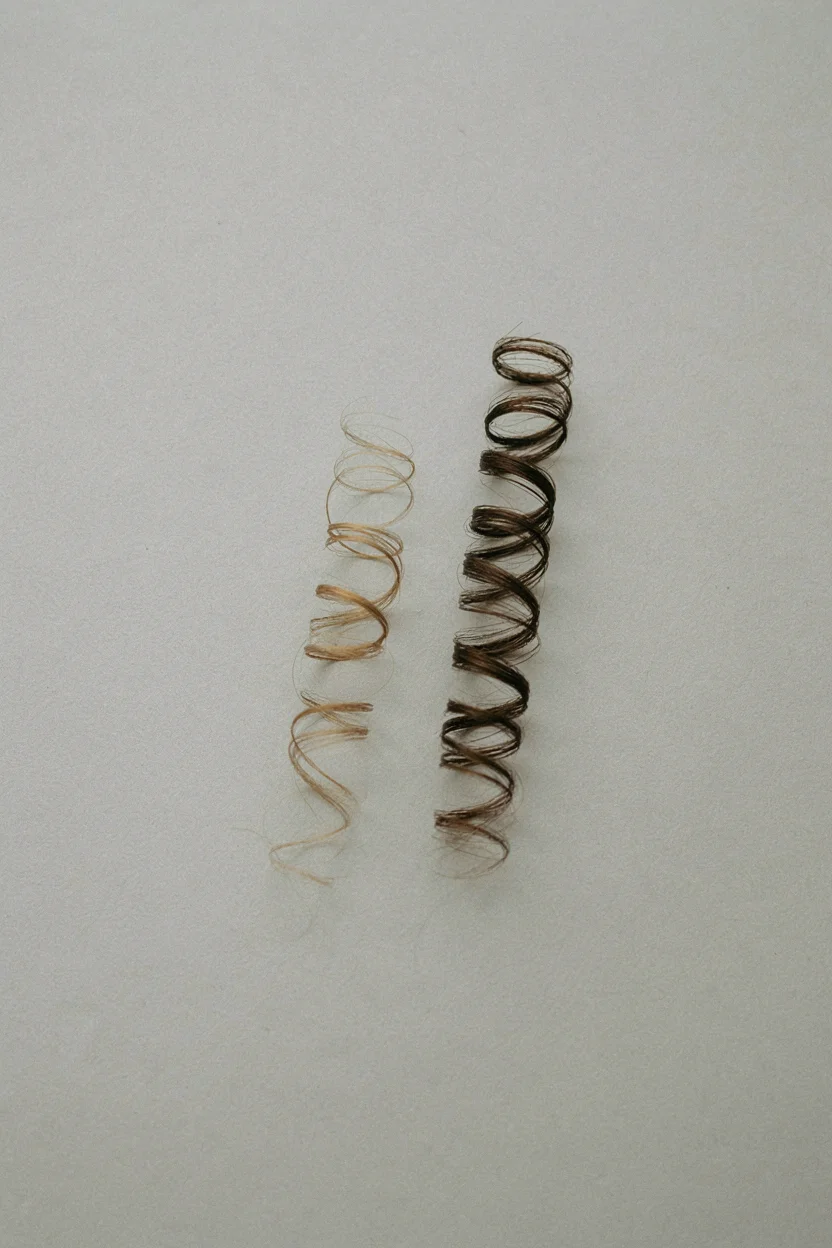
Each hair strand has three layers: the medulla at the centre, the cortex around it, and the cuticle on the outside. The cortex is what holds a curl shape, because that’s where the keratin bonds rearrange when you set the hair. Fine hair has a thinner cortex. Not less keratin, just less of it, packed into a narrower strand. That means there’s less material available to hold the new shape once you remove the wrapping tool.
On medium or coarse hair, the cortex is thick enough that a heatless set can rearrange enough bonds to create a curl that holds for a full day. On fine hair, the same set rearranges fewer bonds because there’s less cortex to work with, and the curl that results is lighter, looser, and more prone to relaxing back to straight. This isn’t a flaw in the hair. It’s just how the geometry works.
And I think this is worth saying clearly: fine hair is not failing at being curly. It’s doing exactly what its structure allows, and the job is to work within that range rather than fight against it.
The Method: What I Actually Do
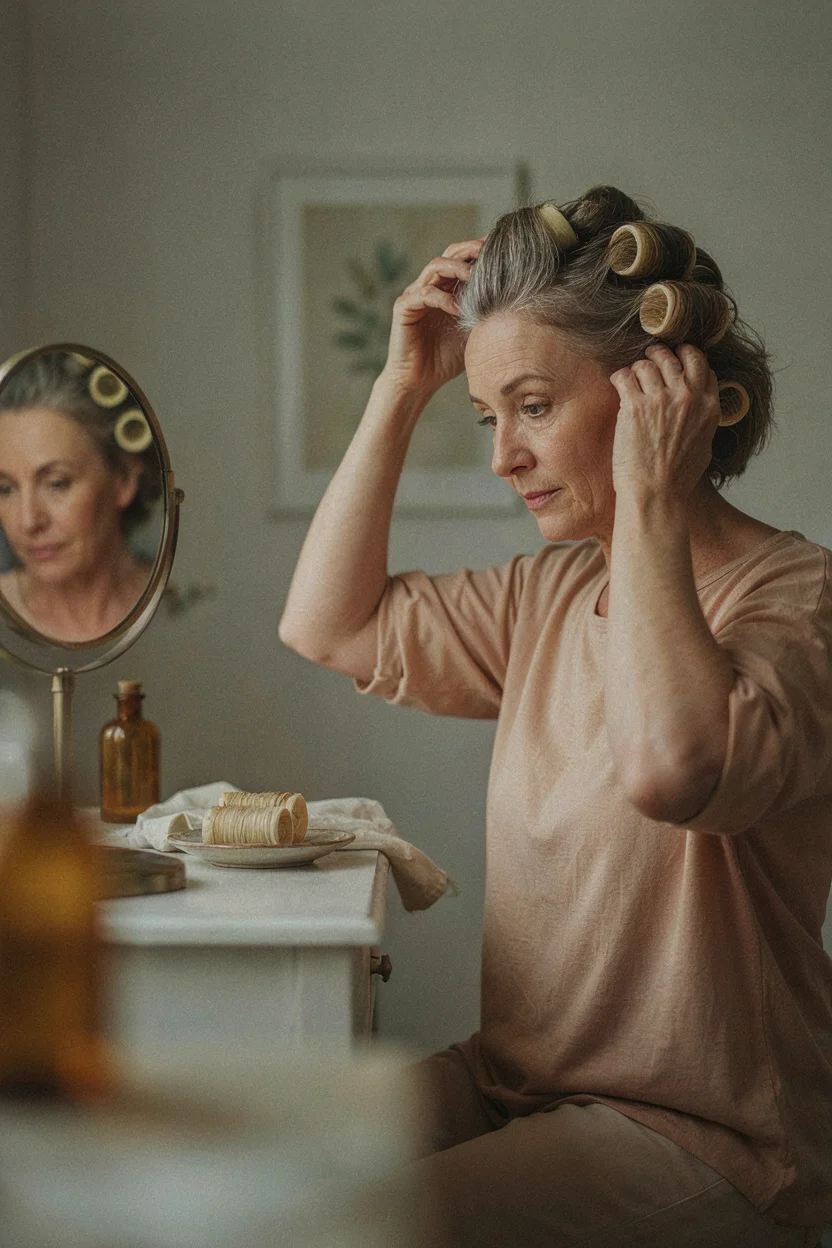
This method works on hair from about 1a to 2c on the curl spectrum. Hair type is a shorthand, not a complete description, but it helps to know the range. If your hair is naturally straighter than 2a, the set will produce looser waves. If it’s wavier to begin with, the set builds on what’s already there and the hold tends to last longer.
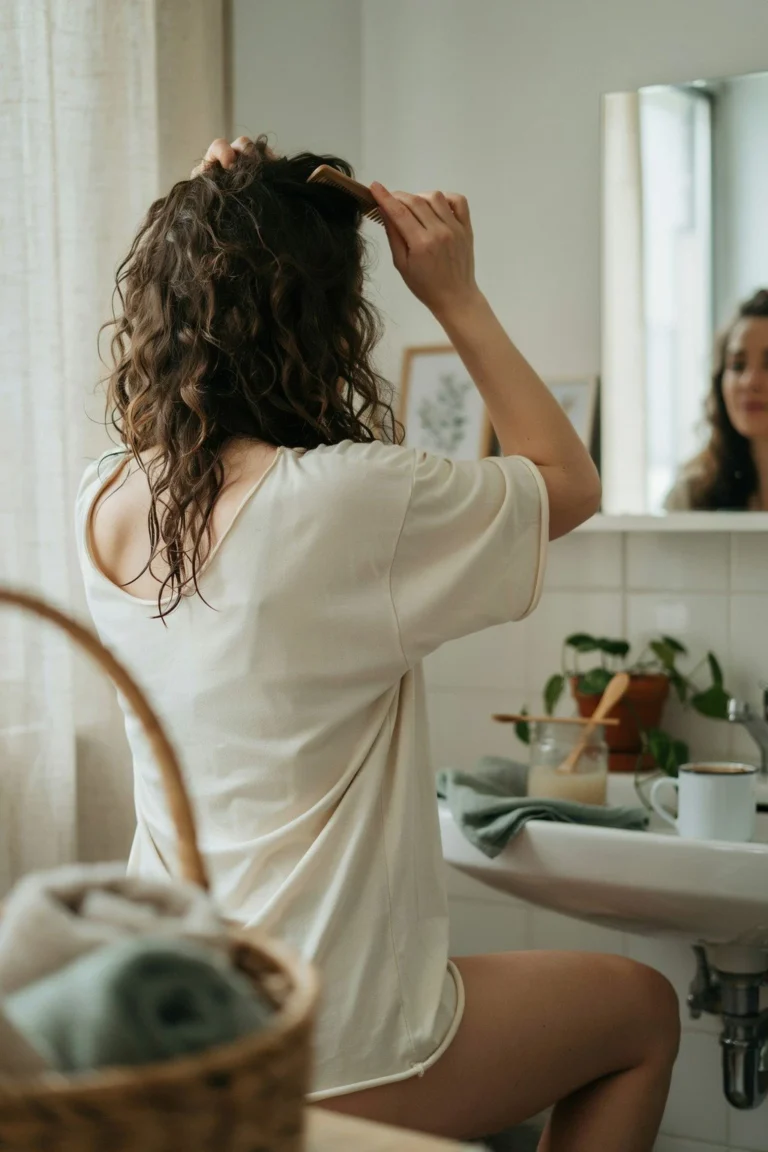
Start with clean, damp hair. Not soaking wet, but damp enough that it’s cool to the touch and slightly darker than its dry colour. I towel-blot mine and then wait about ten minutes before I start wrapping. The reason the moisture level matters is that water temporarily breaks some of the hydrogen bonds in the cortex, and those bonds reform as the hair dries in whatever shape you’ve set it in. Too wet, and the hair takes too long to dry and the bonds don’t set firmly. Too dry, and the bonds have already reformed in the straight position before you even start wrapping.
I use a lightweight leave-in spray, the kind that says weightless or air-light on the label, applied from the mid-lengths to the ends. Not the roots. A small amount, maybe four or five sprays for the whole head. The reason is that fine hair needs some moisture to hold the set, but heavy creams and butters add weight that pulls the curl open as it forms.
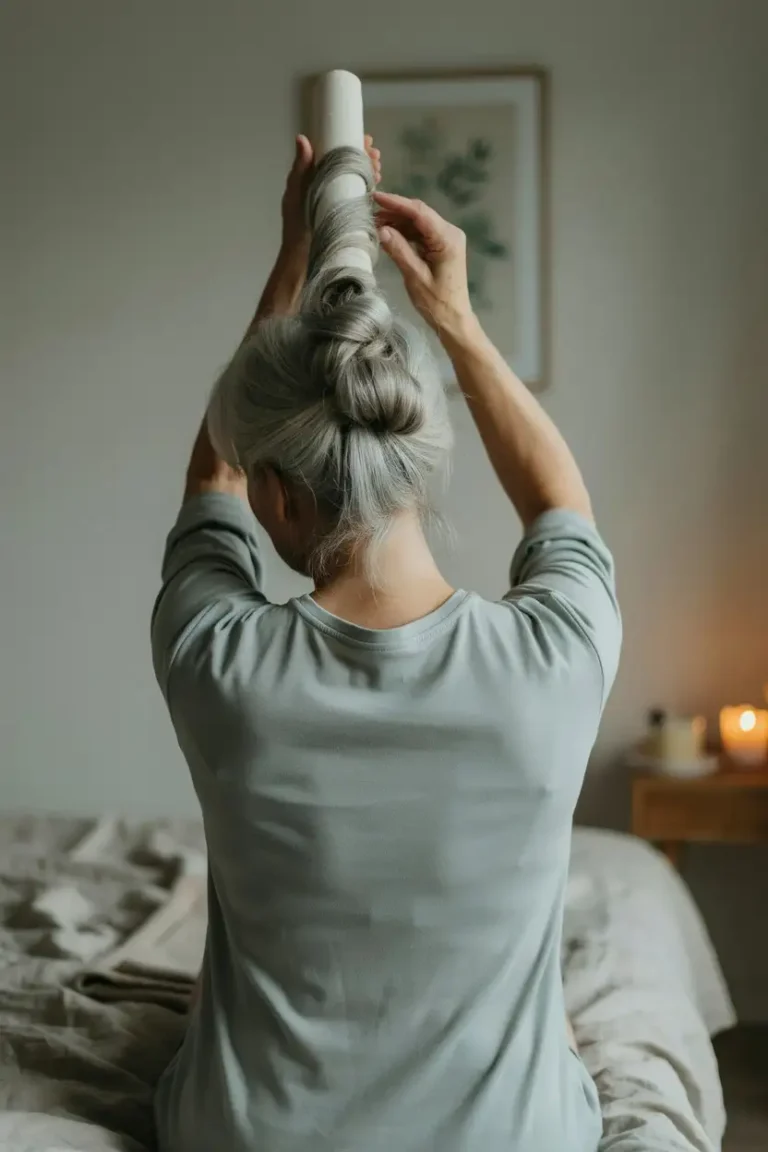
Then the wrapping. I use a foam or silk-covered rod, about two centimetres in diameter, and I wrap the hair in sections starting from the nape and working up. Each section is about two inches wide. I wrap the hair smoothly around the rod without pulling it tight, because tension on fine hair at the root creates stress that can lead to breakage over time, and the goal here is a gentle set, not a tight one. Each wrap takes about 20 to 30 seconds. The whole wrapping process takes me about 10 to 12 minutes.
| Step | Time Required | Hold Duration | Best For |
|---|---|---|---|
| Damp-hair wrapping on foam rods | 10 to 12 minutes | 4 to 6 hours on fine hair | 1a to 2c hair types |
| Overnight set on silk rollers | 15 minutes before bed | 6 to 8 hours on fine hair | All fine hair, better hold than daytime set |
| Flexi-rod set on slightly damp hair | 12 to 15 minutes | 8 to 10 hours on fine hair | 1a to 2b, tighter hold than foam rods |
| Headband wrap on dry hair | 5 minutes | 2 to 3 hours on fine hair | Quick refresh when overnight set has dropped |
Leave the rods in until the hair is completely dry. This is the part most people rush, and it’s the part that makes or breaks the set. On fine hair, I leave mine in for a minimum of four hours if I’m doing a daytime set, or overnight if I’m wrapping before bed. The overnight version gives better results because the hair has eight or nine hours to dry fully in the wrapped position, and the bonds have more time to lock into the new shape.
The Cool-Down Step Most People Skip
When you take the rods out, the hair is still warm from being wrapped, especially if you slept in them under covers. The hydrogen bonds in the cortex are still somewhat flexible at this stage, and the curl shape hasn’t fully set. If you immediately start brushing, finger-combing, or applying products, you’re rearranging bonds that haven’t finished locking into place.
I let my hair sit unwrapped for about five to ten minutes before I touch it. I don’t brush it. I don’t run my fingers through it. I just let it cool and let the bonds finish setting in the curled position. After that cool-down period, I gently separate the curls with my fingers, working from the ends upward, and then I apply a light-hold spray if I want extra insurance for the day.
The difference this step makes is substantial. I’ve tested it side by side on the same hair, same products, same wrapping method, one day with the cool-down and one day without. The day with the cool-down gave me about two extra hours of visible curl before the waves started to relax. On fine hair, two hours is the difference between curls that last through lunch and curls that don’t.
Fine hair needs time to decide it’s curled. Rushing the cool-down is like opening the oven before the cake is set.
Why the Set Falls: Three Things to Check
If your heatless curls are falling by midday, the cause is usually one of three things. The first is wrapping hair that’s too wet. When the hair is very wet, it takes so long to dry inside the wrap that the bonds reform slowly and unevenly. The set looks good when you first unwrap it because the hair is still holding the shape mechanically, but as it finishes drying in the open air, it relaxes back to straight because the bonds never fully set in the curled position.
The second is using a wrapping tool that’s too large. A thicker rod produces a looser wave, and on fine hair, a looser wave has less structural integrity. It relaxes faster. Switching to a slightly smaller rod produces a tighter curl that holds longer, even if you then gently pull it out to loosen it after the cool-down. The tighter initial set gives the bonds a stronger position to lock into.
The third is product weight. If you’re using a cream, butter, or heavy leave-in conditioner before wrapping, you’re adding weight that fine hair can’t carry while maintaining the curl shape. The product pulls the curl open as it forms, and the result is a wave that looks stretched and flat rather than bouncy and defined. Switching to a lightweight spray and keeping it below the roots usually fixes this on its own. For more on how product weight affects fine hair styling, see our root lift guide.
Frequently Asked Questions
Can I do heatless curls on dry hair?
You can, and the headband wrap method works on dry hair for a quick refresh. But the best sets on fine hair happen on damp hair because the water temporarily breaks hydrogen bonds in the cortex, allowing them to reform in the curled position as the hair dries. On dry hair, those bonds are already set in whatever shape the hair was in, and you’re relying on mechanical wrapping alone to hold the shape temporarily. The result lasts two to three hours instead of six to eight.
How do I sleep in heatless curlers without damaging my hair?
I use foam or silk-covered rollers, which are soft enough that they don’t press into the scalp or create hard creases in the hair. I wrap loosely, not tightly, because tension on fine hair overnight can cause breakage at the wrapping point over time. A silk or satin pillowcase reduces friction between the rollers and the pillow, which helps the set stay intact and also reduces surface damage to the cuticle. The wrapping itself takes me about 15 minutes before bed.
Why do my curls look good in the morning but disappear by midday?
This is usually the cool-down issue. If you unwrap the rollers and immediately start styling, the bonds in the cortex haven’t finished setting and you’re rearranging them back toward straight. Letting the hair sit untouched for five to ten minutes after unwrapping gives the bonds time to lock. The other common cause is hair that was slightly too damp when wrapped, which means it didn’t fully dry inside the roller and the bonds never set properly in the first place.
Does hair length affect how well heatless curls hold on fine hair?
Shorter hair tends to hold a heatless set better because there’s less weight pulling the curl open. Shoulder-length fine hair is usually the sweet spot for this method. Hair that’s very long and fine has more weight at the ends, which stretches the curl as it forms and makes it relax faster. If your hair is below shoulder length, using a smaller rod and wrapping slightly tighter at the ends can compensate for the extra weight.
Can I use heatless curls if my fine hair is coloured?
Yes, and heatless methods are a good option for coloured fine hair because they avoid the thermal damage that curling irons and wands can cause on processed strands. Colour-treated hair is more porous, which actually helps the set take because the cortex absorbs and releases moisture more readily. The trade-off is that porous hair also loses the set faster if you don’t let it dry completely before unwrapping. Our guide to shedding versus breakage covers how chemical processing affects the hair shaft in more detail.
The Method That Stuck
I’ve tried a lot of curl methods over the years, and the damp-hair foam rod set with a proper cool-down is the one that consistently works on my fine hair. It takes a little patience the night before and ten minutes of not touching it in the morning, but the result is soft waves that last through the afternoon without any heat at all.
— Tess