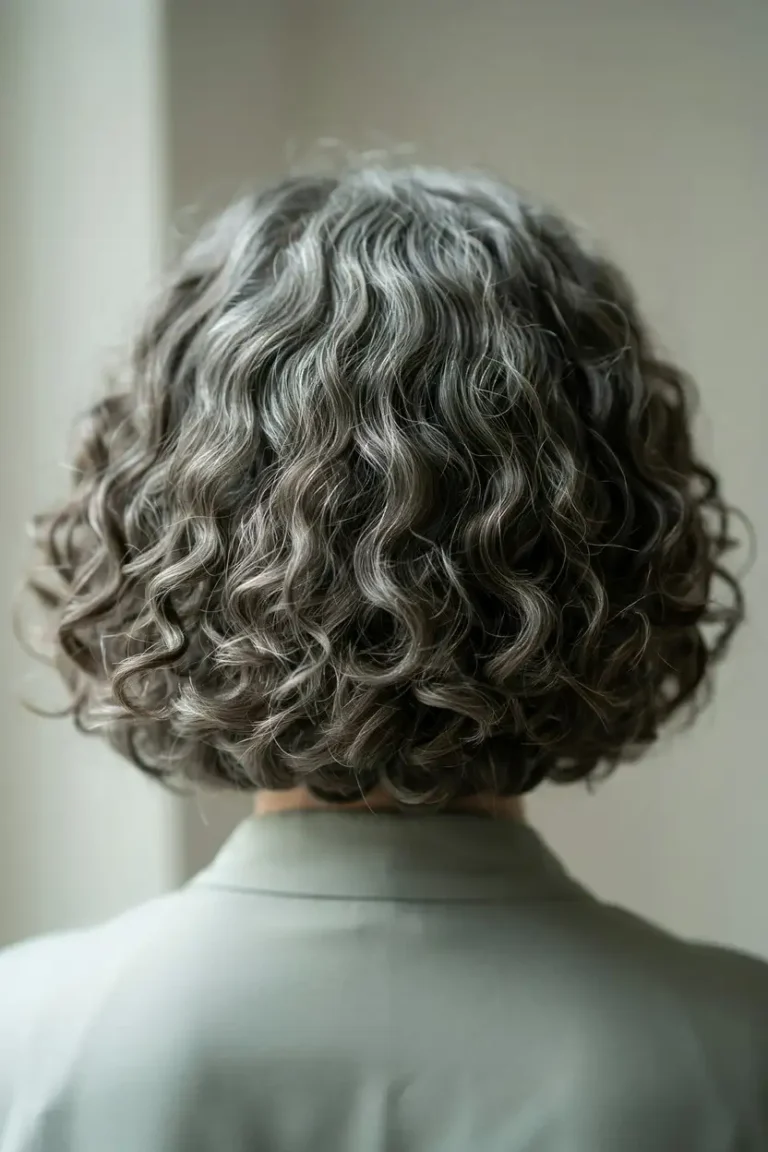
Brunette to Gray: 18 Transition Ideas That Soften the Line

Brunette to gray is the hardest version of this to live through and the most common one, because a level 3 or 4 base sets up the sharpest possible contrast against silver regrowth. Blonde hair blurs into gray almost by accident; dark hair draws a line you can see in a photograph from across the room. That is a real problem with real answers, and none of them involve waiting it out in silence. Mine started at a level 4 and took 14 months, and the ideas below are ordered by where you are in that timeline rather than by how they look.
Why a Brunette Transition Draws a Harder Line
Contrast is the whole problem. Silver arriving against a level 8 blonde is a shift of one or two levels; the same silver against a level 3 brunette is a shift of five or six, and the eye reads that as an edge rather than as a gradient.

Nothing about the growth rate changes. Hair grows roughly half an inch a month regardless of color, so shoulder-length hair needs 20 to 24 months to be entirely your own and a chin-length bob needs 12 to 14. What a dark base changes is how visible each of those months is, which is why blending earns its cost here in a way it does not for everyone.
The First Three Months
Nothing is visible yet at half an inch a month, which makes this the cheapest window and the one most people waste worrying.

Simply Stopping
Cancelling the next root appointment costs nothing and is the only step that actually starts the clock. At 4 to 5 weeks of growth there is nothing to see, and at 12 weeks there is about an inch and a half. I told nobody for the first two months.
A Gloss Over Everything
A demi-permanent gloss across the whole head pulls your colored length slightly cooler without lifting anything, which narrows the contrast before the line appears. It fades rather than growing out, at $40 to $90 every 4 to 6 weeks. Patch test any formula you have not had before.
Moving Your Part
Shifting the part by an inch changes which section of regrowth sits on top and buys several weeks of invisibility for nothing. The effect lasts until the hair falls back, usually a few days. It is the cheapest thing in this article.
A Cut That Shortens the Runway
Taking length off now removes colored hair you would otherwise wait for later. Every 2 inches removed is roughly 4 months off the total. This is the single most effective decision available at this stage.
Months Four to Ten
This is the stretch where the line is unmistakable and where most people quit. Warmth belongs here more than anywhere else, and so do the interventions.

Fine Highlights Through the Front
Lightening fine pieces around the face pulls brightness down from the root so the boundary repeats rather than sitting in one place. On a dark base this takes 2 to 3 sessions spaced 8 to 12 weeks apart at $180 to $320 each. Lift is never damage-free.
A Root Smudge Across the Boundary
Smudging a deposit-only shade over the line blurs it instead of covering it, stretching the visible interval from 4 to 5 weeks out to 8 or 9. Nothing is lifted, so nothing is added to the damage already in your length. Cost sits at $60 to $110.
Lowlights Into the Silver
Adding darker pieces into the grown-out section works from the opposite direction, breaking the silver into something that reads as dimension. Deposit-only, so integrity cost is low, on an 8 to 10 week cycle at $120 to $200. This suits anyone whose hair cannot take more lift.
Wearing It Up on the Bad Days
Putting the whole thing up removes the horizontal line from view entirely, which is a legitimate tool rather than an admission of anything. There is no cost and no appointment. The middle of a grow-out is genuinely uncomfortable, and having something that works on the worst days is worth more than most products.
Month seven is where nearly everyone quits, and almost nobody quits because the hair looks bad. They quit because they had no plan for that month specifically.
Blending Through the Line
These four are about tone rather than placement, and they matter more on a dark base than on any other.

Cool Toning on the Colored Length
Brunette that has been colored for years usually sits warmer than it looks, and warmth beside silver is what makes the contrast read as a clash. A cool gloss every 6 to 8 weeks narrows that gap for $40 to $90. It changes no levels at all.
Teasylights for a Shadowed Root
Backcombing before lightening leaves the root deliberately soft, so what grows in blurs rather than banding. It adds $30 to $60 to a standard foil service and stretches the interval to 4 to 6 months. On a dark base this is usually the better buy over standard foils.
Leaving Some Silver Unlightened
Deliberately skipping the grayest sections means part of what shows is genuinely your own color, which needs no maintenance and costs nothing. It also reduces the total lightened area and therefore the integrity cost. The realism is free.
Working With Box-Colored Length
Box color deposits more pigment than a salon formula and builds unevenly, so lightening over it goes patchy without warning. A strand test before any lightening service is the only way to know what your length will do. On heavily box-colored hair the session count moves from 2 to 4.
Ending It Early
Three ways to stop waiting, each with an honest cost.

Cutting Straight to the Line
Removing everything below your natural silver finishes the grow-out in one appointment. On 10 months of growth that means taking off about 5 inches at half an inch a month. It is the only route that ends immediately and the loss of length is real.
A Full Correction to Silver
Lifting the remaining brunette to match your natural gray is a major chemical service rather than an appointment. From a level 3 or 4 it typically runs 2 to 4 sessions over 3 to 6 months at $800 to $2,500 total, and more on box-colored length. Any colorist quoting one session on a dark previously colored base is describing different hair.
Cutting in Stages
Taking 2 inches every 3 months removes colored length faster than growth alone while keeping a recognisable shape throughout. It shortens a 24-month grow-out to roughly 14. This is the compromise most people actually land on.
If You Started From Red
Red behaves differently enough from brown to need its own note, because red pigment is the most stubborn to remove and the most obvious against silver.

Letting Red Fade Rather Than Lifting It
Red fades faster than any other artificial pigment, so waiting costs nothing and does most of the work that lifting would. Expect noticeable fade over 3 to 4 months of ordinary washing. Lifting red usually exposes orange underneath, which sits worse against silver than the red did.
A Cool Gloss to Kill the Warmth
A gloss with green or ash tones neutralises fading red so the length reads neutral rather than coppery beside your gray. It deposits only, at $40 to $90 every 4 to 6 weeks. This is the highest-value single appointment for anyone transitioning out of red.
Accepting a Longer Runway
Red-to-gray usually takes 3 to 6 months longer than brown-to-gray to look settled, because the pigment lingers in the length after the color has stopped being applied. Knowing that in advance prevents the month-eight panic. The growth rate itself is unchanged.
What Each Transition Route Costs
| Route | Time to finished | Cost over the whole thing | Integrity cost | Worst stage |
|---|---|---|---|---|
| Grow out, no intervention | 12 to 24 months by length | Cuts only | None, and falling | Months 4 to 10 |
| Grow out with root smudges | Same | $60 to $110 every 8 to 9 weeks | None | Softened throughout |
| Grow out with highlights | Same | $360 to $960 over 2 to 3 sessions | Moderate | Mild after session 1 |
| Cut in stages | About 14 months | Cuts only | None | Months 4 to 8 |
| Cut straight to the line | One appointment | Cut only | None | None, at the cost of length |
| Full correction | 3 to 6 months | $800 to $2,500 | High | Between sessions |
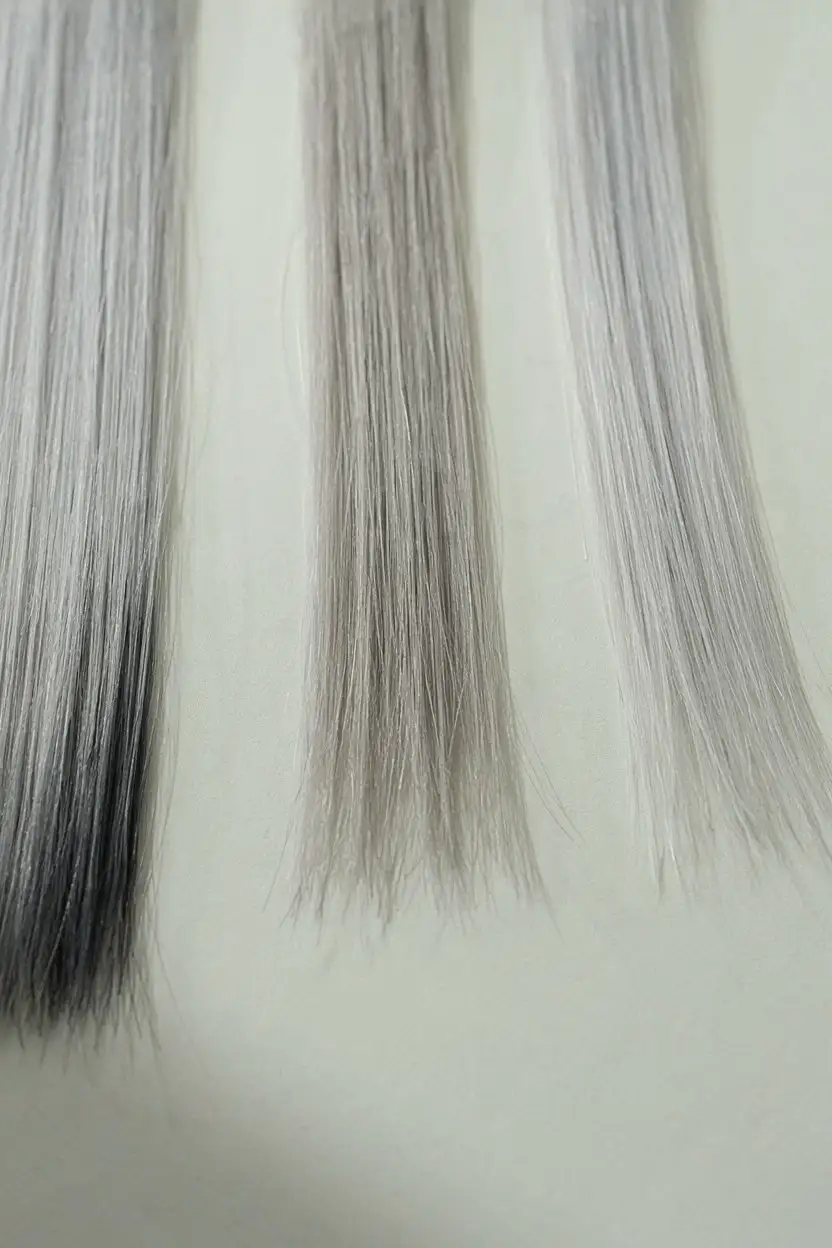
Cost bands vary by region, salon tier, and length. A dark base pushes every lightening figure toward the top of its band because it needs more sessions to get there.
What to Settle Before You Start
- What percentage of your hair is actually gray, measured by a colorist rather than guessed, since almost everyone guesses high.
- What level your colored length actually is, because that decides the contrast and the session count.
- Everything that has been on your hair in the last 3 years, including box color and henna.
- Whether a strand test has been done, if any lightening is being considered.
- How much length you are willing to lose, since that is the only variable that genuinely shortens the timeline.
- What your plan is for months four to ten specifically, because that is where this is decided.

If what is worrying you is how much hair there is rather than what color it is, that is a different question. Shedding above roughly 100 hairs a day for more than 6 weeks, or a part line that has visibly widened, is worth a dermatologist appointment rather than a colorist one.
For the full month-by-month of a grow-out, the transition guide covers each stage in order. If you are weighing blending against a correction on cost, the options comparison separates all three routes.
Frequently Asked Questions
How long does a brunette to gray transition take?
Between 12 and 24 months, decided by length rather than by starting color. At roughly half an inch a month, a chin-length bob is through it in 12 to 14 months while shoulder-length hair needs 20 to 24. A dark base does not slow the growth; it makes each month more visible, which is a different problem. Cutting shorter is the only thing that genuinely shortens the timeline.
Is the transition harder from brunette than from blonde?
Visually yes, and by a wide margin. Silver against a level 8 blonde is a shift of one or two levels, while the same silver against a level 3 brunette is five or six, so the boundary reads as a hard edge rather than as a gradient. That is why blending services earn their cost on dark hair and are frequently unnecessary on light hair. The timeline itself is identical.
What is the cheapest way to soften the line?
A root smudge, at $60 to $110 every 8 or 9 weeks, which blurs the boundary rather than covering it and adds nothing to the damage in your length. Below that, moving your part costs nothing and buys a few weeks. Highlights cost several times more and do more, so the sensible order is to try the cheap options for one full interval before booking anything that lifts. Most people who start with highlights never find out whether a smudge would have been enough.
Can I go straight to silver instead of growing it out?
You can, and it is a major chemical service rather than a shortcut. From a level 3 or 4 base it typically takes 2 to 4 sessions over 3 to 6 months at $800 to $2,500, with a real integrity cost at every session. On hair that has been box-colored for years the count sits at the top of that range and a strand test is not optional. Growing out costs a fraction of it and takes longer, which is the actual trade.
What I Would Plan For
Decide now what you will do in month seven, because that is the month this is won or lost and nobody makes a good decision about it while standing in it. Book the root smudge in advance if that is your answer, or agree the staged cuts with your stylist at the start.
If you are in the middle of one and trying to work out whether to push on or cut, tell me your length and how many months in you are, and I will tell you honestly how much is left.
— Nora