Heatless Curls on Short Hair: What Actually Changes
Heatless curls on short hair follow most of the same principles as long hair, but three things change enough that a straight copy of a long-hair tutorial usually disappoints: section size, how long the curl actually holds once you’re up, and how much easier it is to overdo the tension near your hairline when there’s less length to work with. I’ve adapted every method I use on longer hair down to a shorter length at some point, and the adjustments are small but they matter. Here’s what actually changes and what stays the same. Pattern numbers are a shorthand people use to talk about texture, not the whole picture, and at short lengths, length itself ends up mattering almost as much as pattern does.
Heatless curls on short hair need smaller, more numerous sections and generally hold for less time than the same method on longer hair, since there’s less length and weight to keep the curl’s shape once you’re moving.
Why Heatless Curls Turn Out Differently on Short Hair
Length adds weight, and weight is part of what keeps a curl pulled into shape once you’re up and moving through your day. Short hair has less of it, so a curl that would hold a full day on longer hair might soften to a wave by afternoon at a shorter length using the identical technique. This isn’t a sign the method failed — it’s just physics, and knowing it going in changes how you plan your day around the style rather than being disappointed by it later.
Density and texture still matter as much as they do at any length. A short, fine, straight cut holds the least of any combination I’ve tried, since there’s minimal weight and minimal texture both working against the curl at once. A short, coarser, or textured cut holds noticeably longer, closer to what you’d expect from a longer length on finer hair.
Adjusting Your Heatless Curls Method
- Use smaller, more numerous sections. Short hair wrapped in the same large sections you’d use on long hair won’t have enough length to actually wrap around a rod or ribbon more than once or twice, which gives a weak, loose result. Go with 10 to 14 smaller sections instead of the 6 to 8 you might use on longer hair.
- Watch your tension near the hairline. With less length overall, it’s easier to accidentally pull tension all the way to the root on short hair, since there’s less slack between the root and where the wrapping actually starts. Keep wraps starting at least half an inch from the scalp, and never tight enough to tug when you turn your head. If you can feel pulling at the root once a section is wrapped, undo it and start that section again rather than leaving it and hoping it settles overnight.
- Cut the drying window slightly. Short hair generally dries faster than long hair to begin with, so the 80 percent dry starting point arrives sooner. Check earlier than you would on longer hair rather than assuming the same wait time applies.
- Set expectations on hold time. Plan on the shorter end of any hold range you see quoted for a method, and if you have a full day planned, consider a light touch-up product to carry the style past the point it would otherwise soften.
Short hair isn’t harder to curl without heat. It just holds less, and planning around that honestly beats being disappointed by it every time.
Two Methods That Work Especially Well at Short Lengths
Not every heatless method translates well to shorter hair, but these two hold up better than most because they don’t rely on length to work.
The Mini Flexi Rod Set
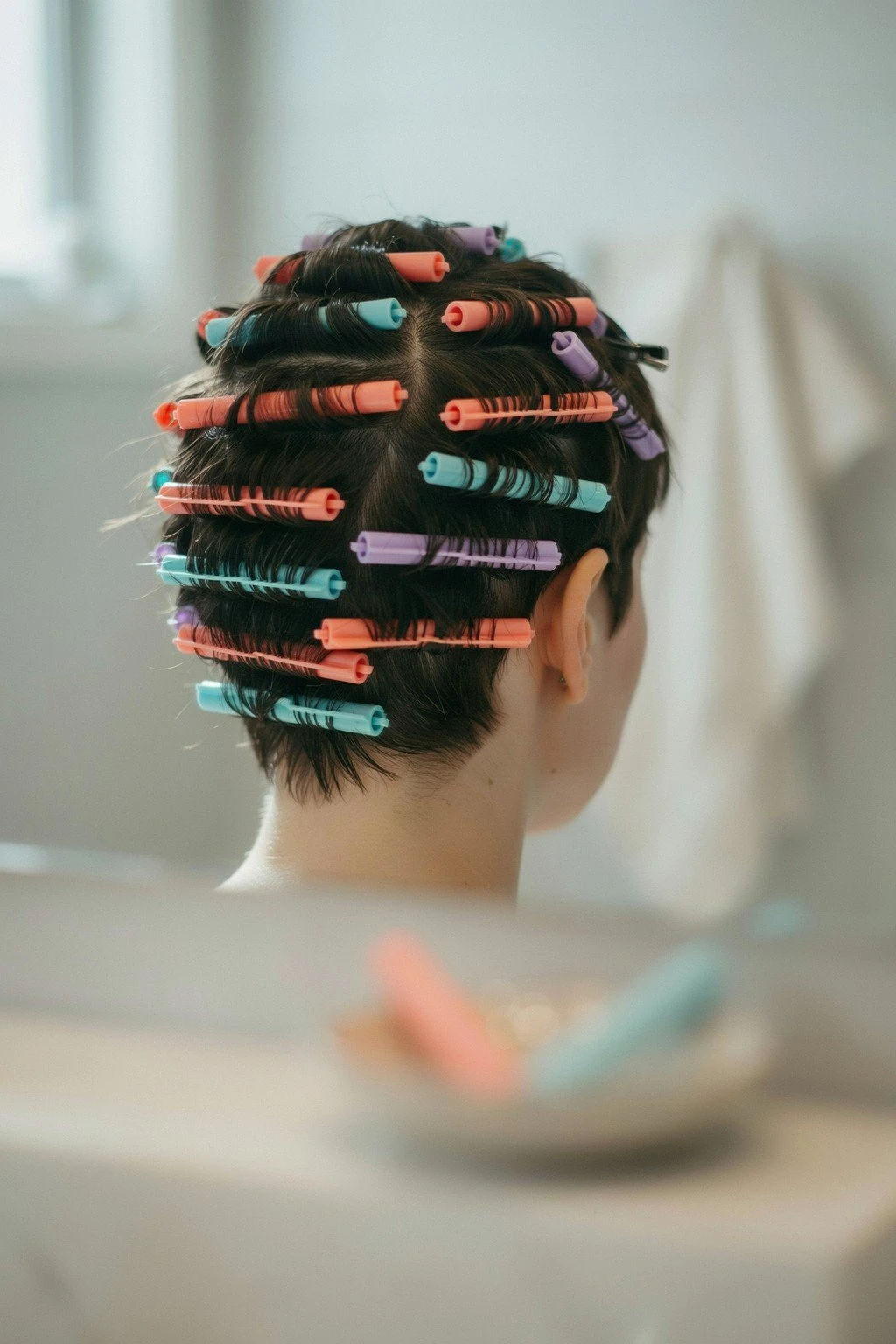
Smaller rods than you’d use on long hair, wrapped in the smaller sections described above. Takes about 15 minutes for a full head at short length, holding 6 to 10 hours, less than the same method on longer hair but still a full workday.
The Pin Curl Set
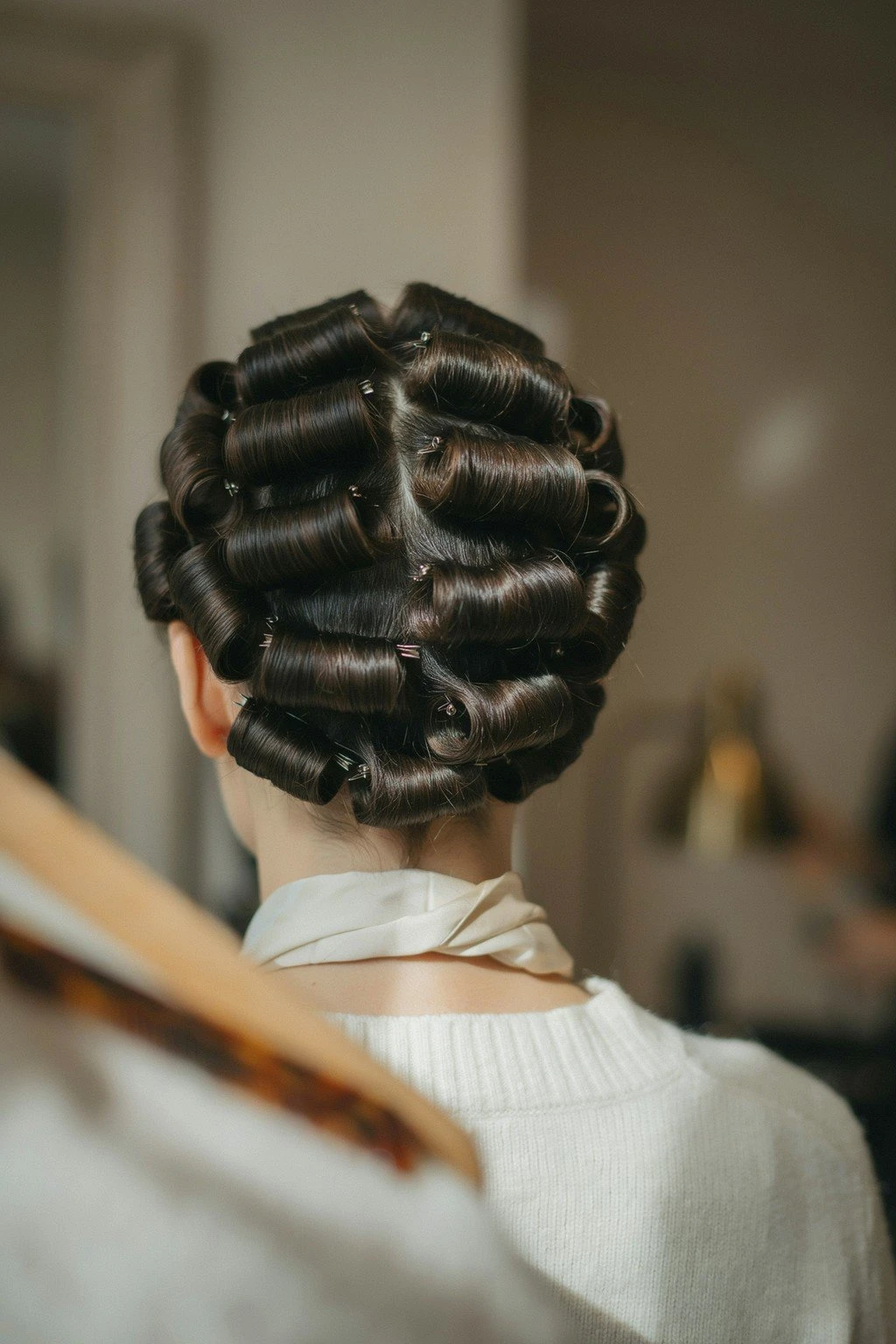
Small sections wrapped flat against the head and pinned in place, a classic technique that actually suits short hair better than long, since there’s less length to fight into a flat curl. About 12 minutes to set, holding a similar 6 to 10 hours. I go back to pin curls more than any other method on my own short cuts, mostly because the flat shape they leave behind actually looks intentional even once the curl itself has softened by evening.
What Doesn’t Work as Well on Short Hair
Braid-outs and twist-outs generally need more length than most short cuts have to actually produce a defined curl once unraveled — on very short hair, the twist itself barely has anything to twist, and the result reads more like texture than a real curl. If your length is right at the edge, a smaller, tighter version can still work, but don’t expect the dramatic wave that the same technique gives on longer hair.
Rag curls and heavier setting tools like curlformers run into a similar length problem — they’re built to wrap a longer strand multiple times, and on short hair there’s often only enough length for a single loose wrap, which produces a soft bend rather than a defined ringlet. If you’re set on trying one of these anyway, expect a much subtler result than the tutorials filmed on longer hair show.
Set Time and Hold at Short Lengths
| Method | Set time | Hold duration on short hair |
|---|---|---|
| Mini flexi rods | 15 minutes | 6–10 hours |
| Pin curls | 12 minutes | 6–10 hours |
| Small ribbon wrap | 8 minutes | 5–8 hours |
What You’ll Need
- Smaller flexi rods or pin curl clips, sized down from a standard long-hair set.
- A lightweight leave-in and a small amount of curl cream.
- A silk or satin bonnet, since short hair can slip out of a standard pillowcase wrap more easily than long hair.
- A light touch-up product for extending hold past the first few hours.
You genuinely need less of everything at short lengths, both product and tools. A full set of long-hair-sized flexi rods is overkill on a short cut, and buying a smaller, dedicated set is worth it if you’re doing this regularly rather than reaching for tools sized for hair you don’t have anymore.
Frequently Asked Questions
Why do my heatless curls fall out faster on short hair than they used to on long hair?
Less length means less weight holding the curl’s shape once you’re moving through your day, so a shorter hold time is expected rather than a sign anything went wrong. Plan around a 6 to 10 hour hold rather than the full day some long-hair methods achieve.
What pattern ranges work best for heatless curls on short hair?
The technique works across most ranges from 2a to 4a, though very fine, straight hair at a short length holds the least of any combination, since there’s minimal texture to begin with helping the curl grip. Denser or coarser short hair generally holds longer.
Will a heatless set damage a fresh short haircut?
No, as long as tension stays reasonable and you’re not pulling tightly right at the hairline. A fresh short cut has all the same styling options a grown-out one does, and heatless methods are gentler on the hairline than most heat tools would be regardless of how recently you were cut. Give a very fresh cut a day or two before a full set if the perimeter feels sensitive right after cutting, which is normal and settles quickly.
Can I use the same products I used on long hair?
Yes, though you’ll likely need less of everything simply because there’s less hair. Start with roughly half the amount you used at a longer length and adjust from there based on how the result looks.
How small should my sections be for short hair?
Aim for sections about an inch wide, smaller than you’d likely use on longer hair, since short hair needs more wraps around a rod or pin to actually hold a shape. This usually means 10 to 14 sections total rather than 6 to 8.
Should I cut my curl products in half when styling short hair?
Roughly, yes. Start with about half of whatever amount you’d use on longer hair and add more only if the result looks under-defined once it’s dry. Overloading short hair with product is one of the most common reasons a heatless set looks weighed down rather than curled.
Try It Tonight, Adjusted
Take whichever heatless method you already know and just shrink the sections and the tension. That’s most of the adjustment, and it’s a lot less to relearn than starting from scratch.
Tell me your length and your pattern, and I’ll help you figure out the right section size and hold expectations. — Tess