Hair Loss After Menopause: What a Clinician Should Check

Hair loss after menopause usually involves several overlapping causes rather than a single one, and identifying which factors are at play requires more than a guess. The hormonal shifts of menopause affect the hair growth cycle directly, but they also interact with nutritional status, thyroid function, and age-related changes in the scalp. I find that the language around this topic tends to push a single explanation, usually oestrogen decline, when the reality is more layered. Most women who notice increased shedding after menopause are experiencing a combination of changes, and separating them is the work of a proper clinical assessment.
Not all hair loss after the menopause transition signals a medical problem. Some increase in shedding is a predictable consequence of lower oestrogen and a shifted androgen balance, and some degree of thinning is part of normal skin ageing. But a sustained increase in shedding or visible thinning deserves investigation rather than a supplement bought online. I think the most productive starting point is to understand what a thorough clinical workup should include, so you can ask better questions at your next appointment.
What Changes in the Hair Cycle After Menopause
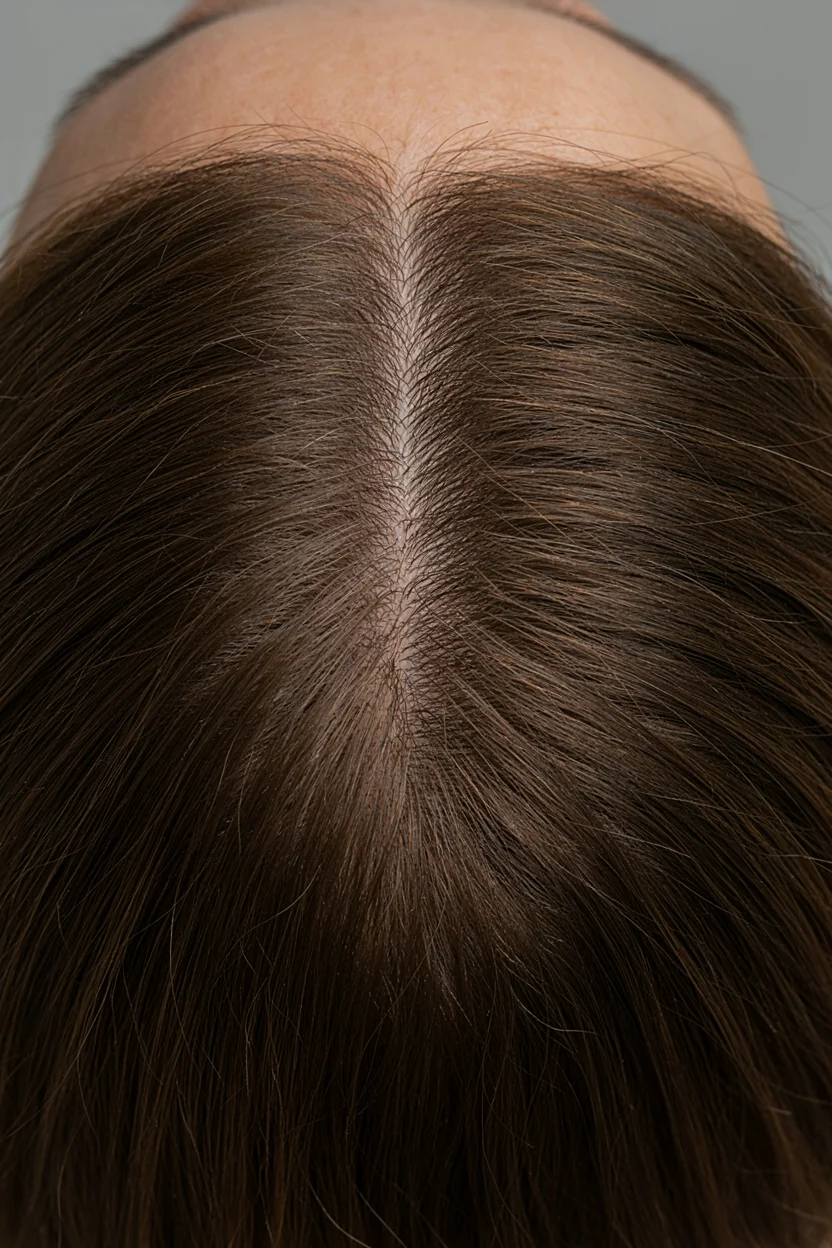
Oestrogen prolongs the anagen phase, which is the active growth period of each hair follicle. When oestrogen levels fall during the menopausal transition, a larger proportion of follicles shift into telogen and then shed within a relatively short window. This is one reason many women describe a noticeable change in hair density within the first year or two after their final menstrual period. The mechanism is well established: oestrogen extends growth, and its withdrawal shortens it.
The balance between oestrogen and androgens also shifts. Androgens, particularly testosterone and its more potent metabolite dihydrotestosterone, shrink hair follicles over time in genetically susceptible individuals. Before menopause, higher oestrogen levels provide a degree of protection against androgen-driven follicle miniaturisation. After menopause, that protection diminishes, and women who might never have noticed androgen effects on their scalp may begin to see diffuse thinning across the crown and a widening of the part line. This is the pattern clinicians call female-pattern hair loss, and it presents differently from the receding hairline more common in men. The extent of thinning depends on individual follicle sensitivity to androgens, which varies considerably and is not something you can predict from hormone levels alone.
The question is rarely whether hormones changed. The question is which downstream effects of that change are showing up on your scalp.
Thyroid function deserves attention as well. Thyroid disorders become more prevalent with age and affect a meaningful proportion of postmenopausal women. Both hypothyroidism and hyperthyroidism can disrupt the hair growth cycle by altering the signals that tell follicles when to grow and when to rest. The clinical picture of thyroid-related hair shedding looks similar to the picture of hormone-related shedding, so distinguishing between them requires a blood test rather than visual inspection.
Nutritional Factors That Intersect With Hormonal Change

Iron stores matter more than many people realise. Ferritin, the protein that stores iron, needs to be above a certain threshold for the hair cycle to function normally. When ferritin falls below that threshold, more follicles enter the resting phase, even in the absence of full anaemia. After menopause, iron stores often improve because menstruation has ceased, but dietary changes and reduced absorption in older adults can work in the opposite direction.
Vitamin D insufficiency is common in older adults regardless of menopausal status, and vitamin D receptors play a role in the hair follicle growth cycle. B12 deficiency also becomes more frequent with age, partly because the stomach produces less of the protein needed to absorb it from food. Both can contribute to increased shedding. I mention these not because supplementation is always the answer, but because a blood test is the only way to know where you stand.
Protein intake is another variable worth examining. Hair fibre is primarily keratin, and the body requires adequate dietary protein to sustain keratin production across all active follicles. Older adults sometimes reduce protein intake without realising it, particularly if appetite has decreased or if dietary habits have shifted. The threshold for adequate intake is higher than many people assume, and a clinician or dietitian can help assess whether your current intake supports normal hair growth.
What a Thorough Blood Panel Should Include

A standard workup for postmenopausal hair loss should include a full blood count, ferritin, thyroid-stimulating hormone, vitamin D, and B12. These cover the most common reversible contributors. Some clinicians also check zinc and folate, though deficiencies in these are less common in well-nourished populations. If the pattern of hair loss suggests androgen involvement, measuring total and free testosterone and DHEA-S may be appropriate, but only when the clinical picture points in that direction.
I should note that the evidence for routine zinc and biotin screening in hair loss is thin unless there is a specific clinical reason to suspect deficiency. Biotin deficiency is extremely rare in people who eat a varied diet, and supplementing without a confirmed deficiency is unlikely to change the picture on your scalp. This is worth knowing because many supplement companies market biotin as a universal solution for thinning hair, and the evidence does not support that claim.
What a Scalp Examination Reveals
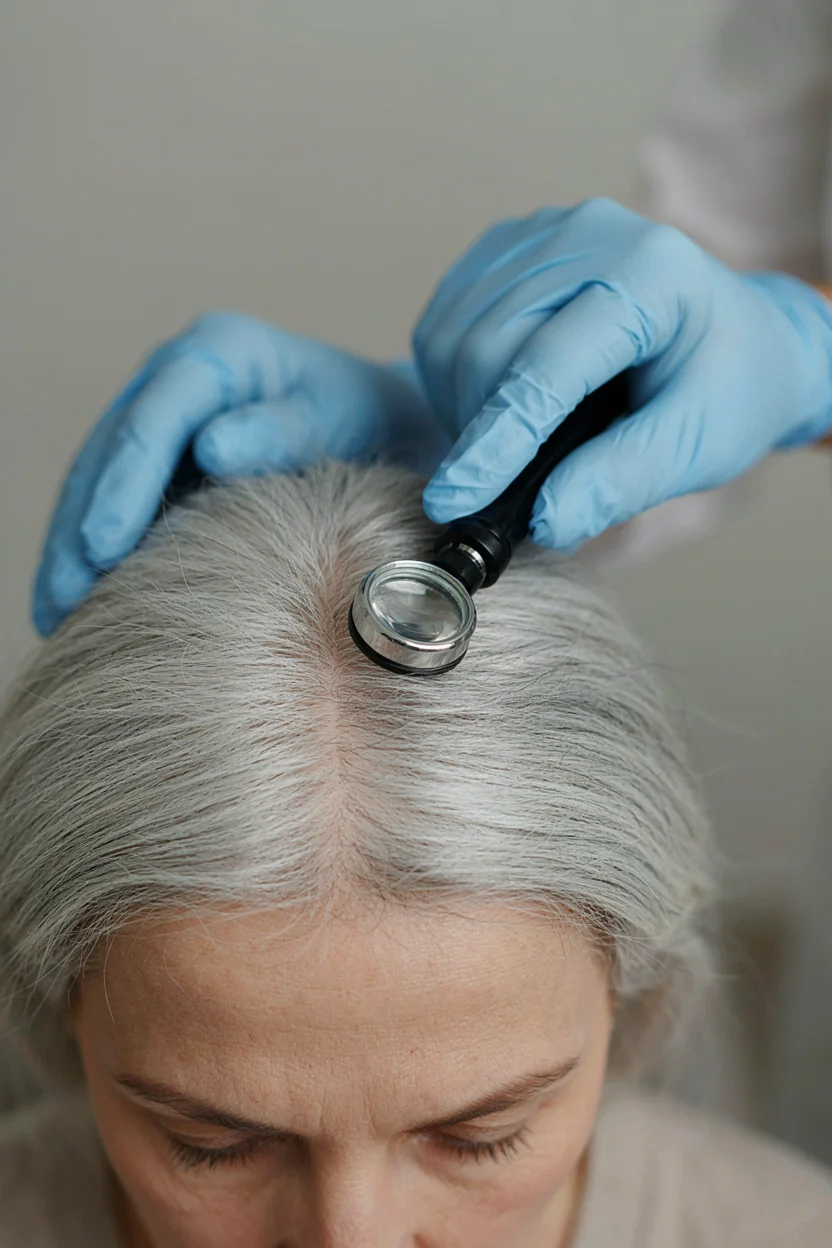
A clinician examining the scalp with a dermatoscope can see things that are invisible to the naked eye. Variations in hair shaft diameter across the scalp suggest androgenetic alopecia, because miniaturising follicles produce progressively finer hairs. Uniform shaft diameters with increased numbers of telogen hairs point more toward telogen effluvium, which is the pattern of shedding triggered by a systemic disruption such as illness, nutritional deficiency, or medication change.
The hair pull test is another standard tool. A clinician gently pulls a bundle of approximately 50 to 60 hairs and counts how many come away. More than six hairs suggests active increased shedding. The bulb shape of each pulled hair also provides information: telogen hairs have a small, club-shaped, unpigmented bulb, while anagen hairs have an elongated, pigmented bulb that suggests a less common disruption. These are standard clinical assessment tools, and any dermatologist or trichologist would use them as part of a thorough evaluation.
Where Can You Research the Hair Pull Test?
| Source | What It Says |
|---|---|
| Donovan Hair Clinic: The pull test | A hair-loss physician explains the test: about 50 to 60 hairs are gently pulled, and more than six coming away (over 10%) has traditionally been treated as a positive result. |
| Healio Dermatology: Hair pull test guidelines revised | Reports on revised pull-test guidance and how factors like recent washing and brushing affect the result. |
| Cleveland Clinic: Telogen effluvium | Describes telogen effluvium, the shedding pattern a positive pull test often points to, along with common triggers and the typical timeline for regrowth. |
I am describing these so that you know what to expect from a proper assessment, not so that you can diagnose yourself at home. Scalp biopsy is the definitive diagnostic tool when visual examination is inconclusive. A small sample of scalp tissue, examined under a microscope, reveals the exact ratio of growing to resting follicles, the presence or absence of inflammation, and whether miniaturisation is occurring. Not every case of hair loss requires a biopsy, but when the clinical picture is unclear, it provides the most reliable answer available.
Sorting Claims About Hair Loss Supplements

The market for hair growth supplements is large and the claims are often more confident than the evidence warrants. I find it helpful to sort common claims by their evidence tier, which means distinguishing between mechanisms that are well understood and effects that have actually been demonstrated in people.
| Claim | Mechanism | Evidence Tier |
|---|---|---|
| Biotin reverses hair loss | Biotin deficiency causes shedding, but deficiency is extremely rare in people eating varied diets | Tier 2 (plausible for the deficient, no evidence it helps those with normal levels) |
| Collagen peptides promote hair growth | Provide amino acids used in keratin synthesis | Tier 2 (mechanism is real, effect on human hair growth not well demonstrated) |
| Saw palmetto blocks DHT | Inhibits 5-alpha-reductase in laboratory settings | Tier 2 (laboratory mechanism is real, clinical evidence for scalp hair growth is limited) |
| Iron improves hair density | Adequate ferritin supports normal follicle cycling | Tier 1 when ferritin is confirmed low, Tier 3 when used without blood testing |
| Keratin supplements strengthen hair | Digested keratin is broken into amino acids like any other protein | Tier 3 (the claim implies targeted delivery to hair that does not occur) |
The pattern across this table is worth noticing. Several of these ingredients have a plausible mechanism, and that mechanism is often demonstrated in laboratory conditions. The step from a plausible mechanism to a measurable effect on actual hair growth in actual people is much larger than the marketing suggests. When I evaluate any supplement claim, I look for two things: is the mechanism biologically plausible, and has that mechanism been shown to produce a measurable hair change in people rather than in cell cultures. Most products on the shelf clear the first hurdle and fall short at the second.
When to See a Dermatologist

There are specific presentations where a dermatologist referral is important rather than optional. Sudden patchy hair loss, visible scalp inflammation or scaling, hair loss accompanied by other symptoms such as fatigue or weight change, and rapidly progressive thinning all warrant specialist evaluation. A personal history of autoimmune disease or hair loss that began after starting a new medication also belong in this category.
A dermatologist can perform investigations that a general practitioner typically does not, including scalp biopsy and more detailed blood panels, and can prescribe treatments that are not available over the counter. I think it is worth being direct about one thing: scarring alopecias, while uncommon, destroy the follicle permanently if not treated early, and any presentation that includes persistent scalp inflammation or scaling alongside hair loss should be evaluated promptly. The threshold for seeking a dermatologist should be low when the scalp itself looks abnormal.
Preparing for a dermatology appointment is straightforward but worth doing. Bring a list of all current medications and supplements, because several common medications can contribute to hair shedding. Note your hair care products and any chemical treatments. Avoid wearing tight hairstyles for at least two days before the appointment, because tension can alter what the clinician sees during the pull test and scalp examination. Photographing your hair monthly in consistent lighting and from consistent angles provides a timeline that helps the clinician understand the progression. For more on how shedding differs from breakage, see our guide to identifying what your strands are telling you.
Frequently Asked Questions
Does everyone lose hair after menopause?
Not everyone experiences noticeable hair shedding or thinning after menopause. The hormonal changes affect every woman, but the degree to which those changes show up on the scalp depends on genetics, iron stores, thyroid function, and overall health. Some women notice very little change, while others see a significant shift in density and hair shaft diameter within the first two years after their final period.
Can hair grow back after menopausal thinning?
It depends on the cause. Hair shedding caused by telogen effluvium, which is a temporary shift in the growth cycle, often resolves within several months once the trigger is addressed. Hair thinning caused by androgenetic alopecia involves follicles that have miniaturised rather than died, and medical treatments can sometimes increase the diameter of those fibres. A dermatologist can assess which situation applies and discuss realistic expectations.
How long before I see improvement from treatment?
Hair grows at approximately one centimetre per month, so even when a treatment is working, visible changes take three to six months to become apparent. This is a function of biology rather than treatment effectiveness, and it means that patience and consistent tracking are necessary parts of any management plan. Photographing your hair at regular intervals helps you see gradual changes that are difficult to notice day to day.
Should I wash my hair less often if it is shedding?
Reducing wash frequency does not reduce hair loss. Washing loosens hairs that have already detached from the follicle as part of the normal shedding process, so you may see more hair in the drain on wash days, but those hairs were going to come out regardless. Avoiding washing can create scalp conditions that worsen the situation, including buildup of sebum and dead skin cells that may contribute to inflammation. Our guide to scalp care and washing frequency covers this in more detail.
Does hormone replacement therapy help with hair loss?
HRT can help with some hair changes related to oestrogen decline, but the effects vary depending on the formulation and the individual. Some HRT preparations include progestogens with androgenic activity that can theoretically worsen hair thinning. HRT is not typically prescribed solely for hair loss, but if you are considering it for other menopausal symptoms, the hair effects are worth discussing with your prescribing doctor as part of the broader decision.
Is a hair growth supplement worth trying?
The evidence for most hair growth supplements is limited, and a targeted approach based on confirmed deficiencies identified through blood work is more productive than a broad supplement strategy. If blood work reveals low ferritin, low vitamin D, or low B12, supplementing those specific nutrients addresses a known contributor. Taking multiple supplements without knowing what you are correcting is unlikely to produce measurable results and can, in some cases, cause harm or interfere with laboratory tests.
Where to Start
Hair loss after menopause is usually the result of several contributing factors rather than one, and a thorough clinical assessment with blood work and scalp examination can identify which ones apply to you. That information saves time and money that would otherwise be spent on treatments that do not address your particular situation.
— Iris