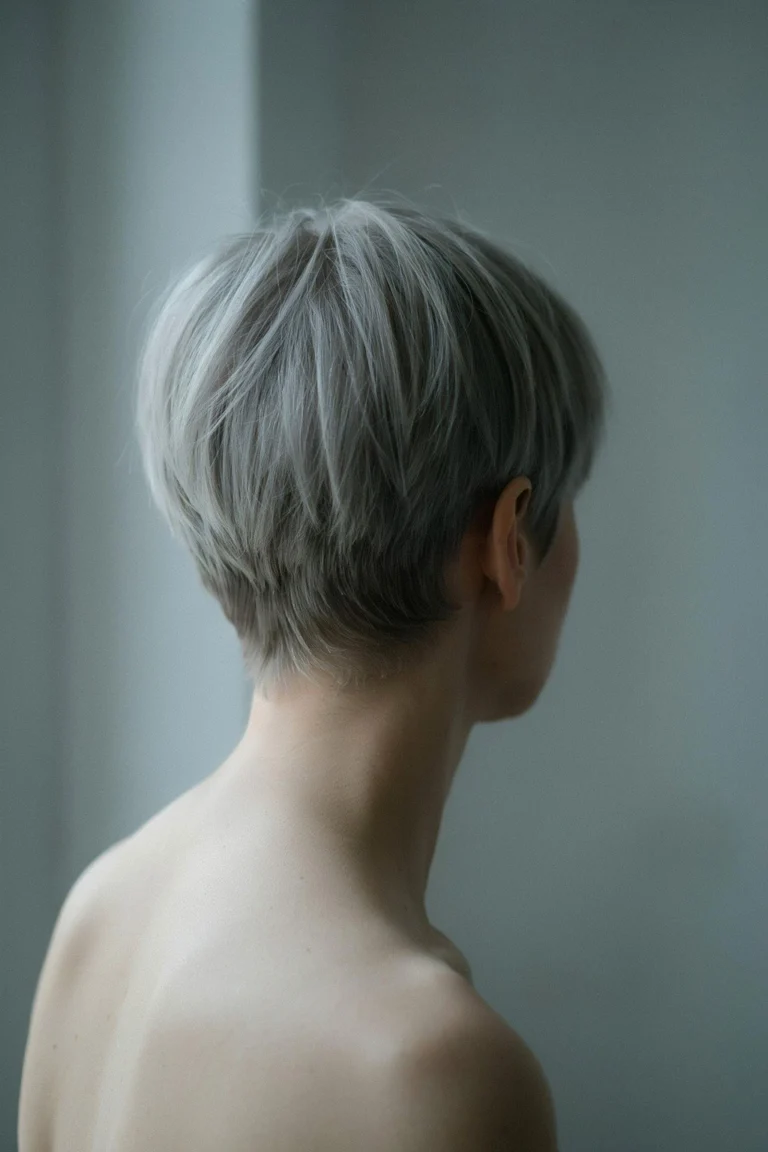
18 Silver Hair Highlights Ideas for Hair That Is Already Going Gray
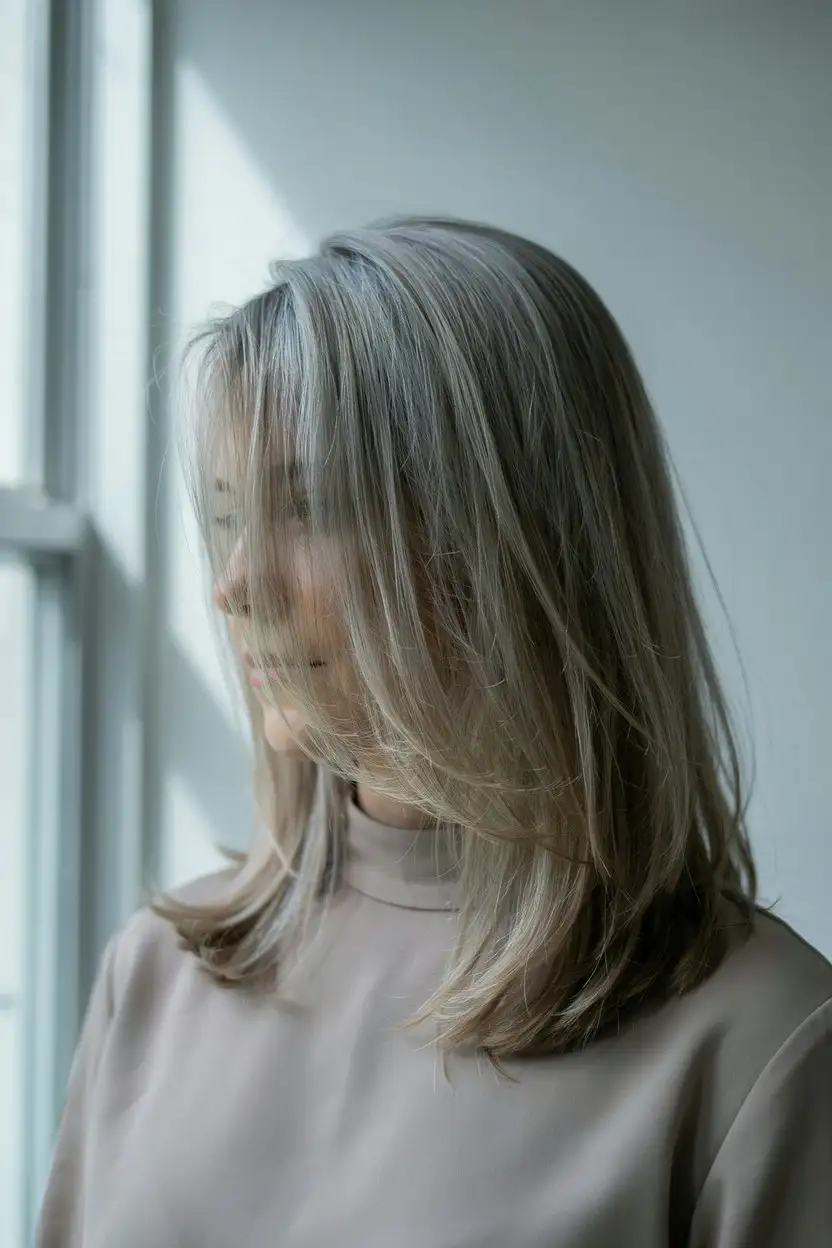
Silver hair highlights are usually searched by someone who already has silver arriving and wants it to read as design rather than as regrowth. That is a different job from putting silver onto brown hair, and it needs different placement, because you are working with brightness that is already there instead of building it from nothing. I spent most of my own grow-out with fine highlights through the front third and would do it again, mainly because it moved the line from an edge to a gradient. Every idea below carries a session count and an interval.
What Silver Highlights Actually Do on Gray Hair
The line between your natural gray and your colored length is visible because it is an abrupt change in one place. Highlights do not remove that change. They repeat it in many places, at different depths, so the eye stops reading a single edge and starts reading dimension.

That is the entire mechanism, and it explains what highlights can and cannot do here. They shorten how long the transition feels without shortening the transition itself, which still runs at roughly half an inch a month. Gray hair is also more porous than pigmented hair, so it takes toner faster and releases it faster, which is why the toning interval matters more than the highlighting one.
Where the Brightness Sits
Placement decides almost everything about how a grow-out reads. These four differ only in where the lightened pieces go.

Fine Weaves Through the Front Third
Concentrating fine pieces around the face puts brightness where your natural gray usually arrives first, so the two match rather than compete. On a dark base this needs 2 to 3 sessions spaced 8 to 12 weeks apart to reach a cool level 8 without compromising the hair. Budget $180 to $320 per session.
Scattered Placement Through the Whole Head
Spreading fine pieces everywhere avoids any single concentrated zone, which suits hair where the gray has come in evenly rather than at the temples. The result is subtler and takes longer to read as deliberate. Same session count, and the interval between full services stretches to 4 to 6 months.
Brightness Kept Below the Ear
Placing lightened pieces only through the mid-lengths and ends leaves the root zone untouched, so there is nothing new growing out and no second line to manage. It is the lowest-commitment option in this group. A gloss every 6 to 8 weeks is the only ongoing cost.
Teasylights for a Softer Root
Backcombing each section before lightening leaves the root deliberately shadowed, which means the regrowth zone blurs rather than banding. The technique takes longer in the chair and usually costs $30 to $60 more than a standard foil service. It stretches the interval to 4 to 6 months.
On Dark and Previously Colored Bases
A dark base changes the arithmetic more than any other factor, and previously colored hair changes it again. This group is about what is actually achievable rather than what a photograph suggests.

Cool Level 8 as a Realistic Target
Lifting a level 3 or 4 base to a genuinely cool level 8 takes 2 to 3 sessions, because pigment leaves in a fixed order and every dark base passes through orange on the way up. Stopping at a warm level 6 and toning it is a legitimate outcome rather than a failure. Lift is never damage-free at any level.
Working With Box-Colored Length
Box color deposits more pigment than a salon formula and often builds unevenly, so lightening over it produces patchy results without warning. A strand test before any lightening service on unknown previous color is the only way to find out what your particular length will do. On heavily box-colored hair the session count moves from 2 to 4.
Fewer, Wider Pieces
On a very dark base, a smaller number of wider sections lifts more cleanly than many fine ones, because each piece gets enough product to process evenly. The look is bolder and the damage is more contained. Expect the same 2 to 3 sessions.
Going Darker Instead
Where lift is not sensible, adding lowlights a level or two below your base creates contrast against the silver that is already there, working from the opposite direction. It deposits rather than lifts, so integrity cost is low, and it holds 8 to 10 weeks at $120 to $200.
Highlights do not shorten a grow-out by a single day. They change what it looks like while it happens, which is a different promise and usually the one that matters.
Blending Rather Than Adding
These three add no lightener at all. They work by adjusting what is already on your head, which makes them the cheapest options here.
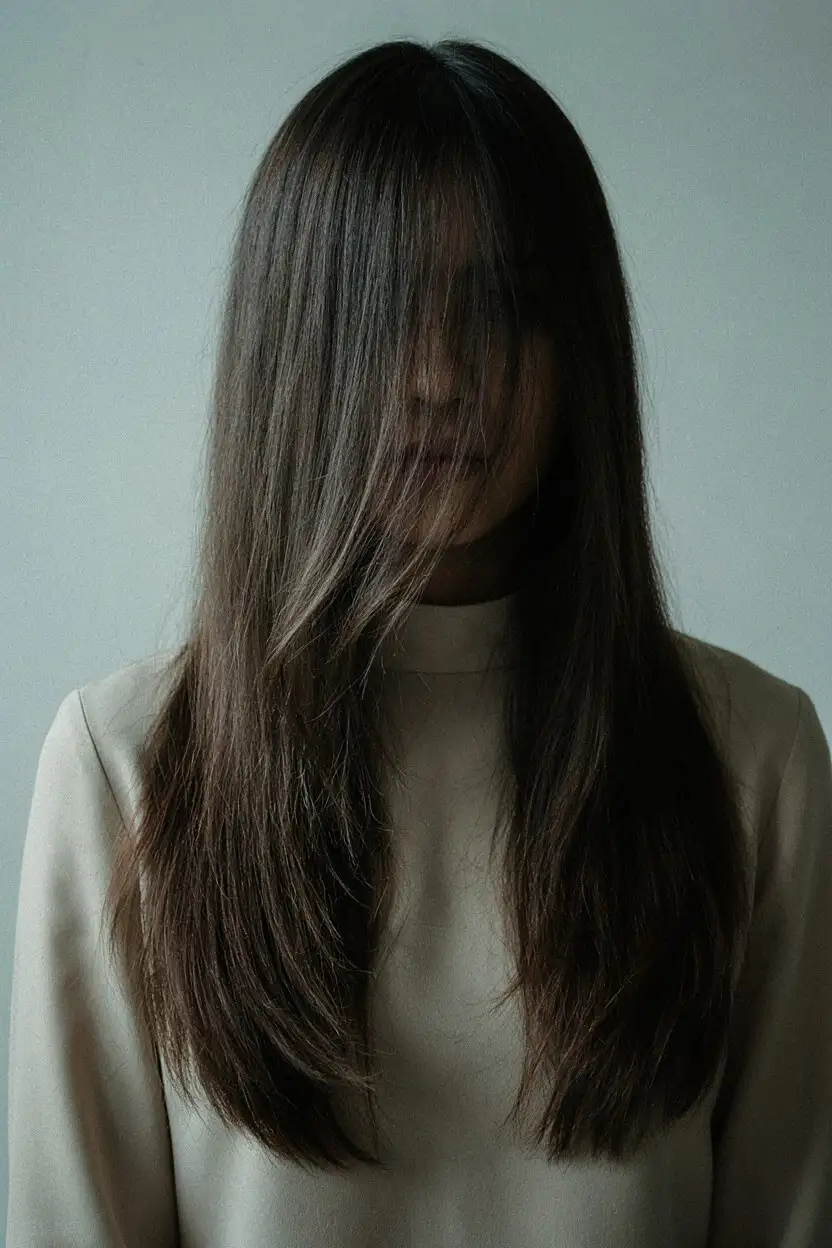
A Root Smudge Over the Line
Smudging a deposit-only shade across the boundary blurs it rather than covering it, which stretches the interval from 4 to 5 weeks to 8 or 9. Nothing is lifted, so nothing is added to the damage in your length. Cost is around $60 to $110.
A Gloss Over Everything
A demi-permanent gloss across the whole head pulls the natural gray and the colored length closer in tone without changing either one’s level. It fades rather than growing out, so there is no line. Patch test any formula you have not had before, and expect 4 to 6 weeks of wear.
Moving the Part
Shifting the part by an inch changes which section of regrowth sits on top and can buy several weeks between appointments. It costs nothing and takes seconds. The effect lasts until the hair falls back, which is usually a few days.
Money Pieces and Lowlights
Concentrated placement is easier to maintain than scattered placement, because everything that needs toning is in one place you can see.
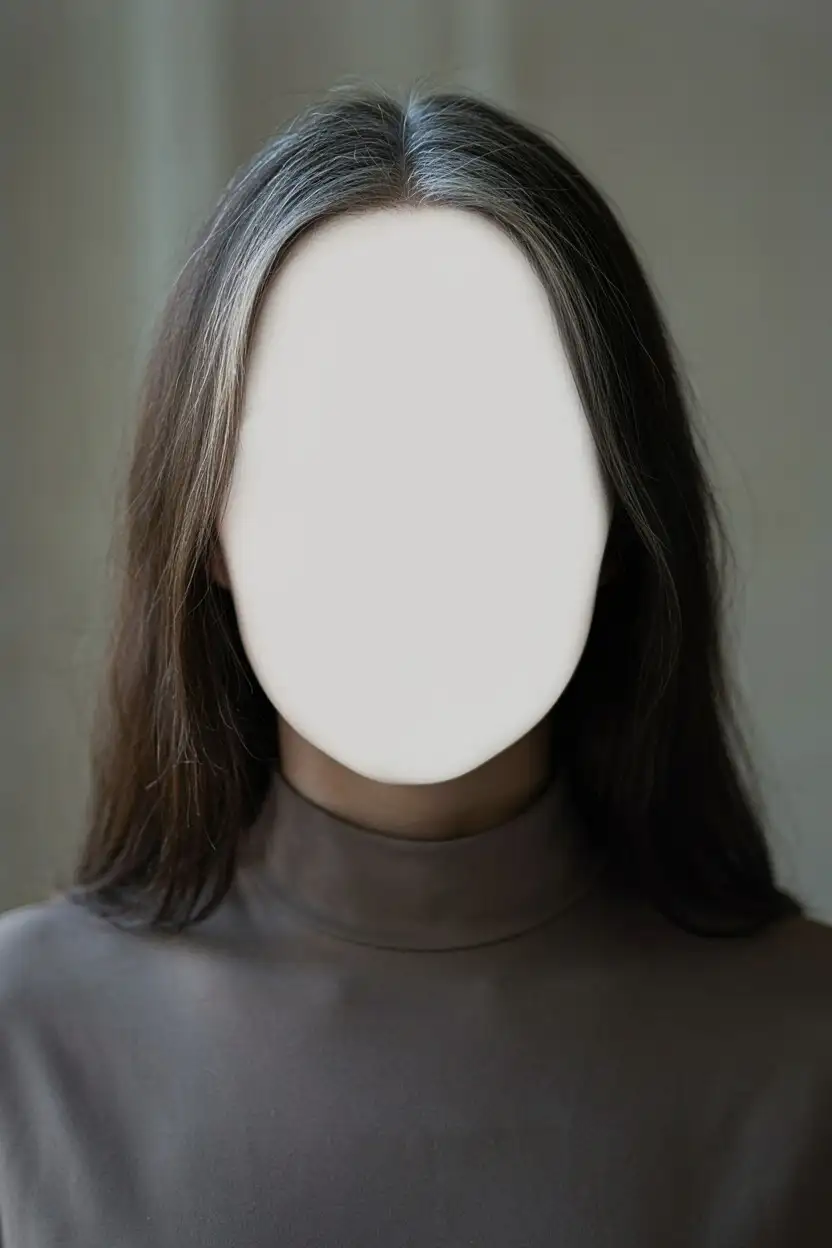
A Wide Silver Money Piece
One broad bright section at the front reads as deliberate in a way that scattered pieces take longer to achieve. It also keeps every lightened strand within reach for toning. Refresh the tone every 6 to 8 weeks.
A Narrow Streak at the Temple
A single narrow piece at one temple is the smallest possible version of this and often the most convincing, because it mirrors where natural gray usually starts. One session is enough. Cost sits at $60 to $120.
Lowlights Threaded Behind the Brightness
Adding a few darker pieces behind the bright ones stops the front reading as a flat block of light. Because lowlights deposit only, they add no lift and can be refreshed on the same 8 to 10 week interval as a gloss. This is the entry that fixes a money piece that has gone stripey.
Herringbone Placement
Alternating the direction of each woven section produces a less regular pattern than a standard foil grid, which suits hair where natural gray is already irregular. It takes longer in the chair. The interval matches whatever the underlying service was.
Keeping Silver Highlights Bright
Lightened hair on a porous base goes warm faster than anything else in this article. These three are the maintenance, and they matter more than the original placement.
Purple Toning, Every Two or Three Washes
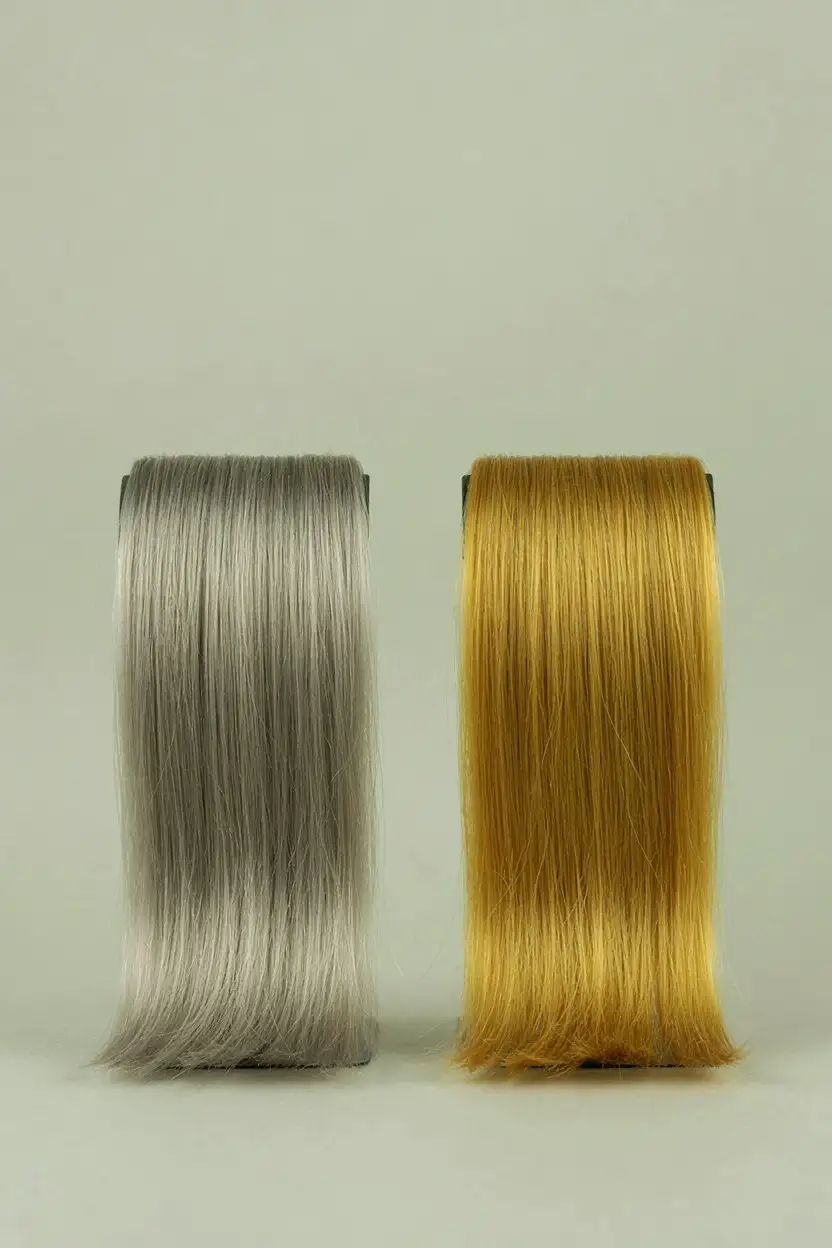
Purple shampoo deposits violet pigment to counter the yellow that lift leaves behind. Every 2 to 3 washes holds the tone; every wash turns the lightened pieces dull and faintly lilac, which is the most common self-inflicted problem in this category. Over-toning is far easier to do than to undo.
A Salon Gloss on Schedule
A professional gloss every 6 to 8 weeks resets the tone across all the lightened pieces at once, which is more even than anything achievable at home. It runs $40 to $90. This is the single most useful recurring appointment for anyone with silver highlights.
Chelating Monthly in Hard Water
Above roughly 120 ppm, mineral settles into porous lightened hair and reads as a yellow-green cast that toner alone will not shift. A chelating shampoo removes the deposit. Once a month is enough for most water.
What Silver Highlights Cost to Keep
| Approach | Sessions to result | Cost to get there | Ongoing interval | Integrity cost |
|---|---|---|---|---|
| Fine weaves, front third | 2 to 3 | $360 to $960 | 4 to 6 months | Moderate, contained to the front |
| Scattered full head | 2 to 3 | $400 to $1,000 | 4 to 6 months | Moderate, spread |
| Below the ear only | 1 to 2 | $180 to $500 | Gloss every 6 to 8 weeks | Low, no root regrowth |
| Money piece | 1 | $60 to $150 | 6 to 8 weeks | Low, one section |
| Lowlights only | 1 | $120 to $200 | 8 to 10 weeks | Very low, deposit only |
| Root smudge or gloss only | 1 | $40 to $110 | 4 to 9 weeks | None |
Cost bands vary by region, salon tier, and length. A dark base pushes every figure toward the top of its band because it needs more sessions to get there.
What to Ask at the Consultation
- What level your base actually is, since that decides the session count rather than the photograph you brought.
- Whether the plan is to lift toward your natural gray or to add contrast against it, because those produce different placements.
- Everything that has been on your hair in the last 3 years, including box color and henna.
- Whether a strand test has been done, if there is any previous color in your history.
- How the placement grows out, and at what week the regrowth starts reading as a line rather than as depth.
- What the toning schedule is at home, and how often the salon expects to see you for a gloss.

If the reason you are considering highlights is that there seems to be less hair than there was, that belongs to a doctor rather than a colorist. Shedding above roughly 100 hairs a day for more than 6 weeks, or a part line that has visibly widened, is worth a dermatologist appointment.
If you would rather not add anything and simply grow it out, the transition guide covers the month-by-month, and the options comparison separates blending from a full correction on total time and cost.
Frequently Asked Questions
Do silver highlights work if I am already mostly gray?
They work differently, and above roughly 60 percent gray most people get more from lowlights than from highlights. At that percentage the brightness is already there, so adding more produces a flat field of light rather than dimension, while a few darker pieces give the eye somewhere to rest. Lowlights also deposit rather than lift, so the integrity cost is much lower. The switch from highlighting to lowlighting is the single most useful adjustment as the percentage climbs.
How often do silver highlights need redoing?
The lightening itself lasts 4 to 6 months on most placements, and the toning underneath it needs attention every 6 to 8 weeks. Those two intervals are what people usually conflate when they say highlights are high maintenance. Placement decides which one dominates: anything kept below the ear has no regrowth line, so only the toning schedule applies. Root-level placement is what shortens the interval.
Will silver highlights damage hair that is already gray?
Lightening is never damage-free, and gray hair is more porous to begin with, so it takes lift faster and can over-process more easily than the pigmented hair beside it. That is a reason for fewer, more careful sessions rather than a reason to avoid it. A colorist working on a mixed head is managing two different porosities in one service, which is why the timing is not the same across the whole head. Fewer levels of lift is the most effective way to protect it.
What is the difference between highlights and blending on gray hair?
Highlighting adds new lightened pieces; blending adjusts what is already there so the boundary stops being abrupt. Blending covers root smudges, glosses, and lowlights, all of which deposit rather than lift and cost $40 to $200 against $180 to $320 a session for lightening. Blending is usually the better first move, particularly above 40 percent gray. Highlighting earns its cost most clearly on darker bases where there is not yet much silver to work with.
Where I Would Begin
Start with the cheapest thing that changes the line, which is almost always a root smudge or a gloss, and live with it for one full interval before booking anything that lifts. If it is enough, you have saved several hundred dollars and a session count.
If you are not sure whether your percentage calls for highlights or lowlights, tell me roughly how gray you are and what your base level is in the comments, and I will tell you which way round it should go.
— Nora