20 Short Silver Hair Ideas, Sorted by Texture and Upkeep

Short silver hair is the length most people arrive at by accident, having cut off a grow-out, and then discover they wanted all along. The reason it works so reliably is mechanical rather than aesthetic: silver is usually coarser and more porous than the hair it replaced, and coarse hair holds a short shape far better than a long one. These are sorted by texture first and upkeep second, because those are the two things that decide whether a cut still looks right in week six. I wore mine short for the two years after my own transition finished.
What Short Silver Hair Asks of the Cut
Gray hair is frequently coarser, wirier, and more porous than pigmented hair, and each of those changes what a short cut does over time. Coarseness means the shape holds; wiriness means the ends stand rather than fall; porosity means the color picks up mineral and product faster than it used to.
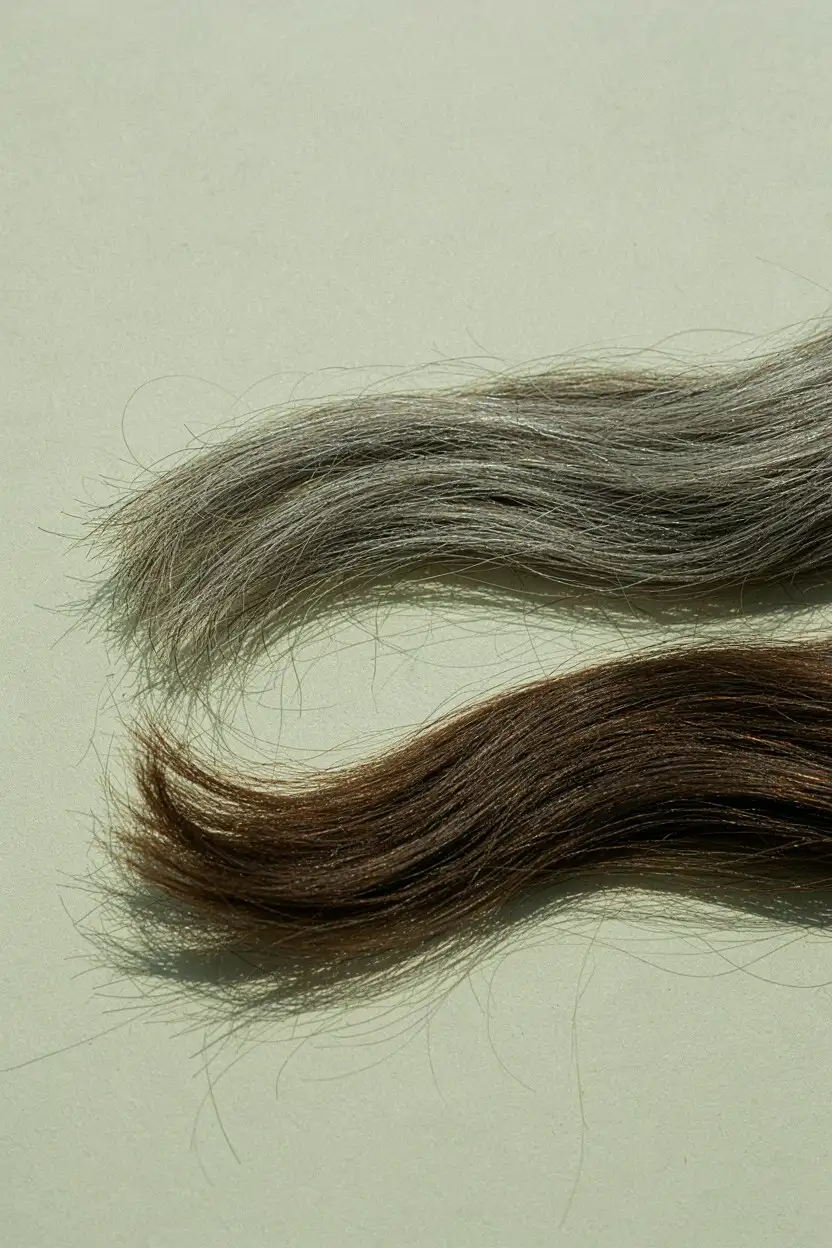
In practice that means a shorter interval on the fringe and a longer one on the overall shape. Most people do well reshaping every 6 to 8 weeks and cleaning the perimeter between times. The old rule of a cut every 4 weeks belongs to fine pigmented hair, not to this.
Pixie Lengths
A pixie puts the coarsest, brightest hair where the light hits it, which is why silver reads so strongly at this length. It is also the shape with the shortest patience for growing out.
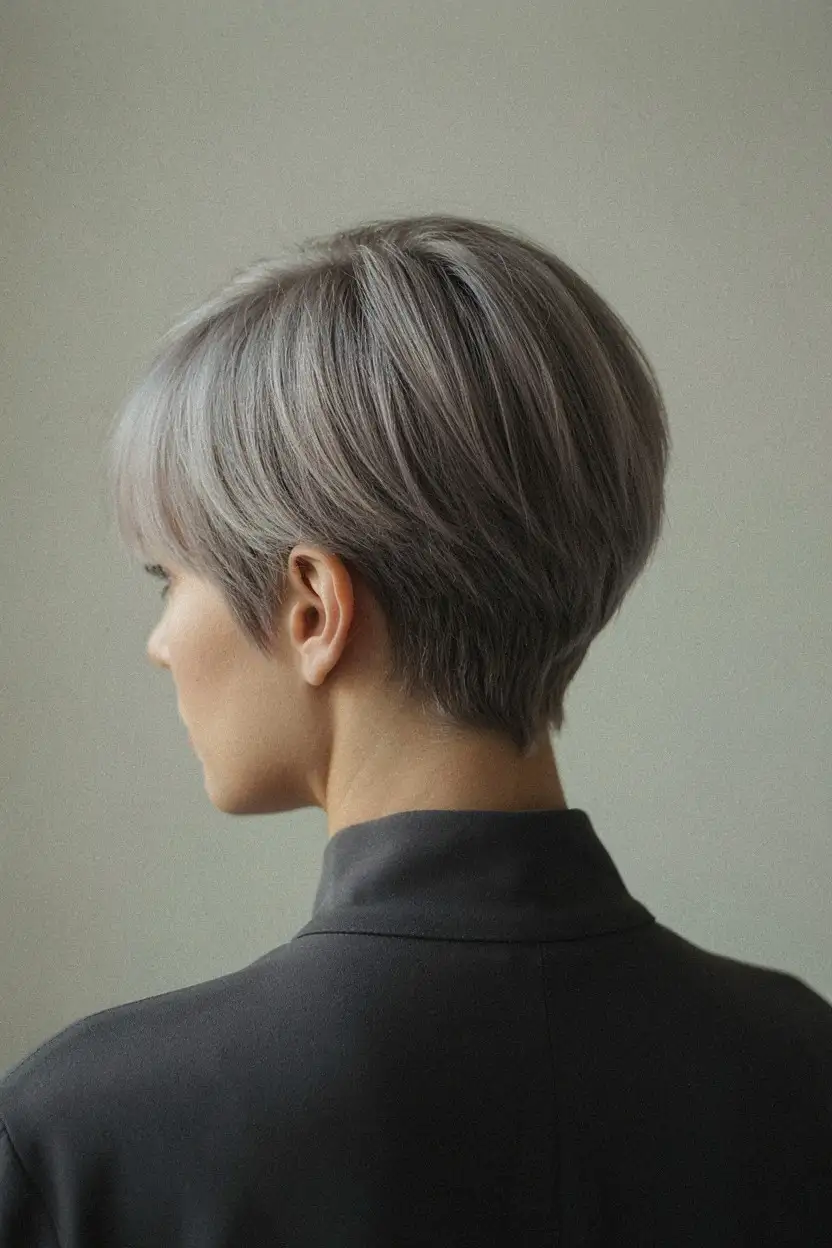
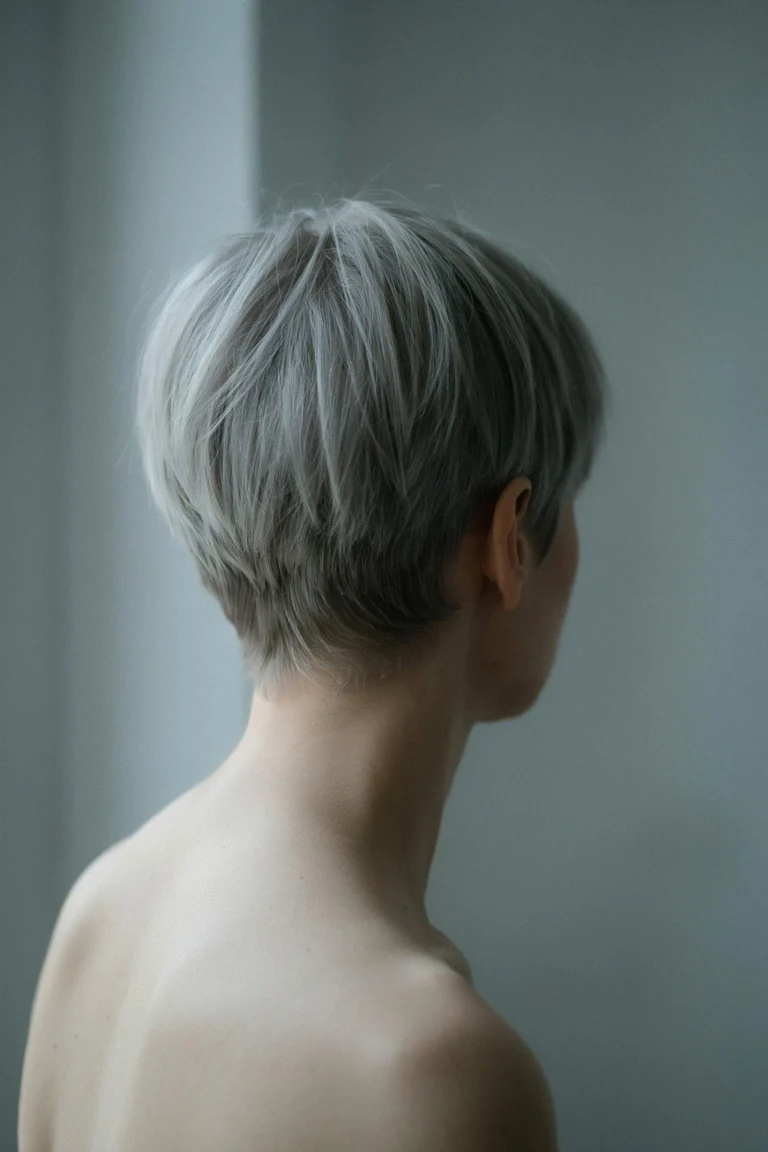
The Classic Tapered Crop
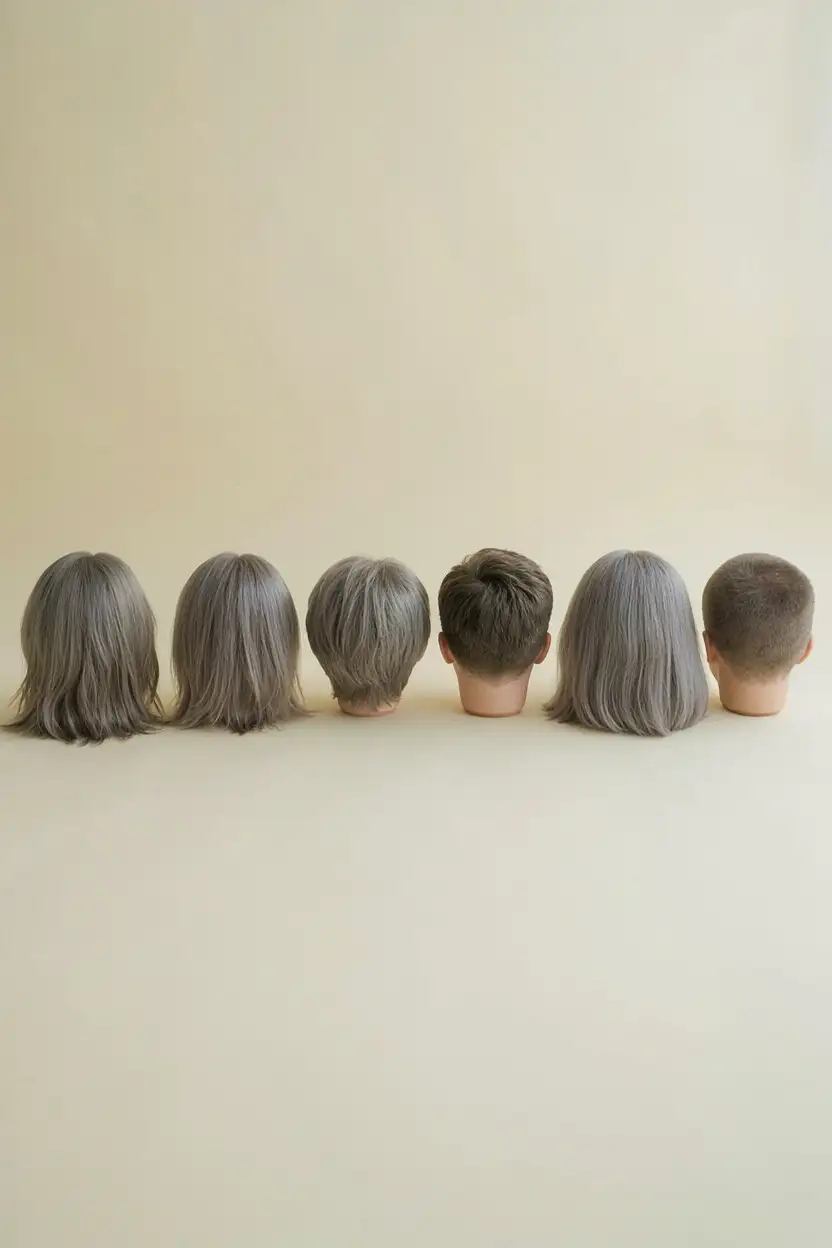
Short through the back and sides with length left on top, this is the shape most colorists reach for first on coarse silver because the taper stops the sides from standing away. Reshaping every 6 to 8 weeks keeps the neckline clean. It is the lowest-fuss option in this group.
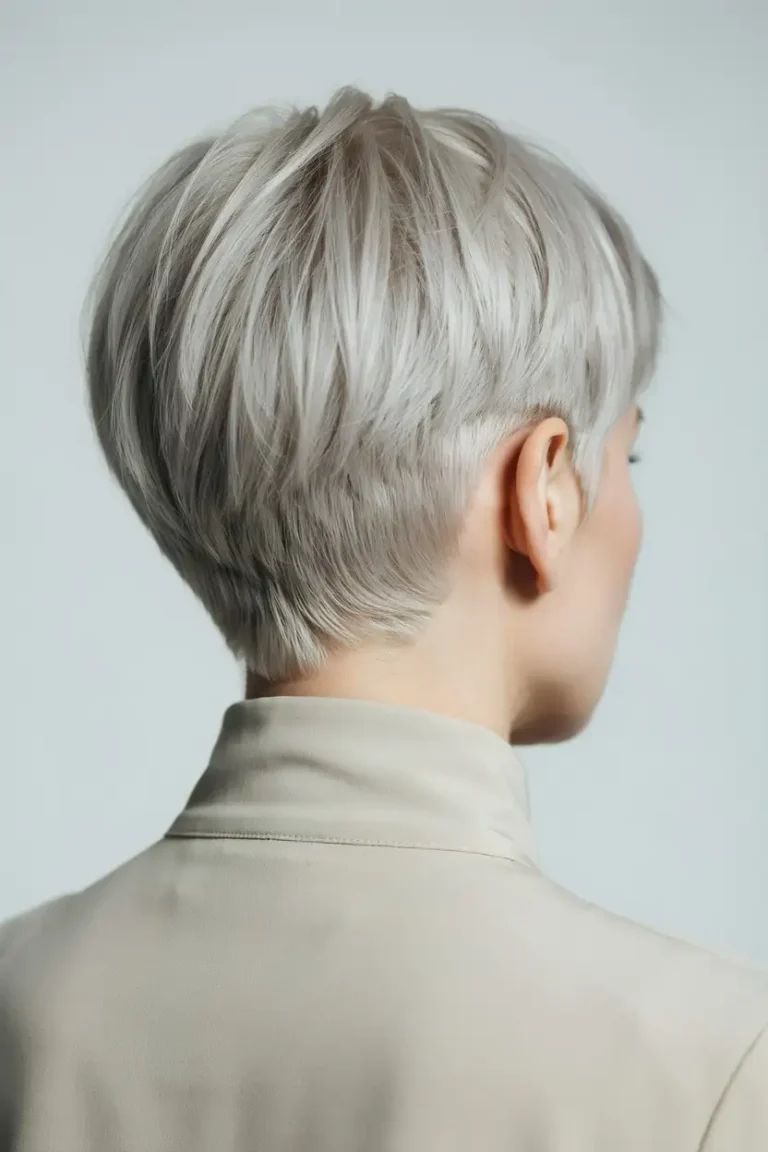
A Longer Top With Movement
Leaving 3 to 4 inches on top gives coarse silver somewhere to move rather than sitting flat, which is the most common complaint at pixie length. The trade is that the top needs styling most days. Expect the same 6 to 8 week interval.
The Undercut Nape
Taking the nape very short under a longer top removes bulk from the coarsest part of most heads. It grows out invisibly, so the interval stretches to 8 to 10 weeks. It suits hair that has become noticeably wirier through the transition.
A Soft Fringe Into the Crop
Bringing a fringe forward gives the eye somewhere to land other than the hairline, which matters more on silver because there is less contrast between hair and skin than there was. Fringes on coarse hair need trimming every 3 to 4 weeks, separately from the cut.
Cropped and Textured
Where a pixie is about shape, these are about surface. Texture is what stops flat silver reading as a helmet, and coarse hair takes texture more readily than fine hair does.
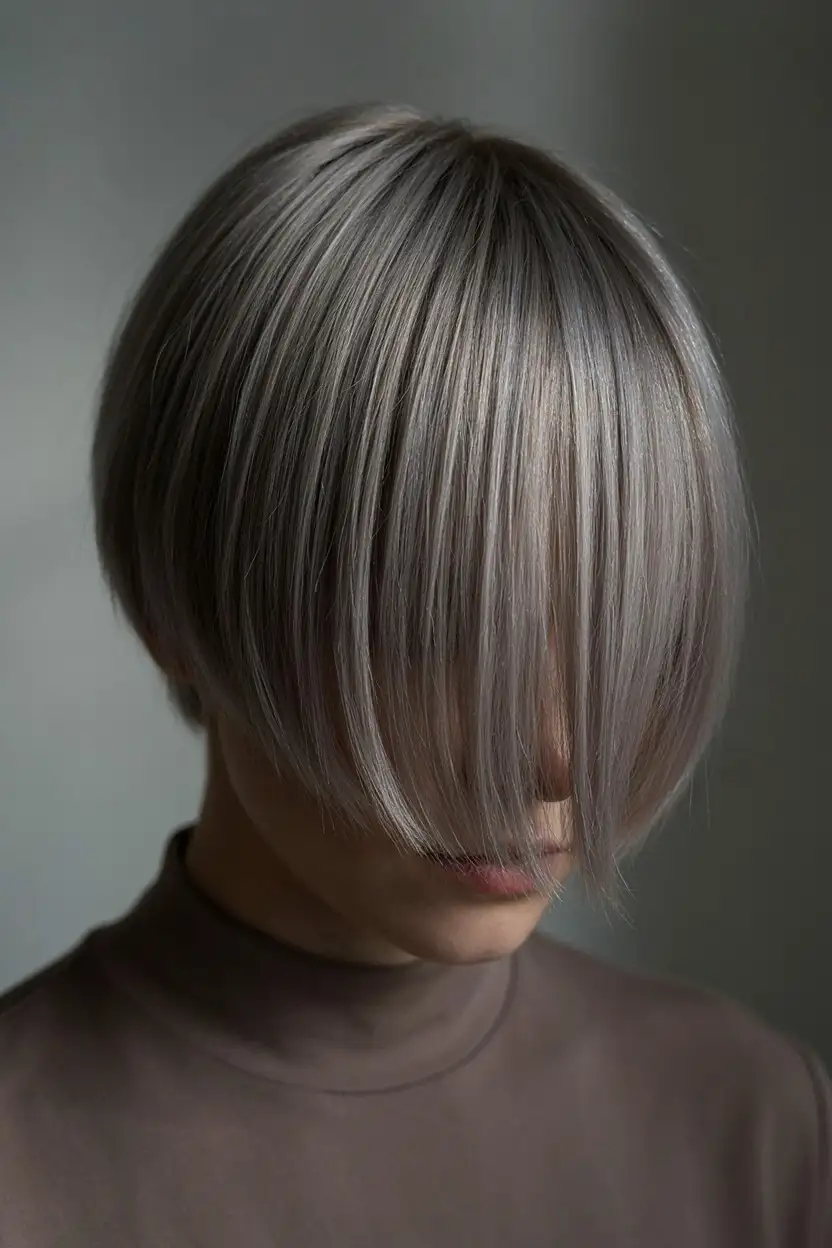
Point-Cut Ends Through the Top
Cutting into the ends rather than straight across breaks up the line so light catches at different depths. On silver that reads as dimension without any color service at all. The effect softens after about 8 weeks as the ends grow blunt again.
A Choppy Crop With Visible Separation
Deliberate separation between pieces suits wiry silver, because it works with the way the hair already wants to stand. This needs a small amount of product on most days and a reshape every 7 to 8 weeks. It is the shape that photographs with the most contrast.
The Grown-Out Crop
Letting a crop drift 2 to 3 weeks past its interval produces a softer, less deliberate shape that plenty of people prefer to the fresh cut. Knowing this is the difference between an overdue appointment and a choice. There is no cost attached.
Razored Rather Than Scissor-Cut
A razor removes bulk without creating the blunt ends that make coarse silver stand out. It is worth asking whether your stylist works this way before booking, since not everyone does. Razored shapes need revisiting every 6 weeks as they soften faster.
Coarse silver is easier to cut short than fine pigmented hair ever was. The texture people complain about is the thing making the shape hold.
Chin-Length and Just Above
This is the longest of the short lengths and the most forgiving of an in-between stage, which makes it the usual landing place for someone cutting off a grow-out rather than starting from a crop.

The Blunt Silver Bob
A blunt perimeter concentrates weight at the ends, which stops coarse hair flicking outward at the jaw. It holds its line for 8 to 10 weeks before the shape softens. This is the most common request I have seen from people finishing a transition.
A Graduated Bob With a Shorter Back
Graduation through the back keeps the shape lifted where coarse hair tends to collapse. It needs cutting every 6 to 8 weeks to hold the angle, which is a shorter interval than a blunt bob. The exchange is a shape that does more of the styling for you.
Chin Length With a Center Part
A center part on silver puts equal brightness on both sides of the face and removes the question of which way to sweep it. It also spreads the regrowth zone rather than concentrating it, which matters if any coverage is still involved. No additional upkeep beyond the cut.
Cutting to the Silver Line
If there is still colored length below your natural silver, cutting straight to where it starts ends the transition in one appointment. On hair grown out for 8 months that means removing roughly 4 inches. It is the only route that finishes immediately, and it is a real loss of length.
Curly and Coily at Short Lengths
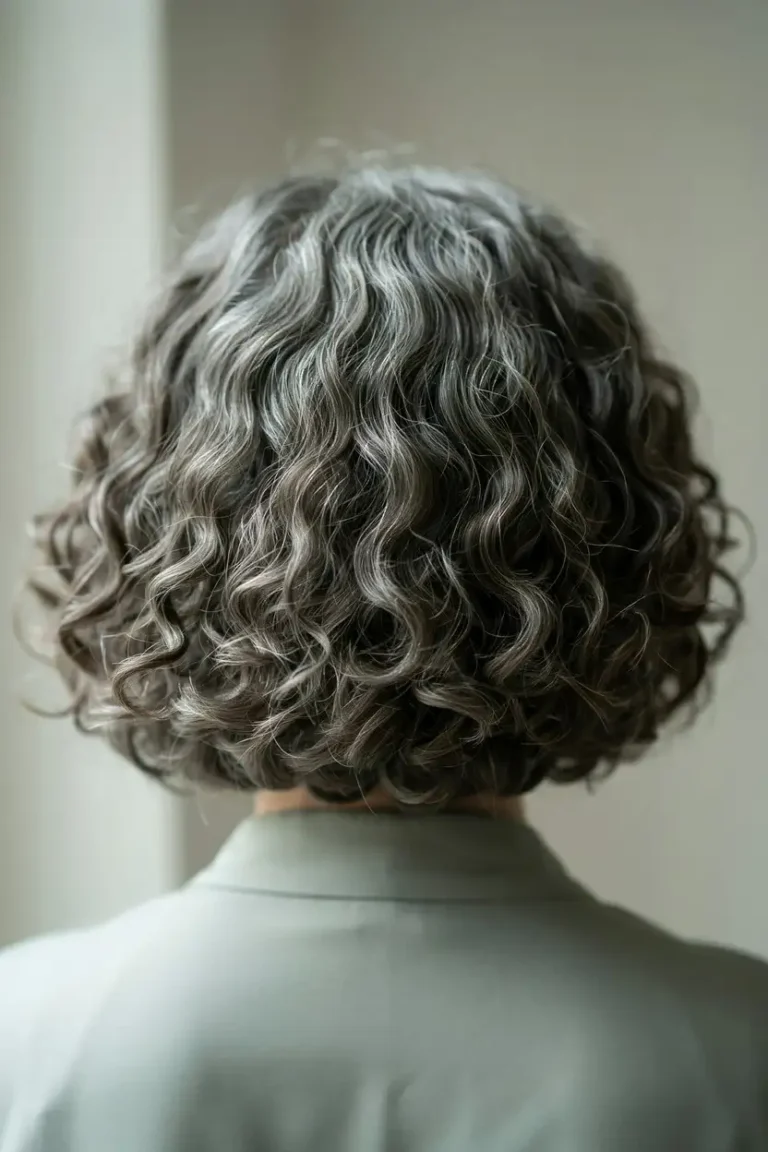
Curly silver is more fragile than straight silver, because every bend in the strand is a point where the cuticle is already under strain and gray hair is more porous to begin with.
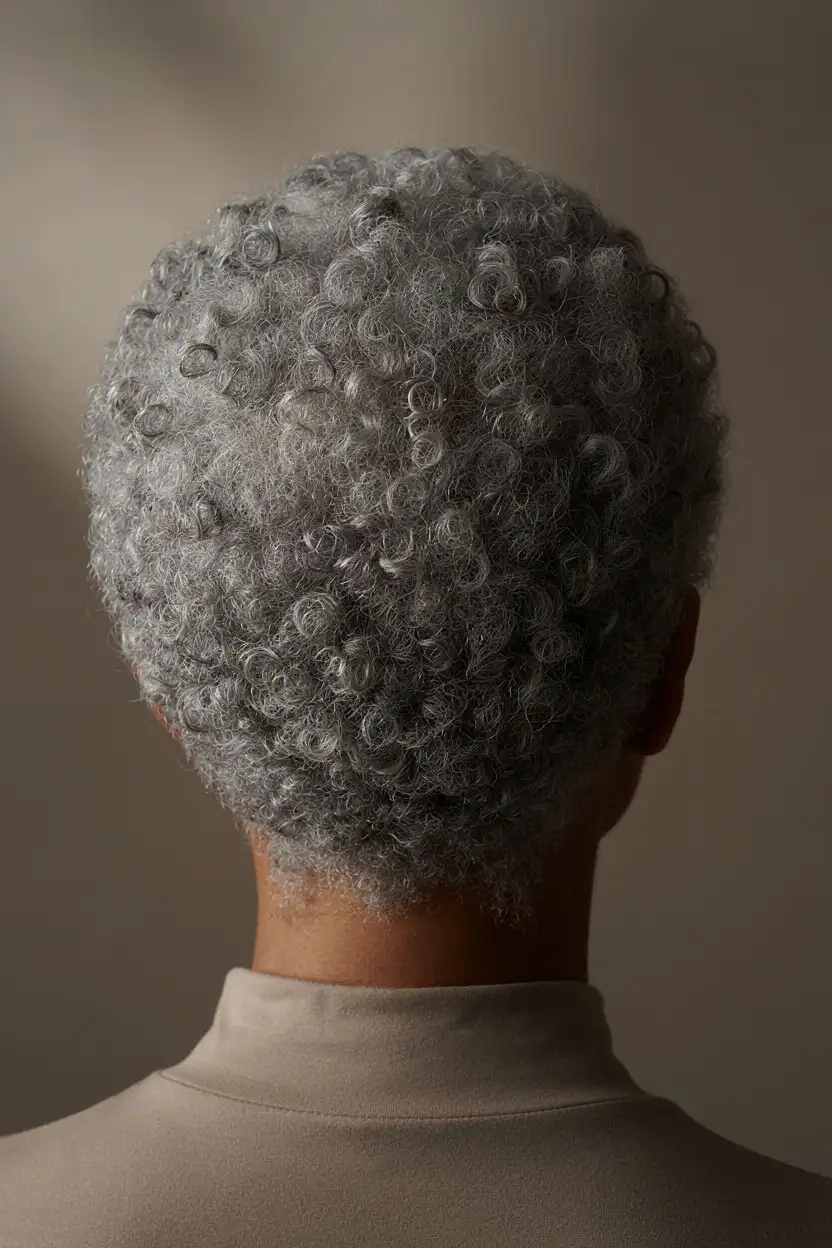
Cut Dry, Curl by Curl
Shrinkage between wet and dry on short curls is large enough that a wet cut regularly produces a length nobody intended. Dry cutting removes the guesswork. Expect a shaping every 10 to 12 weeks, which is longer than most straight short cuts need.
A Rounded Silver Afro
A rounded shape works with coily silver rather than against it, and coarse gray holds that roundness noticeably better than finer hair. Shaping every 8 to 10 weeks keeps it even. Moisture matters more here than cut frequency.
Tapered Sides With Coils on Top
Taking the sides down while keeping length on top gives coily silver height without width, which is the usual complaint at short lengths. The sides need attention every 4 to 6 weeks while the top can wait. It is two intervals in one shape.
Defined Coils Without Heavy Product
Heavy creams flatten coarse gray coils rather than defining them, so lighter gel on damp hair generally gives more shape. This is a routine adjustment rather than a service. Finding the right weight usually takes a few wash days.
Keeping Short Silver Hair Bright
At short lengths the entire head is new growth relatively often, which makes tone easier to manage than it is at length. The problems that remain are mineral and over-toning.
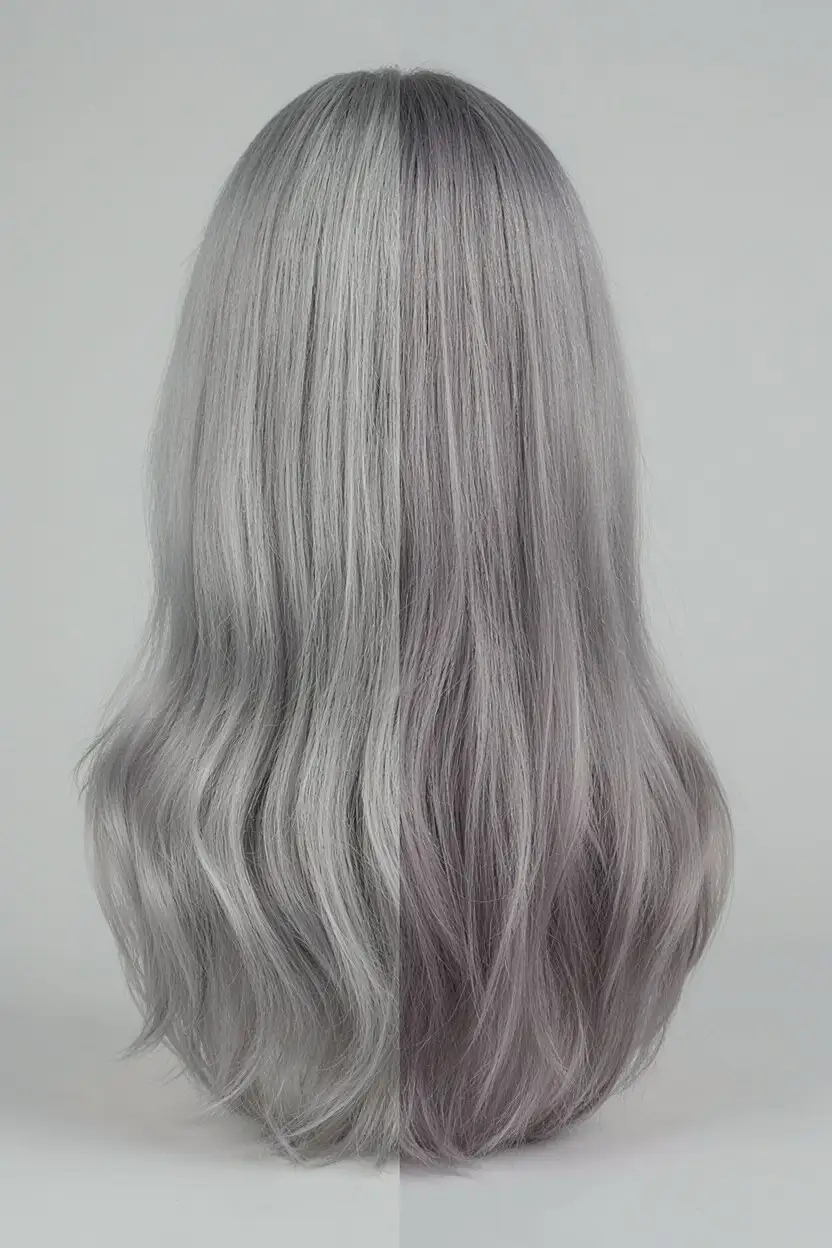
Purple Toning on a Schedule
A purple shampoo deposits violet pigment to counter yellowing. Every 2 to 3 washes keeps silver clean; every wash turns it dull and faintly lilac, which is the most common self-inflicted problem in this category and takes weeks to fade. Over-toning is far easier to do than to undo.
A Clear Gloss for Shine
Porous silver scatters light rather than reflecting it, which reads as dullness even when the tone is right. A clear gloss smooths the cuticle at $40 to $90 every 6 to 8 weeks and deposits no color. Patch test any formula you have not had before.
Monthly Chelating for Hard Water
Above roughly 120 ppm, mineral deposit shows on silver as a yellow cast within weeks. A chelating shampoo removes it. Once a month suits most water, and more frequent use strips more than the mineral.
Leaving It Alone
Plenty of silver needs no toning at all, particularly where it has come in cool rather than warm. Starting with nothing and adding only what the hair asks for costs nothing and avoids the over-toning trap entirely.
What Each Shape Costs to Keep
| Shape | Cut interval | Fringe or edge upkeep | Styling time | Cost band per visit |
|---|---|---|---|---|
| Tapered pixie | 6 to 8 weeks | Neckline between cuts | Under 5 minutes | $45 to $90 |
| Longer-topped crop | 6 to 8 weeks | Fringe every 3 to 4 weeks | 5 to 10 minutes | $45 to $90 |
| Choppy textured crop | 7 to 8 weeks | None | 5 minutes plus product | $50 to $100 |
| Blunt bob | 8 to 10 weeks | None | 10 minutes | $55 to $110 |
| Graduated bob | 6 to 8 weeks | None | Under 10 minutes | $55 to $110 |
| Curly or coily short | 10 to 12 weeks | Sides every 4 to 6 weeks if tapered | Wash-day routine | $60 to $130 |
Cost bands vary by region and salon tier. Dry cutting and razor work usually sit at the top of whichever band applies.
What to Ask Before the Cut
- Whether your stylist cuts curly hair dry, if your texture needs it.
- How this shape looks at week six rather than on the day, since that is where you will spend most of your time.
- Whether the shape needs product daily or only on wash days.
- What percentage of your hair is still colored, if you are cutting off a grow-out, and how much length that means losing.
- Whether a strand test is needed, if there is box color anywhere in your history and any lightening has been discussed.
- What the plan is for growing this out, because every short shape has one and it is better known in advance.
If your reason for going shorter is that there seems to be less hair than there used to be, that is a separate question from the cut. Shedding above roughly 100 hairs a day for more than 6 weeks, or a part line that has visibly widened, is worth a dermatologist appointment rather than a salon one.
If you are still deciding whether to cut off a grow-out or wait it out, the transition guide covers what each month actually looks like, and the maintenance guide covers what silver costs to keep once you are there.
Frequently Asked Questions
Does short silver hair need cutting more often than colored hair?
Usually less often, which surprises people. Coarse gray holds a cut shape longer than fine pigmented hair does, so a crop that needed reshaping every 4 weeks before a transition often stretches to 6 to 8 weeks afterward. The exception is a fringe, which shows growth regardless of texture and needs trimming every 3 to 4 weeks. Overall you are usually paying for fewer visits than you were.
Why does short silver hair stick out at the sides?
Wiriness rather than the cut, in most cases. Gray hair is often coarser and springier than the hair it replaced, so blunt ends stand away instead of falling. A taper through the sides or a razored finish removes the blunt edge that causes it, which is why both come up so often for this texture. Product weight helps at the margins and does not fix the underlying shape problem.
Can you go short straight from a long grow-out?
Yes, and it is the only route that ends a transition in a single appointment. Cutting to where your natural color starts removes all the remaining colored length at once, which at roughly half an inch a month means about 4 inches after 8 months. The trade is obvious and worth naming plainly: you finish immediately and you lose the length. Plenty of people do it at the point where the line starts appearing in photographs.
Will short silver hair look thinner than my colored hair did?
Density does not change when pigment does, though the impression sometimes does, because silver reflects more light and shows the scalp more readily than dark hair. A blunt perimeter and a shape with weight at the ends counter that directly. If the change is in how much hair there is rather than how it reads, that is a medical question rather than a styling one and belongs with a dermatologist.
The Thing Worth Knowing First
Book the shape for how it behaves at week six rather than how it looks in the chair, because coarse silver settles differently from the hair you had before and the first fortnight is not representative. Ask your stylist to show you that stage before you commit to an interval.
If you are choosing between a crop and a bob and cannot decide, tell me your texture and how much of your hair is still colored in the comments and I will tell you which one holds better.
— Nora