Hair Growth Products: What Actually Works
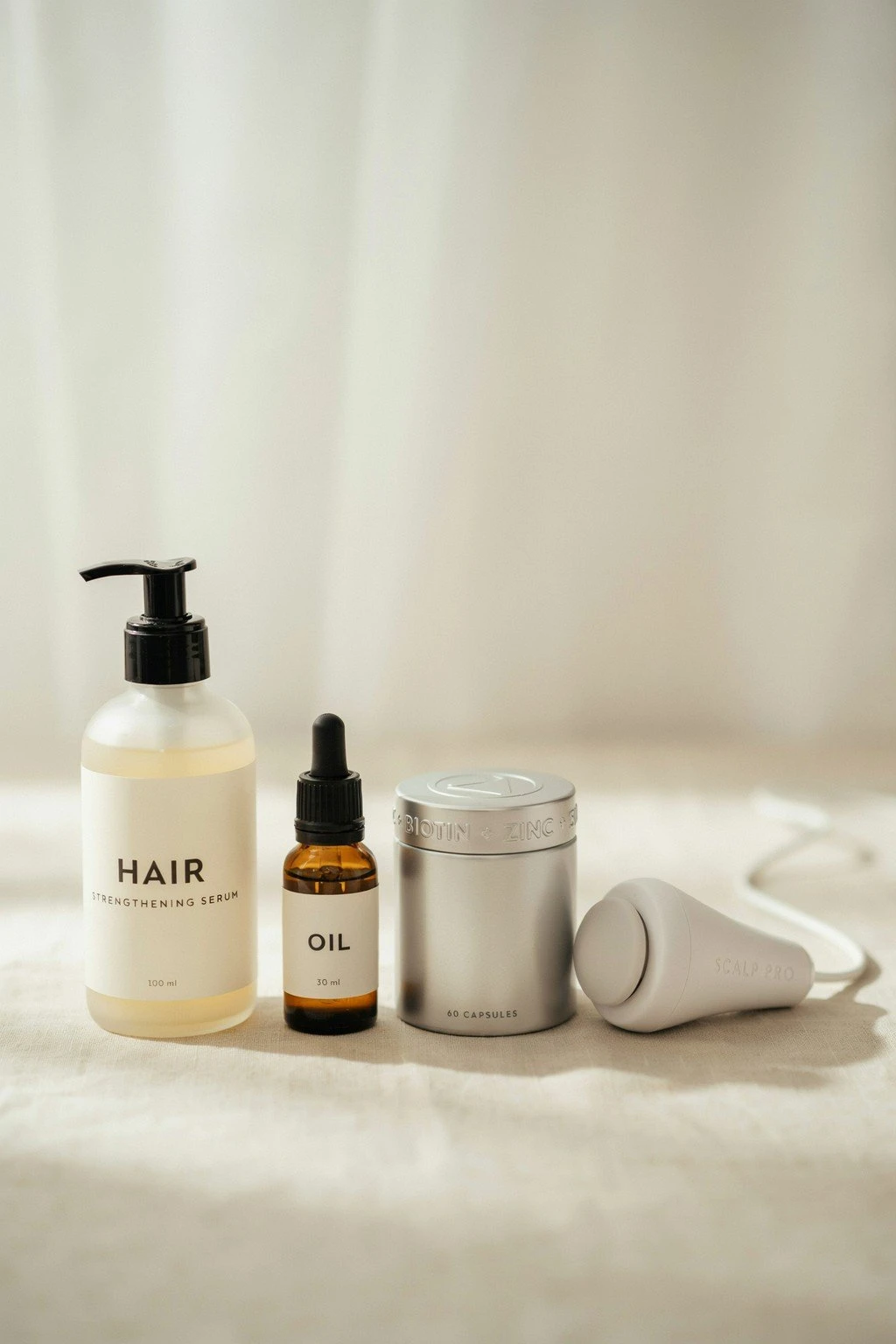
Every time I’ve gone looking for something to help my hair, I’ve noticed the same shelf holds oils, serums, supplements, and the occasional device, all filed under the same “hair growth” label as if they’re interchangeable, when the honest answer is that they work through entirely different mechanisms with entirely different amounts of evidence behind them. Hair growth products range from topical oils that mostly reduce breakage to devices with a genuinely studied mechanism to supplements that only help if you have an actual deficiency, and treating all of them as one category is exactly how people end up disappointed by the wrong purchase. Sorting a shelf by mechanism rather than by marketing category is the single most useful thing you can do before spending money here.
Hair growth products span several genuinely different mechanisms — topical oils, scalp serums, supplements, and light-based devices — and knowing which mechanism you’re actually paying for matters more than any specific brand.
What Counts as a Hair Growth Product
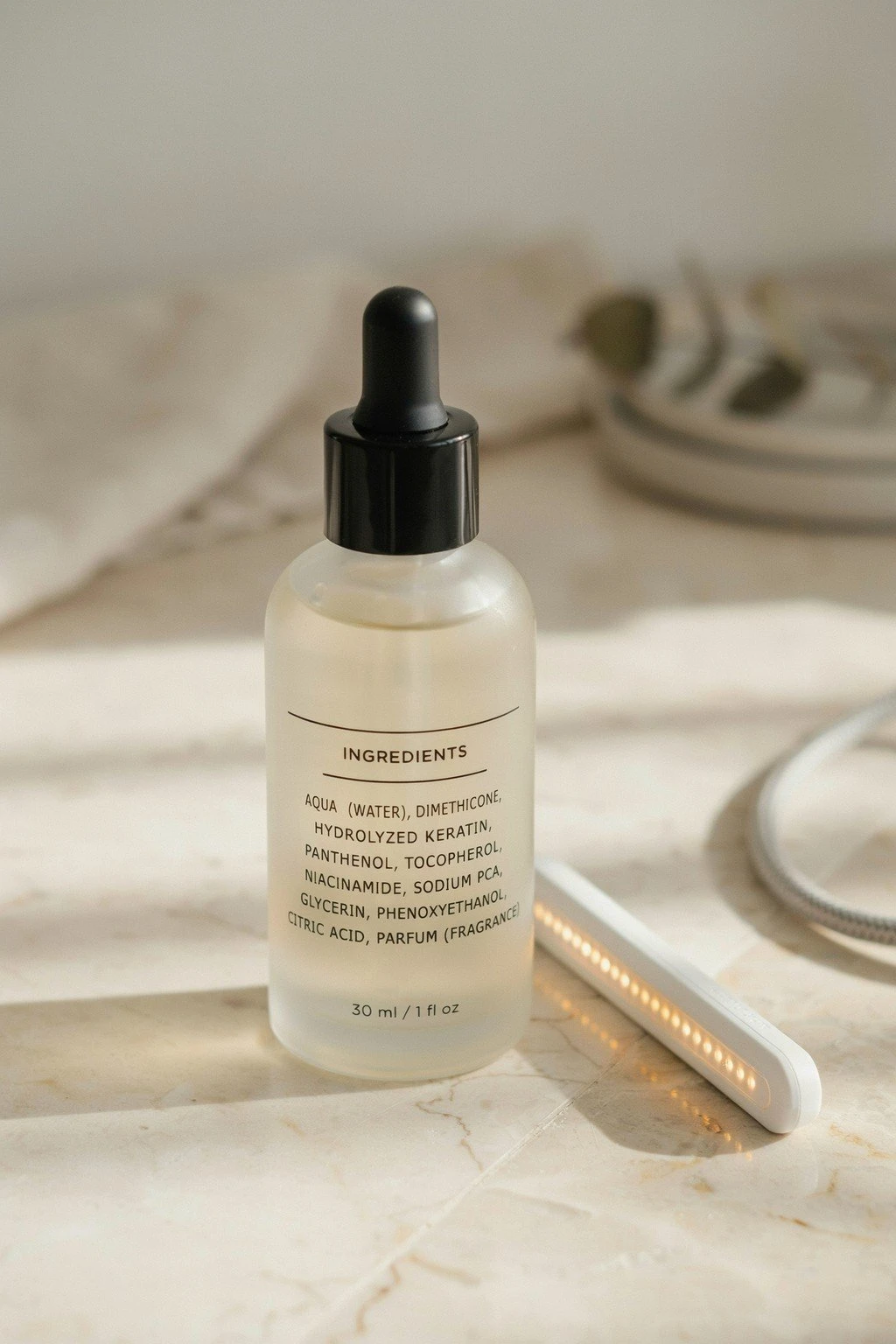
Topical oils, covered in more depth elsewhere on this site, mostly work by conditioning the scalp and reducing shaft breakage rather than by accelerating the follicle itself. Scalp serums typically add active ingredients like peptides or caffeine on top of a lighter, faster-absorbing base than a straight oil, aiming more directly at the follicle environment, though the evidence for most peptide claims at consumer concentrations remains thin. Supplements — biotin, collagen, marine-based blends — address nutritional gaps, which matters enormously if a real gap exists and does very little if it doesn’t. Devices, mainly low-level light therapy combs and caps, work through an entirely different, more device-specific mechanism than anything topical or ingestible. Minoxidil, the one FDA-approved over-the-counter topical treatment for pattern hair loss, sits in its own category entirely, and I’ll say plainly here that discussing dosing or a treatment protocol for it is outside what belongs in a general guide — a doctor or pharmacist is the right source for that conversation, not a product roundup.
It’s worth noticing how differently these categories are regulated, because that gap explains a lot about the marketing you’ll see. Minoxidil went through a formal approval process specifically for hair loss, with clinical trial data behind its labeling. Cosmetic products — oils, serums, most supplements — face a much lower bar, since they’re regulated as cosmetics rather than drugs in most markets, which means a manufacturer can make a claim sound scientific without the same evidence standard a drug label has to meet. That regulatory gap is exactly where words like “clinically proven” on a serum bottle deserve a second look, since “clinically proven to improve the appearance of” is a very different, much weaker claim than the drug-level testing behind minoxidil’s actual approval.
Which Ones Have a Real Mechanism
Low-level light therapy has the most substantive mechanism-level evidence of the non-drug categories here: red light at specific wavelengths is thought to stimulate cellular activity in the follicle through a process called photobiomodulation, and multiple device manufacturers have run trials showing a measurable effect on hair density over several months of consistent use. The evidence is real but modest — most studies show a meaningful improvement in density rather than a dramatic transformation, and consistency over months, not weeks, is what the studied protocols actually required. Peptide-based serums have a plausible cellular signaling mechanism in laboratory settings, but the leap from a petri dish to a peptide applied topically at a consumer-safe concentration, absorbed through skin and hair, is a much bigger one than the marketing implies — this sits solidly in the plausible-but-thin tier rather than the settled one. Supplements only have a real mechanism where an actual deficiency exists; a multivitamin taken by someone with normal iron, protein, and biotin levels isn’t correcting anything a follicle is short on, however reassuring the bottle looks on a bathroom shelf.
I tried a biotin supplement for the better part of a year before it occurred to me to actually check whether I was deficient in the first place, and the blood panel came back entirely normal — which meant that whatever mild improvement I thought I’d noticed almost certainly wasn’t the biotin doing anything a follicle needed. It’s a genuinely easy trap to fall into, because a supplement is the lowest-effort purchase in this entire category, and it’s much easier to buy a bottle than to get a blood panel that tells you whether it was ever going to help.
What Hair Growth Products Do Not Do
This is worth stating plainly, since it’s where most of this category’s marketing outruns its own evidence:
- No topical product changes how long your genetically set anagen (growing) phase lasts.
- No supplement helps a follicle that isn’t actually short on the nutrient in question — more of something you don’t need doesn’t translate into more hair.
- No product reverses pattern hair loss caused by follicle miniaturization; that specific mechanism needs a conversation with a dermatologist, not a shelf product.
- No device or serum works faster than the hair growth cycle itself allows — a claim of visible results in a few weeks is describing marketing, not biology.
Where the Marketing Overshoots
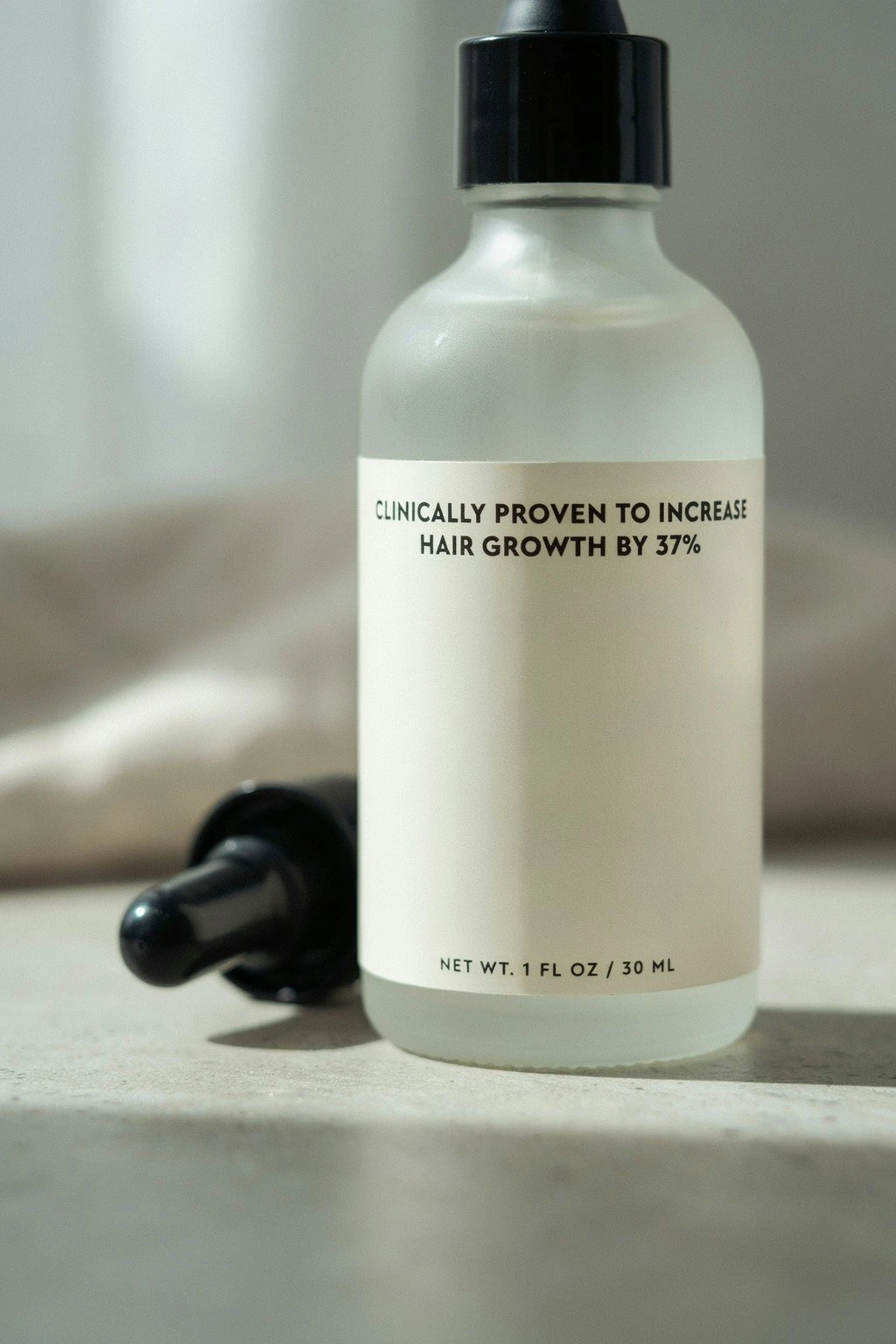
A label claiming a product “reactivates dormant follicles” or “awakens” hair growth is almost always a tier three claim — it borrows the real vocabulary of follicle biology to describe an effect that hasn’t been demonstrated at the concentration or delivery method used in the actual product. Before-and-after photography across this whole category deserves the same skepticism regardless of which specific product type is being sold: styling choices, lighting, and a timeline long enough for normal seasonal shedding variation to resolve on its own can all manufacture an impressive-looking result that has little to do with what the product actually did. The honest version of most of this marketing would read closer to “may support a healthy-looking scalp environment,” which is accurate and, predictably, far less compelling on a label than “regrow your hair.”
A product that reduces breakage and one that changes how a follicle behaves are not the same purchase, even when they’re marketed with the same word.
Matching the Product to the Actual Problem
Someone whose main issue is breakage and dry, brittle ends rather than an actual reduction in density is the person most likely to see a real difference from a lighter oil or a moisture-focused serum, since less breakage genuinely reads as fuller-looking hair even without any change at the follicle. Someone with a confirmed nutritional deficiency — something a blood panel can actually verify rather than assume — is the person a targeted supplement is built for, and it’s worth getting that confirmed rather than guessing, since supplementing a nutrient you’re not short on does nothing useful. Someone noticing genuine density loss over months, particularly at the part or hairline, is dealing with something none of these consumer products was built to reverse on its own, and a dermatologist visit is the more useful next step than trying a third serum.
Building a Realistic Routine
| Product type | Evidence tier | What it’s actually addressing | Realistic timeline |
|---|---|---|---|
| Topical oil | Settled (shaft only) | Breakage, scalp conditioning | 3–4 months |
| Peptide/caffeine serum | Plausible but thin | Possible follicle-level signaling | 3–6 months |
| Low-level light device | Plausible, modest evidence | Photobiomodulation at the follicle | 4–6 months, consistent use |
| Supplement (no confirmed deficiency) | Marketing claim | Nothing measurable | Not applicable |
Choosing one product category deliberately, rather than layering three or four different growth-labeled products at once, actually makes it easier to tell what’s working, since a combined routine gives you no way to isolate which piece produced any change you eventually see. Track any routine with a monthly photo in consistent lighting rather than relying on memory, and hold off on judging anything before the three-to-four-month mark at the earliest — that’s roughly the minimum window for a real mechanism, if there is one, to become visible at all.
Budget matters here too, and it’s worth being honest about where the money actually goes furthest. A topical oil is the least expensive category and the most likely to deliver a modest, reliable improvement through breakage reduction alone, which makes it a reasonable low-risk starting point for almost anyone. A light therapy device is a much larger upfront cost with a real mechanism behind it, worth considering specifically for someone who has confirmed there’s no underlying medical cause for their thinning and wants a non-drug option with actual evidence. A supplement is only worth the money after a blood panel, not before — spending on a targeted correction is a very different decision than spending on a guess.
Frequently Asked Questions
Do hair growth products actually work?
Some do something real, though rarely the dramatic transformation implied by marketing — topical oils genuinely reduce breakage, low-level light devices have modest but real evidence behind them, and supplements help specifically where a deficiency exists. None of them changes the underlying rate your genetics set for how fast a follicle produces new hair.
Are expensive hair growth products more effective than cheaper ones?
Price tracks packaging and marketing far more reliably than it tracks the strength of the underlying mechanism. Checking the active ingredient and its evidence tier tells you more about whether a product is worth trying than the price point does.
How long should I try a hair growth product before giving up?
Three to four months is the realistic minimum for any topical or device-based product, since that’s roughly how long it takes for a change at the follicle level, if one is happening, to become visible at the ends. Judging a product after two or three weeks almost never reflects what it’s actually capable of doing.
Can I use multiple hair growth products at once?
You can, but layering several makes it much harder to tell which one, if any, produced a change you eventually notice. Starting with one product for a full three-to-four-month trial before adding another gives you a clearer read on what’s actually helping.
Do laser combs and caps really work for hair growth?
The evidence for low-level light therapy devices is more substantial than for most topical serums, with several manufacturer-run trials showing a modest but measurable improvement in density over consistent use. The results tend to be gradual and moderate rather than dramatic, and consistency with the device’s stated schedule matters more than any other single factor in whether it works.
Where to Actually Start
Before buying anything new, get honest about which problem you’re actually solving — breakage, a possible deficiency, or genuine density loss — since that answer points to a completely different product category than “hair growth” as a single search term implies. Pick one, give it a real three to four months, and track it with photos rather than guesswork. If nothing in that category moves the needle by month four, that’s a better reason to see a dermatologist than to try a fourth product on the same shelf.
Tell me in the comments which category you’re trying, and I’ll help you set realistic expectations for it. — Iris