Hair Shedding or Breakage? The Clues Are in the Strands

Hair shedding and breakage are different processes with different causes, but they produce a similar visual result: shorter or fewer hairs than you expected to see. The distinction matters because the interventions for each are entirely different, and treating the wrong one wastes time while the actual problem continues. I have spent years reading trichology literature and talking to clinicians about this distinction, and I find that most people have never been told how to look at a single strand of hair and identify what happened to it. The answer is usually visible if you know where to look.
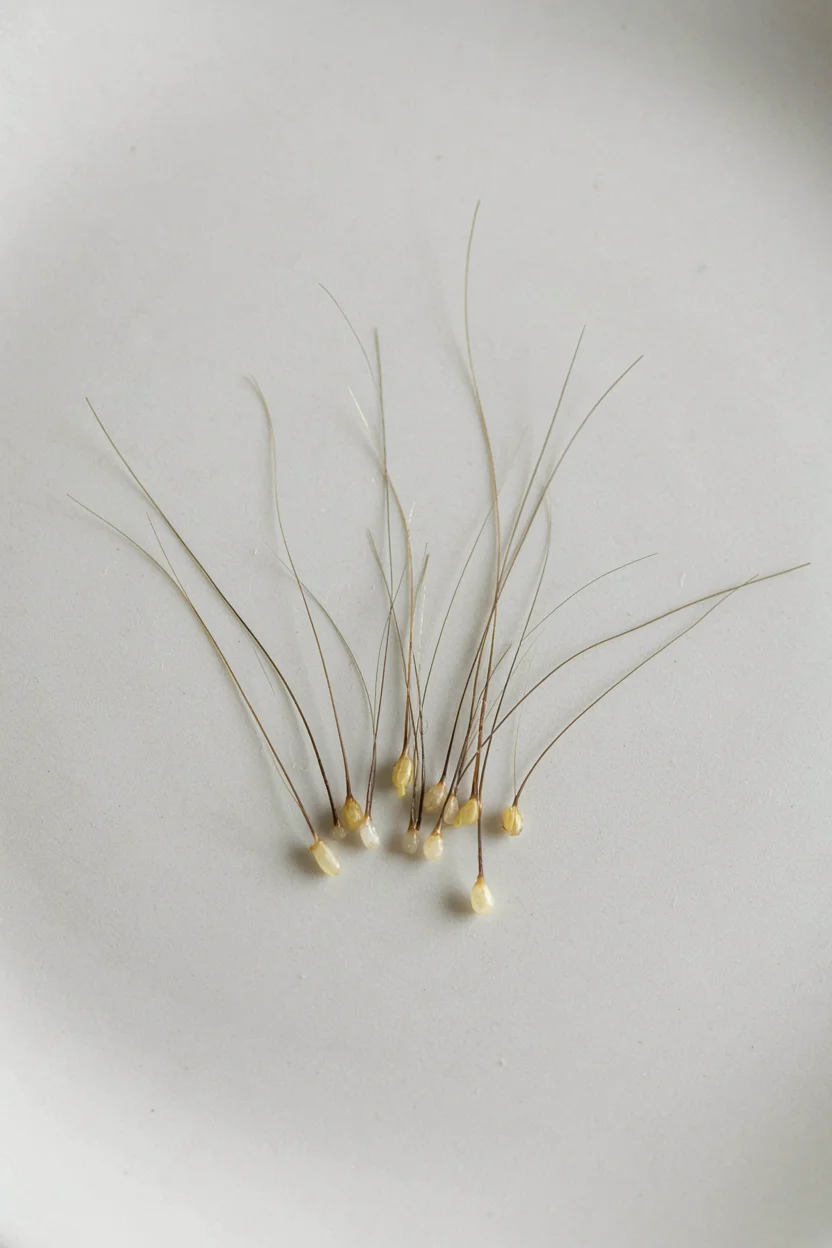
Shedding is a root-level event where the follicle releases a fully grown hair as part of its natural cycle, and the strand arrives with a small, pale bulb at one end. Breakage is a shaft-level event where the hair fibre snaps somewhere along its length, producing a shorter piece with no bulb and often a frayed or uneven tip. If the hairs you are finding have bulbs, you are dealing with shedding. If they do not, you are dealing with breakage. That single observation is the most useful starting point for understanding what is happening on your scalp.
What Shedding Actually Is
Every hair follicle cycles through growth, regression, and rest. The anagen phase is the active growth period, during which the hair shaft extends at roughly one centimetre per month. After anagen, the follicle enters catagen, a brief transitional phase, and then telogen, a resting phase that lasts approximately three months. At the end of telogen, the follicle releases the hair and begins producing a new one. This is a normal, continuous process, and it means that some shedding is happening at all times.
The average scalp has approximately 100,000 follicles, and at any given moment roughly 10 to 15 percent of them are in telogen. This translates to somewhere between 50 and 100 hairs shed per day as a typical range. The exact number fluctuates based on season, health status, medication use, and where you are in the hormonal cycle. A shed hair, when you examine it, has a small, club-shaped bulb at the root end. This bulb is unpigmented and slightly widened compared to the rest of the shaft, and it indicates that the hair completed its growth cycle and was released normally by the follicle.
When shedding increases beyond the typical range, the condition is called telogen effluvium. This occurs when a larger-than-usual proportion of follicles shift into telogen simultaneously, often in response to a physiological trigger such as illness, surgery, significant weight loss, medication change, or nutritional deficiency. The increased shedding usually becomes noticeable approximately two to three months after the triggering event, because that is the duration of the telogen phase itself. The lag is one of the reasons people struggle to identify the cause: by the time the shedding appears, the event that provoked it may feel distant and unrelated.
What Breakage Actually Is
Breakage is structural failure of the hair shaft. The hair fibre is composed primarily of keratin proteins arranged in a cortex surrounded by overlapping cuticle cells. When the structural integrity of that fibre is compromised, whether by chemical processing, mechanical stress, thermal damage, or environmental exposure, the shaft becomes vulnerable to snapping at its weakest point. Unlike shedding, breakage has nothing to do with the follicle or the growth cycle. It is entirely a property of the hair above the scalp surface, which is not alive and cannot repair itself.
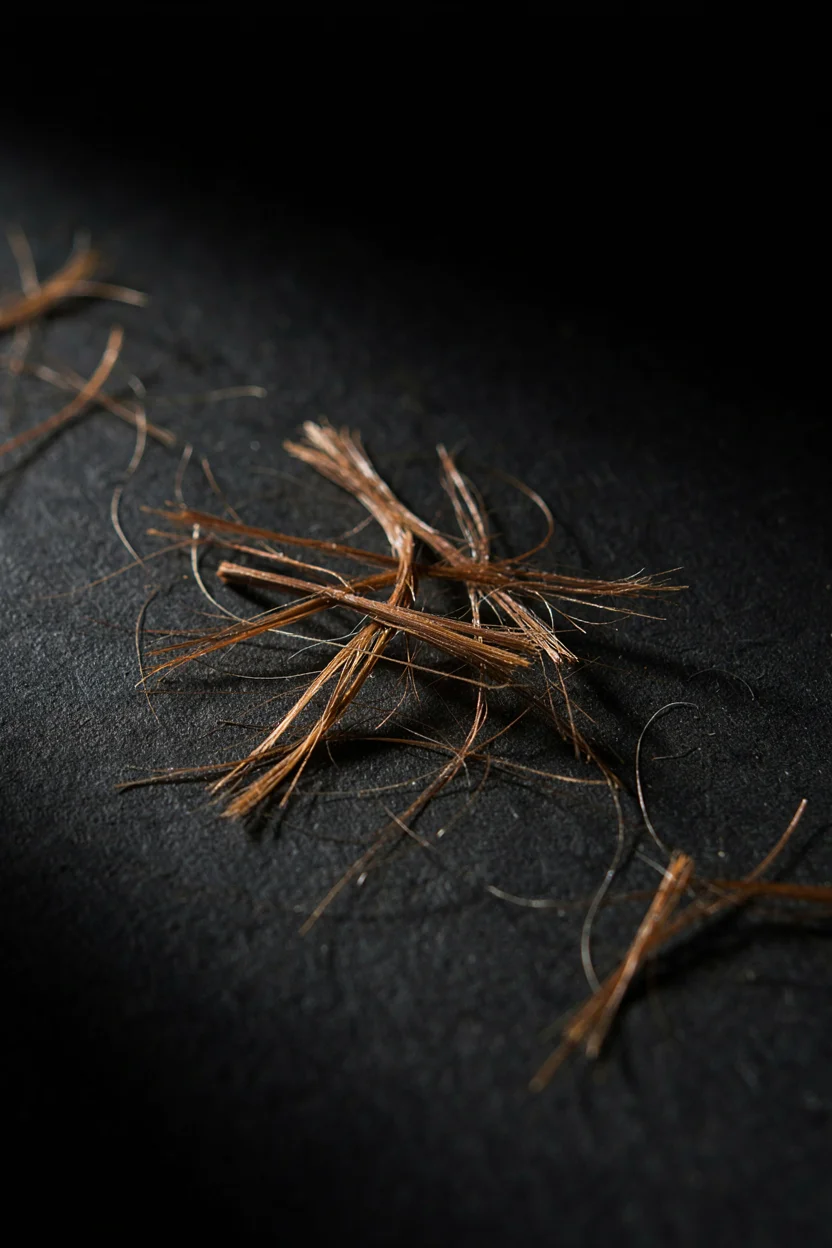
A broken hair, when you examine it, has no bulb at either end. The break point may appear frayed, split, or cleanly snapped depending on the type of stress that caused the failure. If the breakage occurred close to the scalp, the remaining hair may look like short, uneven stubble that does not match the surrounding length. If it occurred further along the shaft, you may notice shorter pieces mixed in with longer hair, creating a layered effect that you did not intentionally create.
The causes of breakage are more varied than the causes of shedding, and they tend to be cumulative. Chemical treatments such as bleaching, permanent colouring, and relaxing break the disulphide bonds within the cortex and lift the cuticle layer, reducing the tensile strength of the fibre. Thermal styling above 180 degrees Celsius causes the water within the hair shaft to boil, creating small voids in the cortex that weaken the structure. Mechanical stress from tight hairstyles, aggressive brushing, and rough towel-drying creates microfractures in the cuticle that propagate over time into full breaks. I think it is worth being direct about this: most breakage is caused by what we do to hair rather than by what the body does to it.
Reading the Clues in Your Hair

The most straightforward diagnostic step is to collect the hairs you find on your pillow, in your brush, or in the shower drain, and look at them closely. A magnifying glass or the macro lens on a phone camera is usually sufficient. What you are looking for is the end of the strand.
- A hair with a small, pale, club-shaped bulb at one end is a shed hair that completed its growth cycle normally.
- A hair with a bulb at one end and a tapered, pointed tip at the other has never been cut and is likely a new growth that shed early.
- A hair with no bulb at either end and a frayed or split terminus is a broken hair that snapped along the shaft.
- A hair with a white dot at the break point has a structural weakness at that location, often from chemical or thermal damage.
- A hair that is noticeably shorter than the surrounding hair and has a blunt, uneven end has almost certainly broken rather than shed.
If most of the hairs you collect have bulbs, your primary concern is shedding, and the relevant questions are about what might be triggering an increase in telogen entry. If most do not have bulbs, your primary concern is breakage, and the relevant questions are about which mechanical, chemical, or thermal stressors are weakening the shaft. It is entirely possible to experience both simultaneously, which is one reason the distinction is often missed. A person who is shedding due to a nutritional deficiency and also breakaging due to heat styling has two separate problems that require two separate approaches.
The end of the strand tells you where the problem lives. A bulb means the follicle released it. No bulb means something along the shaft failed.
How Chemical Processing Changes the Breakage Picture
Chemically processed hair is more susceptible to breakage than virgin hair, and the degree of susceptibility scales with the extent of processing. Bleaching is the most structurally aggressive treatment because it oxidises melanin within the cortex and simultaneously damages the disulphide bonds that give the hair its tensile strength. Each bleaching session reduces the force required to break the hair, and the effect is cumulative rather than reversible.
Permanent hair colour is less aggressive than bleach but still involves lifting the cuticle and depositing oxidative dyes within the cortex. Repeated colouring over previously coloured sections, rather than applying colour only to new growth, increases the overlap of chemical exposure and progressively weakens the shaft. I find this is one of the most common contributors to breakage in women who colour their hair regularly, because the mid-lengths and ends accumulate more chemical exposure over time than the roots do.
| Claim About Breakage | Mechanism | Evidence Tier |
|---|---|---|
| Bond-building treatments repair damaged hair | Crosslink broken disulphide bonds within the cortex | Tier 2 (mechanism is demonstrated in laboratory conditions, effect size on everyday hair durability is less clear) |
| Protein treatments strengthen hair | Hydrolysed proteins fill gaps in the cuticle and cortex temporarily | Tier 2 (temporary filling effect is real, permanent strengthening is not demonstrated) |
| Silicone-free products prevent breakage | Silicones reduce friction between strands, which lowers mechanical stress | Tier 3 (the claim that removing silicones prevents breakage implies silicone causes damage, which evidence does not support) |
| Regular trims prevent split ends from travelling | Removing the damaged tip eliminates the point where further splitting originates | Tier 1 (mechanically sound and consistent with how fibre failure propagates) |
The pattern here is important. Some products coat the hair and temporarily reduce friction or fill surface damage, lowering the probability of breakage under mechanical stress. That is a real and measurable effect. The claim that a product restores the internal structure permanently is a much larger claim, and the evidence for it is thinner. For more on how chemical processing interacts with scalp health, see our scalp care and washing guide.
Mechanical and Thermal Stressors Worth Examining

Mechanical breakage often comes from habits that feel innocuous. Brushing hair when it is wet subjects the shaft to greater stress because wet hair is more elastic and more prone to stretching beyond its recovery point. Towel-drying with vigorous rubbing creates friction between strands that lifts and damages cuticle cells. Sleeping with hair in a tight ponytail or bun places sustained tension on the same section of shaft every night, which can produce fatigue fractures in the cuticle over time.
Thermal damage from flat irons, curling wands, and blow dryers is a function of both temperature and contact duration. The threshold at which structural damage becomes significant is approximately 180 degrees Celsius for dry hair and lower for wet hair, because the water within the shaft turns to steam and creates internal pressure. Most consumer styling tools reach temperatures well above this threshold. Reducing the temperature and limiting passes over each section reduces the cumulative thermal load, though it does not eliminate it entirely.
The interaction between mechanical and thermal stress is additive rather than independent. Hair that has been heat-styled and then pulled into a tight style experiences both types of stress simultaneously, and the weakened shaft is more vulnerable to mechanical failure. This is one reason breakage often seems to appear suddenly: the damage has been accumulating across multiple practices, and the shaft finally reaches a failure point.
When to Seek Professional Assessment
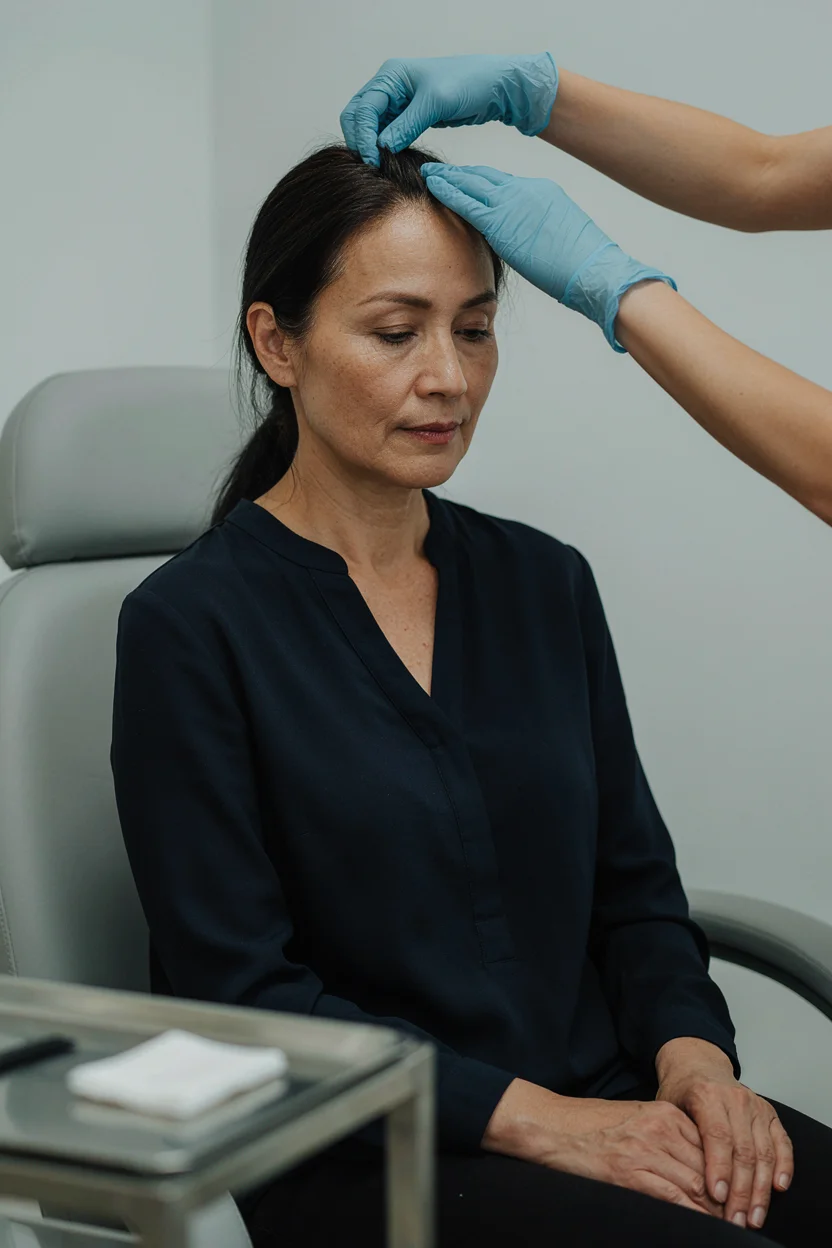
There are situations where the distinction between shedding and breakage is not straightforward, and professional assessment becomes valuable. If you are losing hair in distinct patches rather than diffusely, if the shedding began suddenly and severely, if your scalp is inflamed or painful, or if you notice changes in the texture of new growth emerging from the scalp, these are reasons to see a dermatologist. A trichologist or dermatologist can perform a trichogram, which involves examining plucked hairs under a microscope to determine the proportion of follicles in each growth phase, providing a more precise picture than visual inspection alone.
I think it is also worth noting that persistent shedding that continues for more than six months without an obvious trigger deserves investigation regardless of whether breakage is also present. Chronic telogen effluvium exists as a distinct condition, and it can be associated with underlying nutritional, hormonal, or autoimmune factors that require blood work to identify. The threshold for seeking a professional opinion should be lower, not higher, when the pattern is unclear. Our guide to hair loss after menopause covers the clinical workup in more detail.
Frequently Asked Questions
Can I have both shedding and breakage at the same time?
Yes, and this is more common than either condition alone. A person who is experiencing telogen effluvium from a nutritional deficiency and also using heat styling tools regularly may be shedding from the root and breaking along the shaft simultaneously. Examining a sample of hairs for the presence or absence of bulbs usually reveals whether one or both processes are occurring, and addressing each separately is more effective than applying a single approach to both.
Does shedding mean my hair is unhealthy?
Shedding between 50 and 100 hairs per day is a normal part of the hair growth cycle and does not indicate poor health. An increase beyond that range suggests that more follicles than usual have entered the resting phase, which can be triggered by a wide range of physiological events. The shedding itself is not a sign that the hair is unhealthy in the sense of being damaged. It is a sign that the growth cycle has shifted, and identifying the trigger is the productive next step.
Will cutting my hair stop the shedding?
A haircut does not affect the follicle or the growth cycle, so it does not change the rate of shedding. What a haircut can do is remove the most damaged and breakage-prone sections of the shaft, which reduces the visible effects of breakage and makes the remaining hair appear fuller. This is a cosmetic improvement rather than a change in the underlying biology, but it is a legitimate reason to trim if breakage is contributing to the appearance of thinning.
How can I tell if my hair is breaking from heat or from chemical processing?
The location of the breakage often provides a clue. Heat damage tends to produce breakage along the mid-lengths and ends, where styling tools make the most contact and where the hair is oldest and most weathered. Chemical damage can produce breakage closer to the point where the chemical was applied, and overlapping applications on previously treated sections create distinct weak points. In practice, many people have both types of damage, and the distinction matters less than reducing the overall stress on the hair shaft.
Does brushing cause breakage?
All brushing creates some degree of mechanical stress on the hair shaft, and the amount depends on the force applied, the type of brush, and the condition of the hair. Hair that is wet, chemically processed, or already damaged is more susceptible to breakage during brushing. Using a wide-tooth comb on wet hair, starting from the ends and working upward, reduces the force applied at any single point and lowers the probability of breakage. The goal is not to avoid brushing entirely but to minimise unnecessary stress during the process.
What the Strands Are Telling You
The distinction between shedding and breakage is one of the most practical things you can learn to identify, because it determines which questions are worth asking next. Look at the ends of the hair, note what you see, and let that observation guide where you direct your attention.
— Iris