Persistent Itchy Scalp: When Shampoo Is Not the Answer

When my scalp began itching persistently a few years ago, I did what most people do: I bought a different shampoo, then another, then a third, each one promising relief and each one delivering roughly the same result. It took me longer than I would like to admit before I considered that a persistent itchy scalp might not be a product problem at all. The itching that lasts for weeks or months, that survives every switch in your hair care routine, is usually pointing to something happening on the scalp skin itself, something that no shampoo alone is designed to resolve.
A persistent itchy scalp, one that lasts longer than three weeks and does not respond to changing your shampoo, is most often caused by a scalp skin condition such as seborrhoeic dermatitis, contact dermatitis from a hair product ingredient, fungal overgrowth, or an inflammatory condition like psoriasis. The shampoo you switch to is unlikely to address any of these on its own. Identifying the actual cause, which requires looking at the scalp directly rather than guessing from symptoms, is the step that leads to real relief.
What the Scalp Actually Is
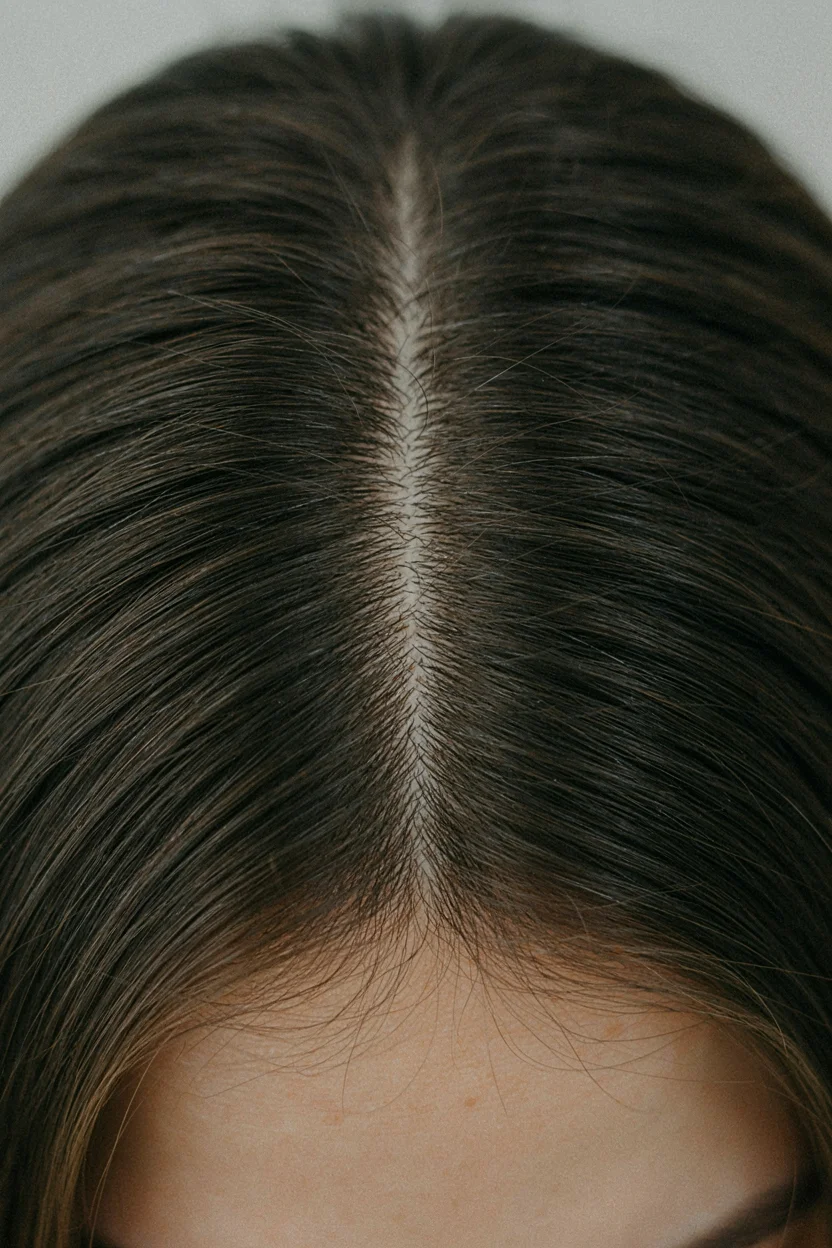
The scalp is skin, which sounds obvious but matters more than most hair care advice acknowledges. It has the same basic structure as the skin on the rest of your body: an outer epidermis with a protective barrier, a dermis beneath it containing blood vessels, nerve endings, and hair follicles, and a resident population of microorganisms that live on its surface in a generally stable balance. The scalp differs from most other skin in a few important ways. It produces more sebum than most areas, because each of the roughly 100,000 hair follicles on the scalp has an associated sebaceous gland. It is also covered in hair, which traps heat, moisture, and product residue against the skin in a way that bare skin does not experience.
The scalp’s pH sits in the same mildly acidic range as the rest of the skin, between 4.5 and 5.5, and this acidity is part of the barrier that keeps the microbial population in check and the outer skin layer intact. When this barrier is disrupted, whether by harsh surfactants, excessive washing, allergic reactions to product ingredients, or an underlying skin condition, the nerve endings in the epidermis register the disturbance as itch. The itch is a signal, not the problem itself, and treating the signal without addressing what triggered it is the reason so many people cycle through products without finding relief.
The scalp also has a microbiome, a community of yeast species like Malassezia, bacteria, and other microorganisms that coexist in a balance maintained by the skin’s immune system and its acidic surface. When this balance shifts, whether because of excess oil production, a change in washing habits, or an immune response, the result can be inflammation, flaking, and the kind of persistent itch that no amount of tea tree oil shampoo will resolve on its own.
What Different Kinds of Itch Tend to Indicate
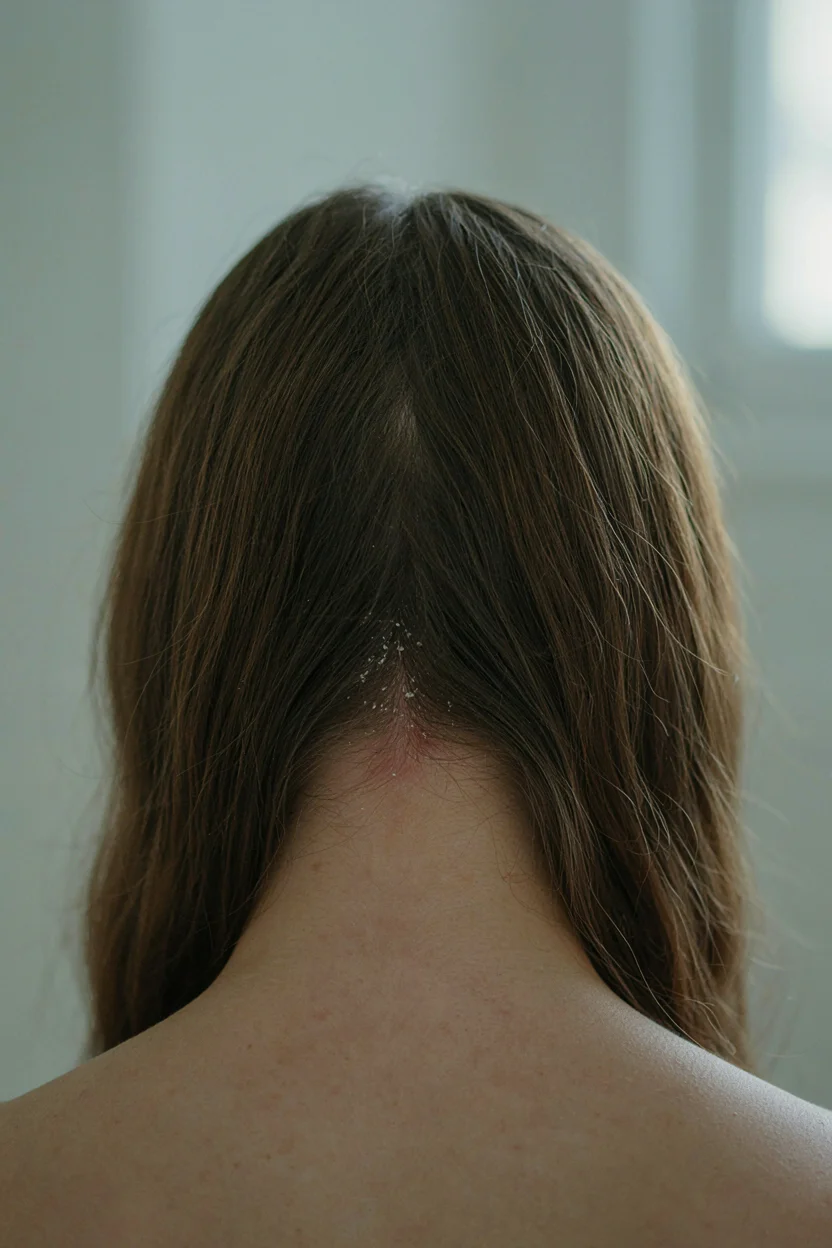
Not all scalp itch is the same, and the pattern of your itch, where it sits, what accompanies it, and when it tends to worsen, provides useful information about what might be causing it. Here is how the most common causes tend to present.
| Condition | Itch Pattern | Visible Signs | Common Location |
|---|---|---|---|
| Seborrhoeic dermatitis | Persistent, often worse with stress or weather changes | Yellowish, greasy flakes; mild redness | Scalp, behind ears, eyebrows, sides of nose |
| Contact dermatitis | Begins after new product use; may intensify with repeated exposure | Redness, swelling, sometimes blistering | Wherever the product touched the scalp |
| Scalp psoriasis | Intense, persistent; may feel deeper than surface itch | Silvery-white scales on raised, well-defined patches | Hairline, behind ears, nape of neck; may extend beyond hairline |
| Fungal overgrowth | Intense, persistent; may worsen with moisture | Round scaly patches, sometimes with hair breakage | Patchy areas on the scalp |
| Dry scalp | Mild to moderate; improves with moisturizing | Small, dry white flakes; no significant redness | Diffuse across the scalp |
Seborrhoeic dermatitis is one of the most common causes of persistent scalp itch, and it is frequently mistaken for simple dryness or dandruff. The yeast species Malassezia, which lives on everyone’s scalp in small numbers, appears to trigger an inflammatory response in some people, producing the characteristic greasy yellowish flakes and mild redness. It tends to flare with stress, hormonal shifts, and cold dry weather, and it responds to antifungal ingredients like ketoconazole or zinc pyrithione when used in a targeted way, not simply swapped in as another random shampoo purchase.
Contact dermatitis is the scalp’s immune response to a specific ingredient it has decided to react against. The most common culprits include fragrance compounds, preservatives like methylisothiazolinone, and certain hair dye chemicals, particularly paraphenylenediamine, which is present in many permanent hair colour formulations. The itch from contact dermatitis tends to appear within hours to days of exposure and intensifies with repeated contact. I watched a friend deal with persistent scalp itching for months, treating it as dryness and cycling through gentle shampoos, before a dermatologist identified contact dermatitis from the hair dye she had been using for years.
Scalp psoriasis produces thicker, silvery scales on well-defined patches that may extend beyond the hairline onto the forehead, behind the ears, or at the nape of the neck. The itch tends to be more intense and persistent than seborrhoeic dermatitis, and the patches feel distinctly raised when you run your fingers over them. Psoriasis is an immune-mediated condition that requires specific treatment, and mistaking it for dandruff delays the management that would actually bring relief.
Why Switching Shampoos Rarely Solves a Persistent Itch
The instinct to switch shampoos when your scalp itches is understandable, because the shampoo is the product most directly in contact with the problem area. The difficulty is that most shampoos are designed to clean the hair and scalp by removing oil and debris, and cleaning is not the same as treating a skin condition. A shampoo that removes sebum and product buildup is doing its job, but it is not addressing the inflammatory response, the microbial imbalance, or the allergic reaction that is causing the itch in the first place.
Worse, the act of switching shampoos frequently can sometimes make the problem more difficult to identify. Each new product introduces a fresh set of surfactants, fragrances, preservatives, and conditioning agents to the scalp, and any one of those ingredients could be the irritant or allergen driving the itch. When you switch every two weeks and the itch persists, you have not ruled anything out. You have simply added more variables to a situation that needed fewer.
I spent years assuming that an itchy scalp meant I needed to wash more frequently, and the opposite turned out to be closer to the truth. Over-washing strips the scalp’s natural lipid barrier, raising its pH and disrupting the microbial balance that keeps itch-triggering organisms in check. Washing less frequently, with a gentler surfactant and lukewarm rather than hot water, allowed the barrier to recover and reduced the itch more effectively than any product switch had managed.
There is also the matter of what stays on the scalp after washing. Leave-in conditioners, styling products, dry shampoo, and serums all deposit ingredients that remain in contact with the scalp skin for hours or days. If one of those products contains an ingredient your scalp is reacting to, the shampoo you use to wash it off is only part of the picture. The full list of what touches your scalp includes everything you apply between washes, and the culprit may be a product you have used for years without questioning.
If your scalp has been itching for more than three weeks and changing shampoo has not helped, the answer is not another shampoo — it is a professional look at what is actually happening on the skin.
When the Itch Warrants a Professional Look

Most persistent scalp itch is not dangerous, but some causes require treatment that only a clinician can provide, and distinguishing between the two is not always straightforward from symptoms alone. The threshold worth remembering is this: if your scalp has been itching for more than three weeks without improvement after changing your shampoo, or if the itch is accompanied by visible scaling, redness, hair breakage, or patches of hair loss, a dermatologist visit is the appropriate next step.
A dermatologist can examine the scalp with a dermatoscope, a magnifying tool that reveals scale patterns, blood vessel changes, and follicle conditions invisible to the naked eye. They can take scrapings or swabs to test for fungal infection, perform patch testing to identify specific contact allergens, and determine whether the itch is part of a broader skin condition that extends beyond the scalp. This is the kind of diagnostic specificity that no amount of product experimentation can replicate.
In the meantime, there are a few practical steps that reduce irritation without requiring a prescription. Wash with lukewarm water rather than hot, which strips the lipid barrier more aggressively. Reduce the number of products that stay in contact with your scalp between washes, particularly fragranced leave-in treatments and dry shampoo. Avoid scratching, which creates micro-tears in the scalp skin and can introduce secondary infection. If you suspect a specific product is the trigger, stop using it entirely for two to three weeks and observe whether the itch subsides, which is the simplest version of an elimination approach.
- Reduce washing frequency if you currently wash daily, allowing the scalp’s lipid barrier to recover between cleansings.
- Switch to a fragrance-free, sulphate-free shampoo with minimal ingredients, and use nothing else on the scalp for two to three weeks.
- Stop all leave-in scalp products, serums, and dry shampoo during the elimination period.
- Keep a simple log of what you apply to your scalp and when the itch worsens, which provides useful information for a dermatologist appointment.
- Avoid hot water on the scalp, which accelerates lipid loss from the skin barrier.
Frequently Asked Questions
Why does my scalp itch even though I wash it regularly?
Frequent washing can itself contribute to scalp itch by stripping the natural lipid barrier that protects the skin and maintains its mildly acidic pH between 4.5 and 5.5. When this barrier is compromised, the nerve endings in the epidermis register the disruption as itch, and the microbial balance on the scalp surface can shift in ways that promote inflammation. The answer may not be washing more thoroughly but washing less aggressively, with a milder surfactant and cooler water.
Can stress cause a persistent itchy scalp?
Stress does not directly cause scalp itch, but it can worsen conditions that produce it. Seborrhoeic dermatitis, psoriasis, and other inflammatory skin conditions are known to flare during periods of heightened stress, because stress hormones influence the immune system’s inflammatory response and can alter sebum production. If your persistent itchy scalp worsens during stressful periods, the itch is likely a symptom of an underlying condition that stress is amplifying, not creating.
Is a persistent itchy scalp a sign of hair loss?
Some causes of persistent scalp itch can contribute to hair shedding or breakage, particularly fungal infections and inflammatory conditions that damage the follicle environment. However, itch itself does not cause hair to fall out. The concern is that the underlying condition producing the itch may also be affecting hair growth, and both symptoms warrant evaluation by a dermatologist who can determine whether they are connected.
Should I try an anti-dandruff shampoo for my itchy scalp?
An anti-dandruff shampoo containing zinc pyrithione or ketoconazole may help if the cause of your itch is seborrhoeic dermatitis or mild fungal overgrowth. If the cause is contact dermatitis, psoriasis, or a different condition, an anti-dandruff shampoo will not address it, and some formulations may worsen irritation through their surfactant strength or fragrance content. Trying one for two to three weeks is reasonable, but if the itch persists beyond that window, the cause is likely something the shampoo does not target.
How long should I wait before seeing a doctor about my itchy scalp?
If your persistent itchy scalp has lasted more than three weeks without improvement after a shampoo change, or if it is accompanied by visible scaling, redness, hair breakage, or patches of hair loss, a dermatologist appointment is warranted without further delay. These accompanying signs indicate that the cause is likely a specific scalp condition requiring targeted treatment rather than a product adjustment.
The Quieter Scalp
The path to a comfortable scalp is almost always shorter when you know what you are actually treating. If the itch has outlasted your patience and your product shelf, the most practical next step is a dermatologist visit, where a ten-minute examination with a dermatoscope can identify what months of guessing could not. You do not need to live with a scalp that distracts you throughout the day, and the answer is usually more specific and more reachable than the shampoo aisle can provide.
— Iris